What size dumpster do I need for a cleanout or remodel?
Size by both volume and weight. A 20-yard roll-off suits most home cleanouts and single-room remodels, a 30-yard a whole-house cleanout or large renovation, and a 40-yard a big remodel or construction job. Heavy debris such as concrete, dirt and shingles reaches the weight limit long before the box looks full, so it belongs in a smaller container.
Free to ask. Local shops send quotes, and you pay only when you book one.
By Kasra Taheri, Founder, LoclisPublished
Researched and drafted with AI, then checked claim by claim against the sources listed below before it was published. Prices and rules change; the dates beside each source say when it was last checked.
Step by step
Read when to stop and call a pro, further down this page, before you start.
Step 1: List what is going in
Walk the rooms and write down the big items, the rough amount of loose debris, and anything heavy such as tile, plaster, concrete or soil.
Step 2: Separate the heavy material
Plan to put concrete, brick, dirt and roofing in their own smaller container or load, because they reach a weight limit long before they fill the box.
Step 3: Estimate in pickup loads
Count how many full pickup-truck beds the job would fill, then compare with the hauler's own pickup-load figures for each size.[1]
Step 4: Round up one size
If you land between two sizes, the larger one usually costs less than a second haul, unless the extra space would only fill with heavy debris.
Step 5: Ask for the weight allowance
Ask how many tons the price includes, what each extra ton costs, and how many rental days come with it, and get the answers in writing.
Step 6: Measure the drop spot
Measure the driveway or yard where the container will sit, and check for low wires, branches and soft ground the truck has to cross.
Step 7: Check whether it goes on the street
If the container will not fit on your property, ask your city, town or county about a right-of-way permit before you book.
Step 8: Load it flat and level
Break down furniture and boxes, lay long pieces flat, spread heavy debris across the floor of the box, and keep everything below the top edge.
Pick the size by two things at once: how much space the debris takes up and how much it weighs. For most home cleanouts and single-room remodels a 20-yard roll-off is the usual choice. A whole-house cleanout or a large renovation usually needs a 30-yard, and a 40-yard is for big remodels and construction jobs. Heavy debris such as concrete, dirt and roofing goes in a smaller box, because it reaches the weight limit long before it fills the space.
The sizes you will be offered
A "yard" here is a cubic yard of space. WM's Richmond rental page lists 20-yard, 30-yard and 40-yard roll-off containers.[1] Its 20-yard box measures 7 feet wide, 3 feet 6 inches high and 21 feet 11 inches long, and its 30-yard box is the same footprint at 5 feet 2 inches high.[1] WM rates them at about 8, 14 and 16 pickup loads, lists 10 tons for each size, and includes a 7-day rental.[1] Other haulers, especially local ones, also rent 10- and 15-yard boxes, and their sizes and allowances can differ, so ask for the exact dimensions and weight allowance of the box you are being quoted.
WM describes the 20-yard as ideal for heavy-debris home clean-outs and remodeling cleanup, the 30-yard for large home renovation projects or junk removal, and the 40-yard for large construction and large remodeling projects.[1]
Match the size to the job
These are starting points, not rules. Your house, your debris and your hauler's allowances decide the final answer.
- Garage, attic or basement cleanout: a 10- or 20-yard box, depending on how full the space is. Furniture and boxes are bulky but light.
- One bathroom or a small kitchen: a 10- or 20-yard box. Tile, plaster and cabinets add weight fast.
- A large kitchen or several rooms: a 20- or 30-yard box.
- A whole-house cleanout or a full renovation: a 30- or 40-yard box, or more than one haul.
- Concrete, brick, soil or a roof tear-off: a small box, often 10 yards, filled only partway with the heavy material. Shingles from a roof are best left to the roofer, who usually arranges the container as part of the job.
The quickest way to estimate is in pickup-truck loads. Picture how many full beds of debris the job would fill and compare that with the hauler's own figures.
Weight matters as much as volume
Every quote includes a weight allowance, and debris weighs very different amounts for the same space. EPA's volume-to-weight table puts mixed construction and demolition debris at 417 pounds per cubic yard,[2] so a full 20-yard box of it would weigh about twenty times that, a little over four tons.[2] The same table lists concrete at 860 pounds per cubic yard, dirt and sand at 929, asphalt roofing at 731, gypsum board at 467 and clean dimensional lumber at 169.[2] For a cleanout, uncompacted mixed residential, institutional and commercial trash runs 250 to 300 pounds per cubic yard.[2]
That is why a hauler will often put dirt or concrete in a small box. Ten yards of dirt at that rate is ten times 929 pounds, more than four tons,[2] while a large box of furniture and cardboard rarely gets near its limit. If your job mixes both, ask whether a separate small load of the heavy material costs less than one big overweight box.
Measure the spot before you book
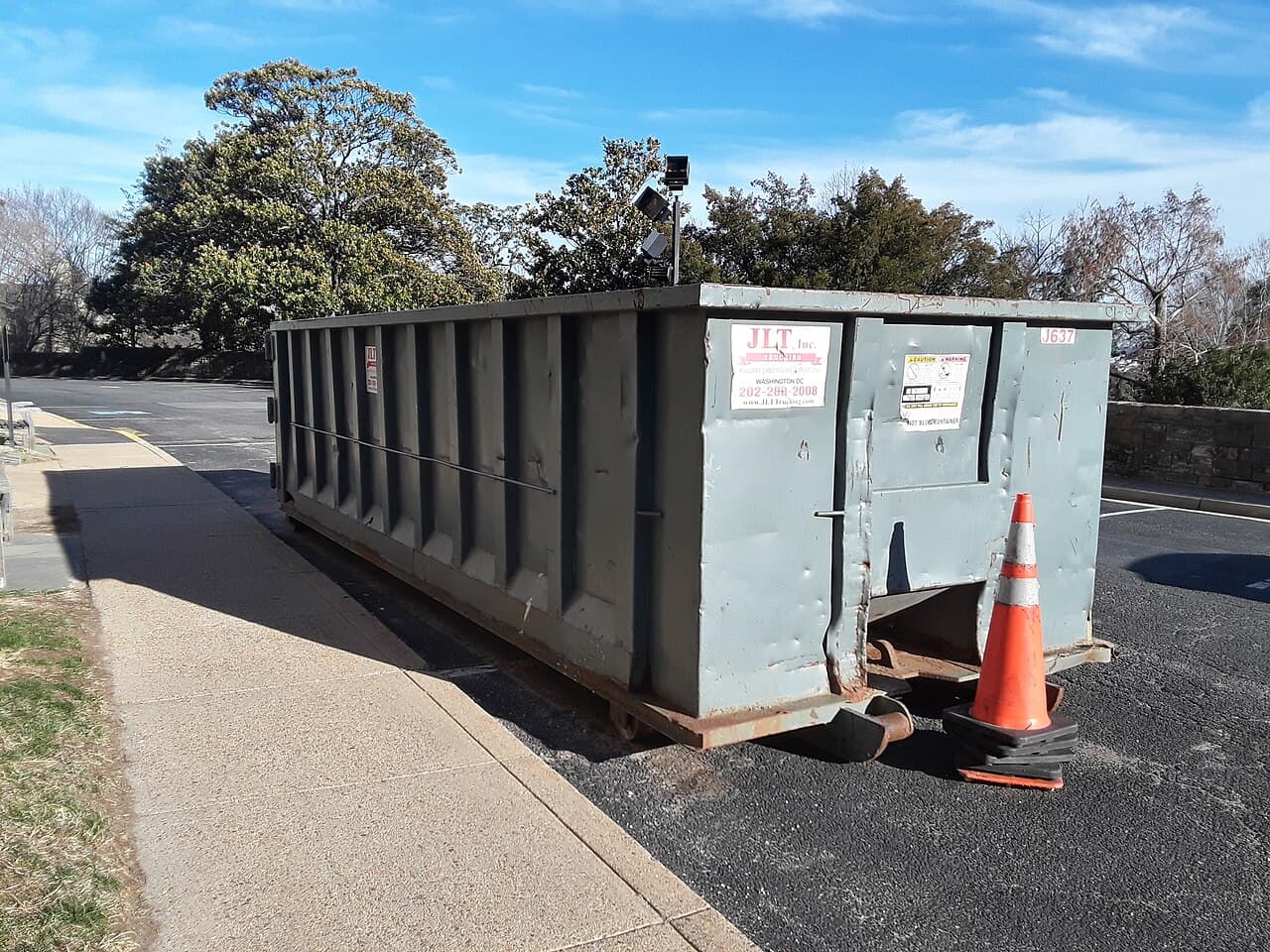
WM's 20- and 30-yard boxes are 21 feet 11 inches long,[1] and the truck that drops it needs more room than that to back in and tilt its bed. Before you book, measure the driveway or yard, look up for low wires and branches, and check for soft ground, septic lines or a thin driveway the truck would have to cross. Many homeowners lay boards under the container's rails to spread the load on a driveway; ask the hauler what it suggests. If there is no room on your property, the container goes on the street, and that usually needs a permit. See whether you need a permit to put a dumpster on the street in Virginia.
Where the debris goes, and what that costs
A roll-off is usually the simplest way to move remodel debris because local drop-off sites often will not take it. Montgomery County's consolidated sites do not take construction or demolition waste, including renovation and remodel waste, and say some unacceptable items may be taken to the Montgomery Regional Solid Waste Authority.[3] There, the Authority's 2026-2027 rates, effective July 1, 2026, charge $53.00 per ton for construction waste and $76.00 per ton for household municipal solid waste.[4] Fees like these, at whichever landfill or transfer station your hauler uses, are a large part of what you pay for extra weight. For how the price is put together, see how much it costs to rent a dumpster in Virginia.
Some things should not go in the box at all, whatever its size. See what you can't put in a dumpster in Virginia before you start loading.
Stop and call a pro if
- The debris includes old flooring, ceiling texture, pipe insulation or siding you suspect contains asbestos. EPA says you generally cannot tell whether a material contains asbestos just by looking at it, that remodeling can disturb such materials, and that if in doubt you should treat it as asbestos and leave it alone.[5]
- The project means taking down walls, a deck, a roof or another structure. That is contractor work, and the contractor usually sizes and orders the container.
- The only place for the container is a steep driveway, a soft lawn or a busy street.
- You find the job is far bigger than one container, such as a hoarded house or a full estate. A cleanout crew can sort, donate and haul in one visit.
Getting it done on Loclis
Browse more junk removal and moving answers, see dumpster rental businesses, or look up junk removal and hauling businesses around Blacksburg. To get quotes for the size and weight you need, describe the job on Loclis.
Common questions
- What does the yard in a 20-yard dumpster mean?
- It is the container's capacity in cubic yards. One cubic yard is 27 cubic feet, so a 20-yard box holds about 540 cubic feet of loose debris when it is filled level with the top edge.
- Is a 10-yard dumpster enough for a bathroom remodel?
- Often, for one small bathroom with tile, a vanity, a toilet and drywall. Tile and mortar are heavy, so a small box fills its weight allowance quickly. Tell the hauler what is coming out and ask which size it suggests.
- What size do I need to clean out a whole house?
- WM describes its 30-yard container as suited to large home renovations or junk removal. A large house with a full attic, basement and garage may need a 40-yard or two hauls. Counting pickup loads first gives you a better answer than guessing.
- Why do haulers want concrete and dirt in a small dumpster?
- Because of weight. EPA's conversion table puts dirt and sand at 929 pounds per cubic yard, against 417 for mixed construction debris. A big box of dirt can weigh more than the truck or the price allows.
- Can I just take remodel debris to the county convenience site?
- Usually not. Montgomery County's consolidated sites, for example, do not take construction or demolition waste, including remodel waste. Ask your locality where construction debris goes and what it charges.
- Can I fill the dumpster above the top?
- Most haulers will not move a load above the rim, because debris can fall off on the road. Plan for a size that holds everything level with the top edge.
Sources
- [1] Temporary Dumpster Rental in Richmond, VA, WM (Waste Management). Checked October 26, 2026.
- [2] Volume-to-Weight Conversion Factors (April 2016), U.S. Environmental Protection Agency, Office of Resource Conservation and Recovery. Checked October 26, 2026.
- [3] Recycling & Trash Disposal Guidelines, Consolidated Sites, Montgomery County, Virginia. Checked October 26, 2026.
- [4] Solid Waste: 2026-2027 Rates, Montgomery Regional Solid Waste Authority. Checked October 26, 2026.
- [5] Protect Your Family from Exposures to Asbestos, U.S. Environmental Protection Agency. Checked October 26, 2026.
Want a pro to handle it?
Describe the job once. Licensed local businesses send quotes, and you pay only when you book one.
Get a quote from a local pro