Why do my LED bulbs flicker on a dimmer switch?
Usually because the bulbs and the dimmer are not a compatible pair: the bulbs are not labelled dimmable, the dimmer was made for incandescent bulbs, or its minimum level is set too low. Check the labels and the dimmer maker's compatibility list. Flicker at full brightness, a hot switch or a burning smell can mean a wiring problem, which is for a licensed electrician.
Free to ask. Local shops send quotes, and you pay only when you book one.
By Kasra Taheri, Founder, LoclisPublished
Researched and drafted with AI, then checked claim by claim against the sources listed below before it was published. Prices and rules change; the dates beside each source say when it was last checked.
This is a job for a licensed pro in Virginia
This page explains what the work involves, the permits, what a licensed pro does and what drives the cost. It does not give step-by-step instructions, because this work needs a licence, a permit or both, and doing it wrong can injure someone. Before you hire, check the licence on Virginia's DPOR record.
LED bulbs flicker on a dimmer most often because the bulb and the dimmer do not suit each other. The bulb may not be a dimmable model, the dimmer may have been made for old incandescent bulbs, or its lowest setting may be below what the bulb can handle. Those are fixable with the right parts. Flicker that comes with heat, a smell or other symptoms is a different problem, and it belongs with a licensed electrician.
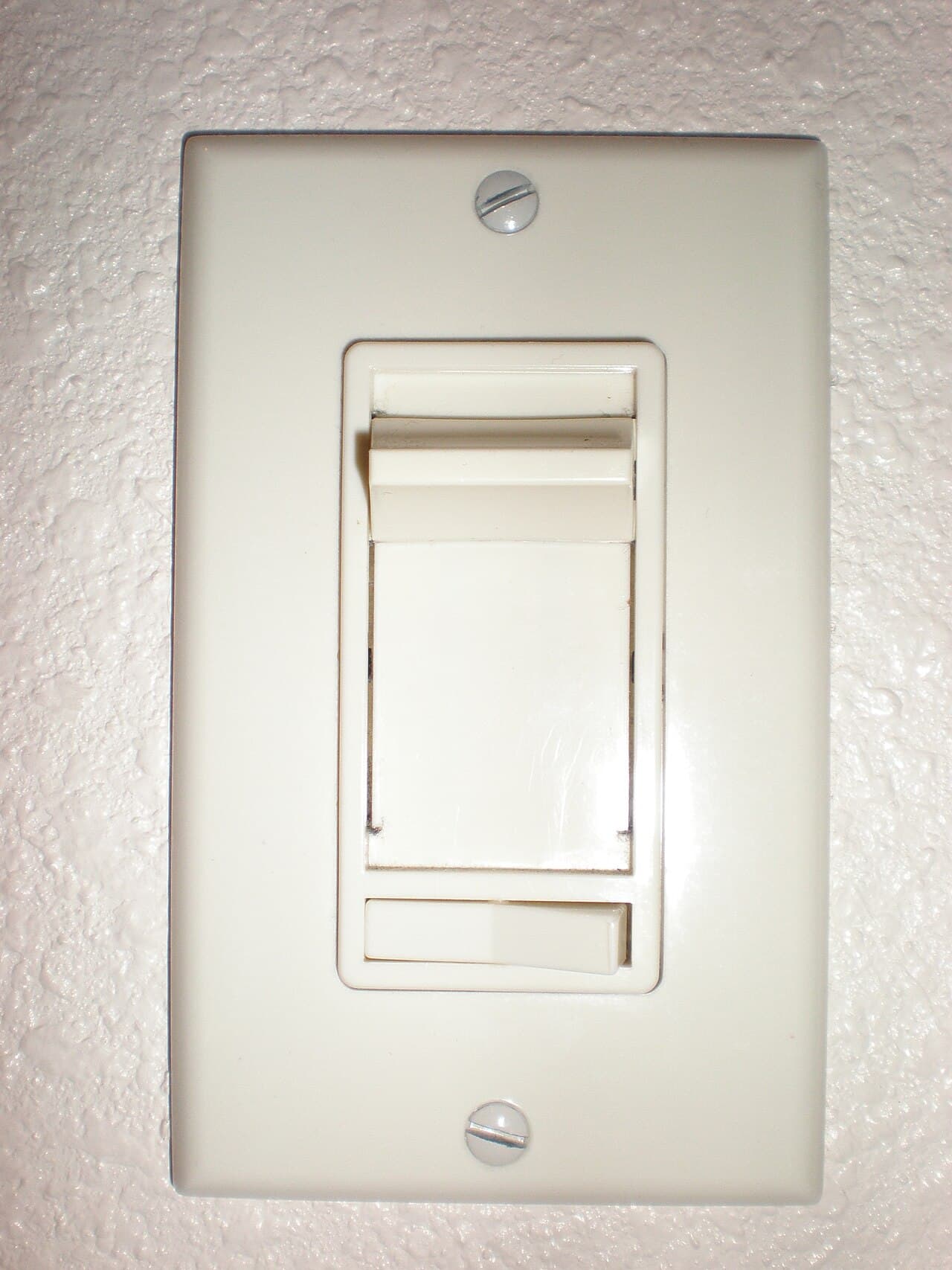
Why LEDs are fussier on a dimmer
Incandescent bulbs make light with a filament and dim without hesitation; LED bulbs make light with a semiconductor, and the dimming dynamics are different.[1] When the two are mismatched, Leviton lists the glitches you see: noise such as buzzing or humming, flickering, strobing or flashing, popping on or dropping out, a poor or limited dimming range, and ghosting, where the light glows after it is turned off.[1]
ENERGY STAR's summary is short: "Not every LED light works well with every dimmer switch."[3]
The usual causes
The bulbs are not dimmable. Many LED bulbs are not made for dimmers at all. Leviton's first rule is "Use only LED bulbs labeled as “DIMMABLE”".[1]
The dimmer was made for incandescent bulbs. Leviton's second rule: "Be certain the dimmer switch is rated to dim LED bulbs (older models may not be)".[1] A dimmer that has been on the wall since the house had incandescent bulbs is a common suspect.
The pair is not on the compatibility list. Dimmable bulbs and LED-rated dimmers still vary. If you are keeping an existing dimmer, ENERGY STAR advises checking the dimmer manufacturer's website to see which bulbs they recommend.[3] For recessed lights, ENERGY STAR's rules say certified downlights sold as dimmable must list compatible dimmers on the package, or give a web address for them, along with known incompatibilities with dimmers, sensors and timers.[4]
The low end is set too low. ENERGY STAR requires that certified downlights marketed as dimmable must dim continuously from 100% to at least 20% of their light output.[4] Leviton's guidance is that "Setting the minimum light level helps ensure smoother dimming if you encounter any flickering"[1] and Leviton's LED dimmers have a mode selector switch to change the minimum and maximum light levels.[2] The dimmer's instruction sheet says whether yours has one.
What you can check without opening anything
Start with the paperwork, not the wall. Read the bulb base or box for the word dimmable. Find the dimmer's brand and model from its box or instruction sheet, or ask the electrician to read it. Then look the pair up on the dimmer maker's compatibility list.
Note the pattern, because it tells an electrician a lot:
- Flicker only at the low end of the slider usually points to the minimum-level setting or the pairing.
- Flicker at full brightness, on lights controlled by an ordinary switch, or across several rooms makes a dimmer mismatch a less likely explanation.
If the pair is not compatible, the fix is parts, not a repair. If you don't find a good match with your current dimmer, ENERGY STAR's advice is to consider replacing it, or to return the lights and try a different one.[3] Changing bulbs is a bulb change. Changing the dimmer is electrical work at the switch box.
When flicker is a wiring warning
Flicker is not always the dimmer. The CPSC's guidance on older home wiring puts it this way: "Signs of electrical system problems include hot-to-the touch face plates on receptacles or switches; flickering lights; circuits that don’t work; or the smell of burning plastic at outlets or switches."[6] Its advice is plain: "If you notice any signs of a problem, have a qualified electrician determine the cause."[6]
Some warmth at a dimmer is expected. The CPSC's home safety checklist notes that "Some dimmer switches may warm during normal use."[7] But unusually warm outlets or switches may indicate an unsafe wiring condition, such as a loose electrical connection that can start a fire.[7] Hot is not warm. Our answer on warning signs of bad wiring covers the other symptoms.
Permits and who does the work
Virginia's building code treats a dimmer swap as an ordinary repair: replacement of dimmer and control switches needs no permit application in Groups R-3, R-4 and R-5, and in Group R-2 where serving a single dwelling unit.[8] No permit is not the same as no licence. In Virginia, no individual may engage in, or offer to engage in, work as a tradesman unless licensed,[9] so anyone you pay to change the dimmer needs an electrical licence or a licensed electrician supervising. See whether you need an electrician to install a light fixture for the details.
When to call a licensed pro
Call a licensed electrician when:
- A switch plate or dimmer is hot to the touch, or you smell burning plastic.
- Lights flicker at full brightness, on ordinary switches, or in several rooms.
- Flicker started after other electrical work, or comes with breakers tripping or dead outlets.
- The dimmer needs replacing with a compatible LED-rated model, or its minimum level needs adjusting.
- Recessed fixtures with built-in LEDs flicker. Some LED light fixtures have LEDs built in as a permanent light source,[5] so there is no bulb to swap.
Ask the electrician to bring a dimmer listed as compatible with your bulbs or fixtures. If you are planning new lights, our answer on adding recessed lighting covers choosing fixtures and dimmers together.
Find an electrician
Browse lighting installers on Loclis, look up electricians in Blacksburg, or read more electrical answers.
Describe your flickering lights and licensed local electricians quote the repair.
Common questions
- Do I need special LED bulbs for a dimmer?
- Yes. Use bulbs labelled dimmable, and a dimmer rated to dim LED bulbs. Leviton notes that older dimmer models may not be rated for LEDs. Even then, check that the pair is on the dimmer maker's compatibility list.
- Why do my LED lights flicker only when dimmed low?
- That pattern usually points to the pairing or the dimmer's low-end setting. Some LED dimmers have an adjustment for the minimum light level, and Leviton says setting it helps smooth out flicker. An electrician can set it, or fit a dimmer listed as compatible with your bulbs.
- Is it normal for a dimmer switch to feel warm?
- A little warmth can be normal: the CPSC notes that some dimmer switches may warm during normal use. A switch or plate that is hot to the touch, or a burning smell, is a sign of an electrical problem, so stop using it and have a licensed electrician check it.
- Can flickering lights be dangerous?
- They can be. The CPSC lists flickering lights among the signs of electrical system problems, along with hot switch plates, dead circuits and a smell of burning plastic, and advises having a qualified electrician find the cause. Flicker that only happens on a dimmer at low settings is more often a compatibility issue.
- Do I need a permit to replace a dimmer switch in Virginia?
- Replacing a dimmer or control switch in a house needs no permit application under Virginia's building code. Anyone replacing it for pay still needs an electrical tradesman licence or must work under a licensed tradesman.
Sources
- [1] How to Avoid Flickering LED Lights, Leviton Manufacturing Co.. Checked October 27, 2026.
- [2] Dimmers, Leviton Manufacturing Co.. Checked October 27, 2026.
- [3] Light Fixtures (Downlights), ENERGY STAR, U.S. Environmental Protection Agency. Checked October 27, 2026.
- [4] Downlights Key Product Criteria, ENERGY STAR, U.S. Environmental Protection Agency. Checked October 27, 2026.
- [5] Learn About LED Lighting, ENERGY STAR, U.S. Environmental Protection Agency. Checked October 27, 2026.
- [6] Repairing Aluminum Wiring (Publication 516), U.S. Consumer Product Safety Commission. Checked October 27, 2026.
- [7] Home Electrical Safety Checklist (Publication 513), U.S. Consumer Product Safety Commission. Checked October 27, 2026.
- [8] 13VAC5-63-80, Virginia Uniform Statewide Building Code, Section 108 Application for permit, Virginia Administrative Code, Legislative Information System. Checked October 27, 2026.
- [9] Code of Virginia § 54.1-1129, Necessity for licensure, Code of Virginia, Legislative Information System. Checked October 27, 2026.
Want a pro to handle it?
Describe the job once. Licensed local businesses send quotes, and you pay only when you book one.
Get a quote for Electrical Repair