Why does my faucet still drip after I replaced the washer?
Usually because the washer was not the only worn part. In a compression faucet the brass seat the washer closes against gets cut and grooved over time, and a new washer cannot seal on a damaged seat. The other common causes are a washer of the wrong size or shape, a drip coming from the other handle, or a faucet that actually needs a new cartridge.
Free to ask. Local shops send quotes, and you pay only when you book one.
By Kasra Taheri, Founder, LoclisPublished
Researched and drafted with AI, then checked claim by claim against the sources listed below before it was published. Prices and rules change; the dates beside each source say when it was last checked.
Step by step
Read when to stop and call a pro, further down this page, before you start.
Step 1: Confirm which side drips
Close only the cold shutoff under the sink; if the drip stops, the cold side is leaking, and if not, try the hot side.[3]
Step 2: Note where the water comes out
A drip from the spout points to the washer, seat or cartridge; water around the handle when the faucet is on points to the stem packing or cartridge seals.
Step 3: Shut off and take out the stem
Close both shutoffs, open the faucet, then unscrew the cap nut and unscrew the stem from the faucet body.[1]
Step 4: Check the new washer
Compare it with the old one for diameter, thickness and shape, and make sure the screw holds it flat and centered on the stem.
Step 5: Inspect the seat
Shine a flashlight into the faucet body and look at the brass ring the washer closes on for nicks, grooves or pitting.[2]
Step 6: Replace or dress the seat
Swap a removable seat for a matching one, or square a fixed seat with a seat dressing tool and shake out the cuttings.[1]
Step 7: Look at the stem
Check the stem threads and the washers or packing under the cap nut, and replace any that are flattened, cracked or hard.
Step 8: Reassemble and test
Refit the stem and cap nut, open the shutoffs slowly, and check that moderate force on the handle stops all flow and drip.[1]
Most of the time, a faucet that keeps dripping after a new washer has a worn seat. In a compression faucet, the usually two-handled kind,[4] the rubber washer on the bottom of the stem presses down on a brass ring in the faucet body. If that ring is nicked or grooved, water gets past even a perfect new washer. The rest of the time the cause is a washer that does not fit, a drip from the other handle, or a faucet that needs a cartridge rather than a washer.
The checks below run roughly from most to least likely.
The seat is worn
A USDA plumbing bulletin describes the problem exactly: "A worn washer with constant leakage over the seat of a compression faucet, together with grit lodging there, often causes the seat to become cut, nicked, and grooved." It adds: "The trouble occurs more often in hot-water than in cold-water faucets."[1] So if the old washer leaked for months before you replaced it, the seat is the first suspect.
With the water off and the stem out, shine a flashlight into the faucet body and look at the seat. A good one is a smooth, even ring. Faucet makers treat a damaged seat as a part to change: Chicago Faucets' repair guide, for example, has you inspect the seat for nicks or water cutting and replace it if necessary.[2] Many seats unscrew with a seat wrench, a hex or square key sold at hardware stores. Take the old seat with you to match it.
If the seat will not come out, it can usually be dressed. The USDA bulletin describes a seat dressing tool screwed into the faucet body, centered over the seat, and turned gently by hand several times so its cutter squares the seat. Then turn the faucet bottom side up to shake out the cuttings, reassemble, and turn the water on to wash out what is left.[1] Go gently and stop once the seat is smooth, since it is easy to cut away too much.
Grit is part of the story too. Seat washers are subject to damage from metal filings left in newly installed water pipes.[1] If the drip came back soon after any plumbing work, flush the faucet before you fit another washer.
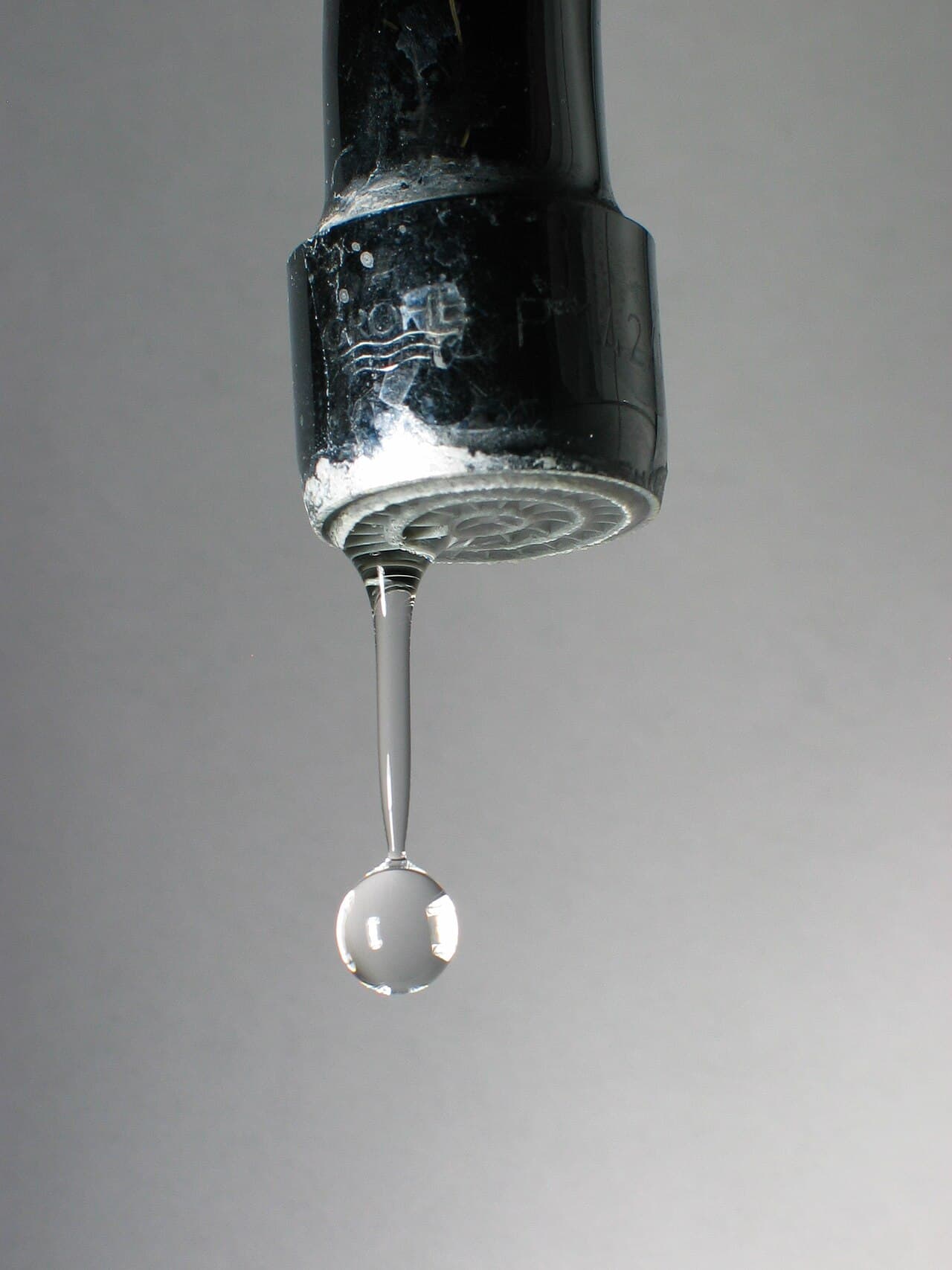
The drip is coming from the other side
On a two-handle faucet both sides feed one spout, so it is easy to fix the wrong one. Pfister's test settles it: with the faucet dripping, close only the cold shutoff; if the drip stops, the cold side is the one leaking. If it does not, close the hot shutoff instead. If neither valve alone stops it, both sides may need new parts.[3]
The new washer does not fit
Faucet washers come in many diameters and thicknesses, flat and beveled, and a near match often drips. Compare the new washer with the old one side by side, check that the washer screw holds it flat and centered, and replace a corroded screw rather than reusing it. A washer that is too thick can also keep the handle from closing fully.
The test for a good repair comes from the same USDA bulletin: "Moderate force on the handle of a faucet in good repair should stop all flow and drip."[1] If you have to lean on the handle, something is still wrong, and forcing it will flatten the new washer within weeks.
It is not a washer faucet
Not every faucet has a washer. Some faucets may need new o-rings, cartridges or ceramic discs, depending on the manufacturer.[4] Moen's guidance for its faucets is direct: "If a faucet is leaking water from the spout, the reason is usually the cartridge."[5] A two-handle faucet with quarter-turn handles is usually a cartridge or ceramic disc faucet even if it looks old-fashioned, and a washer kit will not help it.
Cartridges fail for reasons a new seal alone may not fix. Moen lists sediment or debris in the cartridge, mineral buildup or a damaged seal within the cartridge among the usual causes of a stiff handle,[7] and it recommends cleaning the valve body whenever a cartridge goes in, because this eliminates any mineral build-up and loose debris that may have accumulated inside the valve body.[8] See how to fix a dripping faucet for the cartridge swap.
Water from the handle, not the spout
If the spout is dry but water seeps from under the handle when the faucet is on, the washer at the bottom of the stem is not the problem. On a compression faucet, "A top washer or packing; snugly fitting the stem is necessary to prevent leakage upward through the cap nut when a faucet is opened." If too loosely packed, water spurts from the top of the cap nut.[1] Replace the packing or top washers under the cap nut. On a cartridge faucet, Moen notes that If a faucet is leaking water from the handle, the reason is usually the cartridge.[6]
Why it is worth chasing
A slow drip is easy to live with, but it adds up. EPA's WaterSense program estimates: "A leaky faucet that drips at the rate of one drip per second can waste more than 3,000 gallons per year."[10] On the hot side, you also pay to heat it.
Stop and call a pro if
- The seat is badly pitted, cracked or will not come out, and dressing it does not stop the drip.
- The stem threads or the faucet body threads are stripped, or the body is cracked.
- The shutoff valves under the sink will not close fully. Multi-turn shutoff valves close by forcing a rubber gasket onto a seat inside the valve,[9] and an old one can drip through just like the faucet.
- Water is showing under the sink or on a ceiling below. Virginia licenses plumbing work, and the Board for Contractors must require a master tradesman licence as a condition of licensure for plumbing contractors.[11]
If the faucet is past saving, should you repair or replace a leaky faucet helps you decide, and what a plumber charges to fix a leaky faucet covers the cost. You can also browse all plumbing repair answers or find plumbers in Blacksburg.
If the drip still will not stop, describe the faucet repair once and licensed local plumbers quote it.
Common questions
- What is a faucet seat?
- In a compression faucet, the seat is the brass ring at the bottom of the faucet body that the rubber washer presses down on when you close the handle. If the seat is nicked or grooved, water gets past even a brand-new washer.
- Can I fix a worn seat or do I need a new faucet?
- Usually you can fix it. Many seats unscrew and can be replaced with a matching one, and a seat that cannot be removed can be squared with an inexpensive seat dressing tool. A new faucet is only needed when the seat or body is too damaged to repair or parts are no longer made.
- Why does the hot side wear out first?
- A long-standing USDA plumbing bulletin notes that seat damage from a leaking washer and grit occurs more often in hot-water than in cold-water faucets. If both handles are old, it is worth checking the hot side first.
- Should I tighten the handle harder to stop the drip?
- No. A faucet in good repair should shut off with moderate force. Cranking the handle crushes the new washer against a damaged seat and wears it out quickly, so find the cause instead.
- My faucet only drips for a few seconds after I turn it off. Is that a leak?
- Often not. Water left in the spout can run out for a few seconds after the valve closes. A drip that continues for minutes, or starts again later, is a leak.
- What if my faucet has no washer at all?
- Then it is a cartridge, ball or ceramic disc faucet, and the drip is usually the cartridge or its seals. Moen says that when a faucet leaks from the spout, the reason is usually the cartridge. Replace it with the exact part for your model.
Sources
- [1] Simple Plumbing Repairs in the Home (Farmers' Bulletin No. 1460, revised 1936), U.S. Department of Agriculture, reproduced by Project Gutenberg. Checked October 26, 2026.
- [2] Cartridge Maintenance/Repair Guide, Chicago Faucets. Checked October 26, 2026.
- [3] My widespread bathroom faucet is leaking or dripping, Pfister. Checked October 26, 2026.
- [4] Check For Leaks, Loudoun Water. Checked October 26, 2026.
- [5] Bathroom Faucet: Dripping From The Spout, Moen. Checked October 26, 2026.
- [6] Bathroom Faucet: Leaking Around the Handle of the Faucet, Moen. Checked October 26, 2026.
- [7] Handle is difficult to operate, Moen. Checked October 26, 2026.
- [8] Valve Body Cleaning and Flushing, Moen. Checked October 26, 2026.
- [9] Oatey 101: Stops and Supply Lines, Oatey. Checked October 26, 2026.
- [10] Fix a Leak Week, U.S. Environmental Protection Agency, WaterSense. Checked October 26, 2026.
- [11] Code of Virginia § 54.1-1100. Definitions, Code of Virginia, Virginia General Assembly. Checked October 26, 2026.
Want a pro to handle it?
Describe the job once. Licensed local businesses send quotes, and you pay only when you book one.
Get a quote for Plumbing Repair