How do I keep faucets from leaking?
Close handles with moderate force, keep aerators clean, use only silicone grease on faucet seals, clean finishes with mild soap rather than harsh descalers, and check each faucet and the cabinet below it a few times a year. Replace a worn washer or cartridge at the first drip. On hard water, regular cleaning or softening slows the mineral wear that ruins seals.
Free to ask. Local shops send quotes, and you pay only when you book one.
By Kasra Taheri, Founder, LoclisPublished
Researched and drafted with AI, then checked claim by claim against the sources listed below before it was published. Prices and rules change; the dates beside each source say when it was last checked.
Step by step
Read when to stop and call a pro, further down this page, before you start.
Step 1: Close handles gently
Turn each handle off with moderate force; a faucet in good repair stops all flow and drip without cranking.[5]
Step 2: Listen and look
A few times a year, listen for drips with the faucet off and run the tap to check for water going the wrong direction.[4]
Step 3: Check under the sink
Look for pooling water under the pipes and rust around joints and edges, and dry any damp spot you find.[4]
Step 4: Snug the supply connections
Check that the supply tubing is secure at the shutoff valve and at the faucet, and replace tubing that still seeps once snug.[1]
Step 5: Clean the aerator
Unscrew the aerator, rinse or scrub out debris and mineral deposits with a small brush, and screw it back on.[8]
Step 6: Clean the finish gently
Wipe the faucet with a damp cloth and mild dish soap, rinse and dry it, and avoid lime scale removers and scouring pads.[9]
Step 7: Exercise the shutoffs
Once or twice a year, close and reopen each shutoff valve under the sink by hand so it still works when you need it.
Step 8: Fix the first drip
Replace a worn washer, O-ring or cartridge as soon as a drip starts, using parts made for your faucet's model.[1]
Faucets leak when their seals wear out, and most of what wears them out is avoidable: heavy-handed closing, mineral scale, grit, the wrong grease and harsh cleaners. Loudoun Water's leak guide sums up the cause: "Faucet leaks are usually caused by worn-out seals."[1] It also notes that Worn parts or loose water supply connections are common causes for faucet leaks.[1] A few habits and a twice-yearly check keep both in hand.
Close handles gently
The simplest habit matters most. A USDA plumbing bulletin gives the rule: "Moderate force on the handle of a faucet in good repair should stop all flow and drip."[5] On a compression faucet, cranking the handle shut crushes the rubber washer against the seat and shortens its life. On a cartridge or disc faucet, forcing the lever past its stop strains the cartridge. If a faucet only stops dripping when you lean on it, it needs a repair, not more force; see how to fix a dripping faucet.
Keep minerals and grit out
Where water is hard, it leaves scale. Virginia Cooperative Extension notes that Hard water can also produce a mineral scale on the inside of pipes, cookware, and plumbing fixtures.[6] Inside a faucet, that scale and the grit that rides with it wear seals. Moen lists sediment or debris in the cartridge, mineral buildup or a damaged seal within the cartridge as the usual causes of a stiff handle,[7] which is often the first sign a cartridge is on its way out.
The aerator on the spout is the easiest place to keep clean. Moen notes: "Over time, aerators can accumulate debris and mineral deposits, which can restrict water pressure or distort the spray pattern."[8] Most unscrew by hand: an aerator with threads on the outside of its shell unscrews clockwise, and one with threads on the inside unscrews counter-clockwise.[8] Concealed aerators need the small key that came with the faucet. Rinse the screens, scrub off scale with an old toothbrush, and refit it. How to clean a clogged faucet aerator has the detail, and how to keep faucets free of mineral buildup covers descaling.
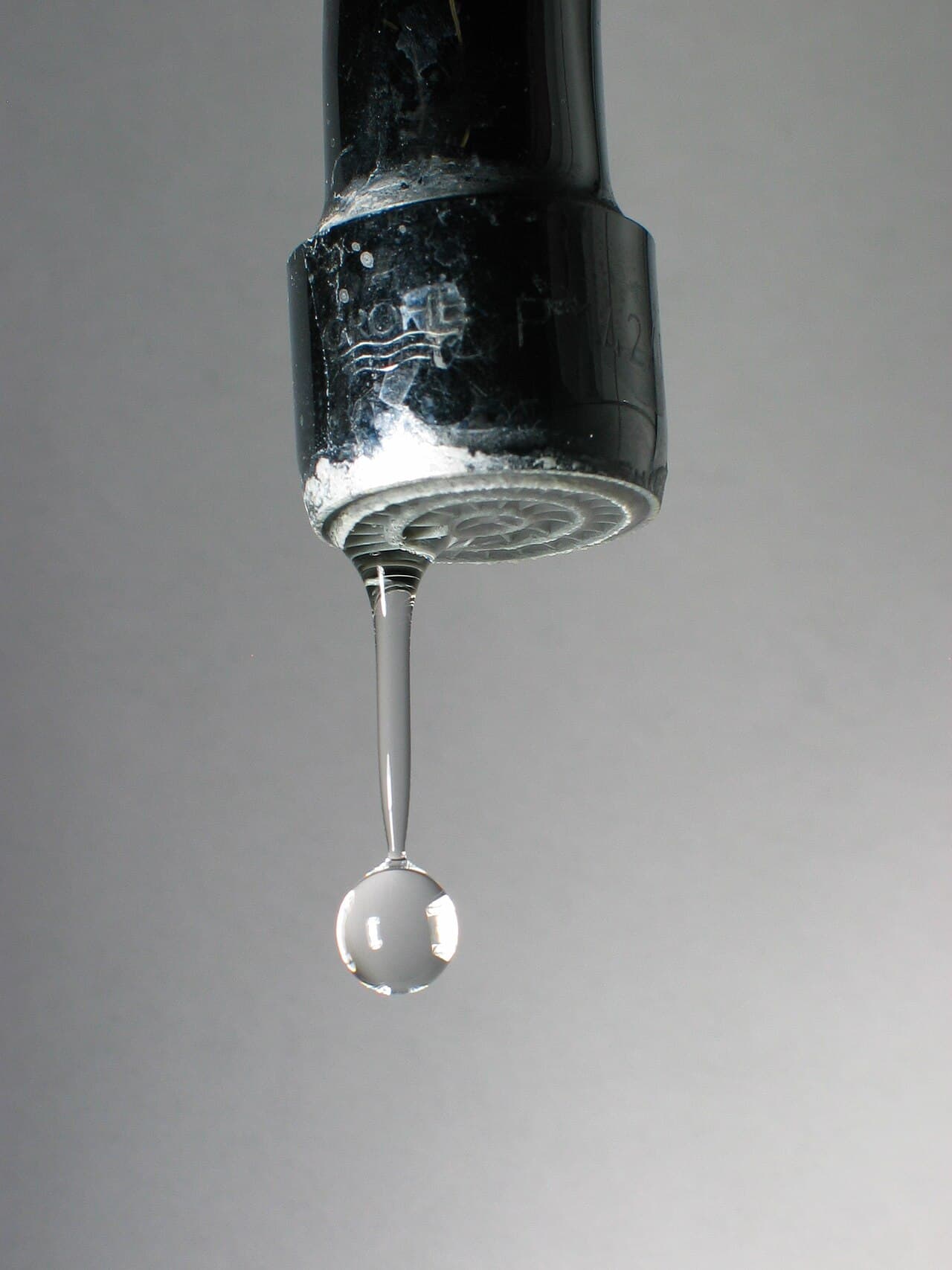
Clean the outside without harming it
Harsh cleaners can damage a faucet's finish. For most of its finishes Moen recommends a damp cloth and mild liquid dishwashing soap, followed by rinsing with water and drying with a soft cloth, and says: "Avoid using any harsh cleansers (e.g., lime scale removers) or pads/sponges that are unsafe for polished metallic surfaces."[9] For dried water spots, Moen allows A 50/50 blend of household vinegar and water, rinsed off afterward.[9] It matters for the warranty too: Moen's lifetime limited warranty excludes damage from cleaners containing abrasives, alcohol, or other organic solvents.[10]
Use the right grease when the faucet is apart
When you service a faucet, grease its seals with silicone grease and nothing else. For one-handle faucets with a 1225 cartridge, Moen has you remove the cartridge and lubricate it inside and out with a silicone-based grease, and it warns: "Petroleum-based lubricants may react with the rubber seals and could cause the handle to become even more difficult to operate."[7] Other cartridges are replaced rather than greased, so check the maker's instructions for your model.
Check every faucet a few times a year
EPA's WaterSense leak checklist makes this quick. For bathroom faucets: "Faucets: Listen for drips and turn on the tap to check for water going the wrong direction." And for every sink: "Under the sink: Check for pooling water under pipes and rust around joints and edges."[4] Loudoun Water adds two jobs: "Periodically replace worn fittings, washers, gaskets and aerators inside the faucet," and check that the supply tubing is secured tightly at the wall and the faucet, and if that does not stop the leak, the tubing may need to be replaced.[1]
Pick a date so it happens. EPA's annual Fix a Leak Week, which in 2026 ran March 16 through 22,[3] is a good one. Looking under sinks matters as much as watching spouts: Loudoun Water warns that hidden leaks can cause significant water damage to walls and ceilings if not identified quickly.[1] How to check your house for leaks once a year covers the rest of the house.
Fix the first drip
A drip is the cheapest point to act. Richmond's Department of Public Utilities puts it simply: "Tightening connections or replacing washers can often stop the leak."[2] Waiting lets grit cut the seat of a compression faucet and lets scale build up in a cartridge, which turns a washer job into a seat or cartridge job.[5]
Keep the shutoff valves working
The valves under the sink are what make a faucet repair easy, and valves that never move can seize. Open and close each one by hand once or twice a year. Pfister advises that if your stops won't turn by hand, you can carefully use a wrench to get them moving, then finish turning them by hand,[12] rather than forcing them all the way. Multi-turn valves tighten a rubber gasket onto a seat inside the valve, while quarter-turn valves pivot a ball with a hole through it.[11] An old multi-turn valve that drips at its stem or will not close fully is worth replacing before it fails during a repair.
Treat hard water if it is causing trouble
Not every home needs a softener. Virginia Cooperative Extension says that generally, water hardness levels less than 7.0 gpg or 120 mg/L do not require treatment, and treatment is only necessary when the hardness level is causing a problem for the homeowner.[6] Test first: The Virginia Household Water Quality Program maintains a list of certified laboratories. If the result is high and scale is a problem, "The most common way to treat hard water is through ion exchange water softening." Be wary of magnetic or electronic descalers; Extension notes that no recognized agency in the United States has established protocol to assess the effectiveness of physical water treatment devices.[6] See do you need a water softener in Virginia.
Stop and call a pro if
- Water is pooling in the cabinet, or there are stains or soft spots under the sink or on a ceiling below.
- A shutoff valve will not close, or leaks at its stem once moved.
- The faucet body or spout is cracked or corroded, or the faucet leaks from several places at once.
- A new washer or cartridge has not stopped the drip; see why a faucet still drips after a new washer.
For when a repair stops making sense, see should you repair or replace a leaky faucet. You can also browse all plumbing repair answers or find plumbers in Blacksburg.
If a faucet has started to leak, describe the repair once and licensed local plumbers quote it.
Common questions
- How often should I check my faucets for leaks?
- A quick look a few times a year is enough for most homes: listen for drips, run each tap, and look under each sink for pooling water or rust. EPA's annual Fix a Leak Week each March is an easy reminder to do the whole house at once.
- Does turning the handle off hard stop leaks?
- No, it causes them. A faucet in good repair shuts off with moderate force. Cranking a compression faucet's handle crushes the washer against its seat, and forcing a cartridge faucet's lever past its stop can strain the cartridge.
- Can hard water make faucets leak?
- It can contribute. Virginia Cooperative Extension notes that hard water leaves mineral scale in plumbing fixtures, and Moen lists mineral buildup and debris among the causes of cartridge trouble. Cleaning aerators and finishes regularly, and softening the water where hardness is high, slows that wear.
- What should I use to clean a faucet?
- A damp cloth with mild dish soap, then a rinse and a dry with a soft cloth. Moen warns against harsh cleansers such as lime scale removers and against pads that can scratch metal finishes, and allows a 50/50 vinegar and water mix for water spots. Moen's warranty excludes damage from cleaners containing abrasives, alcohol or other organic solvents.
- Should I grease my faucet?
- Only with the right grease and only when the faucet is apart for service. Moen recommends a silicone-based grease on its cartridges and warns that petroleum-based lubricants can react with the rubber seals.
- Do I need a water softener to protect my faucets?
- Not necessarily. Virginia Cooperative Extension says hardness below 7.0 grains per gallon generally does not need treatment, and treatment is only necessary when hardness causes a problem. Test the water first; see our answer on whether you need a water softener in Virginia.
Sources
- [1] Check For Leaks, Loudoun Water. Checked October 26, 2026.
- [2] Fix A Leak Week: Simple Steps to Save Water and Money, City of Richmond Department of Public Utilities. Checked October 26, 2026.
- [3] Fix a Leak Week, U.S. Environmental Protection Agency, WaterSense. Checked October 26, 2026.
- [4] Detect and Chase Down Leaks at Home (10 Minute WaterSense Challenge), U.S. Environmental Protection Agency, WaterSense. Checked October 26, 2026.
- [5] Simple Plumbing Repairs in the Home (Farmers' Bulletin No. 1460, revised 1936), U.S. Department of Agriculture, reproduced by Project Gutenberg. Checked October 26, 2026.
- [6] Virginia Household Water Quality Program: Hard Water (Publication 442-664), Virginia Cooperative Extension. Checked October 26, 2026.
- [7] Handle is difficult to operate, Moen. Checked October 26, 2026.
- [8] Faucet Aerator Cleaning, Moen. Checked October 26, 2026.
- [9] Faucet Finish Care and Cleaning, Moen. Checked October 26, 2026.
- [10] Lifetime Limited Warranty, Moen. Checked October 26, 2026.
- [11] Oatey 101: Stops and Supply Lines, Oatey. Checked October 26, 2026.
- [12] My widespread bathroom faucet is leaking or dripping, Pfister. Checked October 26, 2026.
Want a pro to handle it?
Describe the job once. Licensed local businesses send quotes, and you pay only when you book one.
Get a quote for Plumbing Repair