Why does my snow blower run rough or surge?
A snow blower that runs rough or surges is most often running on stale fuel that has gummed the carburetor. Check the choke, make sure the fuel valve is fully open, drain old gas and refill with fresh gasoline under 30 days old, then check the plug wire, spark plug gap and oil level. If it still surges, have the carburetor cleaned.
Free to ask. Local shops send quotes, and you pay only when you book one.
By Kasra Taheri, Founder, LoclisPublished
Researched and drafted with AI, then checked claim by claim against the sources listed below before it was published. Prices and rules change; the dates beside each source say when it was last checked.
Step by step
Read when to stop and call a pro, further down this page, before you start.
Step 1: Stop and make it safe
Shut off the engine, let it cool, and pull the spark plug wire before you reach into the machine.[5]
Step 2: Check the choke
Move the choke to the Off position once the engine is warm.[2]
Step 3: Open the fuel valve
Make sure the fuel shutoff valve is completely open.[2]
Step 4: Judge the fuel
If the tank is nearly empty or holds stale fuel, drain it and refill with fresh gasoline not more than 30 days old.[2]
Step 5: Check the plug wire
Push the spark plug wire on firmly if it is loose.[2]
Step 6: Inspect the spark plug
Look for a pitted, fouled or cracked plug and an incorrect gap; adjust the gap or replace the plug.[2]
Step 7: Check the oil level
Bring the oil to the Full mark on the dipstick, adding or draining as needed.[2]
Step 8: Remove a carburetor heater box if it is warm
If the air temperature is above 40 degrees F, take off a carburetor heater box if your machine has one.[2]
Step 9: Run it again
Restart the engine outdoors and listen for the rough running or surging to settle.
The short answer
A snow blower that runs rough or surges is, most often, running on fuel that has gone bad. Briggs & Stratton puts it plainly: "Stale fuel, dirt, and debris are the most common cause of outdoor power equipment not starting or running properly."[1] Work through the cheap causes in order: choke, fuel valve, fuel, plug wire, spark plug and oil level. If none fixes it, the carburetor is the next suspect and that is a shop job for most owners.
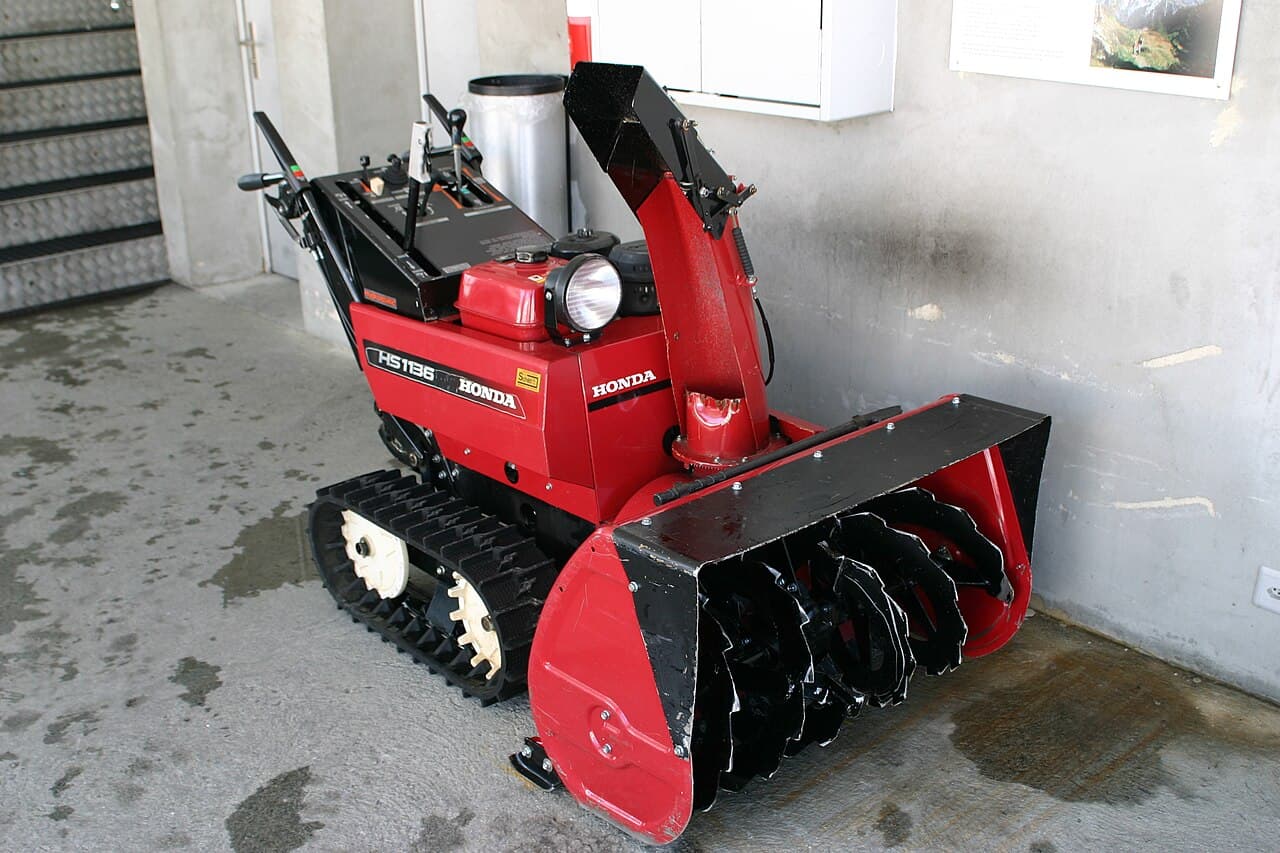
Why surging happens
Surging, where the engine speeds up and slows down on its own, is what an engine does when fuel reaches it unevenly. Old gas leaves gum in the carburetor jets, so the engine alternately starves and floods. "A dirty carburetor can cause poor engine performance or starting problems."[1] Gas does not need to sit long: "Stale, untreated gas begins to break down after about a month."[1] A machine that was put away in March with a half tank has had seven months to do it.
Ethanol makes the problem worse. Penn State Extension notes that "Gasoline is not water soluble, but ethanol is."[4] Honda warns that "Use of fuels with content of ethanol or methanol greater than stated above may cause starting and/or performance problems,"[3] and Toro tells owners not to use "gasohol containing more than 10% ethanol."[2] Check what the pump label says before you blame the machine.
What to check, in order
Toro's troubleshooting table for "Engine runs rough" lists the causes in the order worth trying them.[2]
Choke. "The choke is in the On position."[2] Once the engine has warmed, move it to Off. A choke left on makes an engine run rich, rough and smoky.
Fuel valve. "The fuel shutoff valve is not completely open."[2] A half-open valve restricts flow and can cause surging under load.
Fuel. Toro's fix for a nearly empty tank or stale fuel is to "Drain and fill the fuel tank with fresh gasoline (not more than 30 days old)."[2] Briggs & Stratton adds that you should drain "any fuel in the carburetor float bowl" too, then refill with fresh gas and stabilizer.[1] Use an approved gasoline container and work outdoors.
Plug wire and spark plug. The wire should sit firmly on the plug. Toro lists "The spark plug is pitted, fouled, or the gap is incorrect."[2] Briggs & Stratton notes that "An improper spark plug gap could lead to engine knocking and poor performance."[1] Check the gap against your manual and replace a cracked or fouled plug.
Oil level. "The engine oil level in the engine crankcase is too low or too high."[2] Overfilled oil can also produce smoke, and Briggs & Stratton lists a dirty air filter, bad fuel, overfilled oil and a flooded carburetor as the causes of black exhaust smoke.[1]
Carburetor heater box. Some Toro machines carry a heater box for cold weather, and Toro says to remove it when "The air temperature is above 40°F (4°C)."[2] Skip this if your machine does not have one.
Do these first, safely
Stop the engine before you touch anything near the auger or chute. The Consumer Product Safety Commission warns that "Most snow thrower injuries happen when consumers try to clear snow from the discharge chute or debris from the auger/collectors."[5] Disconnect the spark plug wire for any work at the engine, and when you test run the machine, do it outdoors: "Never leave the machine running in an enclosed area."[5]
If it still runs badly
If fresh fuel, a good plug and the right oil level do not fix it, the carburetor is probably gummed up and needs cleaning or a rebuild. That is quick work for a small engine shop, and what it costs is covered in how much snow blower repair costs in Virginia. On an older machine, is it worth repairing an old snow blower helps you decide between a repair and a replacement. If the engine runs fine but the augers do not turn, see how to replace snow blower shear pins.
Stop and call a pro if
- You smell raw gas or see fuel leaking from the tank, lines or carburetor.
- The engine still surges after fresh fuel, a good plug and the right oil level. The carburetor likely needs cleaning or rebuilding.
- Black smoke or oil in the exhaust keeps coming back after you correct the oil level.
- The engine knocks or loses power under load, which can point at internal wear.
- The recoil starter or governor looks damaged. Toro warns owners not to change governor settings.[2]
Getting help in Virginia
Browse more small engine repair answers, look at local small engine repair pros, or describe your snow blower and local shops can quote it, ideally in writing, before the machine gets busy in the first snowfall.
Common questions
- Why does my snow blower surge?
- Usually uneven fuel delivery, most often from stale fuel that has left gum in the carburetor. Briggs & Stratton says stale fuel, dirt and debris are the most common cause of outdoor power equipment not running properly. Fresh gasoline is the first fix to try.
- How old is too old for snow blower gas?
- Toro tells owners not to use gasoline more than 30 days old, and Briggs & Stratton says untreated gas starts to break down after about a month. Honda says fuel can deteriorate in as little as 30 days.
- Can ethanol gas make a snow blower run rough?
- It can. Honda says fuel with more ethanol than its stated limit may cause starting or performance problems, and Toro tells owners not to use gasohol containing more than 10 percent ethanol.
- Should the choke stay on while it runs?
- No. Toro's table lists a choke left On as a cause of rough running and says to move it to Off once the engine has warmed.
- Is it safe to clear the chute while it surges?
- No. The CPSC says to stop the engine and use a long stick to unclog wet snow and debris, and never to use your hands.
Sources
- [1] Small Engine Problem Solving Tips, Briggs & Stratton. Checked October 28, 2026.
- [2] 622 Power Throw Snowthrower Operator's Manual (Form No. 3326-370), The Toro Company. Checked October 28, 2026.
- [3] Snow blower owner's manual, American Honda Motor Co., Honda Power Equipment. Checked October 28, 2026.
- [4] Fuel Ethanol: Hero or Villain?, Penn State Extension. Checked October 28, 2026.
- [5] Snow Thrower Safety (Publication 5117), U.S. Consumer Product Safety Commission. Checked October 28, 2026.
Want a pro to handle it?
Describe the job once. Licensed local businesses send quotes, and you pay only when you book one.
Get a quote for Small Engines