Why is my automatic pool cover not closing?
Usually something is in the way or the cover is under strain: debris or a hose in the track, water sitting on the cover, a pool water level below the middle of the skimmer opening, or a tripped breaker or GFCI. Release the switch, clear the obvious cause, reverse a foot or two and retry. If it stops again, call the installer.
Free to ask. Local shops send quotes, and you pay only when you book one.
By Kasra Taheri, Founder, LoclisPublished
Researched and drafted with AI, then checked claim by claim against the sources listed below before it was published. Prices and rules change; the dates beside each source say when it was last checked.
Step by step
Read when to stop and call a pro, further down this page, before you start.
Step 1: Release the switch
If the cover hesitates or stops before it reaches the end of the pool, release the key switch at once and investigate rather than holding it down.[1]
Step 2: Look for something in the way
Dirt, debris, or obstacles like towels or hoses can stop the cover, so check the cover path and the tracks.[1]
Step 3: Check the pool water level
Confirm the water is at the middle of the skimmer opening, because a low level makes the cover run under stress.[1]
Step 4: Remove water from the cover
Pump or sweep off standing water, since water on the cover is a listed cause of a cover that will not move.[1]
Step 5: Check the breaker and GFCI
Reset a tripped circuit breaker or GFCI once.[1] If it trips again, leave it off and call a pro.
Step 6: Free a stuck cover edge
If the cover seems stuck to the deck, lift the fabric gently along the edge to break the suction, as the maker's guide describes.[1]
Step 7: Reverse and retry
Reverse the cover a foot or two and try to close it again.[1]
Step 8: Rinse the tracks
With the cover retracted, hose out the tracks and the pulley housings at the track ends.[1]
The short version: clear the path, check the water, then call
An automatic cover that stops or will not close is nearly always telling you about friction or load. The common culprits are debris in the track, water sitting on the cover, a pool that is too low, a tripped breaker or a stuck edge. You can check all of those safely from the deck. Anything involving the motor, wiring, ropes or a pulley belongs to the installer.
When the cover stalls, do not hold the switch. The manufacturer's guidance is that if the cover hesitates or stops before it reaches the end of the pool, you should immediately release the switch and investigate the problem.[1]
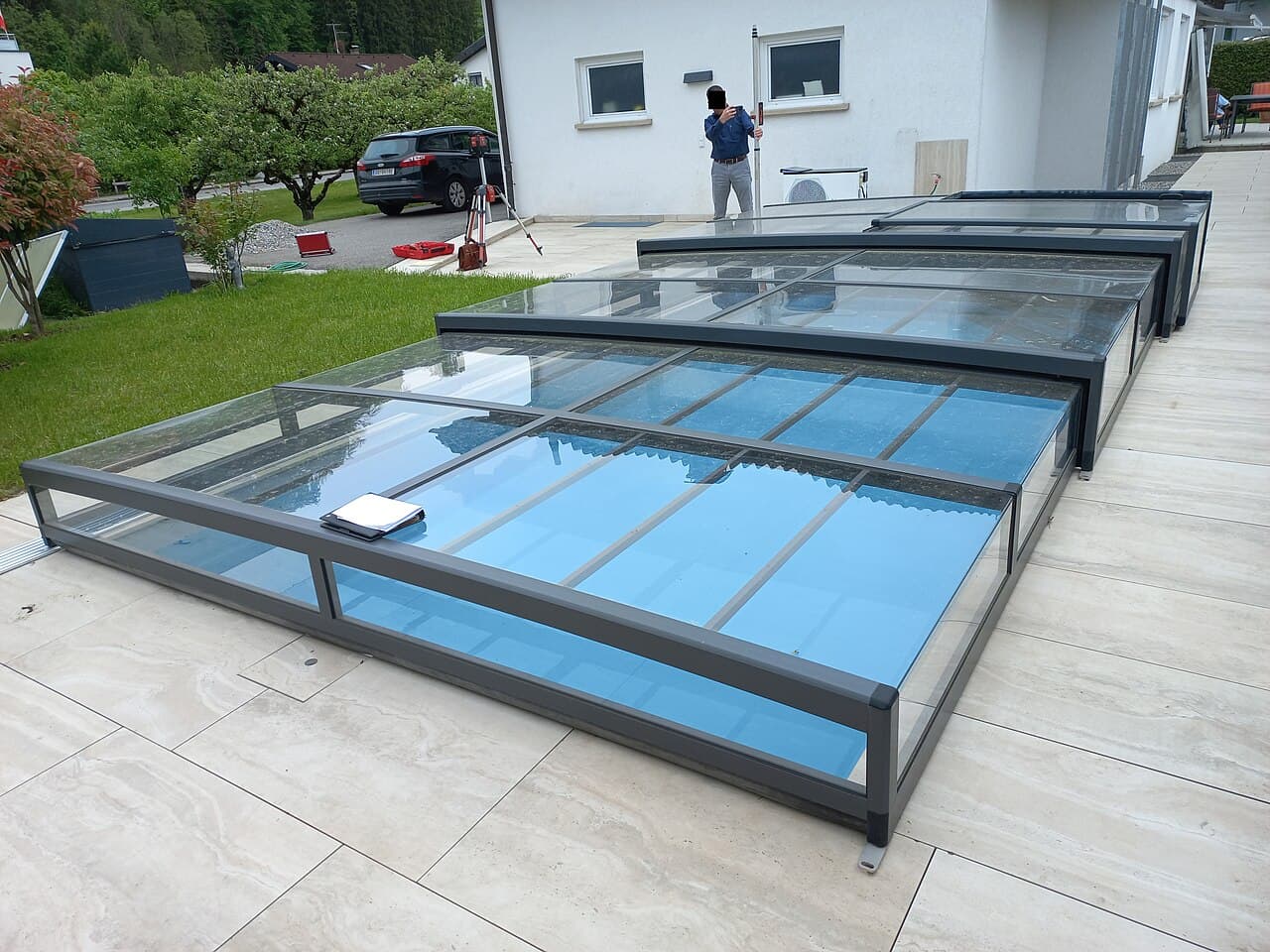
Look for what is in the way
Sometimes dirt, debris, or obstacles like towels or hoses can stop the cover.[1] Walk the length of the pool and check the cover path, the rails along each side and the gap where the cover leaves its housing. A pool toy or a skimmer pole under the leading edge is more common than any mechanical failure.
Then try the manufacturers' own trick. One says to remove any excess water or debris and try reversing the direction;[2] the other says you should reverse the direction of the cover a foot or two and then retry to cover the pool.[1] If it moves, carry on. If it will not move further in the intended direction, the Cover-Pools manual says to call your service technician.[2]
Check the water, on and under the cover
Two water problems cause a lot of stalls.
Water under the cover is too low. One manufacturer says to maintain the water level at the middle elevation of the skimmer opening, and that if the water drops below this level, the cover may operate under stress.[1] After a dry spell or a lot of backwashing, top the pool up first.
Water on top of the cover. The same troubleshooting chart lists "Water on cover" as a reason the cover will not move forward or reverse.[1] A small submersible pump or a broom clears it. Do not run the cover over a heavy pool of water.
A third symptom looks similar: "Cover adhering to deck" is also on the list.[1] After a wet spell or a hot day, the fabric can stick to the coping. Lifting the edge of the fabric a little to let air under it usually breaks the grip.
Power: a breaker or GFCI that has tripped
The chart's first cause of a cover that will not move is that the circuit breaker or GFCI is tripped.[1] A GFCI must be used in the electrical supply line for the motor,[1] so a trip can mean there is water in the wrong place. Resetting once is reasonable. A second trip means leave it off and call a technician. Resetting again and again only masks the fault.
Tracks and housings
Dirt in the tracks is the quiet cause of slow, noisy or stalled covers. The guide notes that in windy and dusty areas with blowing dirt, covers may become inoperable until the debris has been hosed from the tracks.[1] "Debris in housing" is also listed as a cause of a cover running under strain.[1] With the cover retracted, rinse the tracks and the pulley housings at the end of the tracks, and keep leaves out of the housing.
What to leave to the installer
The mechanism is heavy and wired to the pool's power. The guide itself warns: "Disconnect the breaker first if you attempt to service any movable part of the cover system."[1] Its own approach is that a cover that will not retract or extend may need the torque limiter adjusted,[1] but a limiter that keeps slipping means something is wrong elsewhere, usually a worn pulley or a binding rope. Uneven ropes, frayed webbing and a motor that hums without moving all call for a service visit. If the cover is not working you also have no safety barrier, and the CPSC's advice is to maintain pool and spa covers in good working order.[3]
Stop and call a pro if
- The breaker or GFCI trips again after one reset.
- The cover stalls in the same spot after you have cleared the track and tried reversing.
- The motor hums, grinds or runs but nothing moves.
- Ropes, webbing or pulleys look frayed, worn or uneven.
- Water has got into the housing or the mechanism area.
- A fix would mean opening the housing, touching wiring or working on the mechanism.
Getting help in Virginia
For torn fabric, see how to repair a torn mesh pool cover, and for budgeting a service call read what pool cover repair costs in Virginia. Browse more pool and spa answers or pool maintenance pros near you.
When you want someone to look at it, describe the problem and local pros will quote it.
Common questions
- Why does my automatic cover stop partway across the pool?
- Most often something is in the path or the cover is dragging. One manufacturer's guide says dirt, debris, or obstacles like towels or hoses can stop the cover.[^coverstar] Release the switch, clear the path, reverse a foot or two and retry. If it stops again in the same place, that points to a track, pulley or rope problem for the installer.
- Does the pool water level affect whether the cover closes?
- Yes. One manufacturer says to keep the water at the middle elevation of the skimmer opening, and that below this level the cover may operate under stress.[^coverstar] Top up the pool before running the cover.
- The cover is dead and nothing moves. What do I check first?
- The power. The same troubleshooting chart lists a tripped circuit breaker or GFCI first.[^coverstar] A GFCI is required in the motor's supply line,[^coverstar] so a trip can be the system doing its job. Reset it once. If it trips again, stop and have a technician look.
- Can I adjust the torque limiter myself?
- The maker's guide describes the adjustment for a cover that will not retract or extend,[^coverstar] but it is also a safety device that protects the motor from a worn pulley or other trouble. Overtightening it hides the cause. Unless your installer has shown you how, call them.
- Is it safe to keep using the cover while it is stuck?
- Do not keep forcing it. The guide tells you to release the switch at once and investigate.[^coverstar] Until it is fixed, a pool with a half-closed cover is not a barrier, so keep the fence gates latched and children away from the water.
Sources
- [1] Automatic Safety Pool Cover Use & Care Guide, Latham Pool Products (Coverstar), manufacturer's guide. Checked October 27, 2026.
- [2] T3 Evo owner's manual, Auto-Shutoff Operation, Cover-Pools Incorporated (manufacturer's manual). Checked October 27, 2026.
- [3] Safety Barrier Guidelines for Residential Pools: Preventing Child Drownings (Publication 362), U.S. Consumer Product Safety Commission. Checked October 27, 2026.
Want a pro to handle it?
Describe the job once. Licensed local businesses send quotes, and you pay only when you book one.
Get a quote for Pool Equipment