Why is my new fireplace not drawing well?
A new fireplace usually draws poorly because of its design, not dirt. Common causes are a chimney that runs up an outside wall and cools, a chimney that is too short or has bends, and a house pulling air the wrong way through exhaust fans or leaky ducts. If it spills smoke, close the glass doors, let the fire die out and call the installer.
Free to ask. Local shops send quotes, and you pay only when you book one.
By Kasra Taheri, Founder, LoclisPublished
Researched and drafted with AI, then checked claim by claim against the sources listed below before it was published. Prices and rules change; the dates beside each source say when it was last checked.
This is a job for a licensed pro in Virginia
This page explains what the work involves, the permits, what a licensed pro does and what drives the cost. It does not give step-by-step instructions, because this work needs a licence, a permit or both, and doing it wrong can injure someone. Before you hire, check the licence on Virginia's DPOR record.
A new fireplace that smokes, or spills cold air and odors when it is not in use, usually has a design problem, not a dirty flue. The usual causes are where the chimney sits, how tall it is, how many bends it has, and whether the house is pulling air the wrong way. The most common fireplace problems are difficult and expensive to correct after the fireplace is installed, so the installation design stage is critical to success.[1] This is a job for the licensed contractor who installed it, not a DIY fix.
What draft is, and why a new fireplace can lose it
Draft is the pressure difference that pulls air through the fireplace and up the chimney. It gets stronger when the exhaust is hotter and when the chimney is taller.[1] In a well-designed system there tends to be a low level of draft present during the heating season even when the fireplace is not in use, because the room-temperature air inside the chimney is warmer than the outdoor air and so it rises.[1] Without that standby draft, chimney flow can reverse, spilling foul odors and cold air from an unused fireplace.[1]
A cold chimney is the usual starting point. If you light a fire in a fireplace that is backdrafting, smoke will flow into the room instead of up the chimney.[1]
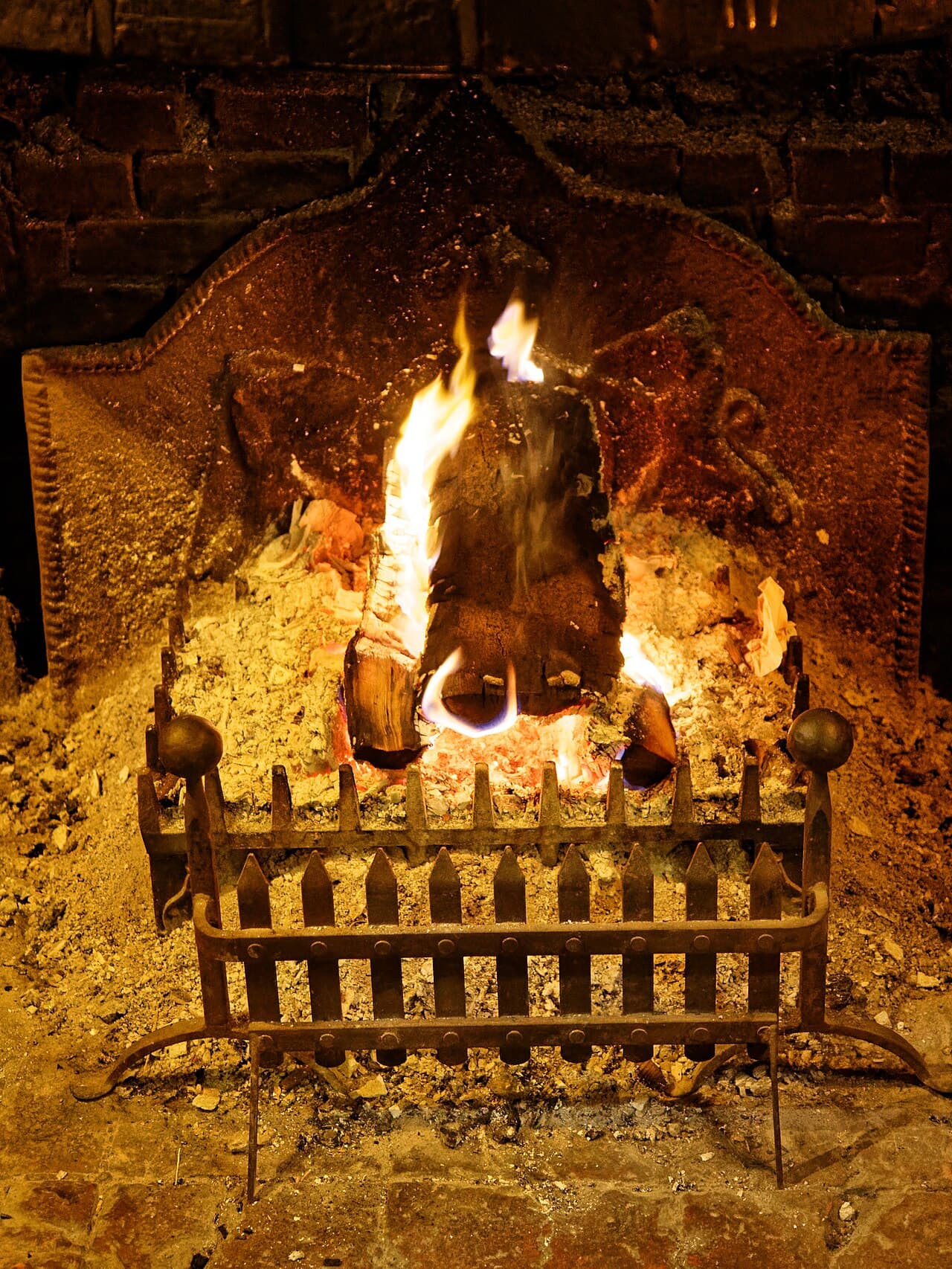
The common causes
The chimney is outside the warm part of the house. Locating a fireplace and its chimney in a chase projecting outside the building envelope is one of the main causes of complaints about fireplaces that spill odors and cold air when not in use and smoke when a fire is lit.[1] Even if the chase is sealed and insulated, the air in a chimney in an outside chase tends to cool gradually to below room temperature, and as the chimney temperature falls, draft declines along with it.[1] The cure DuraVent describes is to install chimneys through the warm space enclosed by the building envelope, which for most house designs means on an interior wall rather than a perimeter wall.[1]
The chimney is too short. To produce enough standby draft, a chimney must be as tall as the highest part of the building envelope.[1] A chimney installed in a single-story section of a two-story house, or low on the eaves of a house with a vaulted ceiling, can suffer cold backdrafting.[1] Factory-built fireplaces are normally approved for minimum system heights in the 14- to 15-foot range, but taller systems than this are preferable for good performance, particularly for fireplaces with generous hearth openings relative to chimney diameter.[1] For fireplaces with large openings or more than one open side, such as see-through or corner fireplaces, a system height of at least 20 feet is preferable.[1]
There are bends in the chimney. Each elbow or offset in a venting system creates turbulence in the flue gas stream and therefore presents resistance to flow.[1]
The house is pulling air the wrong way. Negative pressure inside the house works against the upward flow in a chimney. The three most common causes of it are stack effect, exhaust fan effects and air circulation system imbalances.[1] A large exhaust, such as a downdraft kitchen barbecue fan, can drop the pressure inside a tightly constructed house enough to spill smoke into it.[1] Leaking ducts and air handlers located outside the building envelope in attics or crawl spaces are common causes too, and so are unbalanced supply and return airflows.[1] The fixes include avoiding large exhaust fans in houses with wood-burning equipment, or compensating for the air they exhaust with roughly equal make-up air brought in from outdoors.[1]
Cap and wind. Even where venting problems are assumed to be wind-related, replacing the standard chimney cap with one of specialized design should only be done with the approval of the fireplace manufacturer.[1] The supplied cap should never be replaced or left off for aesthetic or other reasons, and decorative shrouds for chimney tops should never be used unless listed by the fireplace manufacturer.[1]
An open hearth with no glass doors. Open fireplaces are particularly vulnerable to smoke spillage, and most new homes do not provide enough natural leakage to supply the large amount of air that an open fireplace consumes.[1] Spillage resistance is increased significantly when glass doors put the main flow restriction on the room side of the fire.[1]
The one thing you can do right away
If smoke spills into the room, the quickest and most effective way to stop the spillage is to close the glass doors.[1] If the fireplace has none, let the fire die out and leave the rest to the installer.
Do not modify the chimney, cap or flue yourself. For a factory-built fireplace, the installation instructions provided by the fireplace manufacturer take precedence,[1] and chimney height limits in them should be followed precisely.[1]
What to tell the installer
A good diagnosis starts with facts you can write down:
- whether it smokes when lit, spills cold air or smells when not in use, or both
- which exhaust fans (kitchen range, bath, dryer) were running at the time, and whether opening a window changes it
- whether it is worse in cold weather, in wind, or on the second fire of the day
- where the chimney comes out of the roof, and whether it runs up the outside of the house in a chase
Ask the contractor to compare the installed system with the fireplace manufacturer's instructions: chimney height, offsets, clearances and the cap. If the installation does not match them, that is a warranty and workmanship conversation. Fixes for a short or poorly routed chimney can mean adding sections, which changes roof work and sometimes needs a permit. A permit is required when installing a prefabricated fireplace, according to Prince William County's fire department, citing the Virginia Uniform Statewide Building Code,[2] so ask whether the change needs one, and read do I need a permit to install a fireplace or wood stove in Virginia. For cost drivers, see how much it costs to install a fireplace in Virginia, and for the build itself, what installing a wood-burning fireplace involves.
When to call a licensed pro
For the whole job. Diagnosing draft means measuring a chimney, checking the house pressure and often working on the roof, and the repair may involve the chimney, framing or the cap. The Board for Contractors says that if the work you are considering is valued at $1,000 or more, a valid Virginia Contractor's License is required for the license category in which the contractor is to work.[3] Start with the business that installed the fireplace, and check the licence of anyone you hire to fix it.
Loclis lists DPOR-licensed businesses with their licence number and class. Browse chimney and fireplace services or see all chimney and fireplace answers.
Describe the draft problem once and local licensed businesses quote it.
Common questions
- Why does smoke come into the room when I light my new fireplace?
- Usually the chimney is cold or the house is under negative pressure, so air flows down the flue instead of up. Chimneys in outside chases, short chimneys, offsets, running exhaust fans and leaky ducts are the usual causes. Close the glass doors, let the fire out and call the installer.
- Why does my fireplace smell or feel cold when it is not in use?
- That is a loss of standby draft. Without it, chimney flow can reverse, spilling foul odors and cold air from an unused fireplace. A chimney that is not as tall as the highest part of the house, or that runs outside the warm space, is the usual reason.
- Can a kitchen exhaust fan make my fireplace smoke?
- Yes. A large exhaust fan can drop the pressure inside a tightly built house below the pressure outside, which competes with the upward flow in the chimney. DuraVent says to avoid large exhaust fans in houses with wood-burning equipment or supply roughly equal make-up air from outdoors.
- Will glass doors fix a fireplace that smokes?
- They often help a great deal. DuraVent says closing the glass doors is the quickest and most effective way to stop spillage, and that all fireplaces should have them. They do not fix a chimney that is too short or in the wrong place.
- Should I change the chimney cap to improve the draft?
- Not without the fireplace manufacturer's approval. The standard cap supplied with a factory-built fireplace should not be replaced or left off, and decorative shrouds should not be used unless the manufacturer lists them.
- Is my new fireplace still under warranty if it will not draw?
- That depends on your contract and the manufacturer's terms, which this page cannot see. Ask the installer to compare the work with the fireplace manufacturer's installation instructions, and keep your contract and the permit paperwork.
Sources
- [1] Best Practices for Woodburning Fireplace Installation, DuraVent (with the Hearth, Patio and Barbecue Association Technical Committee). Checked October 28, 2026.
- [2] When Using Alternative Home Heating Systems - Use Wisely & Safely, Prince William County Department of Fire and Rescue. Checked October 28, 2026.
- [3] What You Should Know Before You Hire a Contractor, Virginia Board for Contractors, DPOR. Checked October 28, 2026.
Want a pro to handle it?
Describe the job once. Licensed local businesses send quotes, and you pay only when you book one.
Get a quote from a local pro