Do I need a permit for a fence in Virginia?
Usually not a building permit: Virginia's building code exempts fences of any height unless the fence is a swimming pool barrier or is required for pedestrian safety. Local zoning still applies, though. Your county or city sets height limits, and some, such as Prince William County and Virginia Beach, require zoning approval or a zoning permit before you build.
Free to ask. Local shops send quotes, and you pay only when you book one.
By Kasra Taheri, Founder, LoclisPublished
Researched and drafted with AI, then checked claim by claim against the sources listed below before it was published. Prices and rules change; the dates beside each source say when it was last checked.
Step by step
Read when to stop and call a pro, further down this page, before you start.
Step 1: Find who regulates your lot
Note whether you are in a town, a city or a county's unincorporated area, since that office's zoning rules are the ones that apply.
Step 2: Check the height limits
Look up the front, side and rear yard limits; Fairfax County, for example, caps most front-yard fences at four feet.[2]
Step 4: Check for a pool or safety barrier
If the fence will enclose a pool or serve as a pedestrian safety barrier, apply for a building permit as well.[1]
Step 5: Check easements and covenants
Read your plat and deed for easements, and your HOA rules if you have them, before you set the line.
In most of Virginia you do not need a building permit for an ordinary fence, but you may still need a zoning permit or zoning approval, and you always need to stay within your locality's height limits. The building permit exemption has two exceptions: a fence that is a swimming pool barrier, and a fence required for pedestrian safety. Before anyone digs, a Virginia 811 locate request is required by law.
What the state building code says
The Virginia Uniform Statewide Building Code lists "Fences of any height unless required for pedestrian safety as provided for by Section 3306 or used for the barrier for a swimming pool" among the work that needs no permit application or inspection.[1] That covers a backyard privacy fence, a picket fence or a chain-link dog run.
Two details matter. First, the same section says the exemption does not excuse the work from the code's other requirements,[1] so a pool barrier still has to meet the barrier rules. Second, the exemption is for fences. A garden wall is treated differently: concrete or masonry walls are exempt only when they do not exceed six feet in height above the finished grade.[1]
Zoning is where the rules are
Height limits, setbacks and approvals come from your county, city or town zoning ordinance, and they vary. Three examples show the range.
Fairfax County. In Fairfax County, a fence or wall in a front yard cannot exceed four feet in height,[2] and in a side or rear yard it is limited to seven feet.[2] On lots of two or more acres in the R-A through R-1 districts, up to seven feet is allowed in any yard, and a corner lot has two or more front yards, each held to four feet.[2] With a Board of Zoning Appeals special permit, the front-yard limit can go up to six feet.[2] The county says building permits are not typically required for fences of any height, but are required for a pool barrier, a fence required for pedestrian safety, and concrete or masonry walls six feet or taller.[2]
Prince William County. Prince William County requires zoning approval for all fences,[3] and a building permit only when the fence is required for pedestrian safety or is a swimming pool barrier.[3] If the homeowner applies for that building permit and is responsible for the work, the county asks for a Statement of Exemption; a contractor applicant shows a copy of a Virginia contractor's licence and a county business licence.[3] Separate approval is needed for a fence in a storm drain easement.[3]
Virginia Beach. The city's zoning office requires a zoning permit for building, rebuilding, replacing or moving any fence or wall within 30 feet of a public right-of-way.[4] Its fence bulletin, revised in November 2025, lists the fee for a fence permit as $61.[4] Only the property owner or a Virginia licensed contractor can get the permit, and the application needs a current survey or site plan sealed by a Virginia registered surveyor, architect or engineer.[4] The city also says the finished side must face the right-of-way,[4] that barbed wire and electric fences are prohibited in residential districts,[4] and that a fence in an easement may also need approval from whoever controls the easement, which can be a homeowners' association, a utility or a city department.[4]
Your own locality may look like any of these, or like none of them. The planning or zoning office can tell you the height limits for your lot, whether you need approval, and what to bring. Ask for the answer in writing or by email if the rules are not posted.
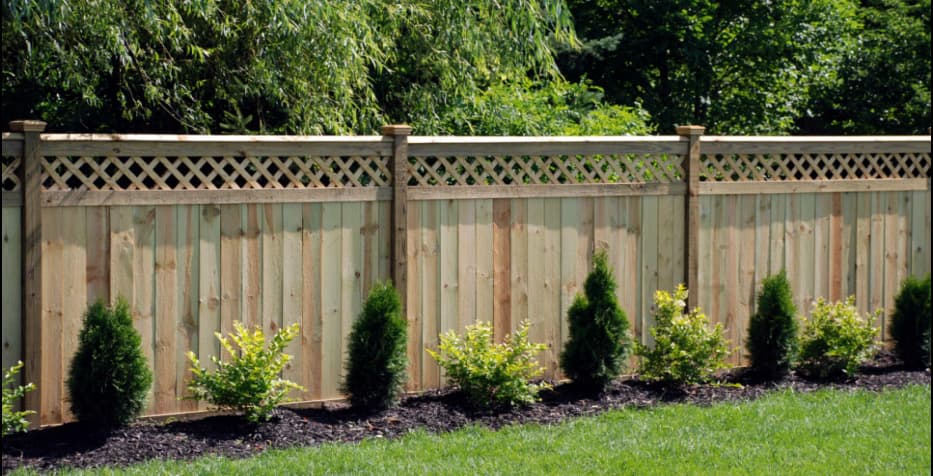
Easements, property lines and HOAs
A permit is not the only approval a fence can need. Your plat or survey shows easements for drainage or utilities, and a fence built across one may have to come out if the easement holder needs access. Before setting the line, find your property corners; a survey is the reliable way when the corners are not obvious. Many homeowners' associations have their own fence rules on height, style and colour, and those apply on top of zoning.
Call 811 before anyone digs
Virginia's damage prevention law defines excavation to include digging, drilling and augering with any tools or equipment,[6] so post holes count. The law is plain: "No person shall make or begin any excavation or demolition without first submitting a locate request to the notification center."[5] Virginia 811 asks for three days' notice before any digging project, fences included, and marks the approximate location of buried lines for free.[7] If you hire an installer, ask who is submitting the request and get the ticket number. How to set a fence post in concrete covers the waiting rules.
Hiring someone to build it
A permit question often turns into a hiring question. Under Va. Code § 54.1-1100, Class C contractors perform or manage work where a single contract is over $1,000 but less than $30,000.[8] DPOR's consumer guide notes: "A license number in an advertisement or on a business card does not necessarily mean the contractor's license is valid."[9] Look the business up on DPOR's licence lookup, and keep in mind DPOR's reminder that "Virginia law requires all licensed contractors to provide a written contract for residential work."[9] The contract should say who obtains any zoning or building permit, who submits the 811 request, and where the fence line is.
Stop and call a pro if
- The fence will enclose a pool or hot tub, or serve as a safety barrier at a drop-off or retaining wall.
- You are not sure where the property line is, or a neighbour disputes it.
- The fence line crosses an easement, a drainage swale or marked utility lines.
- Your plan is for a masonry or concrete wall rather than a fence.
For prices, see what a fence costs in Virginia. Browse fence installers, all exterior answers, or exterior businesses around Blacksburg. When you are ready, describe the fence you want once and licensed local businesses send written quotes.
Common questions
- Is there a statewide fence height limit in Virginia?
- The building code exempts fences of any height from permit application (except pool barriers and fences required for pedestrian safety), and each county, city and town sets its own height rules in its zoning ordinance. Fairfax County, for example, uses four feet in front yards and seven feet in side and rear yards.
- Does a fence around a pool need a permit?
- Yes. The building code's fence exemption does not cover a fence used as the barrier for a swimming pool, so a pool barrier fence goes through the local building permit and inspection process.
- Do I need a permit to replace an old fence in the same place?
- It depends on the locality. Virginia Beach, for example, requires a zoning permit to replace or rebuild a fence within 30 feet of a public right-of-way. Ask your zoning office before assuming a like-for-like replacement is exempt.
- Who pulls the permit, me or the fence company?
- Either, in most places, but settle it in the contract. In Virginia Beach, only the owner or a Virginia licensed contractor can get a zoning fence permit. In Prince William County, a contractor applying for a building permit shows a state contractor's licence and a county business licence.
- Can my HOA be stricter than the county?
- Often, yes. Homeowners' association covenants commonly set their own rules on height, style, colour and placement, and they apply on top of local zoning. Read the covenants and get any required approval in writing before ordering materials.
- Does a fence installer need a Virginia contractor's licence?
- Virginia's contractor licence classes start at Class C, for a single contract over $1,000. Look the business up on DPOR's licence lookup and put its licence number in the contract.
Sources
- [1] 13VAC5-63-80, Section 108 Application for permit (Virginia Uniform Statewide Building Code), Virginia Administrative Code, Virginia General Assembly. Checked October 26, 2026.
- [2] Residential Fences and Walls, Fairfax County Department of Code Compliance. Checked October 26, 2026.
- [3] Fence, Prince William County Building Development Division. Checked October 26, 2026.
- [4] Fence and Wall Bulletin, City of Virginia Beach Zoning Administration. Checked October 26, 2026.
- [5] Va. Code § 56-265.17, Notification required prior to excavation or demolition, Code of Virginia, Virginia General Assembly. Checked October 26, 2026.
- [6] Va. Code § 56-265.15, Definitions (Underground Utility Damage Prevention Act), Code of Virginia, Virginia General Assembly. Checked October 26, 2026.
- [7] Virginia 811: Safety is in Your Hands, Virginia 811. Checked October 26, 2026.
- [8] Va. Code § 54.1-1100, Definitions (Contractors), Code of Virginia, Virginia General Assembly. Checked October 26, 2026.
- [9] What You Should Know Before You Hire a Contractor, Virginia Department of Professional and Occupational Regulation, Board for Contractors. Checked October 26, 2026.
Want a pro to handle it?
Describe the job once. Licensed local businesses send quotes, and you pay only when you book one.
Get a quote for Roofing