Do I need a permit to replace drywall in Virginia?
Usually not. Virginia's building code lists replacement of interior wall and ceiling finishes among the ordinary repairs that need no permit application. You do need one if the work touches a required fire or smoke rated wall or ceiling, removes or adds a wall, or involves wiring or plumbing behind the board. Your locality's building official has the final say.
Free to ask. Local shops send quotes, and you pay only when you book one.
By Kasra Taheri, Founder, LoclisPublished
Researched and drafted with AI, then checked claim by claim against the sources listed below before it was published. Prices and rules change; the dates beside each source say when it was last checked.
Step by step
Read when to stop and call a pro, further down this page, before you start.
Step 1: Say what the job is
Write down whether you are replacing board in place, removing or adding a wall, or touching wiring, pipes or ducts, because the permit rule depends on which.[1]
Step 2: Find out if the wall is fire-rated
The wall or ceiling between an attached garage and the house is the usual one; a required fire or smoke rated assembly needs a permit to repair.[1]
Step 3: Check for a flood zone
The building official may require a permit for exempt items in a special flood hazard area.[1] Ask your building department about it.
Step 4: Call the building department
Describe the repair to your city or county building department and ask whether it needs a permit, since building officials administer the code in each locality.[2]
Step 5: Let a hired contractor pull the permit
If you hire a contractor, the permit should be in the contractor's name and spelled out in the contract.[2]
Step 6: Keep the paperwork
Keep a copy of any permit and inspection record with your home records.
In most cases no. Replacing drywall is an ordinary repair of an interior wall or ceiling finish, and Virginia's Uniform Statewide Building Code says that application for a permit and any related inspections shall not be required for the following, a list that includes ordinary repairs.[1] The permit question changes when the drywall job is part of something bigger: a fire-rated wall, a moved wall, or work on wiring or plumbing behind the board.
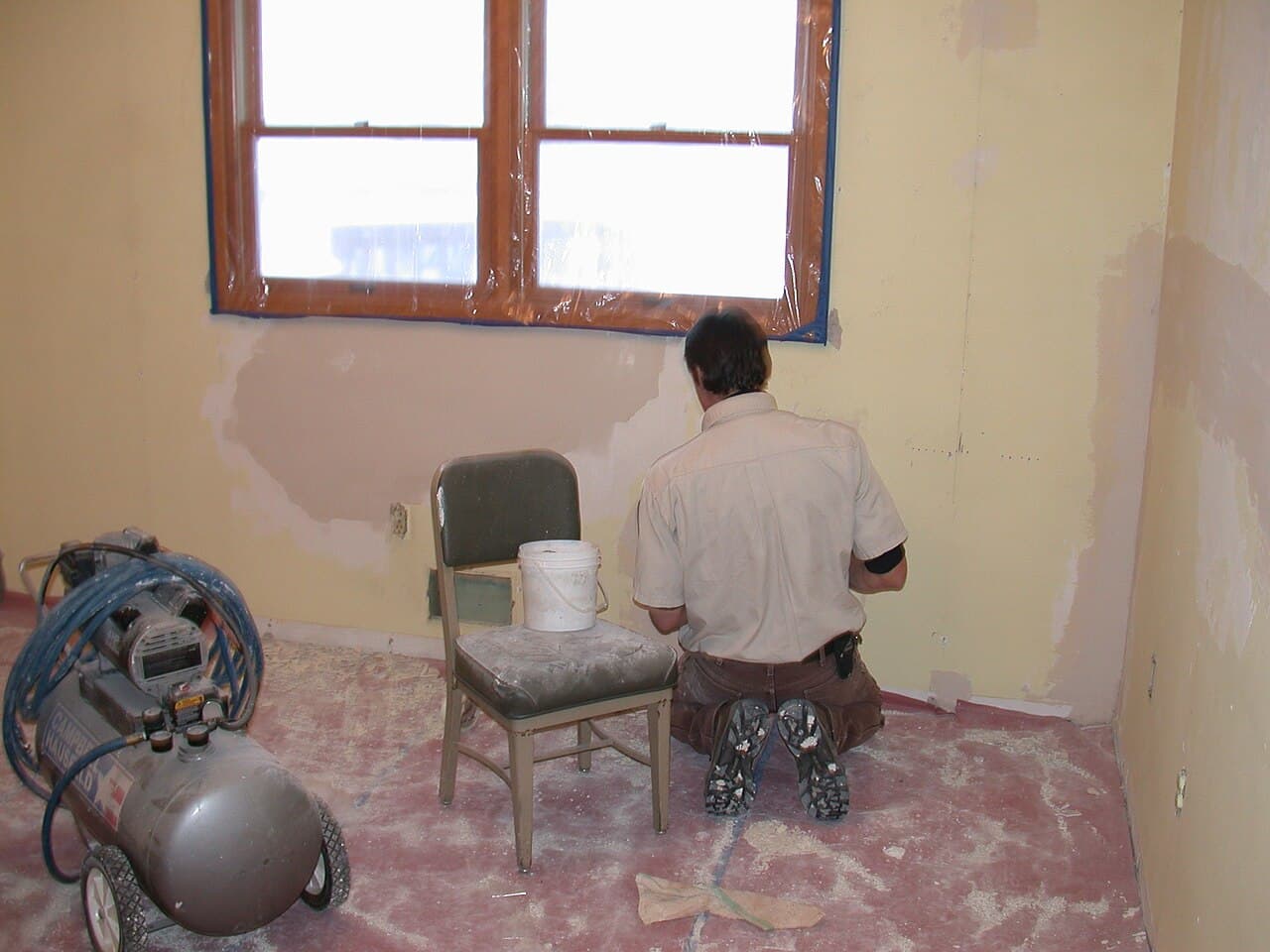
When no permit is needed
The exemptions are in the building code's rule on applying for a permit. Its list of ordinary repairs that include the following has an entry for the replacement of all classes of interior wall or ceiling finishes in other groups, which covers homes, together with the replacement of Class C interior wall or ceiling finishes installed in Groups A, E, and I.[1] The application of paint or wallpaper is on the same list.[1] A patch, a replaced sheet or a re-hung ceiling section in an ordinary room is therefore a repair that needs no permit.
That is the state rule. The code is administered by each locality's building official, and the Department of Professional and Occupational Regulation says so in its consumer guide: Building officials in each locality are responsible for administering the Uniform Statewide Building Code in Virginia.[2] If your job is unusual, a short call to the building department is the safest way to be sure.
When a permit is needed
A fire or smoke rated wall or ceiling. The building code requires a permit for the repair or replacement of any required component of a fire or smoke rated assembly.[1] The common example is the wall and ceiling between an attached garage and the house,. USG's guidance for these assemblies is that the repair must use like materials in order to restore the assembly back to the original condition.[3] In practice that means matching the existing board, not whatever is on hand.
Removing or adding a wall. Permits are required for installations or alterations involving the removal or addition of any wall, partition, or portion thereof.[1] Hanging board on a new partition is part of that project.
Plumbing or wiring. If opening the wall exposes work on the water supply and distribution system, sanitary drainage system, or vent system, or on electric wiring, the code requires a permit for that work too.[1] Moving an outlet or a pipe to suit the new board is a job for a licensed tradesman, and the permit goes with it.
Flood zones and local rules. The building official can ask for more than the exemption list suggests. The code says: Application for a permit may be required by the building official for any items exempted in this section that are located in a special flood hazard area.[1] A house in a mapped floodplain is worth a call before you start.
Emergency repairs. If water damage forces urgent work that does need a permit, the code says that applications for emergency construction, alterations, or equipment replacement shall be submitted by the end of the first working day that follows the day such work commences.[1]
If you hire a contractor
DPOR's advice is that the contractor should apply for and obtain any necessary building permits.[2] Have that written into the contract, and ask for a copy of the permit before work on anything that requires one starts. DPOR warns that if the permit is not spelled out in your contract, you may be held legally responsible for failure to obtain a required permit, and warns against pulling the permit yourself, because the permit holder becomes the general contractor and assumes responsibility for the overall job.[2]
In a house built before 1978, there is a separate rule that has nothing to do with permits: EPA says anyone paid to perform work that disturbs paint in housing built before 1978 must be certified in lead-safe work practices, including sole proprietorships.[4] Ask for the certification.
Stop and call a pro if
- The wall might be fire-rated, and you are not sure. Ask the building department before you cut; a permit and matching board are required for a required assembly.
- Opening the wall shows wiring, pipes or ductwork that need to move. That is licensed work with its own permit.
- The wall comes down, is moved, or a new one goes up.
- The board is wet, moldy or sagging. Fix the source first; see how to repair water-damaged drywall.
- Your house is in a special flood hazard area, where the building official may require a permit for work that is otherwise exempt.
Getting help in Virginia
If you want to know what the job might cost, read what replacing a section of drywall costs in Virginia. Browse drywall patching businesses or more home repair answers.
When you are ready, describe the drywall repair once and local businesses quote it.
Common questions
- Do I need a permit to patch a hole in drywall?
- No. Patching is an ordinary repair of an interior wall finish, and Virginia's building code does not require a permit application for it. The same is true for painting or wallpapering.
- Do I need a permit to hang drywall in a new room?
- Hanging board in a new room usually comes with other work, such as framing a wall, wiring or ductwork, and that work needs a permit. Ask your building department before you start, because the permit covers the project and not only the board.
- Does the drywall between my garage and house need a permit?
- Repairing or replacing a required component of a fire or smoke rated assembly does need a permit under Virginia's building code. That wall is usually one, and the repair has to use like materials to restore the assembly.
- Who pulls the permit if I hire a contractor?
- The contractor. DPOR's guide says the contractor should apply for and obtain any necessary building permits, put that in the contract, and give you copies of the issued permit before work starts.
- Can my locality require more than the state code?
- Localities administer the state code through their building officials, and the building official may require a permit for exempt items in a special flood hazard area. Call your building department if your house is in one.
Sources
- [1] 13VAC5-63-80, Section 108 Application for permit (Virginia Uniform Statewide Building Code), Virginia Administrative Code, Virginia General Assembly. Checked October 27, 2026.
- [2] What You Should Know Before You Hire a Contractor, Virginia Department of Professional and Occupational Regulation. Checked October 27, 2026.
- [3] Repair Drywall: USG Interior Panel & Finishing Solutions, USG. Checked October 27, 2026.
- [4] Lead Renovation, Repair and Painting Program, U.S. Environmental Protection Agency. Checked October 27, 2026.
Want a pro to handle it?
Describe the job once. Licensed local businesses send quotes, and you pay only when you book one.
Get a quote for Home Repair