How much does a chimney liner cost in Virginia?
No Virginia government or manufacturer source publishes a dated installed price for a chimney liner, so any single figure would be a guess. The price depends on the chimney's height, the flue size, the liner type, insulation, the damper and cap, and how hard the roof is to reach. Get at least three itemized written quotes for the same specification.
Free to ask. Local shops send quotes, and you pay only when you book one.
By Kasra Taheri, Founder, LoclisPublished
Researched and drafted with AI, then checked claim by claim against the sources listed below before it was published. Prices and rules change; the dates beside each source say when it was last checked.
This is a job for a licensed pro in Virginia
This page explains what the work involves, the permits, what a licensed pro does and what drives the cost. It does not give step-by-step instructions, because this work needs a licence, a permit or both, and doing it wrong can injure someone. Before you hire, check the licence on Virginia's DPOR record.
A chimney liner has no single Virginia price, and we did not find a government or manufacturer source that dates an installed price, so we will not quote one. What you pay depends on the chimney's height and flue size, the type of liner, whether it is insulated, what has to be done at the damper and the cap, and how difficult the roof is to reach. The way to a real number is an inspection followed by itemized written quotes for the same specification.
What goes into the price
Liner type and length. For wood stoves, Woodstock Soapstone, a stove maker, says a flexible stainless steel liner is sold as a kit that includes a tee for connection to stovepipe, a top flashing to seal the opening of the chimney, and a cap.[1] The kits come in lengths of 20', 25', 30' and so on, and Woodstock advises ordering one long enough to give about a foot of extra liner.[1] A taller chimney costs more in material and in time.
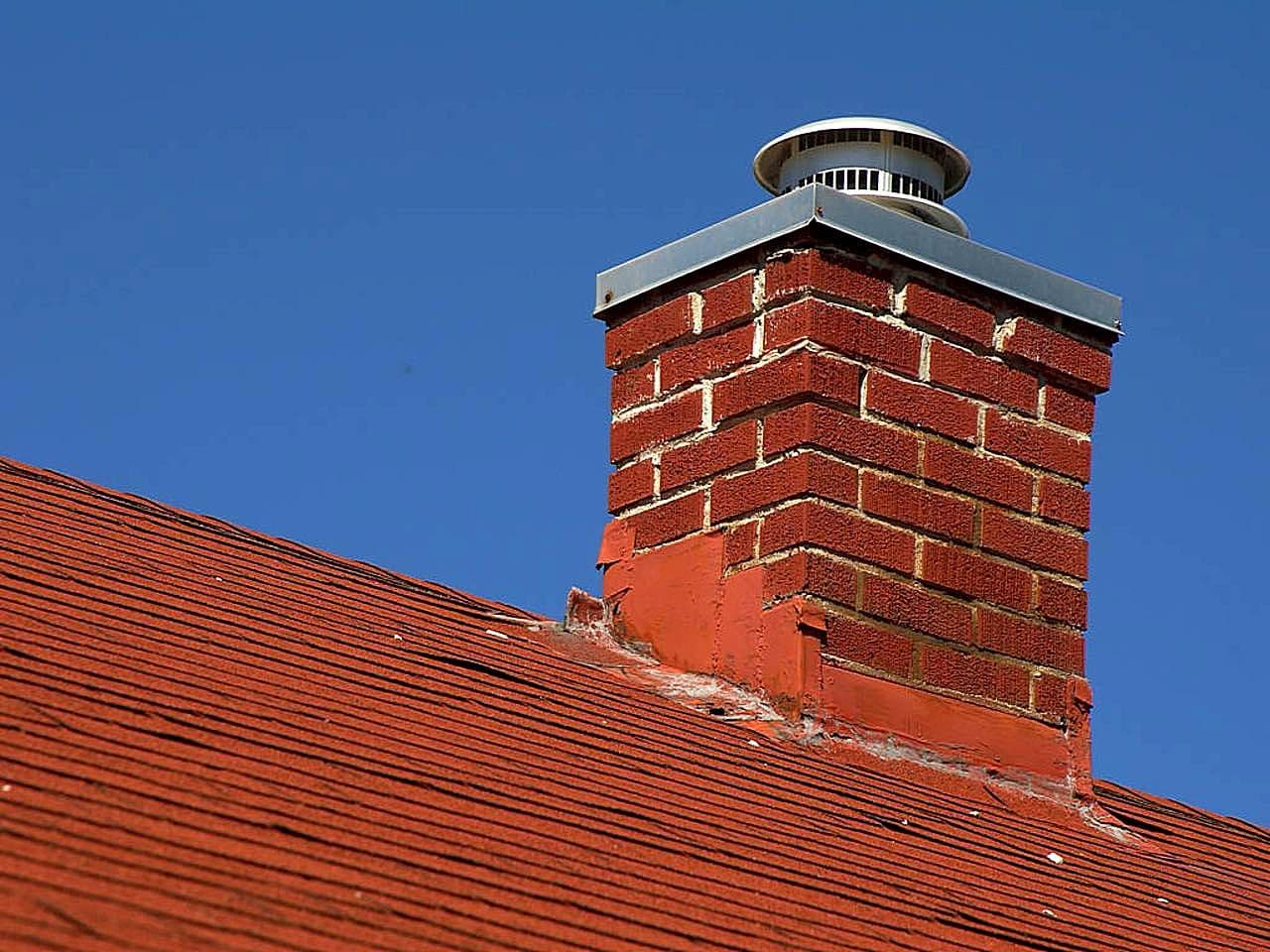
Flue size. Before ordering, you need the height of the chimney, the size of the flue and, for a fireplace, the size of the damper.[1] An oversized or odd-shaped flue can change the parts list, so a measurement on site matters more than a guess from the street.
The damper. Many dampers are narrow, and if the damper is smaller than the 6 or 7 inch diameter of the liner, the damper and part of its frame must be removed or the liner ordered with its end ovalized.[1] That is extra labor or extra parts.
Insulation. If the existing chimney is not lined or is cracked, Woodstock says the liner should be wrapped with an insulating blanket.[1] The wrap adds material and installation time, and it also affects the liner diameter that will fit.
Full or partial liner. Woodstock says kits that run only from the stove to the bottom of the existing flue liner above the damper are more difficult to install and the chimney is more difficult to clean around them, and it discourages their use.[1] A cheaper partial job can cost you more later.
Access. A steep roof, a tall house, a chimney set far from the ridge or a crowded attic raises the labor. So does repair work needed first, such as fixing a crown, flashing or masonry above the roofline.
Permit. Virginia's Uniform Statewide Building Code requires a permit before installations or alterations involving mechanical systems, fuel supply systems or any equipment regulated by the code.[5] Whether your liner falls under that is for your locality's building official to say, and fees are set locally. Ask each contractor whether a permit is included.
Getting quotes you can compare
DPOR advises getting at least three written bids or estimates using identical plans and specifications,[2] and says "Do not automatically accept the lowest."[2] Ask each business to put the following in writing:
- the liner material, diameter and length, with the brand and model
- whether it is insulated, and with what
- what happens at the damper, the top plate, the cap and any flashing
- whether an inspection, camera scan or sweep before and after is included
- whether the permit and cleanup are included
- the warranty on the liner and on the labor
Virginia's Board for Contractors requires a residential contract to include the total cost, the amounts and schedule for progress payments including the down payment, and a listing of the specified materials and work to be performed.[4] DPOR's rule of thumb for a deposit is an initial deposit of no more than 10% of the total price or $1,000, whichever is less.[2]
When to call a licensed pro
For the whole job, from inspection to install. A liner goes up through the roof and the flue, and a wrong size or a missed crack can cause a chimney fire or put exhaust into the house.
Virginia requires that if the work is valued at $1,000 or more, a valid Virginia Contractor's License is required for the license category in which the contractor is to work.[2] Class C contractors are those working on single contracts over $1,000 but less than $30,000.[3] Check the licence on DPOR before you pay anything.
To learn what a liner is and whether you need one, read what a chimney liner is. For a leak at the chimney, see who to hire to repair a chimney leak. Browse chimney and fireplace services or all chimney answers.
Describe your chimney once and licensed local businesses send itemized quotes.
Common questions
- Why can't you give a price for a chimney liner?
- Because we found no Virginia government or manufacturer source that publishes a dated installed price, and prices move with the chimney. The height, flue size, liner type and insulation change the materials, and roof access changes the labor. A written quote after an inspection is the reliable number.
- Is a flexible liner cheaper than rebuilding the flue?
- Often it is, which is why stove makers such as Woodstock Soapstone recommend flexible stainless steel for wood stoves. But it only suits a masonry chimney with enough masonry around it, so an inspection decides what is possible.
- Does the quote include insulation?
- Ask. Woodstock says a liner in an unlined or cracked chimney should be wrapped with an insulating blanket. A quote that leaves it out may look cheaper and not be the same job.
- How much deposit is reasonable?
- DPOR gives a rule of thumb of an initial deposit of no more than 10% of the total price or $1,000, whichever is less. For custom-made or special-order items it says a reasonable deposit could be as high as 30% of the contract value.
- Does a liner install need a permit?
- It depends on the work and the locality. The Uniform Statewide Building Code requires a permit before installations or alterations involving mechanical systems, fuel supply systems or equipment it regulates. Ask your building official and who will pull the permit.
Sources
- [1] Masonry Chimneys, Woodstock Soapstone Company (stove manufacturer). Checked October 27, 2026.
- [2] What You Should Know Before You Hire a Contractor, Virginia Board for Contractors, DPOR. Checked October 27, 2026.
- [3] Code of Virginia § 54.1-1100. Definitions, Code of Virginia. Checked October 27, 2026.
- [4] 18VAC50-22-260. Filing of charges; prohibited acts, Virginia Administrative Code (Board for Contractors). Checked October 27, 2026.
- [5] 13VAC5-63-80. Section 108 Application for permit, Virginia Administrative Code (Uniform Statewide Building Code). Checked October 27, 2026.
Want a pro to handle it?
Describe the job once. Licensed local businesses send quotes, and you pay only when you book one.
Get a quote from a local pro