Why is water leaking around my chimney?
Water usually gets in at the flashing where the chimney meets the roof, the crown on top, cracked brick or mortar joints, or a missing cap. Flashing is a frequent culprit. A licensed roofing or masonry contractor should find and show you the entry point before quoting, because each source has a different repair.
Free to ask. Local shops send quotes, and you pay only when you book one.
By Kasra Taheri, Founder, LoclisPublished
Researched and drafted with AI, then checked claim by claim against the sources listed below before it was published. Prices and rules change; the dates beside each source say when it was last checked.
This is a job for a licensed pro in Virginia
This page explains what the work involves, the permits, what a licensed pro does and what drives the cost. It does not give step-by-step instructions, because this work needs a licence, a permit or both, and doing it wrong can injure someone. Before you hire, check the licence on Virginia's DPOR record.
Water around a chimney almost always gets in at one of four places: the flashing where the chimney meets the roof, the crown on top, the brick and mortar joints, or a missing or damaged cap. Flashing is a frequent culprit. The USDA Forest Service says many apparent roof leaks are really flashing leaks.[1] Finding which of the four is leaking is a job for a licensed pro, because the repair differs for each.
The usual suspects
Flashing. This is the metal that bridges the gap between the chimney and the roof. The Forest Service says that without good tight flashings around chimneys, vents, skylights, and wall/roof junctions, water can leak into buildings and damage walls, ceilings, insulation, and even the electrical system.[1] Flashing fails when sealant dries out, metal corrodes or lifts, or the roof and chimney move at different rates. The tell-tale sign is a stain on the ceiling or wall right beside the chimney that grows after rain.
Crown. The crown is the slab across the top of the chimney. Woodstock Soapstone, a stove maker, lists as a feature of a sound masonry chimney a crown of concrete or non-water soluble refractory cement sloping away from the chimney and sealed with a flexible material.[2] A flat, cracked or crumbling crown lets rain soak into the brick below, and the water shows up as damp or stained walls around the chimney inside the house.
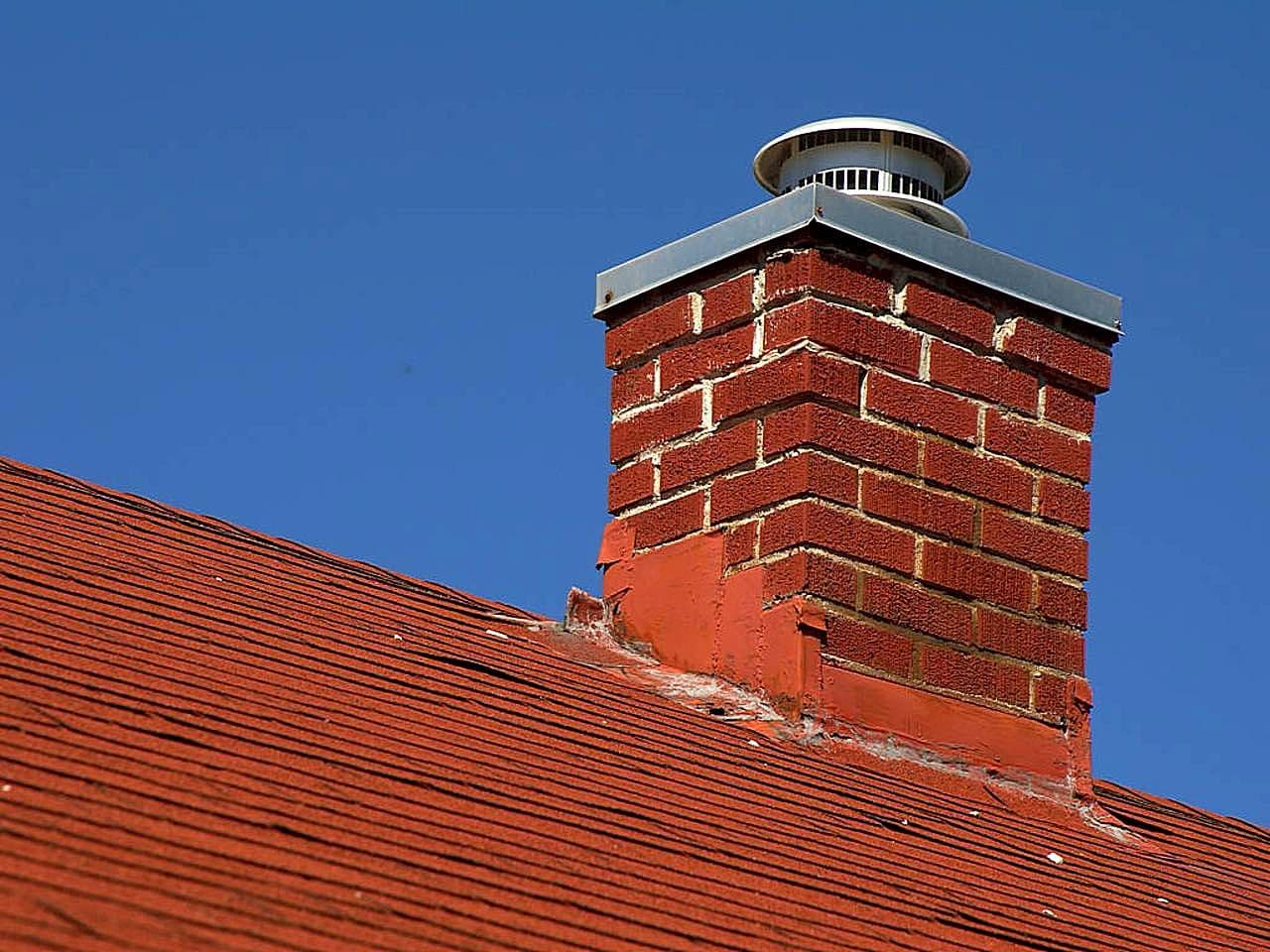
Brick and mortar. Open mortar joints, cracked brick and flaking brick faces let water into the masonry itself. Water that soaks into the masonry can show up inside later than the rain itself.
Cap. Woodstock says the chimney should have a cap to keep out moisture, birds, or other pests.[2] With no cap, rain falls straight down the flue, and you may see water in the firebox, a damp smell or rust on the damper.
Cracks in the flue. EPA says an annual professional inspection includes looking for chimney cracks, which can allow smoke to enter your home or expose your chimney's components to high temperatures.[3] A cracked flue can also carry water. If an inspector finds one, read what a chimney liner is and what a liner costs.
Clues that point to the source
- Stain beside the chimney on an upper floor or attic side: flashing is the first suspect.
- Wet or stained brick, white powder, or damp walls around the chimney: the crown, mortar or brick.
- Water in the fireplace or a rusty damper: the cap or the flue.
- Leaks only in wind-driven rain: often flashing or a joint on the windward face.
- A stain far from the chimney: water can run along framing before it shows, so the roof covering nearby may be involved.
Photograph the stain, note the date and weather, and give that to whoever inspects. Do not seal the stain from inside before the source is found.
Dry the inside first
EPA says that if wet or damp materials or areas are dried 24-48 hours after a leak or spill happens, in most cases mold will not grow.[4] Move furniture, open the area to air and use fans. Keep photos of the damage with dates for your insurer.
When to call a licensed pro
For the repair itself. Chimney leak repair means working on the roof at the chimney and on the stack, and the right fix depends on which of the points above is failing. A dab of sealant on the wrong spot can hide the symptom while water keeps running into the wall.
Virginia defines the trades. "Roofing contracting" means the service that provides for the installation, repair, removal, or improvement of materials common to the industry that form a watertight, weather resistant surface for roofs and decks.[5] "Masonry contracting" means the service that includes the installation of brick, concrete block, stone, marble, slate, or other units and products common to the masonry industry, including mortarless type masonry products."[5] The rule adds that this includes tuck pointing, mortar washing and parging.[5] DPOR says that if the work is valued at $1,000 or more, a valid Virginia Contractor's License is required for the license category in which the contractor is to work.[6]
Ask the inspector to name the point of entry and show it to you. Then get at least three written bids or estimates using identical plans and specifications,[6] and check the licence before you sign. Our guide to who to hire for a chimney leak covers roofers versus masons. To stop it recurring, read how to keep a chimney from leaking. Browse more chimney answers or chimney and fireplace services.
Describe your leak once and licensed local businesses quote the repair.
Common questions
- Is a chimney leak an emergency?
- Not usually, but do not wait. Water keeps damaging framing, insulation and ceilings with every rain. EPA says that if wet areas are dried 24-48 hours after a leak, in most cases mold will not grow, so dry the inside now and book an inspection soon.
- Where does a chimney leak most often start?
- Often at the flashing where the chimney meets the roof. The USDA Forest Service says many apparent roof leaks are really flashing leaks. The crown, mortar joints and cap are the other places to look.
- Can I fix a chimney leak with roofing sealant?
- A sealant patch may slow the water, but it can hide the symptom while the real entry point keeps leaking. Roof-level work is best left to a licensed pro who names the cause first.
- Why does my chimney only leak in some storms?
- Wind-driven rain can push water into joints and gaps that stay dry in ordinary rain, and wet masonry can show a leak later than the storm. Note the weather when it happens and tell the inspector.
- Who fixes a leaking chimney?
- A Virginia-licensed roofing or masonry contractor, depending on the cause. Many chimney companies hold both. See our guide to who to hire for a chimney leak.
- Could the leak be coming from the flue?
- Yes. Cracks in the flue or a missing cap can let rain run down inside. EPA says an annual professional inspection includes looking for chimney cracks.
Sources
- [1] Overview of Roofing Materials for Forest Service Facilities, USDA Forest Service, Missoula Technology and Development Center. Checked October 27, 2026.
- [2] Masonry Chimneys, Woodstock Soapstone Company (stove manufacturer). Checked October 27, 2026.
- [3] Wood-Burning Installation and Maintenance, U.S. Environmental Protection Agency, Burn Wise. Checked October 27, 2026.
- [4] A Brief Guide to Mold, Moisture and Your Home, U.S. Environmental Protection Agency. Checked October 27, 2026.
- [5] 18VAC50-22-30. Definitions of specialty services, Virginia Administrative Code (Board for Contractors). Checked October 27, 2026.
- [6] What You Should Know Before You Hire a Contractor, Virginia Board for Contractors, DPOR. Checked October 27, 2026.
Want a pro to handle it?
Describe the job once. Licensed local businesses send quotes, and you pay only when you book one.
Get a quote from a local pro