How much does new flooring cost in Virginia?
There is no single Virginia price, because the material, the square footage, the condition of the subfloor and what happens to the old floor all change the total. The way to get a real number is to ask three licensed flooring contractors for itemized written bids on the same materials and scope, and compare them line by line.
Free to ask. Local shops send quotes, and you pay only when you book one.
By Kasra Taheri, Founder, LoclisPublished
Researched and drafted with AI, then checked claim by claim against the sources listed below before it was published. Prices and rules change; the dates beside each source say when it was last checked.
Step by step
Read when to stop and call a pro, further down this page, before you start.
Step 1: Measure and list the rooms
Measure each room and note which ones need new flooring, so every contractor bids the same area.
Step 2: Choose the material first
Decide on hardwood, laminate, vinyl, tile or carpet before you ask for bids, because the material drives most of the price.
Step 3: Write down the scope
Specify the product, the underlayment, the removal of old flooring, the subfloor repairs, trim and baseboards, and who moves the furniture.
Step 4: Ask for at least three written bids
DPOR advises soliciting at least three bids for the work and basing all of them on the same set of specifications.[1]
Step 5: Compare line by line
Check that each bid covers the same materials and tasks, and ask about any bid that is substantially lower than the others.[1]
Step 7: Agree on the deposit
Keep the deposit modest and tie later payments to finished work, as DPOR advises.[1]
There is no single Virginia price for new flooring, and a figure quoted per square foot without a scope tells you little. The total depends on the material, the area, the shape of the rooms, the condition of what is underneath, and what has to happen to the old floor. The reliable way to get a number is to ask several licensed contractors for itemized written bids on the same job.
What drives the price
The material. Hardwood, laminate, luxury vinyl, tile and carpet differ widely in material cost, and they differ in labor too. Tile and hardwood take more skill and time to lay than a floating laminate or vinyl plank floor. Choosing the material first is the biggest step toward a usable quote; how to choose flooring for each room can help.
The area and layout. Total square footage matters, but so do closets, stairs, odd angles and doorways. More cuts mean more waste and more time.
The subfloor. Preparation is part of the work. Virginia's contractor regulations define flooring and floor covering contracting as the installation, repair, improvement or removal of materials common in the flooring industry, including wood and wood composite flooring, carpet tack strips, vinyl and linoleum, and ceramic, marble, stone and other tile.[3] The same definition includes installing or replacing subflooring, leveling products and other materials needed to prepare for the new floor, but not floor joists or other structural components.[3] A floor that needs leveling or patching costs more than one that is flat and sound, and rotted joists are a separate repair for a different trade.
Removing the old floor. Pulling up carpet is quick. Pulling up glued vinyl or tile is slow, and older flooring can raise health issues. The EPA says to have removal and major repair of asbestos-containing material done by people trained and qualified in handling asbestos.[4] In a house built before 1978, the EPA says anyone paid to perform work that disturbs paint must be certified in lead-safe work practices,[5] which can affect who can bid and how.
Trim, transitions and furniture. Baseboards, quarter-round, thresholds and moving furniture are often separate lines, or left out entirely. Ask.
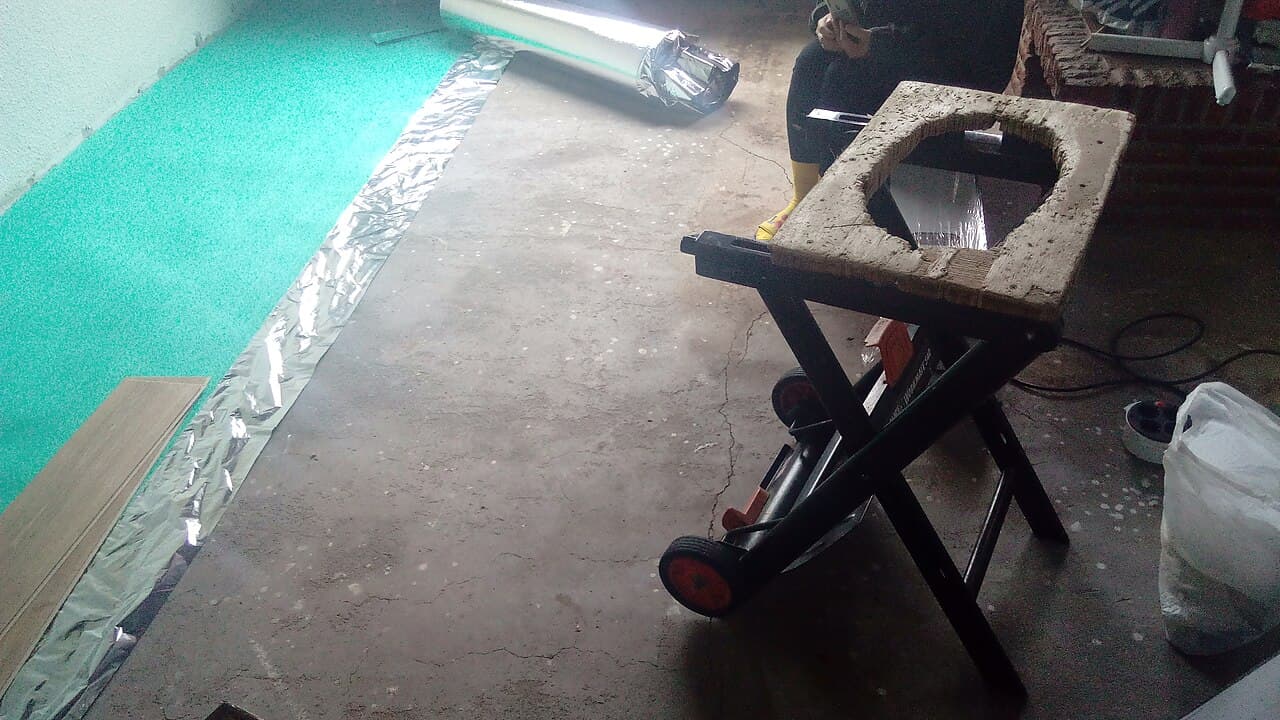
How to get quotes you can compare
DPOR advises soliciting at least three bids for the work, all based on the same set of specifications.[1] Give each contractor the same list: the product and color, rooms, underlayment, removal and disposal, subfloor repairs, trim, and cleanup.
Then look hard at the outliers. Beware of any bid substantially lower than the others, because DPOR says it probably indicates that the contractor has made a mistake or is not including all the work quoted by competitors.[1] A higher bid can also be reasonable if it uses better materials or covers more work.
Ask each bidder:
- which product, by brand and model, and who buys it
- what is included for removal, leveling and trim
- how long the job takes and what the warranty covers
- their Virginia licence number and class
Licence and payment
A Class C contractor handles a single contract of over $1,000 but less than $30,000.[2] Read how to choose a flooring installer for how to check the licence.
DPOR's rule of thumb is an initial deposit of no more than 10% of the total price or $1,000, whichever is less, and up to 30% if the job needs custom-made items or special orders.[1] DPOR says never to let payments get ahead of the contractor's work and not to pay 100% of the bill until the work is 100% complete.[1]
Stop and call a pro if
- You find soft, rotted or sagging subfloor, which may point to a leak or structural problem.
- The old flooring may contain asbestos or the paint may contain lead.
- The floor needs a lot of leveling, or the job involves moving walls or plumbing.
- You are asked to pay most of the price before any work starts.
Browse other flooring answers or flooring businesses on Loclis. To compare quotes, describe your flooring project.
Common questions
- Why are flooring quotes so different?
- Usually the jobs are not the same. One bid may include removing the old floor, repairing the subfloor, new underlayment and trim, and another may not. DPOR advises basing every bid on the same specifications so you can compare them.
- Does a low bid mean a good deal?
- Not necessarily. DPOR warns that a bid substantially lower than the others probably means the contractor has made a mistake or is not including all the work the others quoted.
- Does flooring need a licensed contractor in Virginia?
- Flooring and floor covering is a specialty service in Virginia's contractor regulations. A Class C contractor handles a single contract of over $1,000 but less than $30,000.
- How much deposit is reasonable?
- DPOR's rule of thumb is no more than 10% of the total price or $1,000, whichever is less, and up to 30% if the job needs custom-made items or special orders.
- Can an old floor add to the cost?
- Yes. Old vinyl or tile may contain asbestos, and the EPA says removal should be done by people trained and qualified in handling asbestos. In a house built before 1978, the contractor may also need lead-safe certification.
Sources
- [1] What You Should Know Before You Hire a Contractor, Virginia Board for Contractors, Department of Professional and Occupational Regulation. Checked October 27, 2026.
- [2] Va. Code § 54.1-1100, Definitions, Code of Virginia, Virginia General Assembly. Checked October 27, 2026.
- [3] 18VAC50-22-30, Definitions of specialty services, Virginia Administrative Code, Board for Contractors. Checked October 27, 2026.
- [4] Protect Your Family from Exposures to Asbestos, U.S. Environmental Protection Agency. Checked October 27, 2026.
- [5] Lead Renovation, Repair and Painting Program, U.S. Environmental Protection Agency. Checked October 27, 2026.
Want a pro to handle it?
Describe the job once. Licensed local businesses send quotes, and you pay only when you book one.
Get a quote from a local pro