Why is my new floor making noise?
A new floor usually clicks, creaks or pops for one of four reasons: the planks or trim touch the wall, cabinets or door frames, so the floor cannot move; the subfloor is not flat, so planks flex underfoot; the subfloor itself squeaks; or the air is too dry or damp. Check those in order, and call the installer before anything is pulled up.
Free to ask. Local shops send quotes, and you pay only when you book one.
By Kasra Taheri, Founder, LoclisPublished
Researched and drafted with AI, then checked claim by claim against the sources listed below before it was published. Prices and rules change; the dates beside each source say when it was last checked.
Step by step
Read when to stop and call a pro, further down this page, before you start.
Step 1: Pin down the noise
Walk the room slowly and note what the sound is (click, creak, squeak or pop), where it happens, and whether it is worse in winter, summer or after a sunny afternoon.
Step 2: Check the edges
Look along the walls, door frames and any cabinets for planks pressed hard against them; a floating floor needs a gap all the way round.[1]
Step 3: Look at the trim
Press on the baseboard or quarter round and see whether it is pinned down onto the planks; trim belongs on the wall, covering the gap, not clamping the floor.[1]
Step 5: Check for sun and heat
Note whether the noise follows direct sunlight through a window, and close the blinds on those afternoons to see if it stops.[1]
Step 6: Tell clicks from squeaks
A sharp click at a plank joint points to the floor covering; a squeak or creak that follows a line across the room often comes from the subfloor, which the squeaky floor guide covers.
Step 7: Photograph and report it
Take a short phone video of the noise and photos of the edges, then send them to your installer with the date of installation.
Start with what the floor is doing
New flooring is rarely noisy because the material is bad. More often the floor cannot move the way it was designed to, or the layer under it is not flat, or the room's air is outside the range the maker allows. Each cause has its own sound, so the sound is your first clue.
A click or tick at a plank joint, a pop that follows the heating cycle, or a rub along one wall usually means the floor covering is pinned. A creak or squeak that follows a line across the room usually comes from the subfloor below, not the flooring on top. A hollow, drum-like knock under your heel usually means a low spot below the planks.
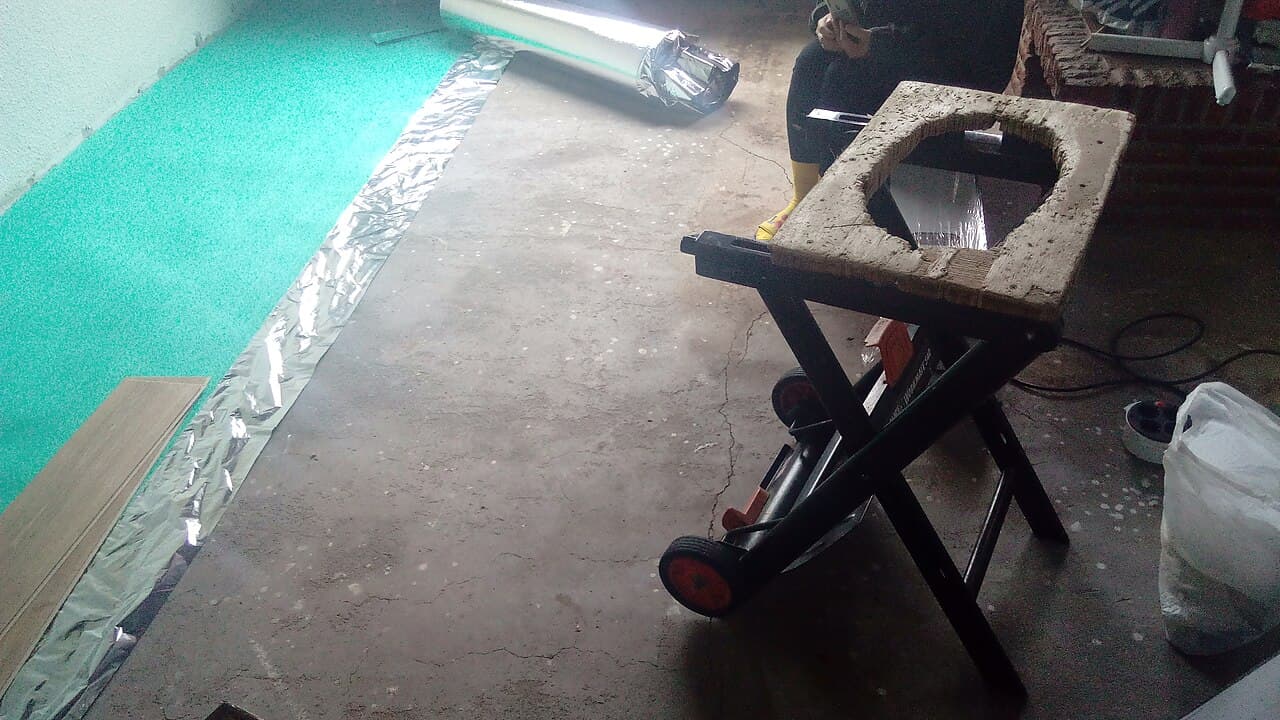
The floor is touching something
Floating floors, which include most laminate and click-together vinyl plank, are not fastened to the subfloor. They need room to expand and shrink. One manufacturer's guide says "Perimeter expansion is required for floating floors".[1] The same guide says "Do not install cabinets directly on the floor as this is a floating installation method".[1]
If a plank touches a wall, a door casing, a stair nosing or a heating vent, it rubs there every time the floor moves, and that is the tick or pop you hear. The cure is a gap, which is the installer's job to restore.
Check the trim as well. Once the spacers come out, the last step is to "install the base or quarter round to cover the expansion space".[1] The trim is meant to be fastened to the wall. If it was nailed down through the floor, it holds the planks in place and they grind against it.
The subfloor is not flat
Click-together planks lean on the surface below. The installation guide's wording is "All subfloors must be clean, flat, dry and structurally sound."[1] If a hump or dip was never corrected, the planks flex at the joints when you walk on them and the locking edges click or creak. The same flex can open the joints over time.
This is the cause worth pushing on, because it is an installation defect rather than a fact of life. Our guide on levelling before new flooring explains what flat means and how it is fixed, and a floor-leveling quote will show what it costs when the floor has to come up.
The air is too dry or too damp
Wood and laminate swell and shrink with moisture in the air, which is why a floor can be quiet in April and noisy in January. Shaw's laminate care advice is to "maintain between 35% and 65% humidity year round to minimize expansion and contraction of your laminate flooring".[3] For hardwood, Shaw says "Maintain consistent humidity levels (35-55%) to prevent warping."[4] One luxury vinyl plank maker asks for "Relative humidity should be maintained between 40% and 70%."[2]
Those ranges differ by product, so look up the one for your floor. A humidity meter costs little and shows quickly whether the room is outside the range. If it is, a humidifier in winter or a dehumidifier in summer is often the simplest fix.
Sun matters for vinyl in particular: "high direct temperature from sunlight may result in thermal expansion causing the material to buckle or expand".[1] A floor that ticks only in a sunny room in the afternoon is a good candidate.
What a loud floor usually is not
A squeak from a nailed hardwood floor, or from a floor over an open basement ceiling, is normally the subfloor rubbing a joist or fastener. It is a familiar problem with a familiar fix, covered in how to fix a squeaky floor. If your new floor sits on an old subfloor, that squeak may have been there before and only become audible once carpet or old flooring was removed.
Do this before you call
Work through the checks above and write down what you find. Then report it promptly to the installer, in writing, with a short video of the noise. Do not trim planks, pry up edging or run screws through the floor on your own while a warranty may still apply: do the observation, and let the installer repair what they installed. If you are still choosing who will do the work, how to choose a flooring installer lists what to ask about workmanship, and how to choose the right flooring for each room helps you avoid putting a floor where it will fight the room.
Stop and call a pro if
- The noise comes with a soft or bouncy spot. That points to something under the floor, not the flooring.
- Planks are lifting, peaking or separating at the joints. Buckled planks mean the floor has no room to expand or has been wetted.
- The floor is damp or the room smells musty. Find the moisture source before more floor is covered.
- You would have to remove trim, flooring or any framing to get at the cause.
- The installer will not come back or says it is normal. Get a second opinion in writing from another installer.
Getting help in Virginia
Browse more flooring answers or flooring businesses on Loclis. To have an installer diagnose and fix the floor, describe your flooring problem and local pros will respond.
Common questions
- Is a clicking or popping new floor normal?
- A little settling noise in the first days is common as a floor adjusts to the room. Noise that continues, gets louder or shows up in the same spots every day is worth reporting, because it usually means something is rubbing, flexing or pinned.
- Why does my new floor crackle when the heat comes on?
- Heat and sun change the size of floor materials. One manufacturer notes that "high direct temperature from sunlight may result in thermal expansion causing the material to buckle or expand", and the same movement can make a pinned floor tick or pop against a wall or cabinet.[^thd]
- Why does my floating floor sound hollow?
- A floating floor rests on its underlayment instead of being glued or nailed down, so a low spot in the subfloor leaves a small void under the planks that rings when you step on it. The installation guide's requirement is that "All subfloors must be clean, flat, dry and structurally sound."[^thd] A hollow patch that returns after the planks are pressed down is a flatness problem for the installer.
- Will the warranty cover a noisy floor?
- It depends on the installer's workmanship terms and the manufacturer's warranty, and both usually require that you report the problem promptly and that the home's humidity stayed in the maker's range. Keep your invoice, the product name and photos of the problem, and read the written terms.
- Can I fix a squeaky new floor myself?
- A squeak that comes from the subfloor can often be reduced with the methods in the squeaky floor guide, but on a new floor ask the installer first, since fastening through the floor yourself can affect the warranty.
Sources
- [1] Malibu Wide Plank, Installation Guidelines for Rigid Core Luxury Vinyl Plank Floors, Malibu Wide Plank, installation guide. Checked October 27, 2026.
- [2] Aquawood Plus Installation Guide (luxury vinyl plank), Aquawood, manufacturer installation guide. Checked October 27, 2026.
- [3] Laminate Care, Shaw Floors. Checked October 27, 2026.
- [4] Hardwood Care, Shaw Floors. Checked October 27, 2026.
Want a pro to handle it?
Describe the job once. Licensed local businesses send quotes, and you pay only when you book one.
Get a quote from a local pro