How do I choose a flooring installer?
Pick a licensed Virginia contractor, not just a skilled installer. Look up the licence with DPOR, call local references, get at least three written bids on identical specifications, and sign a written contract that names the product, the scope, the schedule and a payment plan tied to finished work. Be wary of a bid far below the rest.
Free to ask. Local shops send quotes, and you pay only when you book one.
By Kasra Taheri, Founder, LoclisPublished
Researched and drafted with AI, then checked claim by claim against the sources listed below before it was published. Prices and rules change; the dates beside each source say when it was last checked.
Step by step
Read when to stop and call a pro, further down this page, before you start.
Step 1: Look up the licence
Check the contractor's licence with the Board for Contractors, because a licence number on an advertisement or business card does not necessarily mean the licence is valid.[1]
Step 3: Call local references
Ask for local references, call them, and if possible look at finished jobs.[1]
Step 4: Get at least three written bids
Ask each contractor to bid the same specifications so the prices can be compared.[1]
Step 6: Read the written contract
Make sure it names the materials, the scope, start and finish dates, the total price and the payment schedule.[1]
Step 7: Keep the deposit small
Agree to a modest deposit and tie later payments to finished work.[1]
Step 8: Put changes in writing
Have every change to the job written down and signed by both of you before it is done.[1]
Hire a licensed Virginia contractor with local references, compare at least three written bids, and sign a written contract. Skill with a flooring nailer or tile saw matters, but the paperwork is what protects you if something goes wrong. A good installer will not be bothered by any of these steps.
Start with the licence
DPOR says a licence number in an advertisement or on a business card does not necessarily mean the contractor's licence is valid, so look it up with the Board for Contractors yourself.[1] The stakes are real. DPOR says unlicensed contracting is against the law, and that if you contract with someone who does not hold a licence, the Board for Contractors may not be able to help you resolve a complaint.[1]
Flooring is a named specialty. Virginia's contractor regulations define flooring and floor covering contracting as the installation, repair, improvement or removal of materials common in the flooring industry, including wood and wood composite flooring, carpet tack strips, vinyl and linoleum, and ceramic, marble, stone and other tile.[3] The same definition includes installing or replacing subflooring and leveling products, but not floor joists or other structural components.[3]
The class of licence depends on the size of the contract. A Class C licence covers a single contract of over $1,000 but less than $30,000, a Class B licence covers $30,000 or more but less than $150,000, and a Class A licence covers $150,000 or more.[2]
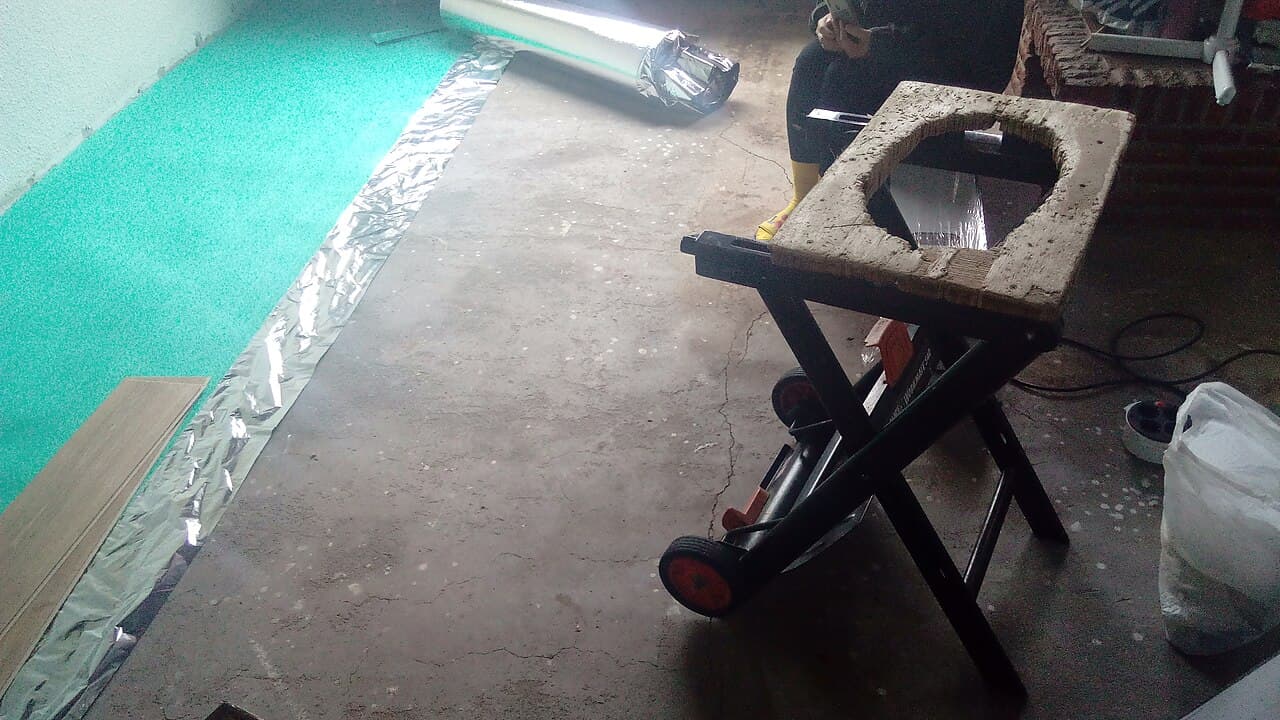
Check references and finished work
DPOR advises asking for local references, calling them, and if possible going out to look at finished projects.[1] Ask past customers whether the crew kept to the schedule, left the house clean, and came back to fix problems. Look at seams, transitions at doorways, and how neatly the trim was handled.
Compare written bids
DPOR advises soliciting at least three bids and basing all of them on the same set of specifications, and warns against automatically accepting the lowest.[1] See how much new flooring costs in Virginia for what should be in each line.
Then ask the questions that matter for flooring:
- Who removes and disposes of the old floor, and who repairs the subfloor if needed?
- Is the product named by brand and model, and who orders it?
- How will they handle humidity, acclimation and underlayment for the product you chose?
- What does the workmanship warranty cover, and for how long?
If your house is older, ask about the old materials. The EPA advises having removal and major repair of asbestos-containing material done by people trained and qualified in handling asbestos, and says not to sand or try to level asbestos flooring or its backing.[4] And the EPA says anyone paid to perform work that disturbs paint in housing built before 1978 must be certified in lead-safe work practices, including sole proprietorships.[5]
Get it in writing
Virginia law requires licensed contractors to provide a written contract for residential work.[1] DPOR says the contract should include the total price, when payments will be made, and whether there is a cancellation penalty.[1] Add the product, the rooms, the start and finish dates, cleanup, and who moves furniture.
DPOR's rule of thumb is an initial deposit of no more than 10% of the total price or $1,000, whichever is less.[1] It also advises never letting payments get ahead of the contractor's work, and not paying 100% of the bill until the work is 100% complete.[1]
The Board for Contractors requires all changes to a contract to be made in writing and signed by both the contractor and the consumer before the changes are implemented.[1] If you add a room or switch products midway, put it on paper.
For help choosing the product itself, see how to choose flooring for each room.
Stop and call a pro if
- The installer cannot give a licence number, or the number does not match the name on the quote.
- You are pushed to pay most of the price before work starts, or to sign a blank or partly blank contract.
- The old floor may contain asbestos, or the house predates 1978 and the contractor has no lead-safe certification.
- The subfloor is rotted or sagging, which is a repair for a licensed contractor before any new floor goes down.
Browse more flooring answers or flooring businesses on Loclis. To collect quotes from licensed contractors, describe your flooring job.
Common questions
- Does a flooring installer need a licence in Virginia?
- A contractor who takes a job of over $1,000 needs a Virginia contractor licence, at least Class C, and flooring is a recognised specialty. Check the licence on the DPOR website before you pay anything.
- What if I hire an unlicensed installer?
- DPOR says unlicensed contracting is against the law, and that the Board for Contractors may not be able to help you resolve a complaint if you contract with someone who does not hold a licence.
- Should I let the installer buy the flooring?
- It is worth asking. Either way, the contract should name the exact product, color and quantity, so there is no dispute about what was ordered.
- How much should I pay up front?
- DPOR's rule of thumb is no more than 10% of the total price or $1,000, whichever is less, unless the job needs custom or special-order items.
- What if the floor was installed badly?
- Start with your written contract and tell the contractor in writing. If it is not resolved, the Board for Contractors takes complaints about licensed contractors, which is another reason to hire one.
Sources
- [1] What You Should Know Before You Hire a Contractor, Virginia Board for Contractors, Department of Professional and Occupational Regulation. Checked October 27, 2026.
- [2] Va. Code § 54.1-1100, Definitions, Code of Virginia, Virginia General Assembly. Checked October 27, 2026.
- [3] 18VAC50-22-30, Definitions of specialty services, Virginia Administrative Code, Board for Contractors. Checked October 27, 2026.
- [4] Protect Your Family from Exposures to Asbestos, U.S. Environmental Protection Agency. Checked October 27, 2026.
- [5] Lead Renovation, Repair and Painting Program, U.S. Environmental Protection Agency. Checked October 27, 2026.
Want a pro to handle it?
Describe the job once. Licensed local businesses send quotes, and you pay only when you book one.
Get a quote from a local pro