How much does storm damage repair cost in Virginia?
There is no single Virginia price for storm damage repair, and we found no dated Virginia source that publishes one. The cost depends on what was damaged, hidden damage, permits, and your deductible: Virginia's Bureau of Insurance notes some policies have a separate wind or hurricane deductible. Get at least three written, itemized quotes.
Free to ask. Local shops send quotes, and you pay only when you book one.
By Kasra Taheri, Founder, LoclisPublished
Researched and drafted with AI, then checked claim by claim against the sources listed below before it was published. Prices and rules change; the dates beside each source say when it was last checked.
This is a job for a licensed pro in Virginia
This page explains what the work involves, the permits, what a licensed pro does and what drives the cost. It does not give step-by-step instructions, because this work needs a licence, a permit or both, and doing it wrong can injure someone. Before you hire, check the licence on Virginia's DPOR record.
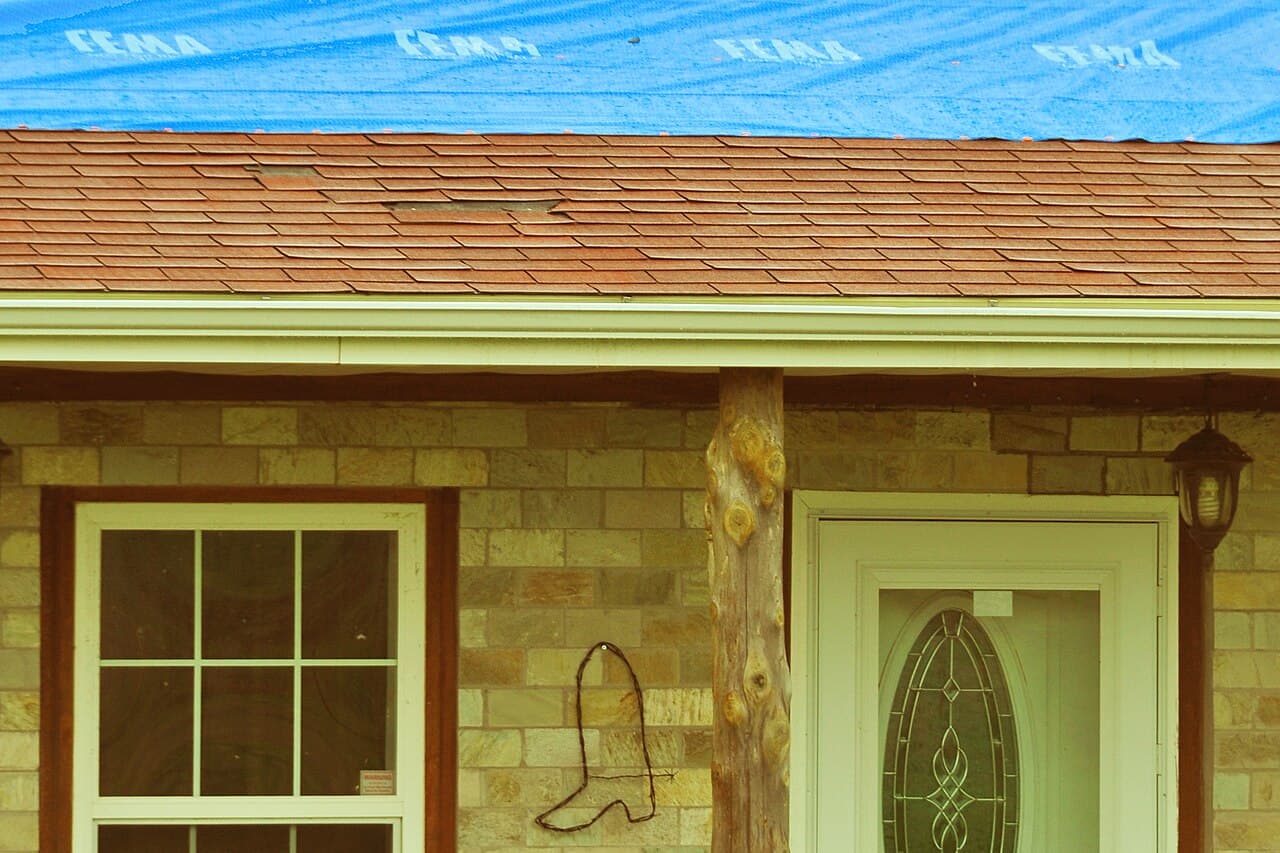
There is no honest single price for storm damage repair in Virginia. A tarp over a small hole and a roof, siding and interior rebuild after a tree strike are different jobs, and we found no Virginia source that publishes dated storm repair prices, so we do not quote any. What follows is what moves the bill, what your insurance may cover, and how to get written quotes you can compare.
What decides the price
What was damaged. Roof coverings, framing, windows, siding, ceilings, insulation, wiring and mechanical equipment each carry their own labour and materials. Storm damage also tends to be partly hidden: water that got in behind a ceiling or wall only shows up when a contractor opens it up. Virginia's Bureau of Insurance expects this, advising that if there is a discrepancy over the cost of repairs or the contractor has found hidden damage, you contact the company representative to try to resolve the difference.[1]
Emergency versus permanent work. Tarping, boarding up and drying out are priced as urgent, short jobs. Permanent repairs are priced by scope, so ask each contractor to separate the two on the quote.
Access and the number of trades. A roof, a ceiling and a wall that all need work usually means a roofer, a drywall crew, a painter and sometimes an electrician. A general contractor coordinates them and adds a margin for it; separate trades cost less to hire but leave scheduling to you.
Permits and code. Repairs that change structure often need a building permit from your locality. Ask whether the permit and inspection are in the price.
Demand. After a widespread storm, good contractors get booked up and quotes can be harder to compare. DPOR warns that scammers frequently attempt to profit from disasters,[2] which is covered below.
What your insurance may change
For most homeowners, the cost that matters is the part the policy does not pay. Some homeowners policies contain a special deductible for wind or hurricane losses,[1] and it is applied separately from any other deductible on the policy. The Bureau says some wind or hurricane deductibles are written as a flat amount, such as $1,000, while others are applied to the loss as a percentage of the insurance coverage on the dwelling.[1]
The Bureau's own example shows the effect. If a hurricane causes damage to your house amounting to $3,000, your dwelling is insured for $100,000 and your policy has a 2% hurricane deductible, the deductible would be $2,000, and the company would pay $1,000.[1] Read your declarations page before you decide whether a small repair is worth a claim.
Payment can also come in stages. With replacement cost coverage, the most usual way is for the insurer to make a partial payment (ACV) until the property has been repaired, and you then have six months to claim the difference.[1] Budget for paying contractors before the second payment arrives.
If a tree is involved, the Bureau says most policies pay for the reasonable cost for clean up and removal of trees that fall and cause damage to your fence or deck furniture,[1] and generally the fallen tree must cause damage to your home or property before the insurance company is obligated to pay.[1]
Getting quotes you can compare
DPOR says to get at least three estimates whenever possible.[2] The Bureau of Insurance adds that you should not sign any contract for major repair until the insurer's representative has determined how much damage there is and how much the company will pay.[1] For each quote ask for:
- a written scope that matches the adjuster's estimate line by line, with any extra work priced separately
- the contractor's licence number, class and specialty, which you can check in DPOR's License Lookup
- who pulls the permit, and whether the fee is included
- materials by brand and grade, the warranty on labour and on materials, and a start and finish estimate
- a payment schedule tied to finished work
Class matters for large jobs. Virginia law defines Class C contractors as those whose single contract or project is over $1,000 but less than $30,000, and Class B as $30,000 or more but less than $150,000.[3] Check that the licence class covers the value of your contract.
Paying safely
On deposits, DPOR's disaster advice is pay 10 percent down or $1,000, whichever amount is less, with a higher limit if the job needs custom-made items or special orders.[2] It also says not to pay 100% of the bill until the work is 100% complete and you are satisfied, and to avoid cash.[2] The Bureau of Insurance says it is highly unlikely that a reputable contractor would request full payment in advance.[1] If you have a mortgage, the lender may have its own rules for how insurance funds are released.[1]
The Bureau of Insurance's answer to a contractor who offers to start faster if you sign your check over to them is no.[1] See how to spot a storm-chasing contractor and the first steps after storm damage.
When to call a licensed pro
For every permanent repair. Roof, structural, electrical and gas work after a storm needs a licensed Virginia contractor of the right class, and DPOR notes that consumers have very little recourse against unlicensed contractors.[2] Loclis lists DPOR-licensed businesses with their licence details: browse restoration services, read more restoration answers, or describe the job once and licensed local pros will quote it.
Common questions
- Why do you not give a dollar figure for storm damage repair?
- Because we found no Virginia source that publishes dated prices for it, and the range between a tarp and a rebuild is too wide for an average to mean anything. Use three written quotes for your own house.
- What is a wind or hurricane deductible?
- A separate deductible some homeowners policies apply to wind or hurricane losses. The Bureau of Insurance says it may be a flat amount, such as $1,000, or a percentage of the dwelling coverage, so a 2% deductible on a $100,000 dwelling is $2,000.
- How much deposit should I pay a storm repair contractor?
- DPOR advises 10 percent down or $1,000, whichever amount is less, unless the job needs custom-made items or special orders, when a limit of 30% applies. Keep payments from getting ahead of the work.
- What if the contractor finds more damage than the adjuster did?
- Contact the insurer's representative to resolve the difference, as the Bureau of Insurance advises, and keep photographs of the hidden damage. If you cannot resolve it, contact the Bureau.
- Does homeowners insurance pay for tree removal?
- Often, if the tree damaged the house or other property. The Bureau says the fallen tree generally must cause damage before the insurer is obligated to pay, though some policies add limited coverage for trees that block a driveway.
Sources
- [1] Disaster Strikes Insured Homeowners Loss, Bureau of Insurance, Virginia State Corporation Commission. Checked October 27, 2026.
- [2] Disaster Recovery: Avoiding Fraud, Virginia Department of Professional and Occupational Regulation. Checked October 27, 2026.
- [3] Va. Code § 54.1-1100, Definitions, Code of Virginia, Virginia General Assembly. Checked October 27, 2026.
Want a pro to handle it?
Describe the job once. Licensed local businesses send quotes, and you pay only when you book one.
Get a quote from a local pro