How do I prepare my house for hurricane season in Virginia?
Start before the season, which Ready.gov dates June 1 to November 30. Learn your evacuation zone, read your policy for a wind or hurricane deductible and flood cover, copy your documents, secure outdoor items, and have licensed pros check the roof, nearby trees and any generator. Leave roof, tree and electrical work to licensed trades.
Free to ask. Local shops send quotes, and you pay only when you book one.
By Kasra Taheri, Founder, LoclisPublished
Researched and drafted with AI, then checked claim by claim against the sources listed below before it was published. Prices and rules change; the dates beside each source say when it was last checked.
This is a job for a licensed pro in Virginia
This page explains what the work involves, the permits, what a licensed pro does and what drives the cost. It does not give step-by-step instructions, because this work needs a licence, a permit or both, and doing it wrong can injure someone. Before you hire, check the licence on Virginia's DPOR record.
Prepare in three layers: know your risk and your evacuation zone, get your insurance and documents in order, and have a licensed pro look at the parts of the house a hurricane tests first, usually the roof, nearby trees and any generator. Do it before a storm is named, because contractors, shutter suppliers and insurers get busy and slow once one is on the forecast map.
Know your risk
Ready.gov dates it: "Atlantic Hurricane Season: June 1-November 30".[1] Hurricanes are not just a coastal problem. Ready.gov says to find out how rain, wind, water and even tornadoes could happen far inland from where a hurricane or tropical storm makes landfall.[1]
If you live in an evacuation zone, Ready.gov warns: "You may have to evacuate quickly due to a hurricane if you live in an evacuation zone."[1] Learn your evacuation routes, practice with your household and pets, and identify where you will stay.[1] Follow the instructions from local emergency managers.[1]
Get the insurance side ready first
This is the step that most affects what a storm costs you, and it needs no ladder.
- Read the deductible. The Bureau of Insurance says some homeowners policies contain a special deductible for wind or hurricane losses.[2] It also says: "Yes, there is often a difference between wind deductibles and hurricane deductibles."[2] Which one applies to a given loss depends on how your policy describes it, so read the wording and ask your agent. Our storm repair cost answer walks through the Bureau's worked example.
- Check flood coverage. The Bureau states plainly that standard homeowners policies do not cover flood damage.[2] If you want flood cover, it is a separate policy, and Ready.gov points to the National Flood Insurance Program for it.[1]
- Keep copies of your documents. Ready.gov says to make sure your insurance policies and personal documents, such as ID, are up to date, and to make copies and keep them in a secure password-protected digital space.[1]
- Photograph your home and belongings now, so there is a before to compare with after. After a loss, the Bureau's advice is: "Keep an inventory of your damaged property – take pictures or video the damage if possible."[2]
What to do around the house
Ready.gov's list for strengthening your home is short: "De-clutter drains and gutters, bring in outside furniture and consider hurricane shutters."[1] Loose patio furniture, bins and garden items are what a strong wind turns into projectiles. Drains and gutters at ground level are yours to clear. Gutters on an upper storey, or any work on the roof, are a job for a professional rather than a ladder in the wind.
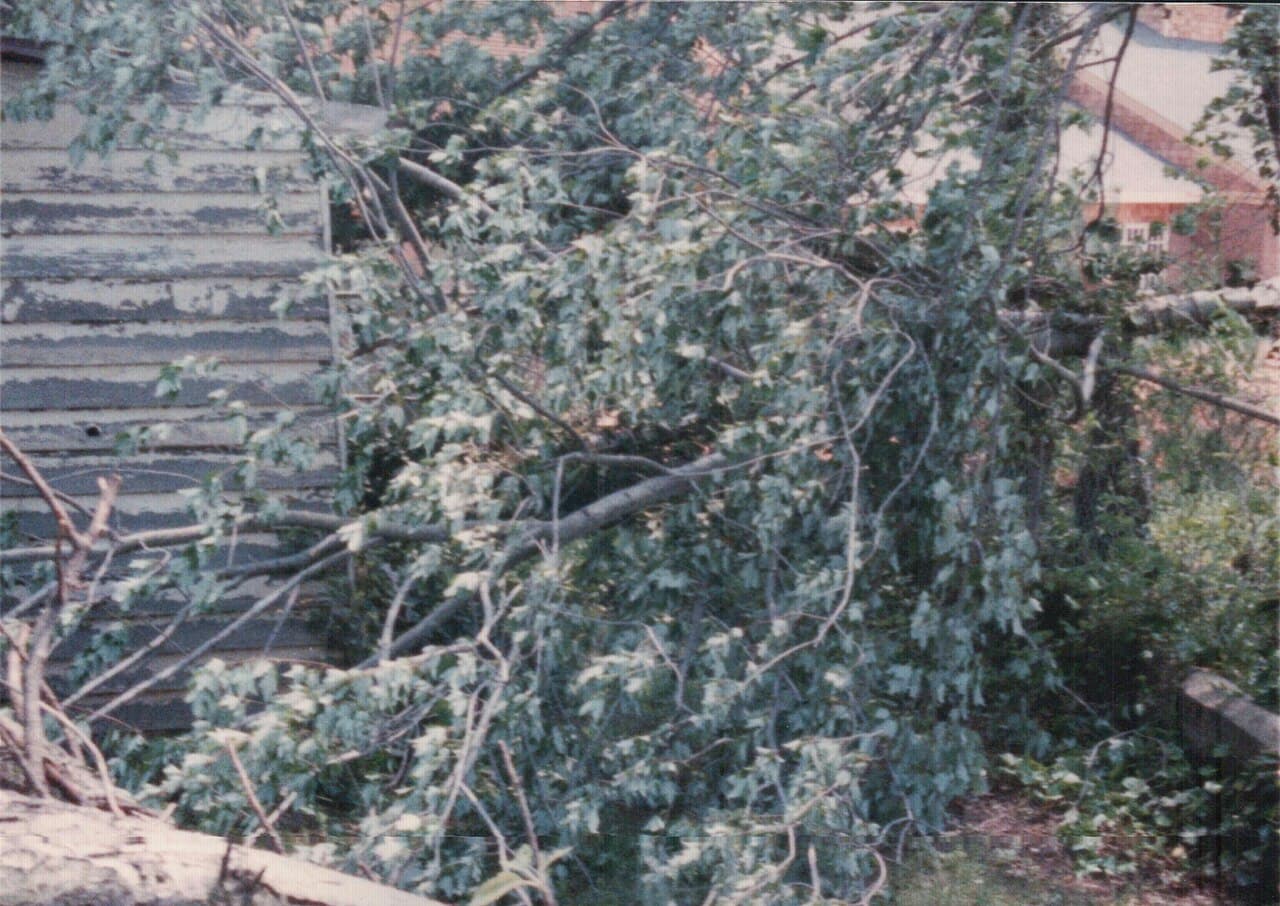
Trees are the other big one. Ready.gov advises: "Cut down or trim trees that may be in danger of falling on your home."[3] Do not do this yourself if the tree is large, leaning, or anywhere near a power line. Tree work next to a house or a line needs a trained crew with the right equipment. Dominion Energy's rule: "Keep all ladders and other tools in the SAFE ZONE, at least 10 feet from any power lines."[4] The Bureau of Insurance says: "Generally, the fallen tree must cause damage to your home or property before the insurance company is obligated to pay for clean up and removal."[2] So a weak tree is best dealt with before the storm, not after.
Power and generators
Plan for an outage that may last days. Ready.gov says to take an inventory of the items you need that rely on electricity[5] and to plan for batteries and other alternative power sources.[5] If you use medical devices or refrigerated medicine, talk to your provider before the season.[5] Just before a storm, Ready.gov says to disconnect appliances and electronics to avoid damage from electrical surges.[5]
A generator is the most dangerous item on this list. Ready.gov's rule: "Generators and fuel should always be used outdoors and at least 20 feet away from windows, doors and attached garages."[5] Keep it dry and protected from rain or flooding, because Ready.gov notes that touching a wet generator or devices connected to one can cause electrical shock.[5] Ready.gov also says to install working carbon monoxide detectors on every level of your home.[5]
A permanently installed standby generator is not a weekend project. It ties into your electrical panel and usually a gas line, and under the Uniform Statewide Building Code a permit is required before installations or alterations involving "electric wiring" or "fuel supply systems".[6] Have a licensed electrician or contractor install and permit it.
Hiring before the season
Roof condition, flashing, windows and doors, garage doors and tree work are all easier to arrange in spring than in the week before a storm. Ask a licensed roofer or contractor to look over the roof covering and flag anything loose, and put the work into a written scope.
Hire only licensed contractors. DPOR says to get at least three estimates whenever possible, and notes that consumers have very little recourse against unlicensed contractors.[7] Look up any licence in DPOR's License Lookup, and be cautious of anyone who knocks on your door after a storm: see how to spot a storm-chasing contractor. If a storm does damage your home, start with the first steps after storm damage, and for the structure itself, how to tell if a storm damaged your house's structure.
When to call a licensed pro
For the roof, windows and doors, shutters that are fixed to the house, tree removal, any electrical work and any generator hookup. Roof and structural jobs need a contractor licensed by DPOR for the work, and the Code of Virginia prohibits contracting for, or bidding upon the construction, removal, repair or improvements to or upon real property owned, controlled or leased by another person without a license or certificate.[8] You can do the paperwork and the packing yourself; leave the building to someone licensed.
Loclis lists DPOR-licensed businesses with their licence details. Browse restoration services, read more restoration answers, or describe the job once and licensed local pros will quote it.
Common questions
- When is hurricane season in Virginia?
- The Atlantic hurricane season runs from June 1 to November 30, according to Ready.gov. Virginia is affected inland as well as on the coast, through wind, rain, flooding and tornadoes.
- Does homeowners insurance cover hurricane flood damage?
- No. The Bureau of Insurance says standard homeowners policies do not cover flood damage. Flood cover is a separate policy, such as one through the National Flood Insurance Program.
- What is a hurricane deductible?
- A special deductible some homeowners policies apply to wind or hurricane losses. The Bureau says wind and hurricane deductibles often differ, so read how your policy describes it.
- Should I trim trees near my house before a storm?
- Ready.gov advises cutting down or trimming trees that may fall on your home. Hire a trained crew for anything large, leaning or near power lines, and keep ladders at least 10 feet from lines.
- How far from the house should a generator be?
- Ready.gov says generators and fuel should be used outdoors and at least 20 feet away from windows, doors and attached garages, and kept dry.
Sources
- [1] Hurricanes, Ready.gov, Federal Emergency Management Agency. Checked October 28, 2026.
- [2] Disaster Strikes Insured Homeowners Loss, Bureau of Insurance, Virginia State Corporation Commission. Checked October 28, 2026.
- [3] Thunderstorms & Lightning, Ready.gov, Federal Emergency Management Agency. Checked October 28, 2026.
- [4] Electric Safety, Dominion Energy. Checked October 28, 2026.
- [5] Power Outages, Ready.gov, U.S. Department of Homeland Security. Checked October 28, 2026.
- [6] 13VAC5-63-80. Section 108 Application for permit (Virginia Uniform Statewide Building Code), Virginia Administrative Code, Virginia General Assembly. Checked October 28, 2026.
- [7] Disaster Recovery: Avoiding Fraud, Virginia Department of Professional and Occupational Regulation. Checked October 28, 2026.
- [8] Va. Code § 54.1-1115, Prohibited acts, Code of Virginia, Virginia General Assembly. Checked October 28, 2026.
Want a pro to handle it?
Describe the job once. Licensed local businesses send quotes, and you pay only when you book one.
Get a quote from a local pro