What are the first steps after a storm damages a home in Virginia?
Make everyone safe, photograph the damage before you clean up, and call your insurer. Then protect the house from more damage with temporary measures such as a roof tarp, and keep receipts. Virginia's Bureau of Insurance advises waiting for the insurer's go-ahead before permanent repairs. Hire only licensed contractors for anything structural, on the roof, or electrical.
Free to ask. Local shops send quotes, and you pay only when you book one.
By Kasra Taheri, Founder, LoclisPublished
Researched and drafted with AI, then checked claim by claim against the sources listed below before it was published. Prices and rules change; the dates beside each source say when it was last checked.
This is a job for a licensed pro in Virginia
This page explains what the work involves, the permits, what a licensed pro does and what drives the cost. It does not give step-by-step instructions, because this work needs a licence, a permit or both, and doing it wrong can injure someone. Before you hire, check the licence on Virginia's DPOR record.
Get everyone safe, photograph the damage, call your insurer, and protect the house from further damage with temporary measures before anything permanent. Virginia's Bureau of Insurance says insurers expect you to do exactly that, and that you should keep receipts and hold off on final repairs until the insurer has seen the damage.[1] Permanent repairs, and anything on a roof, in the structure or on the electrical system, are work for licensed pros.
Start with safety, then document everything
Call 911 for any emergency, and keep family and pets out of any room or part of the house that looks unsound. If the power is out, plan for it before the evening. Ready.gov, the federal emergency-preparedness site, says a refrigerator keeps food cold for about four hours and a full freezer for about 48 hours if the doors stay closed.[2] It says to throw away food that has been exposed to temperatures 40 degrees or higher for two hours or more.[2]
Ready.gov says never to use a gas stove or oven to heat your home.[2] If you run a generator, Ready.gov says generators and fuel should always be used outdoors and at least 20 feet away from windows, doors and attached garages.[2] Ready.gov also advises battery-backup carbon monoxide detectors in central locations on every level of your home.[2]
Before you move or clean anything, document the damage. The Bureau of Insurance's advice is to take photographs to show the way things look before you begin cleaning and repairing, and to keep receipts for all of your clean-up expenses.[1] Walk every room and the outside, shoot wide and close, and keep a running list of what is damaged and what you have thrown away.
Call your insurer early
Report the loss to your agent or the claims department right away; the phone number is in your policy. The Bureau of Insurance says insurance companies are required to acknowledge the receipt of your claim within 10 working days.[1] If the insurer has not responded in the required time, the Bureau can help.
Read your policy for two things before the adjuster arrives. Some homeowners policies contain a special deductible for wind or hurricane losses,[1] and it may be separate from your regular deductible. And if you cannot live in the house, ask about Additional Living Expense coverage, which pays costs above your normal living expenses; keep every receipt.[1]
Stop more damage, but keep the evidence
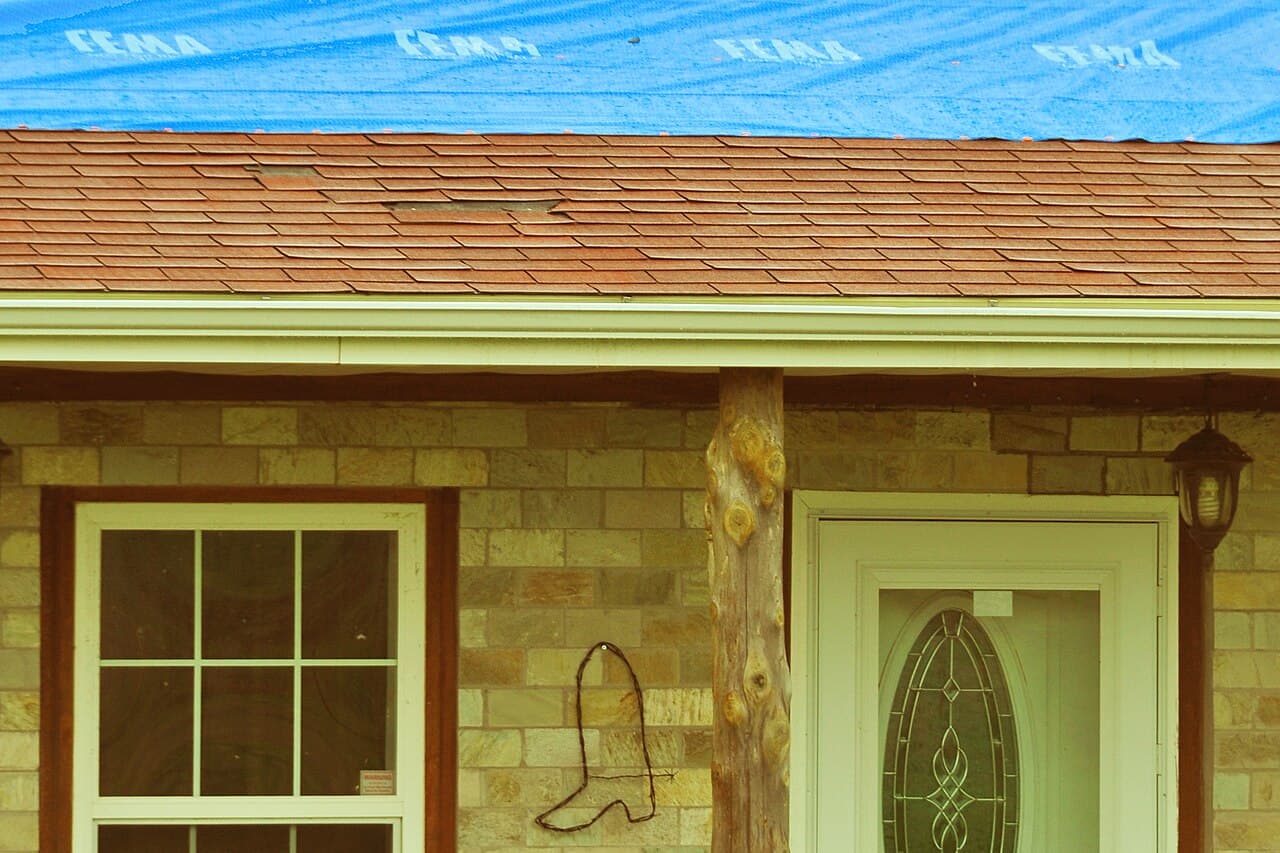
Insurers expect homeowners to protect their property from further damage and will pay the reasonable costs associated with protecting the property.[1] That usually means a tarp over a hole in the roof, boards over broken windows, and moving belongings out of the wet. Ask your insurer before you start, and keep what is damaged: the Bureau says that whenever you make temporary repairs, be sure you save all damaged property for the adjuster to inspect.[1]
A roof tarp is a job for a roofer, not for you on a ladder in the wind or on wet shingles. Ask the insurer whether it has a preferred emergency service, and call a licensed contractor yourself if the adjuster cannot come quickly.
Wait before final repairs
If the adjuster cannot come for days and rain is coming, temporary repairs are fine. For permanent work the Bureau's advice is that unless the insurance company has advised you in writing to go ahead and make final repairs, you should wait.[1] It also advises that you obtain written estimates before repairs begin, and do not sign any contracts for major repair until the company representative has determined how much damage there is and how much the company will pay.[1]
A fallen tree is a common case. The Bureau says the fallen tree must generally cause damage to your home or property before the insurance company is obligated to pay for clean up and removal.[1] Photograph the tree where it fell before anyone cuts it.
Permits and emergency work
Repairs that change structure often need a building permit under the Virginia Uniform Statewide Building Code. The code allows for urgency: applications for emergency construction, alterations, or equipment replacement must be submitted by the end of the first working day that follows the day such work commences.[3] A licensed contractor should handle the permit and say so in the contract.
When to call a licensed pro
For nearly everything past the first day. Structural damage, roof openings, storm-damaged wiring or gas, flooded mechanical equipment and tree work all need licensed tradespeople. Check any contractor before you sign: DPOR says to verify a licence using License Lookup or by calling (804) 367-8511.[4] DPOR also warns that scammers frequently attempt to profit from disasters by taking advantage of individuals who are rebuilding.[4] Our guide to spotting a storm-chasing contractor shows the warning signs, and what storm damage repair costs explains how to compare quotes.
Browse restoration services with licence details, read more restoration answers, or describe the job once and licensed local roofers will respond.
Common questions
- Should I call my insurance company or a contractor first?
- Call your insurer first. The Bureau of Insurance says to contact your agent or insurer immediately to discuss temporary repairs, and that insurers will pay the reasonable costs of protecting the property. Then call a licensed contractor for temporary repairs such as a roof tarp if the adjuster cannot come quickly.
- Will insurance pay for a roof tarp?
- Virginia's Bureau of Insurance says insurers will pay the reasonable costs associated with protecting the property, and that placing tarps on the roof is a way of protecting it from further damage. Call your insurer first and keep the receipts.
- Can I throw away damaged items right away?
- Ask your insurer first. The Bureau of Insurance says that when you make temporary repairs you should save all damaged property for the adjuster to inspect. Photograph it before you move it and keep a list of anything you discard.
- How long does the insurer have to respond to my claim?
- The Bureau of Insurance says companies are required to acknowledge receipt of your claim within 10 working days. If you have not heard back in that time, you can contact the Bureau.
- Do I need a permit for storm repairs?
- Repairs that change structure often do. For emergency work, the Virginia Uniform Statewide Building Code requires the application by the end of the first working day after the work starts. Your contractor should handle it.
- How do I check that a contractor is licensed?
- Use DPOR's License Lookup or call (804) 367-8511. Check that the licence is valid and the class and specialty match the job.
Sources
- [1] Disaster Strikes Insured Homeowners Loss, Bureau of Insurance, Virginia State Corporation Commission. Checked October 27, 2026.
- [2] Power Outages, Ready.gov, U.S. Department of Homeland Security. Checked October 27, 2026.
- [3] 13VAC5-63-80, Virginia Uniform Statewide Building Code, Section 108 Application for permit, Virginia Administrative Code, Legislative Information System. Checked October 27, 2026.
- [4] Disaster Recovery: Avoiding Fraud, Virginia Department of Professional and Occupational Regulation. Checked October 27, 2026.
Want a pro to handle it?
Describe the job once. Licensed local businesses send quotes, and you pay only when you book one.
Get a quote from a local pro