How often should dog waste be picked up in the yard?
Often enough that no pile is ever sitting there when it rains: for most households that means every day or two, and always before a forecast storm and before mowing. Rain carries waste on the ground into storm drains and local waters, so frequent bagging and trashing matters more than any fixed schedule.
Free to ask. Local shops send quotes, and you pay only when you book one.
By Kasra Taheri, Founder, LoclisPublished
Researched and drafted with AI, then checked claim by claim against the sources listed below before it was published. Prices and rules change; the dates beside each source say when it was last checked.
Step by step
Read when to stop and call a pro, further down this page, before you start.
Step 1: Pick a routine
Walk the yard once a day or every other day, at the same time as another chore so it sticks.
Step 2: Scoop before rain
Check the forecast and clear the yard before a storm, because rain moves waste on the ground toward storm drains.[1]
Step 3: Scoop before mowing
Clear the lawn first so the mower does not spread waste or throw it around the yard.
Step 4: Bag it
Put the waste in a bag and tie it.[2]
Step 6: Add days for more dogs
Scoop more often with several dogs, a puppy or a small yard, and during hot weather when flies gather.
Pick up dog waste every day or every other day, and always before it rains. There is no single schedule that suits every yard, but the rule that works is simple: do not let waste sit on the ground long enough to be rained on, mowed over or found by flies.
Why rain sets the schedule
Pet waste left on the grass or in the woods makes its way to storm drains every time it rains.[1] Storm drains lead to lakes and streams, and the waste travels there untreated.[1] Pet waste may carry disease-causing organisms, which make water unsafe for swimming and more costly to treat for drinking.[1] Like human waste, animal waste may contain harmful bacteria and viruses, and its nutrients accelerate the growth of nuisance algae.[1]
Prince William County's stormwater office adds that some urban areas have found pet waste to contribute up to 50% of the total bacteria content in streams,[2] and that leaving pet waste on the ground increases public health risk by allowing harmful bacteria and nutrients to wash into storm drains.[2] So the practical test is not "how long has it been" but "is there a pile out there and is a storm coming".
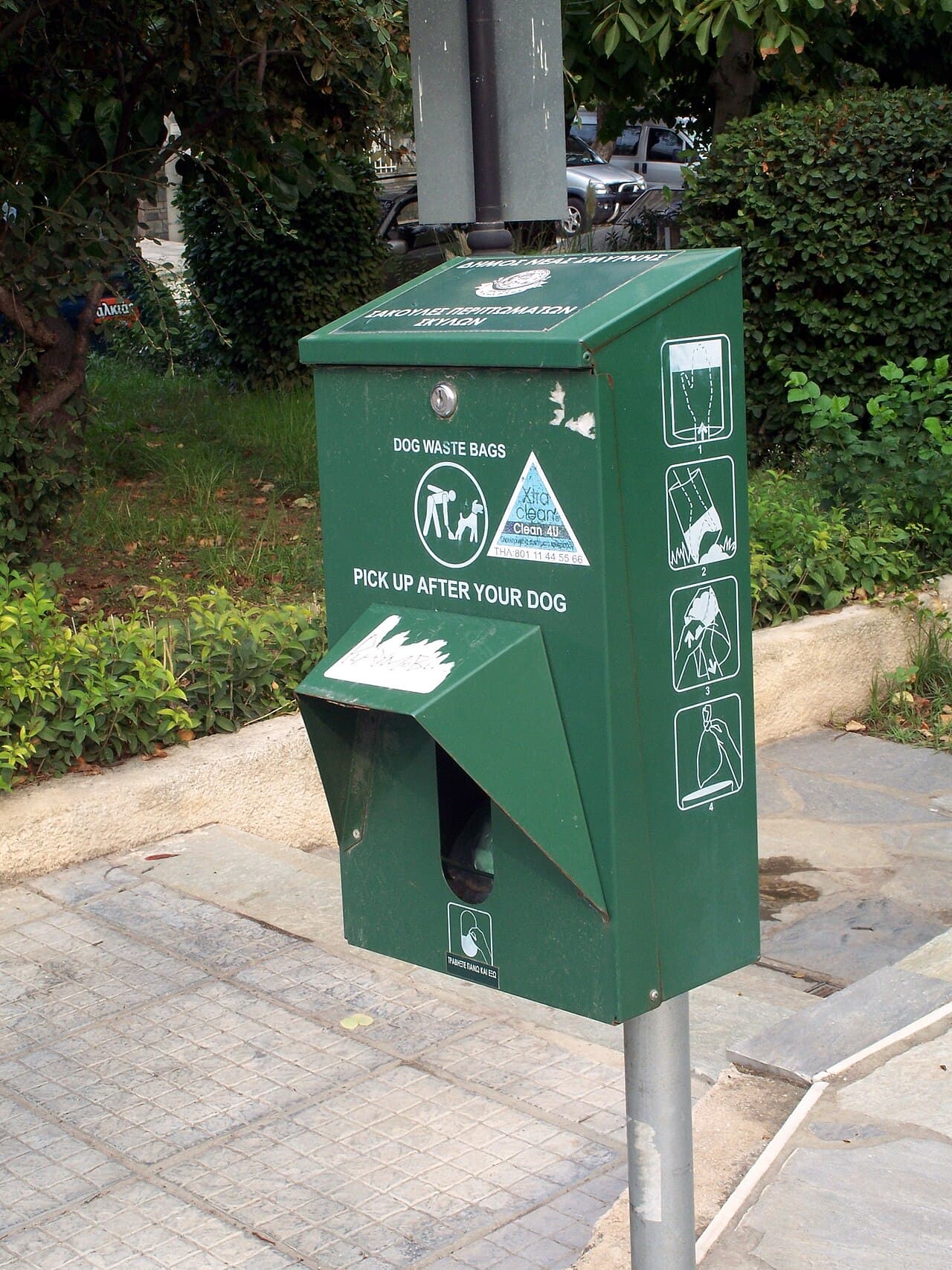
A schedule that works
One small dog, a dry stretch of weather: a walk around the yard every day or two. It takes a couple of minutes when the piles are fresh and few.
Several dogs, a puppy, or a small yard: daily, because piles stack up and the dog has fewer clean places to go.
Hot weather: daily. Waste draws flies in summer, and Virginia Cooperative Extension's pest guide gives this advice for flies: "Bag pet waste before putting in garbage pails."[3]
Before rain: whatever your usual rhythm, check the forecast and clear the yard the day before a storm.
Before mowing: clear the lawn first. A mower rolls through waste and spreads it over the grass, the wheels and your shoes.
After a gap: if you have been away or a week has slipped by, do a thorough walk, including fence lines, shrubs and the dog's favorite corners. Old piles dry into the grass and are easy to miss.
Where it goes
Bag it, tie the bag and put it in the household trash. Fairfax County's soil and water conservation district tells residents to scoop it up and bag it with the rest of the household garbage,[1] and Prince William County's stormwater office calls bagging, then placing pet wastes in the trash, the best disposal method.[2]
Do not hose waste into the street, flush it into a storm drain or add it to a food-scrap compost bin. Keep the trash can lid tight so the bag does not become the next smell. For clearing odor that has already built up, see how to get rid of dog poop smell in your yard.
Make it easy to keep up
Habits stick when the supplies are in the way. Keep bags and a scoop by the back door, clip a roll to the leash, and tie the yard walk to something you already do, such as the evening feeding. A single designated potty area, on mulch or gravel away from the patio, shortens the walk and keeps the rest of the lawn clean.
Know your local rules too. Fairfax County's pooper scooper law carries a fine of up to $250 for owners who break it,[1] and many Virginia localities and homeowner associations have their own pick-up rules. Check yours.
Stop and call a pro if
- You cannot keep up. A large yard, several dogs, an injury or a heavy work schedule is exactly what a regular scooping service is for.
- There is a big backlog. Weeks of buildup is a one-time cleanup job that a service can clear and then maintain.
- The ground stays soggy where you scoop. Standing water holds waste and odor and points to a drainage problem a landscaper or excavator should look at.
- A sewage or septic smell mixes with the yard smell. That is a plumber's or septic professional's job, not a scooping job.
Getting help in Virginia
If you decide to hand the job off, how much a dog poop scooping service costs in Virginia explains what drives the price and what to ask for in a written quote. Loclis lists local pros under pet services, and there are more questions answered under pet services answers.
When you would rather not do it yourself, describe your yard once and local pet-waste services quote it.
Common questions
- Is picking up dog poop once a week enough?
- For one small dog on a dry lawn it can be tolerable, but a week is long enough for piles to attract flies, smell and get rained on. Every day or two is a better habit, and the yard should always be clear before a storm.
- Should I pick up dog poop before mowing?
- Yes. A mower can smear and scatter waste across the lawn and onto the mower itself, so scoop first.
- Does rain wash dog poop away?
- It washes it somewhere else. Fairfax County's soil and water conservation district says pet waste left on grass makes its way to storm drains every time it rains, and storm drains lead to lakes and streams. Scoop ahead of rain instead of counting on it.
- Where do I put dog waste once it is picked up?
- Bag it, tie the bag and put it in the household trash. Prince William County's stormwater office calls this the best disposal method. Do not put it in a storm drain or a food-scrap compost bin.
- Can a scooping service take over the job?
- Yes. Services usually visit weekly or more often, and a weekly visit works best if you also clear the yard before heavy rain. See what a dog poop scooping service costs in Virginia before you compare quotes.
Sources
- [1] Picking Up Dog Waste: Scoop the Poop, Northern Virginia Soil and Water Conservation District, Fairfax County. Checked October 28, 2026.
- [2] Stormwater Pollution Reduction, Prince William County, Department of Environmental Services. Checked October 28, 2026.
- [3] 2026 Pest Management Guide: Home Grounds and Animals, Nuisance Insects of the House and Yard, Virginia Cooperative Extension, Virginia Tech. Checked October 28, 2026.
Want a pro to handle it?
Describe the job once. Licensed local businesses send quotes, and you pay only when you book one.
Get a quote from a local pro