How do I get rid of dog poop smell in my yard?
Pick up every pile, bag it and put it in the trash, because leftover waste is the source of the smell. Then soak the lawn spots your dog uses with a hose and scrub patios and walkways with soap and water. Keep up a weekly scoop, or more often in hot weather, so the smell does not return.
Free to ask. Local shops send quotes, and you pay only when you book one.
By Kasra Taheri, Founder, LoclisPublished
Researched and drafted with AI, then checked claim by claim against the sources listed below before it was published. Prices and rules change; the dates beside each source say when it was last checked.
Step by step
Read when to stop and call a pro, further down this page, before you start.
Step 1: Find every pile
Walk the whole yard, including fence lines, shrubs and the dog's favorite spots, and note where the smell is strongest.
Step 2: Scoop and bag it
Pick up all waste and tie it in a bag.[1]
Step 4: Rinse the lawn spots
Soak the places the dog urinates on the grass with a hose so residue washes into the soil.
Step 5: Scrub hard surfaces
Scrub patios, walkways and pavers with a stiff brush and mild dish soap, then rinse onto the lawn, not toward a storm drain.
Step 6: Keep to a schedule
Scoop at least weekly, and more often in hot weather or with several dogs, and bag the waste before it goes in the garbage.[2]
The smell comes from waste that is still on the lawn, or from urine and old residue left on the ground and on hard surfaces. Pick up every pile, bag it, put it in the trash, then rinse the spots your dog uses most. Keeping up with it stops the smell coming back.
Start with the source
Odor is almost never "in the yard" in general. It is in specific places: a corner the dog favors, the base of a fence, a patio or walkway, a bit of mulch. Walk the yard, including under shrubs and along the fence line, and find every pile before you try to treat anything. Old piles that have dried into the grass still smell when it rains.
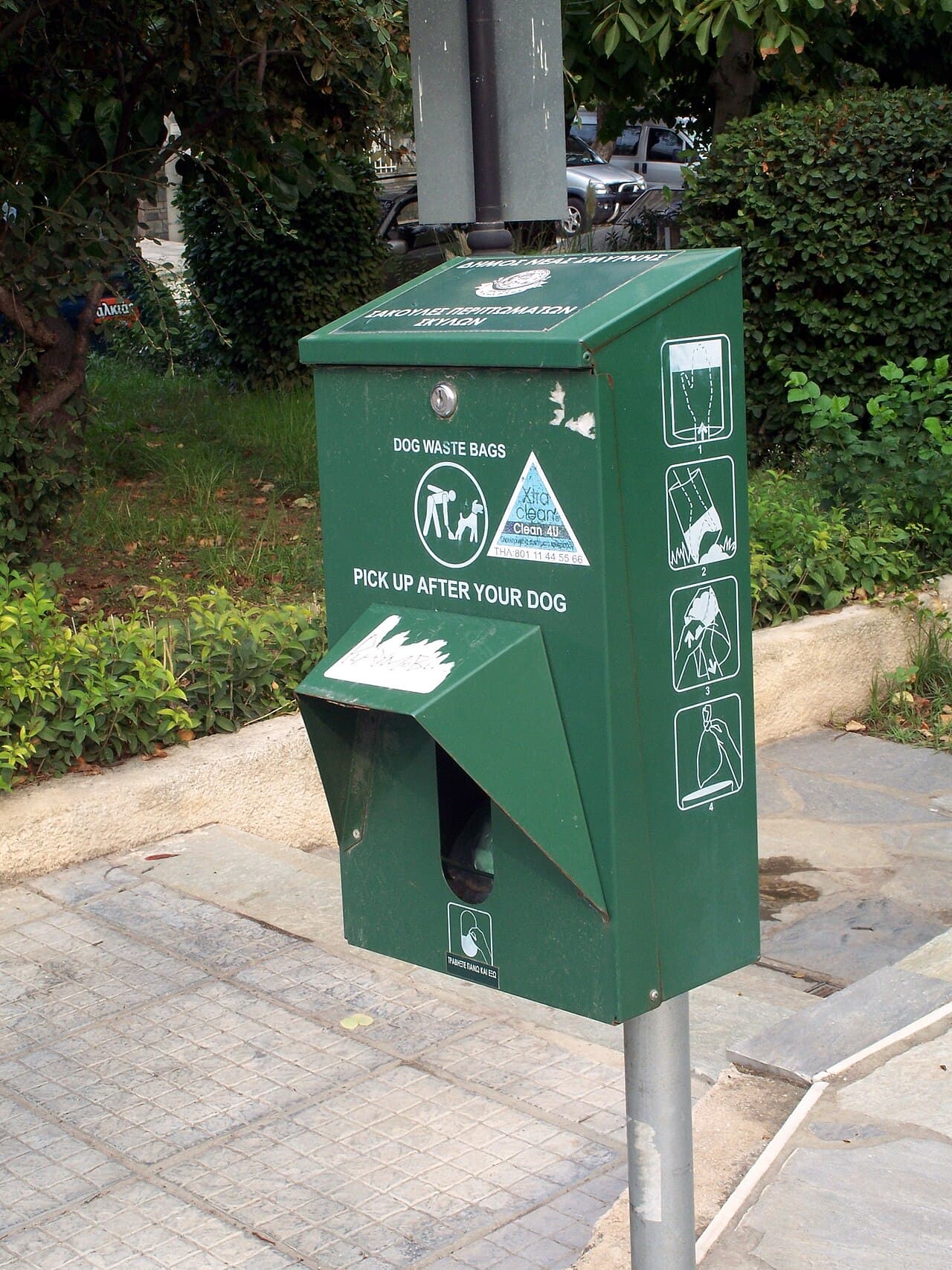
Use a scoop or a bag-on-hand and pick up everything, then bag it. Pet waste is best bagged and put in the trash: Prince William County's stormwater office calls bagging, then placing pet wastes in the trash, the best disposal method.[1] Do not put it in a food-scrap compost bin. Chesterfield County's food-scrap drop-off at its convenience centers lists pet waste under what not to compost.[3]
Then rinse what is left
Once the piles are gone, water does most of the remaining work. On grass, soak the usual spots with a hose so urine and residue wash down into the soil. On a patio, deck boards, a concrete pad or pavers, scrub with a stiff brush and a mild dish-soap solution, then rinse. Hard surfaces hold odor longer than soil does, so they are often where a smell that will not quit is hiding.
Keep the runoff on your own lawn or a planted bed where you can. Prince William County's stormwater office says leaving pet waste on the ground increases public health risk by allowing harmful bacteria and nutrients to wash into storm drains,[1] so do not hose waste toward the street or a curb inlet.
Some people use garden lime or a store-bought odor product on top. Neither is needed to start with. If you do try one, read its label first, and keep it away from vegetable beds and from where the dog will lick or roll.
Keep the smell from coming back
Frequency does more than any product. Scoop at least weekly, and more often in hot weather or with several dogs. A regular scoop also helps with flies: Virginia Cooperative Extension's pest guide lists "Good sanitation, tight fitting garbage can lids" as prevention for flies and says to "Bag pet waste before putting in garbage pails."[2]
Do the same with the trash itself. Double-bag, tie the bag, and use a can with a lid that fits. A bin of bagged waste left in the sun can smell as much as the yard did.
If the dog always uses one spot, give it one: a patch of mulch or gravel, away from the patio and the windows, that you can scoop and rinse easily.
Why it matters beyond the smell
The smell is the least of it. Pet waste can be a major contributor of bacteria and excessive nutrients to local waters, and some urban areas have found pet waste to contribute up to 50% of the total bacteria content in streams.[1] Picking it up regularly protects your lawn, your family and the creek downstream.
Stop and call a pro if
- You cannot keep up. A large yard, several dogs, an injury or a heavy work schedule is exactly what a weekly scooping service is for.
- The smell is sewage, rotten eggs or something that is not pet waste. That points to a leaking sewer line, a septic problem or a drainage issue, which is a licensed plumber's or septic professional's job.
- The ground stays wet or boggy near where you scoop. Standing water holds odor and needs a drainage fix.
- There is a large or old backlog of waste. If it is more than you want to handle, a service will clear it once and then keep it up.
Getting help in Virginia
Once the yard is clean, what a scooping service costs tells you what to compare if you want to hand it off. Loclis lists local pros under pet services, and there are more questions answered under pet services answers.
When you would rather not do it yourself, describe your yard once and local pet-waste services quote it.
Common questions
- Does lime get rid of dog poop smell?
- It is not needed to start with. Removing the waste and rinsing the spots does most of the work. If you try lime or an odor product, read the label first and keep it away from vegetable beds and from where the dog will roll or lick.
- Can I put dog poop in my compost?
- Not in a food-scrap compost program. Chesterfield County's convenience-center drop-off, for example, lists pet waste under what not to compost. Bag it and put it in the trash.
- Why does my yard smell worse after rain or in summer?
- Rain and heat wake up old waste hiding in the grass and wet the urine residue on hard surfaces. Scoop more often in hot weather and rinse the dog's usual spots.
- Is it okay to rinse dog waste into the street?
- No. Prince William County's stormwater office says leaving pet waste on the ground allows harmful bacteria and nutrients to wash into storm drains and eventually local water bodies. Pick it up and rinse onto your own lawn.
- When should I use a scooping service?
- When you cannot keep up with it: a big yard, several dogs, an injury or a long backlog. A weekly service keeps the smell from building up.
Sources
- [1] Stormwater Pollution Reduction, Prince William County, Department of Environmental Services. Checked October 27, 2026.
- [2] 2026 Pest Management Guide: Home Grounds and Animals, Nuisance Insects of the House and Yard, Virginia Cooperative Extension, Virginia Tech. Checked October 27, 2026.
- [3] Convenience Centers, Chesterfield County Waste and Resource Recovery. Checked October 27, 2026.
Want a pro to handle it?
Describe the job once. Licensed local businesses send quotes, and you pay only when you book one.
Get a quote from a local pro