How often should I change my furnace filter?
Check it every month while the heat or air conditioning is in heavy use, and change it when it looks dirty. Manufacturers typically recommend replacement every 60 to 90 days, and the interval your filter's maker gives is the one to follow. If the old filter comes out heavily soiled, consider changing it more often; homes with pets, smokers or allergies may need shorter intervals.
Free to ask. Local shops send quotes, and you pay only when you book one.
By Kasra Taheri, Founder, LoclisUpdated
Researched and drafted with AI, then checked claim by claim against the sources listed below before it was published. Prices and rules change; the dates beside each source say when it was last checked.
Step by step
Read when to stop and call a pro, further down this page, before you start.
Step 1: Find the filter
Look for the filter in or near the indoor air handler or furnace.[6] In some homes it sits behind a return-air grille in a wall or ceiling instead.
Step 2: Turn the system off
Switch the system off at the thermostat so the blower is not pulling air while the filter is out.
Step 3: Slide it out and look
Pull the filter out and look at it; if it is dirty or clogged, clean it if it is a washable type or replace it.[6]
Step 4: Read the size and rating
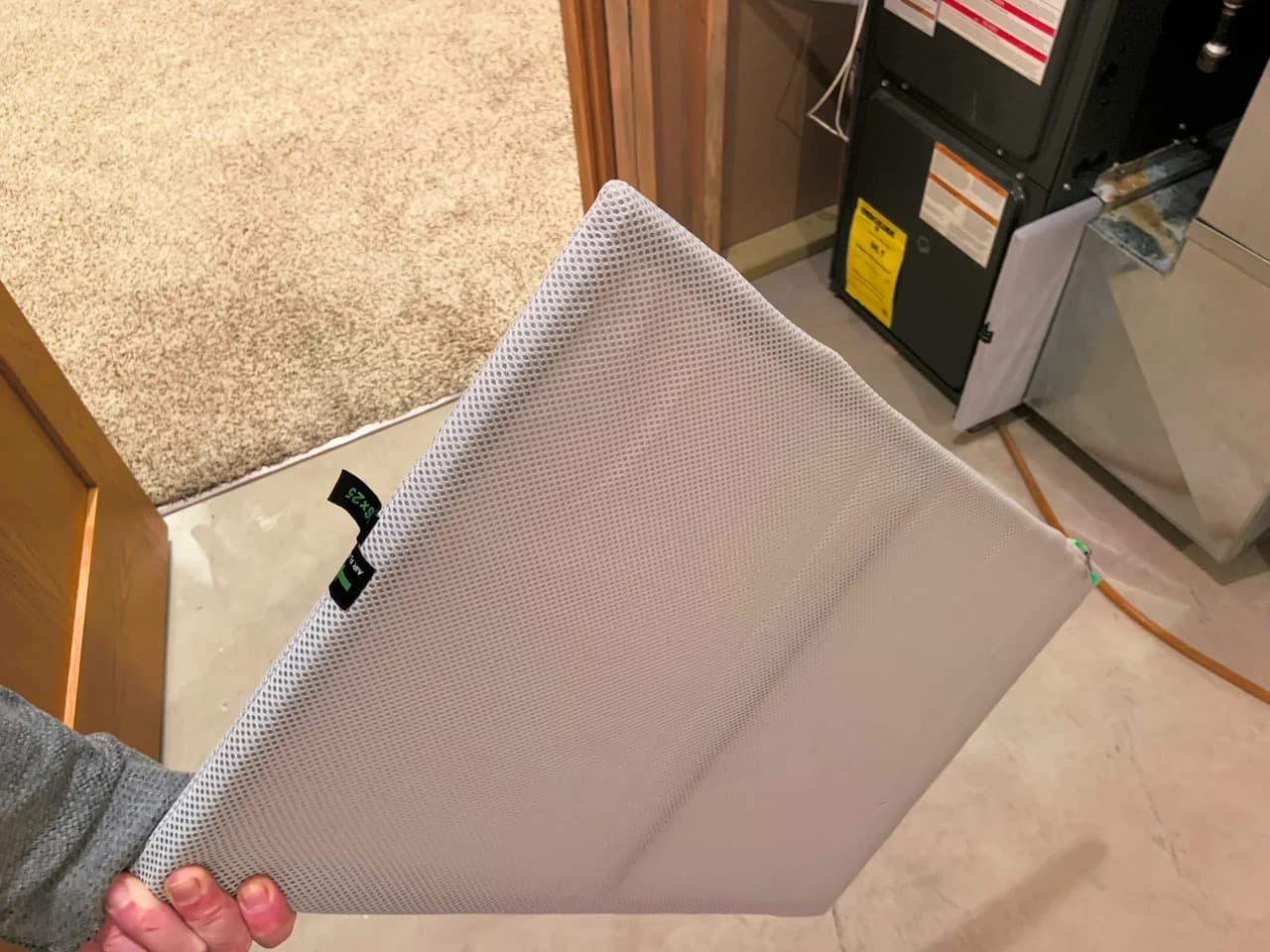
Note the size and the MERV or other rating, usually marked on the old filter, before you buy a replacement. Filters come in 1 to 5 inch thicknesses and a variety of lengths and widths, so match all three.[2]
Step 6: Insert it the right way
Slide the new filter in so it fits snugly without being bent or crushed.[2] If its frame has an airflow arrow, point the arrow toward the furnace or air handler, away from the return duct.
Step 7: Turn the system back on
Close any filter door, switch the system back on at the thermostat and check that air is coming from the vents.
Check your furnace filter once a month during the heating and cooling seasons and change it whenever it looks dirty. Manufacturers typically recommend replacement every 60 to 90 days,[2] but the interval your filter's maker gives is the one to follow, and a house with pets, a smoker or someone with allergies may need it sooner.
A schedule that works
Look at the filter once a month while the heat or air conditioning is in regular use. That monthly check is what ENERGY STAR recommends for central air conditioners, furnaces and heat pumps,[1] and Virginia Cooperative Extension advises checking it monthly during peak season.[4] The filter is usually located in or near the indoor air handler,[6] and if the filter is dirty or clogged, it should be cleaned or replaced.[6]
Then set the replacement interval by what you see. If the old filter comes out heavily soiled, consider changing filters more often.[2] Pets, smokers, allergies and the size of the home all change how fast a filter loads, which is why Trane suggests replacing filters every 30 to 90 days, depending on the size of the home, the number of pets, smokers and allergies.[5] Whatever the filter, the EPA's advice is to replace filters according to the manufacturer's recommendations.[2]
In spring and fall, when the system barely runs, you can usually stretch the checks.
Why it matters
ENERGY STAR warns that "a dirty filter can increase energy costs and damage your equipment, leading to early failure."[1] In summer, Trane notes that a dirty or clogged filter makes cooling cycles longer.[5]
The EPA's point is simpler: "If a filter is dirty and overloaded, it won't work well."[2]
One reason a filter can last longer than you expect: the EPA notes that furnace and HVAC filters filter the air only when the system is running, which in most homes is usually less than 25% of the time during the heating and cooling seasons.[2] A system that runs more, in a hard winter or a hot July, loads its filter faster.
Picking the right filter
Size. Filters commonly come in thicknesses of 1 to 5 inches, with a variety of lengths and widths to match common sizes of filter frames in furnaces and HVAC systems.[2] The size is usually marked on the old filter, so check it before you shop. The EPA says the right filter fits snugly so air does not leak around it, and you should not have to bend or crush a filter to make it fit.[2]
Rating. A MERV rating reports how well a filter captures particles between 0.3 and 10 microns.[3] If you want better filtration, the EPA's advice is to choose a filter rated at least MERV 13, or as high a rating as your system fan and filter slot can accommodate.[3][2] It adds: "Most furnaces and HVAC systems can accommodate a MERV 13 filter without creating equipment problems, provided that the filter is replaced frequently."[2] Because, in the EPA's words, "HVAC systems are not commonly labeled with any filter recommendations,"[2] ask your technician at the next check-up what your system can take.
What to avoid. The EPA says to avoid air cleaners and furnace or HVAC filters that intentionally produce ozone, a lung irritant.[2]
What a filter will not fix. The EPA is clear that filters do not address the cause of mold and musty odors.[2] A musty smell from the vents is often water where it should not be; see how to clear a clogged condensate drain.
Stop and call a pro if
Changing a filter is a homeowner job. These are not:
- You smell gas near a gas furnace. Leave the filter and get out. Columbia Gas of Virginia tells customers to "go outside and call 911 and then call us at 1-800-544-5606 (24/7)."[7] If another company supplies your gas, call its emergency line.
- A carbon monoxide alarm sounds, or people in the house have headaches, dizziness, confusion or nausea while a gas or oil furnace is running. EPA lists severe headaches, dizziness, mental confusion, nausea and fainting among the symptoms of CO poisoning,[8] and says that if anyone has symptoms when the alarm goes off, get them out of the house immediately and seek medical attention.[8] If no one has symptoms, it says to ventilate the home with fresh air, turn off the furnace and other fuel-burning appliances, and have a qualified technician inspect them.[8] Columbia Gas of Virginia tells customers who smell gas or have carbon monoxide symptoms to "go outside and call 911 and then call us at 1-800-544-5606 (24/7)."[7] If another company supplies your gas, use its emergency number.
- You see soot, scorch marks or a burnt smell around the furnace's burner area or filter slot. Turn the furnace off at the thermostat and have a technician check it: ENERGY STAR notes that a dirty burner or cracked heat exchanger causes improper burner operation and can make the equipment operate less safely.[1]
- The filter slot is inside the furnace's burner or blower compartment behind a panel you have to unscrew. Ask a technician to show you the right way in, or to fit an easier filter rack.
- The old filter is wet, or the cabinet has water in it. That is usually a drain problem, not a filter problem.
- The system still runs nonstop or blows weak air with a clean filter. See why an HVAC system runs all the time.
A yearly check-up covers the parts behind the panels; what an HVAC tune-up costs in Virginia lists what it should include, and whether a maintenance plan is worth it helps you decide how to book it.
Finding a technician
Loclis lists DPOR-licensed HVAC businesses with their licence number and class. Look up HVAC businesses in Blacksburg or another town, browse HVAC maintenance, or see all heating and cooling answers.
If something is wrong beyond the filter, describe it once and licensed local HVAC businesses quote it.
Common questions
- Is every three months often enough?
- It depends on the filter and the house, so follow the interval the filter's maker gives and look at the filter monthly in winter and summer. The EPA says manufacturers typically recommend replacement every 60 to 90 days, and that if filters appear heavily soiled when you replace them, you should consider changing them more frequently. ENERGY STAR's checklist has homeowners inspect, clean or change filters once a month.
- Do I need to change the filter more often with pets?
- Usually. Trane puts the range at every 30 to 90 days depending on the size of the home, the number of pets, smokers and allergies. If the filter is grey and matted at the one-month check, shorten the interval.
- What MERV rating should I buy?
- The EPA suggests at least MERV 13, or as high a rating as your system fan and filter slot can accommodate, and says most furnaces and HVAC systems can take a MERV 13 filter without equipment problems if it is replaced frequently. Because systems are rarely labelled with a filter recommendation, ask your HVAC technician at the next check-up.
- Does a heat pump or air handler need the same filter changes?
- Yes. A central system's filter sits in or near the indoor unit whether it is a furnace, air handler or heat pump, and ENERGY STAR's monthly check applies to central air conditioners, furnaces and heat pumps alike.
- Will a better filter fix a musty smell?
- No. The EPA says filters do not address the cause of mold and musty odors, which come from a water or moisture problem. A musty smell near the indoor unit can be a sign of a clogged condensate drain, so check that next.
- Can I reuse a washable filter?
- Some filters are made to be washed and reused. Follow the manufacturer's cleaning instructions, let it dry fully before it goes back in, and check it on the same monthly schedule as a disposable filter.
Sources
- [1] Maintenance Checklist, ENERGY STAR, U.S. Environmental Protection Agency. Checked October 26, 2026.
- [2] Guide to Air Cleaners in the Home, U.S. Environmental Protection Agency. Checked October 26, 2026.
- [3] What is a MERV rating?, U.S. Environmental Protection Agency. Checked October 26, 2026.
- [4] ENERGY SERIES: What about the Air Conditioning System? (2901-9001), Virginia Cooperative Extension, Virginia Tech. Checked October 26, 2026.
- [5] AC Won't Turn Off? Find Out Why And What to Do, Trane. Checked October 26, 2026.
- [6] Heat Pump Troubleshooting Guide, Carrier. Checked October 26, 2026.
- [7] Safety, Columbia Gas of Virginia. Checked October 26, 2026.
- [8] Protect Your Family and Yourself from Carbon Monoxide Poisoning, U.S. Environmental Protection Agency. Checked October 27, 2026.
Want a pro to handle it?
Describe the job once. Licensed local businesses send quotes, and you pay only when you book one.
Get a quote for HVAC Repair