How do I clear a clogged AC condensate drain line?
Turn the system off, find the drain line's access point near the indoor unit and its exit outside, then pull the clog out with a wet/dry vacuum at the outdoor end. Pour distilled vinegar or a PVC-safe cleaner into the access point, let it sit, and flush with water. Call an HVAC technician if water has damaged ceilings or the clog keeps coming back.
Free to ask. Local shops send quotes, and you pay only when you book one.
By Kasra Taheri, Founder, LoclisPublished
Researched and drafted with AI, then checked claim by claim against the sources listed below before it was published. Prices and rules change; the dates beside each source say when it was last checked.
Step by step
Read when to stop and call a pro, further down this page, before you start.
Step 3: Look inside
Take the cap off the access point and shine a flashlight in to look for debris, mold or a blockage.[2]
Step 4: Pull out what you can reach
If the clog is within reach, pull it out carefully so you do not push it farther in; a wire brush can loosen it.[2]
Step 5: Vacuum from the outside end
Hold a wet/dry vacuum hose tight over the outdoor end of the line and run it to suck the clog out.[1]
Step 7: Flush with water
Pour clean water into the access point and watch for it to run freely out of the outdoor end.[2]
Step 8: Check the pan you can reach
If there is a drain pan you can see and reach without opening the unit, such as a pan under an attic air handler, soak up standing water with towels and wipe it clean; leave any pan behind a panel to a technician.[2]
Step 9: Cap it, restart and watch
Put the cap back, turn the cooling on, and check over the next few hours that water drips from the outdoor end and the pan stays dry.[2]
Many clogged AC drain lines can be cleared by a homeowner with a wet/dry vacuum, a flashlight and a cup of vinegar. Turn the cooling off first, clear the line from the outside end, flush it, and dry any pan you can reach without opening the unit. If water has already reached a ceiling, or the line clogs again within weeks, it is time for a technician.
What the drain line does and where it is
When your air conditioner or heat pump cools, the indoor coil pulls moisture out of the air. That water drips into a pan under the coil and leaves the house through the condensate drain line, usually a ¾-inch PVC pipe that carries condensation from the evaporator coil to a drain outside the home.[1] Trane notes that it may be visible in a crawl space or attic, but it may also run under a concrete basement floor.[3]
Most lines have a capped tee or open stub near the indoor unit. That is the access point you pour into. The other end runs to a drain or outside the home, usually near the outdoor unit.[2]
Why it clogs, and how you can tell
The clog is usually a slow build-up. Carrier explains that dust and airborne particles the coil collects mix with the moisture the AC pulls out of the air and form a sludge that travels into the drain line.[1] Trane adds mold and mildew growing in standing water in the drain pan, ordinary dust, dirt and dander, and even a spider's web.[3]
The common signs are musty smells from the indoor unit or vents, water stains on ceilings or floors near the unit, weak cooling, and a system that shuts off or will not start.[1] Trane also lists rust on the bottom of the indoor unit.[3]
That last sign, a system that simply stops, is often a safety feature doing its job. Some systems have a float or safety switch that shuts the indoor unit down when water rises in the drain pan.[1][3] Without that switch, the system keeps running, the pan fills and spills over, and the water can damage ceilings or drywall.[3]
Many systems also have a secondary drain pan and a backup line that usually ends above a door or window.[2] If water is coming out of that backup line, the main line is likely blocked. Water dripping from the main line outside is a sign the system is working properly.[2]
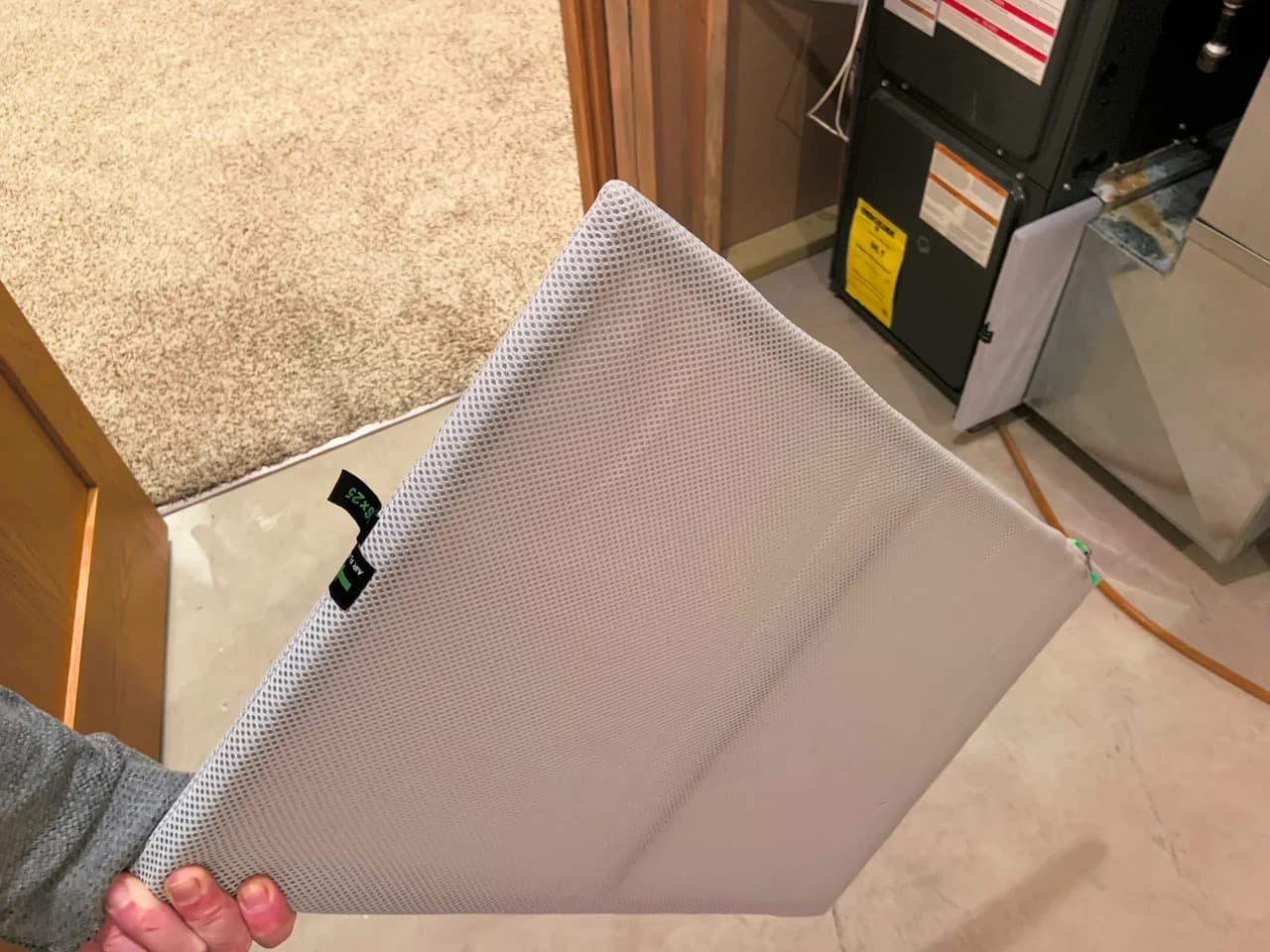
Before you start
Check whether the system is still under the manufacturer's warranty. Trane warns that if your unit is under warranty, going the DIY route could void the warranty,[3] so read the warranty terms or call the installer first.
Gather a wet/dry vacuum, a flashlight, a few old towels, a small wire or bottle brush, distilled white vinegar and a jug of clean water. Wear gloves: what comes out of the line is slimy and smells.
The steps on this page clear the line itself. They do not involve opening the indoor unit's panels, which is where the coil, blower and electrical parts are. The main drain pan usually sits inside the unit under the coil; a pan you can see without removing a panel is the only one to touch.
Choosing what to pour in
Distilled vinegar is the usual choice. Carrier and Trane both suggest a cup of it down the line between service visits,[1][3] and Lennox suggests diluted vinegar or a cleaner made for PVC pipe left to sit before a water flush.[2] Hot water, not boiling, can help loosen minor buildup.[1]
Keep expectations modest. Carrier's guide notes that vinegar and bleach may not fully prevent blockages because many clogs are debris that is not organic.[1] That is why the steps vacuum the clog out first and use the vinegar to clean up what is left.
Keeping it from clogging again
A clear line stays clear longer with a little routine care. Lennox suggests flushing the line every few months[2] and changing air filters about every three months so dust does not build up on the evaporator coil.[2] See how often to change your furnace filter for the details.
ENERGY STAR lists checking the condensate drain as part of a typical annual check-up and warns that a plugged drain can cause water damage in the house and affect indoor humidity levels.[4] If you already pay for yearly service, ask the technician to show you the access point and how they clean it. What a tune-up costs in Virginia covers what that visit should include.
Stop and call a pro if
Lennox's list of signs that the job has gone past a simple fix: extensive water damage or rust, clogs that keep coming back, a musty odor from the vents, a clog high up in the line that you cannot reach, and a system that makes unusual noises, stops cooling or shuts off.[2] Add these:
- The line runs under the slab or inside a finished wall and you cannot get to either end.
- Water is coming through a ceiling below an attic unit. Turn the system off at the thermostat and get it looked at the same day.
- The system will not restart after the line is clear and the pan is dry. Something other than the drain is wrong.
- The fix means opening the indoor unit to reach the pan, the coil or the float switch.
- Water is pooled around the air handler or furnace, or has reached its electrical parts, a nearby outlet or an extension cord. Lennox turns the AC off first because "working with water and electricity can be dangerous."[2] Keep away from the wet area, do not reach into it, and call a technician.
Virginia's Code defines a tradesman as anyone who does electrical, plumbing or heating, ventilation and air conditioning work for the general public for compensation,[6] and no one may do that work without a tradesman licence unless they work under the supervision of a tradesman licensed in that specialty.[5] Loclis lists DPOR-licensed HVAC businesses with their licence number and class: look up HVAC businesses in Blacksburg or another town, browse HVAC maintenance, or read more heating and cooling answers.
If it is more than a clog, describe the problem once and licensed local HVAC businesses quote it.
Common questions
- Where is my AC condensate drain line?
- It starts at the drain pan under the indoor coil, at the air handler or beside the furnace, and runs outside. Carrier describes it as a ¾-inch PVC pipe, and Trane notes it may be visible in a crawl space or attic or run under a basement slab. Look for a capped tee near the indoor unit; that is the access point.
- Can I pour vinegar down my AC drain line?
- Yes. Carrier and Trane both suggest a cup of distilled vinegar poured into the access point as a simple way to help keep the line clear between service visits. Lennox suggests diluted vinegar or a PVC-safe cleaner left for 30 minutes or longer, then a water flush. It will not dissolve every clog, so pull or vacuum out a real blockage first.
- Why did my air conditioner shut off when the drain clogged?
- Many systems have a float or safety switch in the drain pan that turns the system off when water rises, so the pan does not overflow into the house. Clear the line and dry any pan you can reach without opening the unit, and the system should start again. If it does not, call an HVAC technician.
- Water is dripping from a pipe above my window. Is that normal?
- That is often the backup line. Lennox explains that many systems have a secondary drain line that usually ends above a door or window, and Carrier's guide says water coming from that emergency line usually means there is a problem with the main drain. Check the main line for a clog.
- How often should the condensate drain be cleaned?
- Have it checked at every annual cooling check-up, which ENERGY STAR lists as part of a typical tune-up. Between visits, Lennox suggests flushing the line every few months, and changing the air filter regularly keeps dust off the coil that feeds the sludge.
Sources
- [1] How to Clean AC Drain Line, Carrier. Checked October 26, 2026.
- [2] AC Drain Line Clogged? Here's What to Do, Lennox. Checked October 26, 2026.
- [3] AC Condensate Drain Line Clogged? Get Expert Help, Trane. Checked October 26, 2026.
- [4] Maintenance Checklist, ENERGY STAR, U.S. Environmental Protection Agency. Checked October 26, 2026.
- [5] Va. Code § 54.1-1129, Necessity for licensure, Code of Virginia, Virginia General Assembly. Checked October 26, 2026.
- [6] Va. Code § 54.1-1128, Definitions, Code of Virginia, Virginia General Assembly. Checked October 26, 2026.
Want a pro to handle it?
Describe the job once. Licensed local businesses send quotes, and you pay only when you book one.
Get a quote for HVAC Repair