How do I change the oil in a riding mower?
Disconnect the spark plug wires, run the engine briefly so the oil is slightly warm, then drain it into a pan through the drain valve or as your manual directs. Replace the filter if there is one, refill with the oil type and amount in your manual, check the dipstick and recycle the old oil. Most residential mowers need it about once a year.
Free to ask. Local shops send quotes, and you pay only when you book one.
By Kasra Taheri, Founder, LoclisPublished
Researched and drafted with AI, then checked claim by claim against the sources listed below before it was published. Prices and rules change; the dates beside each source say when it was last checked.
Step by step
Read when to stop and call a pro, further down this page, before you start.
Step 1: Read the manual's oil and capacity
Find the oil grade, the capacity and the drain method for your engine in the operator's manual, and buy oil and a filter to match.[3]
Step 2: Park level and make it safe
Park on level ground, turn the engine off and disconnect the spark plug wires before you work on the mower.[2]
Step 3: Warm the oil slightly
Run the engine for a minute or two so the oil is slightly warm, then let it settle and cool enough to touch without burns.
Step 4: Drain into a pan
Set a drain pan under the engine and drain the oil through the drain valve or plug, or the way your manual directs, until it stops flowing.
Step 5: Replace the filter if fitted
If the engine has an oil filter, spin off the old one, wipe the mounting surface, oil the new filter's gasket and hand-tighten it.
Step 6: Refill in stages
Pour in most of the oil the manual calls for, wait a minute, and check the level a few ounces at a time to avoid overfilling.[3]
Step 7: Check the dipstick
With the mower level, wipe the dipstick, reinsert it fully, pull it out again and confirm the oil sits between the full and add marks.[3]
Step 8: Start, check for leaks and reconnect
Reconnect the spark plug wires, start the engine, let it idle briefly, then shut it off and look for oil around the filter and drain. Recheck the dipstick.
Step 9: Recycle the old oil
Pour the used oil into a leak-proof container without mixing anything into it, and take it and the old filter to a recycling drop-off.[4]
Change the oil with the engine slightly warm and the spark plug wires disconnected, drain it into a pan, replace the filter if your engine has one, refill with the grade and amount in your operator's manual, and recycle the old oil. For most residential mowers, oil is typically changed every year.[1] A riding mower with a lot of hours should follow the hour interval in its manual instead.
Know what your engine needs
The manual for your engine, not a general rule, sets the oil grade, the capacity and the drain method. Briggs & Stratton advises choosing a high-quality detergent oil classified as "For Service SF, SG, SH, SJ" or higher, and avoiding special additives.[3] It also says SAE 30 is best for warmer temperatures (above 40°F), SAE 10W-30 is good for varying temperatures but may increase oil consumption above 80°F, and synthetic SAE 5W-30 provides the best protection at all temperatures.[3] Below 40°F, it says, SAE 30 will result in hard starting.[3]
If your engine is another make, such as Kohler, Kawasaki or Honda, use the grade printed in its own manual. Many mowers also have a gauge that records hours of use, and Illinois Extension says that heavy users should change the oil by the number of hours the manufacturer specifies.[1] Briggs & Stratton notes that using synthetic oil does not alter your required 50-hour oil change intervals.[3]
Buy the filter at the same time if your engine has one, and have a drain pan, rags, gloves and a funnel ready.
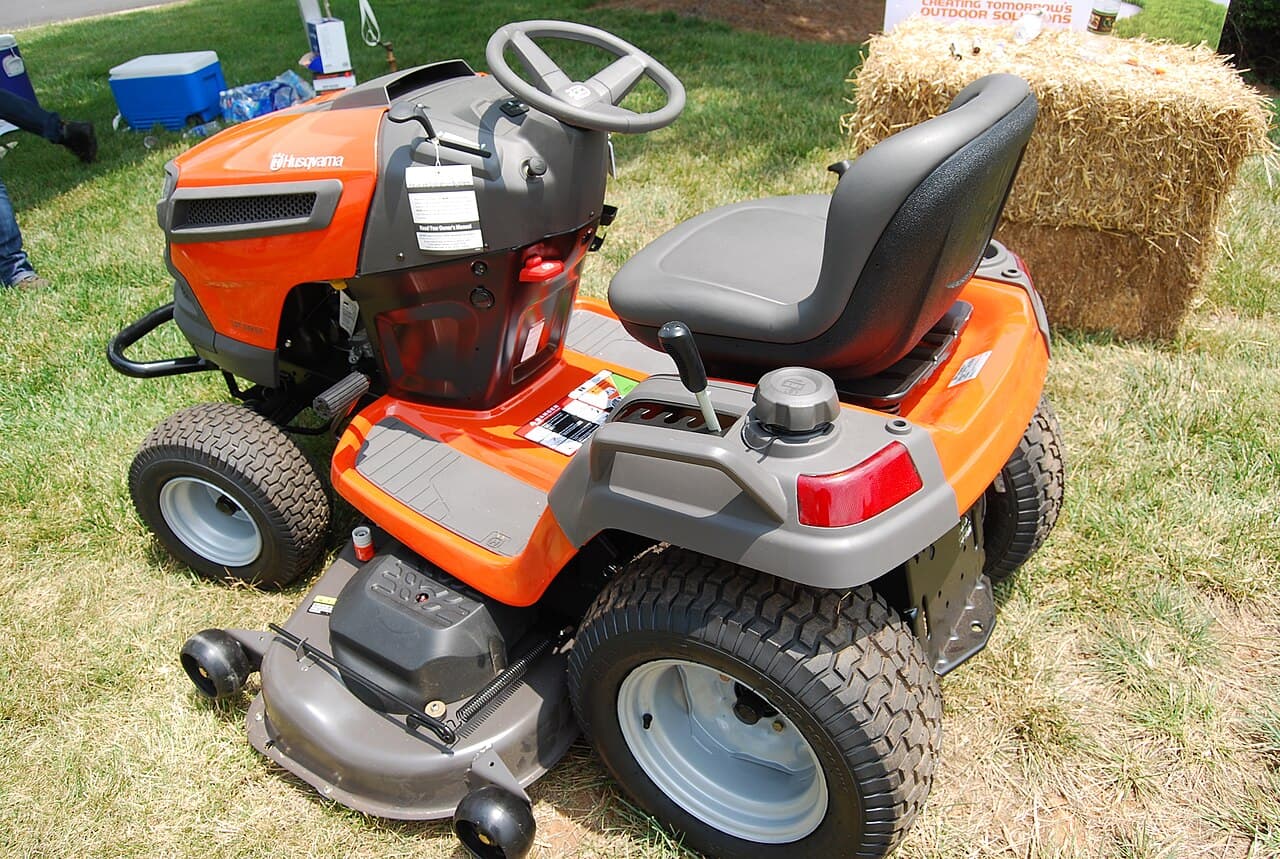
Prepare the mower
Park on level ground, shut the engine off and set the parking brake. Virginia Cooperative Extension's rule is to disconnect the spark or electric plug before troubleshooting or repairing the mower.[2] On a riding mower that means pulling both spark plug wires and keeping them clear of the plugs.
Run the engine for a minute or two beforehand. Warm oil drains faster and carries more of the sludge out with it. Do not drain a hot engine: let it sit until the muffler and block are comfortable to touch.
Drain, filter, refill
Many riding mower engines have a drain valve or plug you can reach with a pan under it; some have an extension hose. If yours has no drain, the manual will tell you whether to pump the oil out through the dipstick tube or to tilt the mower. Do not improvise a tilt on a heavy riding mower (see below).
Let the oil drain until it slows to drips. Wipe the filter seat, rub a film of fresh oil on the new filter's rubber gasket, and turn it on by hand until the gasket touches, then tighten it as far as the filter's label or your manual says. Close the drain.
Fill slowly. Briggs & Stratton's check is to park the mower on a level surface, remove the dipstick, wipe it clean, reinsert it fully, remove it again and look at the bottom of the blade; the oil should sit between the "full" and "add" marks, and if it is low, pour in a few ounces at a time to avoid overfilling.[3] Overfilled engines can smoke and foam the oil, so stop at the full mark.
Reconnect the spark plug wires, start the engine, and look for seepage at the filter and drain after a minute of idling. Shut it off, wait a minute and recheck the level.
Get rid of the old oil
Used oil is not trash. EPA says individuals who generate used oil through the maintenance of their personal vehicles and equipment are not subject to regulation under the used oil management standards,[4] but it still advises: "Don't mix used oil with anything."[4] Store it in a leak-proof container,[4] and take it to a place that collects it. Under EPA's rules, service station dealers who want relief from cleanup liability must accept used oil from do-it-yourselfers and send it for recycling,[4] so many service stations and county collection sites take it. Call before you go, because local policies vary.
Stop and call a pro if
- The oil is milky, or smells of gasoline. That points to water or fuel getting into the crankcase, which needs diagnosis.
- The level keeps dropping or the engine smokes. The engine may be burning oil or leaking it.
- The drain plug or filter will not come off, or the threads strip.
- The manual says to tip the mower and you cannot do it safely. Riding mowers are heavy and a mower can tip over easily.[2]
- You find metal flakes in the drained oil.
Getting help in Virginia
For what a repair bill looks like, see how much riding mower repair costs in Virginia, and for the repair-or-replace decision see is it worth fixing an old riding mower. Browse lawn equipment repair answers or lawn mowing services.
If the mower needs more than an oil change, describe the problem and local small engine shops can quote it.
Common questions
- How often should I change the oil in a riding mower?
- About once a year for most residential mowers. Illinois Extension says oil is typically changed every year for most residential mowers, and heavy users should follow the hour interval in the manufacturer's manual. Briggs & Stratton lists a 50-hour interval for its small engines.
- What oil does a riding mower use?
- Whatever your engine manual specifies. Briggs & Stratton says SAE 30 suits warmer temperatures above 40°F and SAE 10W-30 suits varying temperatures, with synthetic 5W-30 working at all temperatures.
- Can I use car motor oil?
- Briggs & Stratton advises a high-quality detergent oil classified For Service SF, SG, SH, SJ or higher. Check that the label and viscosity match your manual.
- How much oil does a riding mower take?
- It varies by engine, so use the capacity in the manual and fill in stages, checking the dipstick, to avoid overfilling.
- Where can I get rid of the used oil?
- EPA says to keep it unmixed in a leak-proof container and take it to a collector. Service stations that accept used oil from do-it-yourselfers are a common option, so call first.
- Do I need to change the filter every time?
- Follow your manual. If the engine has a filter, many owners change it with the oil, and it is a cheap part.
Sources
- [1] Mower Maintenance, University of Illinois Extension. Checked October 27, 2026.
- [2] Lawn Care: Rotary Mower Safety (BSE-42P), Virginia Cooperative Extension, Virginia Tech. Checked October 27, 2026.
- [3] What type and how much oil for my lawn mower?, Briggs & Stratton. Checked October 27, 2026.
- [4] Managing Used Oil: Answers to Frequent Questions for Businesses, U.S. Environmental Protection Agency. Checked October 27, 2026.
Want a pro to handle it?
Describe the job once. Licensed local businesses send quotes, and you pay only when you book one.
Get a quote for Lawn Equipment