How do I maintain a riding mower?
Check oil and fuel before each mow and clean the deck after it. Each season, sharpen the blades and replace the oil, air filter and spark plugs on the schedule in your manual. In autumn, add fuel stabilizer, run the engine briefly, remove the battery and store the mower clean so it starts in spring.
Free to ask. Local shops send quotes, and you pay only when you book one.
By Kasra Taheri, Founder, LoclisPublished
Researched and drafted with AI, then checked claim by claim against the sources listed below before it was published. Prices and rules change; the dates beside each source say when it was last checked.
Step by step
Read when to stop and call a pro, further down this page, before you start.
Step 1: Read the manual
Find the service intervals, oil grade, belt and blade specifications in the operator's manual, and follow them over any general rule.[1]
Step 3: Clean the mower after mowing
Blow clippings and dust off the deck, engine and battery area, and scrape the underside of the deck with the spark plug wires disconnected.[1]
Step 4: Keep blades sharp and balanced
Have the blades sharpened and balanced, or replace them when they are chipped or bent.[1]
Step 5: Change the oil on schedule
Change the oil after the first five hours on a new mower, then every 50 hours or each season, whichever the manual says.[3]
Step 6: Replace the air filter, fuel filter and spark plugs
Swap the filters about once a year and the two spark plugs about every two years, using the parts the manual lists.[1]
Step 7: Check tires, battery and belts
Keep tires at the pressure printed on the sidewall, keep battery terminals clean and tight, and look over the drive and deck belts for cracks and glazing.
Step 8: Prepare for winter storage
Fill the tank with stabilized fuel, run the engine briefly, remove the battery to a cool dry place and store the mower clean.[4]
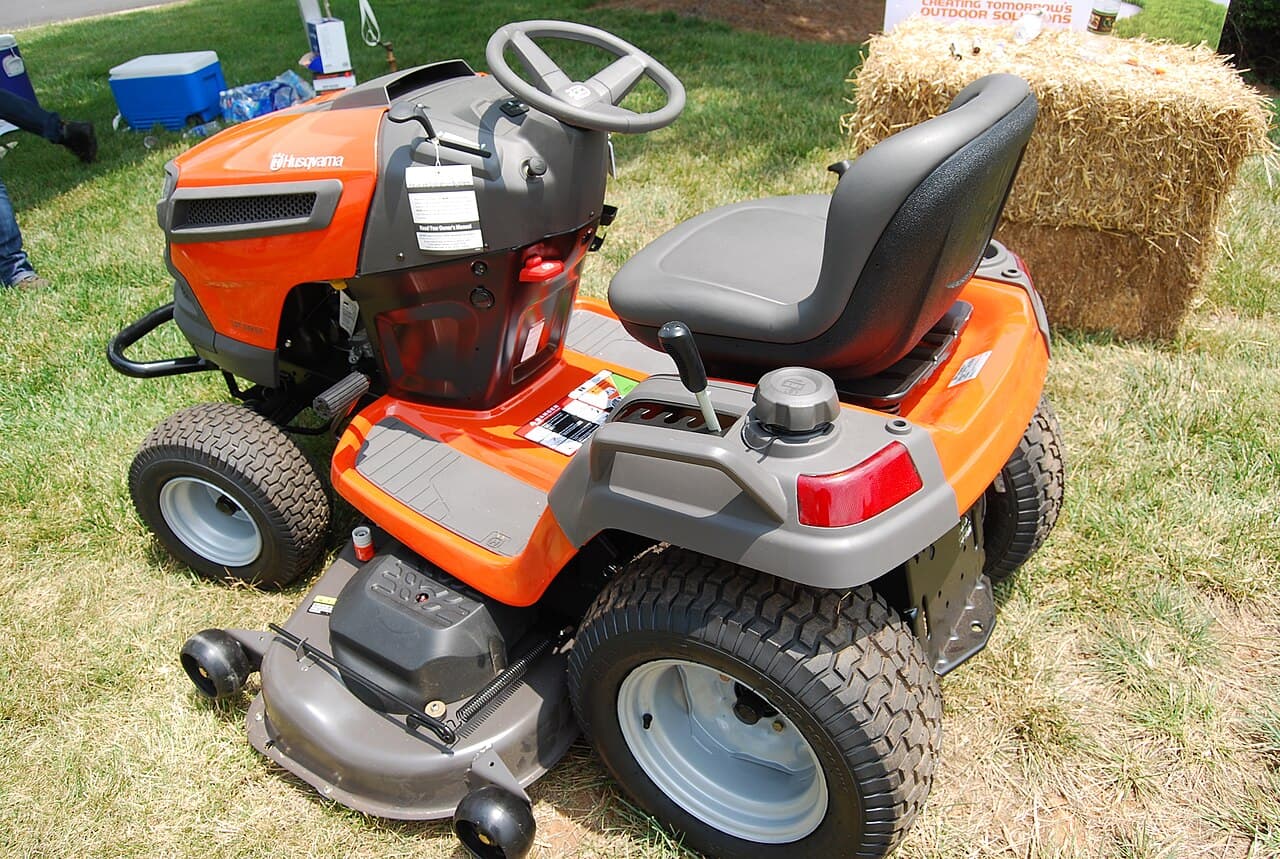
Maintain a riding mower on a calendar: check oil and fuel before every mow, clean the deck after every mow, sharpen the blades each season, and replace oil, filters and spark plugs on the manual's schedule. Illinois Extension's advice starts with the manual: "Consult with your equipment's user manual before performing maintenance or operating."[1] Then add a winter storage routine so the mower starts in spring.
Before and after every mow
Check the oil with the dipstick while the engine is cold and on level ground. Look at the fuel too. Briggs & Stratton says: "Gasoline deteriorates after 30 days and can negatively affect engine and starting performance."[3] So buy fuel in quantities you will use within a month or so.
Walk around the machine before you sit down. Look for loose bolts, low tires, leaks under the engine and damaged belts or guards. Virginia Cooperative Extension says to "Make sure all guards and safety shields are in place" and to "Never disengage any safety switches or devices."[2]
After mowing, clean the machine. Grass clippings stuck to the bottom of the mower deck hold water causing the metal to rust and shortening the lifespan of the equipment.[1] A leaf blower or compressor clears the deck top, engine and battery area. Scrape the underside with a putty knife or use the deck wash port if your mower has one. Whenever your hand goes near the blades always disconnect the spark plug,[1] and on a riding mower that means both plug wires. Virginia Cooperative Extension puts the rule the same way: disconnect the spark or electric plug before troubleshooting or repairing the mower.[2]
Once a season
Oil. Briggs & Stratton's schedule: "If you have a new mower, change the oil after the first five hours of use. After that, change the oil after every 50 hours of use or at the beginning of each lawn care season."[3] The steps are in how to change the oil in a riding mower.
Air filter. Air filters keep dust from entering the engine.[1] Illinois Extension says to change the filter per the manufacturer's direction (at least once per year).[1] In a dusty yard, look at it more often.
Fuel filter. Fuel filters are typically changed on an annual basis.[1]
Spark plugs. Push mowers often will have one, while riding mowers will have two.[1] Inspect them for clean contacts and scoring. Typically, spark plugs are changed every two years.[1] Buy the plug your manual lists, set the gap it specifies and avoid cross-threading when you start the new plug by hand.
Blades. Sharp blades cut grass; dull blades bludgeon, rip, and tear grass blades.[1] Sharpen or replace them once a season, and check the balance, because an unbalanced blade can create a slight wobble that causes strain on a mower and may result in an uneven cut.[1] A shop will sharpen and balance blades for a small fee, and swapping in a spare set makes it painless.
Tires, belts and grease points. Tire pressure is printed on the tire sidewall, and uneven pressure makes the deck cut unevenly. Look at drive and deck belts for cracks, fraying and shiny glazed surfaces. Grease the fittings and pivot points your manual lists, and wipe off excess so it does not collect grass.
Winter storage
An hour in autumn saves a service call in spring. Briggs & Stratton's storage advice is: "Top off the fuel tank before storing."[4] It also says to add an alcohol-free fuel stabilizer and ethanol treatment according to the package directions, then run the mower for a few minutes so the treated fuel gets through the system.[4]
Take the battery out. Briggs & Stratton says: "Remove the battery. Your battery should be stored in a cool, dry place."[4] It also says to "Clean the battery terminals using a terminal cleaner, and coat all terminals with a terminal protector."[4] A battery maintainer helps if you have a plug nearby.
Clean the deck, change the oil and store the mower under cover with the deck lowered or as the manual says.
Safe habits that are also maintenance
Never refuel the mower when its engine is hot or running.[2] Keep guards and safety switches working, as above, and let the engine cool before you top up the tank.
Stop and call a pro if
- The engine smokes, knocks or loses power after a fresh oil, filter and plug change.
- The oil is milky or smells of gasoline.
- The mower will not drive straight or the transmission whines, or the hydrostatic drive has a leak.
- The deck or spindle is noisy or wobbles, or a blade has hit something solid.
- You smell fuel at a leak or see damaged wiring near the battery.
Getting help in Virginia
For prices, see how much riding mower repair costs in Virginia, and if you are weighing an old machine, is it worth fixing an old riding mower. More topics are in lawn equipment repair answers, and you can browse lawn equipment pros.
When a service is due and you would rather not do it, describe the job and local small engine shops can quote it.
Common questions
- How often should a riding mower be serviced?
- Once a year at minimum, usually before the season starts. Illinois Extension lists oil yearly, air and fuel filters at least yearly and spark plugs about every two years, and Briggs & Stratton says every 50 hours of use or each season for oil.
- How often should I change the oil in a riding mower?
- Briggs & Stratton says to change it after the first five hours on a new mower, then after every 50 hours or at the start of each season. The steps are in how to change the oil in a riding mower.
- Do riding mowers have two spark plugs?
- Many do. Illinois Extension says riding mowers will have two, and that they are typically changed every two years. Use the plug and gap in your manual.
- Should I use fuel stabilizer?
- Briggs & Stratton says gasoline deteriorates after 30 days, and that for storage you should add an alcohol-free stabilizer and ethanol treatment according to the package directions.
- Should I take the battery out for winter?
- Briggs & Stratton advises removing the battery and keeping it in a cool, dry place, with the terminals cleaned and protected.
- When is a repair better done by a shop?
- When the problem is more than routine upkeep: hydrostatic transmission or drive problems, a bent crankshaft, fuel-system rebuilds or anything the manual reserves for a dealer.
Sources
- [1] Mower Maintenance, University of Illinois Extension. Checked October 28, 2026.
- [2] Lawn Care: Rotary Mower Safety (BSE-42P), Virginia Cooperative Extension, Virginia Tech. Checked October 28, 2026.
- [3] How to Perform Lawn Mower Maintenance, Briggs & Stratton. Checked October 28, 2026.
- [4] Storing Your Mower & Outdoor Power Equipment, Briggs & Stratton. Checked October 28, 2026.
Want a pro to handle it?
Describe the job once. Licensed local businesses send quotes, and you pay only when you book one.
Get a quote for Lawn Equipment