How do I change my own oil?
Use the grade and capacity in your owner's manual, warm the engine briefly, drain the oil into a leak-proof pan, fit a new filter, refill to the dipstick's full mark and check for leaks. Do all of it from level ground, and leave any job that needs the car raised to a shop. Take the used oil and filter to a recycling site.
Free to ask. Local shops send quotes, and you pay only when you book one.
By Kasra Taheri, Founder, LoclisPublished
Researched and drafted with AI, then checked claim by claim against the sources listed below before it was published. Prices and rules change; the dates beside each source say when it was last checked.
Step by step
Read when to stop and call a pro, further down this page, before you start.
Step 1: Read the manual first
Find the oil grade, oil capacity and filter type in the owner's manual, because the wrong grade can lower gas mileage.[1]
Step 2: Set out your supplies
Gather new oil, a new filter, a filter wrench, gloves, rags, a funnel and a leak-proof container for the old oil.[2]
Step 3: Warm the engine briefly
Run the engine for a few minutes so the oil flows, then switch it off and let it settle on level ground.
Step 4: Open the oil filler cap
Take the filler cap off so air can enter and the oil drains freely.
Step 5: Drain the old oil
Catch the oil in your container without spilling any, either through the drain plug if you can reach it without raising the car, or by pumping it out through the dipstick tube if the manual allows it.[2]
Step 6: Change the filter
Loosen the old filter, let it drain, wipe the mounting surface, oil the new filter's rubber ring lightly and tighten it by hand as the filter's instructions say.
Step 7: Refill
Add oil through a funnel in stages, stopping a little short of the manual's capacity.
Step 8: Check the level
Wait a minute, wipe and read the dipstick, and top up to the full mark without going over.
Step 9: Look for leaks
Run the engine briefly and check the filter and plug for drips, then recheck the dipstick after it settles.
Step 10: Recycle the oil and filter
Seal the used oil in a leak-proof container and take it, with the drained filter, to a recycling drop-off.[2]
Changing your own oil is a small job if you can do it from level ground without raising the car. Read the manual for the right oil, drain the old oil into a leak-proof pan, fit a new filter, refill to the full mark on the dipstick, and recycle what you drained. If reaching the drain plug means lifting the car, pay a shop to do it.
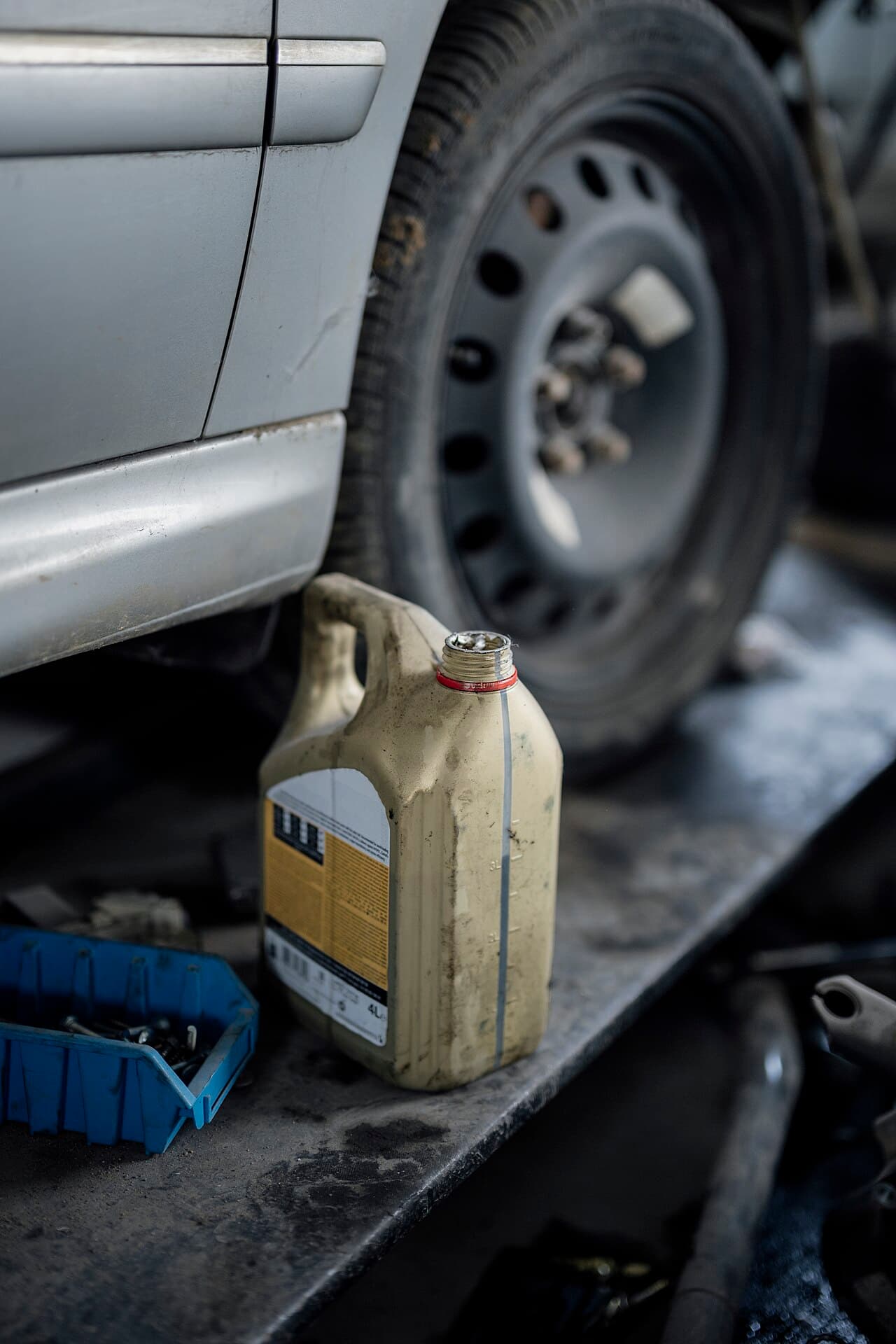
Start with the manual
Your owner's manual lists the oil grade, how much the engine takes and which filter fits. Follow it exactly. The Department of Energy says you can improve your gas mileage by 1%–2% by using the manufacturer's recommended grade of motor oil, and that using 10W-30 motor oil in an engine designed to use 5W-30 can lower your gas mileage by 1%–2%.[1] The manual is also where you will see whether your engine allows oil to be pumped out through the dipstick tube.
What you need
New oil and a new filter, a filter wrench, nitrile gloves, rags, a funnel, and a leak-proof container to hold the old oil. The EPA's advice to home mechanics is to take care not to spill any when you collect it and place it in a leak-proof can or container.[2] A wide, low drain pan with a spout, plus cardboard under the work area, makes a spill easy to clean up.
How the job goes
Run the engine for a few minutes so the oil is warm and flows, then switch it off and let it sit on level ground. Warm oil drains better than cold, but an engine that has just run hard has hot parts, so give it a few minutes.
Take off the oil filler cap so air can get in. Then drain the oil, either through the drain plug where you can reach it without raising the car, or with a pump through the dipstick tube where the manual allows it. Put the container where the oil will land, and keep the plug and its washer clean.
Next, change the filter. Loosen it with the wrench, let it drain, and wipe the mounting surface. Rub a little new oil on the new filter's rubber ring and tighten it by hand as its instructions say. Overtightening makes it hard to remove next time.
Add oil in stages through the funnel, stopping a little short of the capacity in the manual. Wait a minute, wipe the dipstick, push it fully in, pull it out and read the level. Top up to the full mark and no higher. Run the engine briefly, check around the filter and plug for drips, and read the dipstick again after the engine has been off for a few minutes.
Recycling the old oil and filter
Do not pour used oil on the ground or down a drain. Used motor oil is insoluble, persistent, and can contain toxic chemicals and heavy metals, and the EPA says used oil from one oil change can contaminate one million gallons of fresh water.[2] Take it in the sealed container to a collection site, along with the filter: the EPA says to drain and recycle used oil filters as well.[2]
Some local garages, for example, may accept used motor oil for recycling, so call before you drive over.[3] In Fairfax County, the household hazardous waste program lists motor oil among the materials it takes, and the Fairfax County Household Hazardous Waste Program accepts hazardous materials from residents free of charge.[4] In other counties and cities, ask the solid waste office where residents can drop off used oil.
Stop and call a pro if
- The car has to be raised to reach the drain plug. Have a shop do the change rather than working under a vehicle on a jack.
- The drain plug will not turn or its threads look stripped. Forcing it can ruin the oil pan.
- The old oil looks milky, or you find metal flakes. That can point to a bigger engine problem that an oil change will not fix.
- The oil level drops soon after a change, or the engine runs rough or shows a warning light. Get it diagnosed.
- You cannot recycle the oil the same day. Let the shop take it, rather than storing it.
Getting help in Virginia
If you would rather not do it, see what an oil change costs in Virginia. Browse oil change shops or more automotive answers.
When you are ready, post an oil change job and local shops will quote it.
Common questions
- What oil should I put in my car?
- The grade in your owner's manual. The Department of Energy says using 10W-30 in an engine designed for 5W-30 can lower gas mileage by 1% to 2%, so do not guess from what the shelf recommends. The manual also gives the oil capacity and the filter specification.
- Do I have to raise the car to change the oil?
- Often, to reach the drain plug. That is the part of the job to hand to a shop unless you already have a proper lift. Some vehicles allow the oil to be pumped out through the dipstick tube from above, but only do that if your owner's manual allows it.
- Where do I take the used oil in Virginia?
- Pour it into a leak-proof container and take it with the drained filter to a recycling site. Some local garages may accept used motor oil, according to the EPA. Fairfax County accepts motor oil at its household hazardous waste sites free for county residents; elsewhere, ask your county or city solid waste office.
- Can I pour used oil down the drain or on the ground?
- No. Used motor oil is insoluble, persistent and can contain toxic chemicals and heavy metals, and the EPA says the oil from one change can contaminate one million gallons of fresh water. Always recycle it.
- How full should the engine be after an oil change?
- To the full mark on the dipstick, not above it. Add oil in stages, wait a minute for it to settle, wipe and read the dipstick, and top up only as needed.
Sources
- [1] Gas Mileage Tips: Keeping Your Vehicle in Shape, U.S. Department of Energy, fueleconomy.gov. Checked October 27, 2026.
- [2] Managing, Reusing, and Recycling Used Oil, U.S. Environmental Protection Agency. Checked October 27, 2026.
- [3] Household Hazardous Waste (HHW), U.S. Environmental Protection Agency. Checked October 27, 2026.
- [4] Household Hazardous Waste, Fairfax County Department of Public Works and Environmental Services. Checked October 27, 2026.
Want a pro to handle it?
Describe the job once. Licensed local businesses send quotes, and you pay only when you book one.
Get a quote for Automotive