How do I clean and store a pool safety cover?
Remove leaves and debris, spray the cover with a hose and brush it gently to loosen dirt, then let it dry. Check it for damage, fan-fold it into its bag and hang the bag off the ground, away from chemicals and heat, so mice stay out. An automatic cover can be washed with mild dish liquid every 3 to 6 months.
Free to ask. Local shops send quotes, and you pay only when you book one.
By Kasra Taheri, Founder, LoclisPublished
Researched and drafted with AI, then checked claim by claim against the sources listed below before it was published. Prices and rules change; the dates beside each source say when it was last checked.
Step by step
Read when to stop and call a pro, further down this page, before you start.
Step 1: Clear the surface
Remove all leaves and debris from the cover's surface.[1]
Step 2: Rinse and brush
Spray the cover with a hose and gently brush to loosen dirt.[1]
Step 3: Use only mild soap
On an automatic cover, wash with mild hand dish washing liquid and no laundry detergent or other chemicals.[2]
Step 4: Let it dry
Lay it out until fully dry before folding, so it does not go into the bag damp.
Step 5: Check for damage
Look over the mesh, straps and stitching, and have any damage repaired as soon as possible.[1]
Step 6: Fold it
Fold the cover and store it in the bag it came in; fan folding is recommended.[1]
Step 7: Hang the bag
Hang the bag off the ground to avoid mice and rodents, and keep it away from chemicals and heat.[1]
Step 8: Clean the anchors
Clean and lubricate the deck anchors every time you open and close the pool.[1]
Take every leaf and bit of debris off the cover, rinse it with a hose, brush it gently, let it dry, then fan-fold it into its bag and hang the bag off the ground, away from chemicals and heat. That covers a mesh cover. An automatic cover is cleaned on the pool, and needs its tracks kept clear too. Do it at the end of every season, before the cover sits in a garage or shed for months.
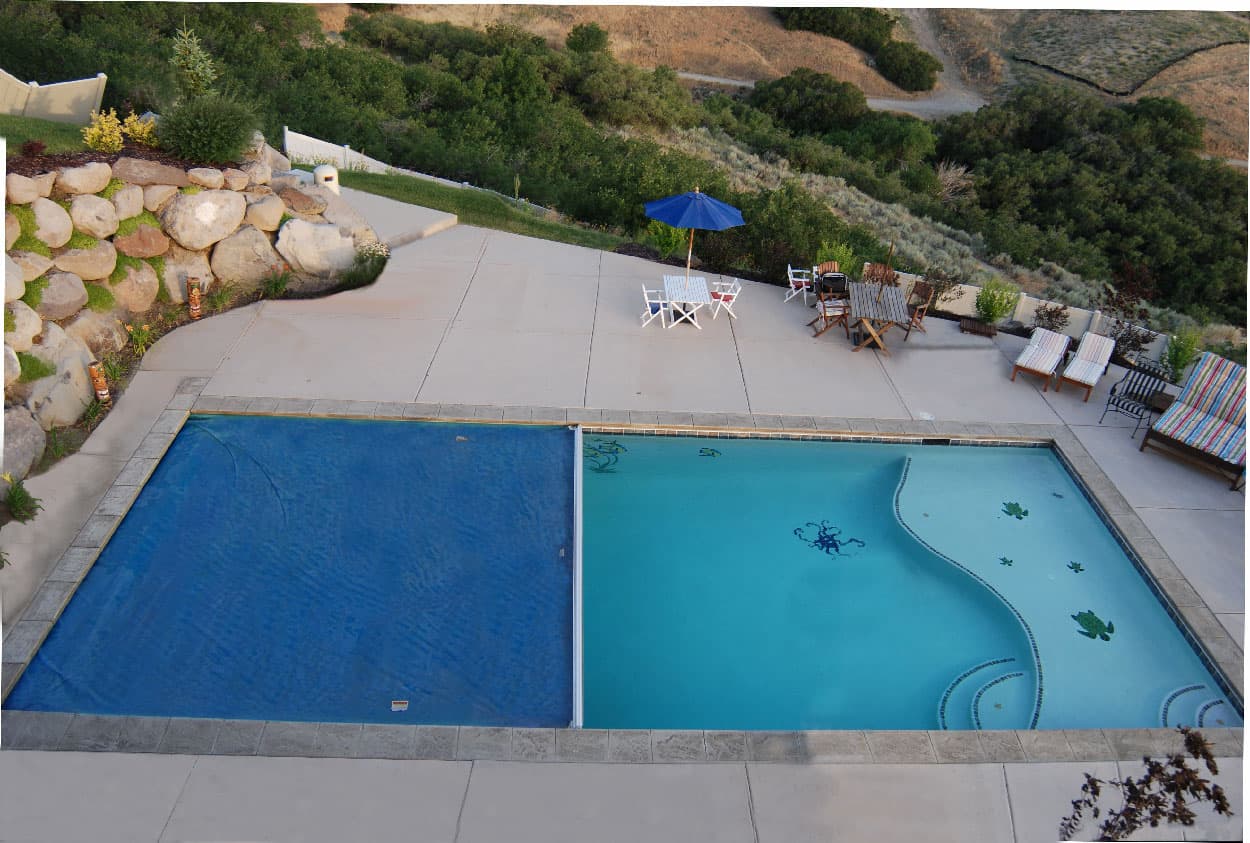
Clean it before it goes away
Tara Safety Covers, a maker of mesh covers, tells owners to clean the cover before storage.[1] Its steps are short: remove all leaves and debris from the cover's surface, then spray the cover with a hose and gently brush to loosen dirt.[1]
Handle it by the straps, not the fabric. Tara's rule is never grab the paneled material and always move the cover by using the reinforced webbing and straps.[1] The mesh itself can shift as you handle it, and Tara says the strands of the mesh material can be moved back into position by rubbing the material gently between your fingers.[1]
Let the cover dry before you fold it. A damp cover in a closed bag is how mildew starts, and the sun does most of the work if you spread it across a clean deck or lawn for a few hours.
Washing an automatic cover
An automatic cover collects a different kind of dirt. Coverstar explains that when you uncover the pool, the water in the pool is transferred from the pool to the top surface of the cover, and the sun then dries it, causing high concentrations of chlorine on top of the cover that may damage the fabric.[2] Its answer is a periodic wash: you can wash the cover with a mild hand dish washing liquid every 3 to 6 months, and do not use laundry detergent or any other chemicals to clean the cover.[2]
The mechanism needs the same attention. Retract the cover and use a high pressure nozzle on a garden hose to spray directly into the slots of the aluminum deck tracks.[2] This is not just tidiness: a build-up of sand and dirt in the tracks will grind the webbings and make them fail prematurely.[2]
Check it, then fold it
Look the cover over while it is clean. Tara says if your cover has damage, have it repaired as soon as possible.[1] Check the straps, the stitching around the buckles and the mesh for tears or chafing, and set aside any cover that is not safe to use. Tara's warning label tells owners to inspect the cover annually for damage and not to use it if it is damaged.[1]
Fold the cover and store it in the bag included with your order, and fan folding is recommended.[1] Hang the bag off the ground to avoid mice and rodents, and keep the cover away from chemicals and heat.[1] Rodents are a real hazard for covers: Coverstar says rodents may nest in the cover housing and chew on the cover and ropes.[2]
Anchors, and putting it back
Clean and lube the anchors every opening and closing.[1] When the cover goes back on in the fall, never raise the deck anchors before reinstalling, because damage may occur by dragging the cover over raised anchors.[1] In spring, check the cover for damage that may have occurred during the winter season, and lower the deck anchors before moving the cover to prevent damage to the cover.[1] Once the cover is back on, keep the water level where it should be: the water level in the pool must be between 15 and 18 inches below the cover at all times, or the warranty will be voided.[1]
For the full installation routine, read how to put on a pool safety cover. If you find standing water on top during the season, see why water pools on a safety cover.
Stop and call a pro if
- The cover is torn, the straps are fraying or the stitching is pulling out. Do not use a damaged cover.[1] A pool pro or the cover maker can repair or replace it.
- Anchors are loose, corroded or will not turn. They are set into the deck, and re-setting them is a pro's job.
- An automatic cover will not run or is noisy after cleaning. Mechanism and electrical faults are not an owner repair.
- You find rodent damage to ropes or the housing. The rope and housing repair belongs to a service tech.
- You are not sure the cover still fits. A cover that no longer fits does not meet the safety job it was bought for.
Getting help in Virginia
If the cover is past repair, see how much a pool safety cover costs in Virginia, and check whether Virginia requires a fence or barrier around a pool. Browse all of our pool and spa answers or local pool pros.
When you are ready, describe the job and local pool pros can quote it in writing.
Common questions
- What can I clean a pool safety cover with?
- A hose and a gentle brush for a mesh cover. For an automatic cover, Coverstar says you can wash it with mild hand dish washing liquid every 3 to 6 months, and not to use laundry detergent or any other chemicals.
- Where should I store a pool safety cover?
- Folded in its bag, with the bag hung off the ground and away from chemicals and heat. Tara says hanging the bag off the ground avoids mice and rodents.
- How do I fold a safety cover?
- Tara recommends fan folding, which means pleating the cover back and forth like a paper fan, before it goes into its bag.
- Why do automatic covers collect chlorine residue?
- Coverstar explains that when you uncover the pool, the water in the pool is transferred from the pool to the top surface of the cover, and the sun then dries it, leaving a high concentration of chlorine that may damage the fabric.
- Can I move the cover by pulling on the mesh?
- No. Tara says never to grab the paneled material and always to move the cover by using the reinforced webbing and straps.
Sources
- [1] Mesh Safety Cover Installation & Care Guide, Tara Safety Covers, Inc.. Checked October 28, 2026.
- [2] Automatic Safety Pool Cover Use & Care Guide, Latham Pool Products (Coverstar), manufacturer's guide. Checked October 28, 2026.
Want a pro to handle it?
Describe the job once. Licensed local businesses send quotes, and you pay only when you book one.
Get a quote from a local pro