How do I clean up fallen branches after a storm?
Check for power lines first, photograph the damage, then clear branches that are already on the ground by hand with gloves, loppers and a pruning saw. Cut pieces to the length your town will collect and set them out the way it asks. Leave anything hanging in a tree, touching a line or on the house to a pro.
Free to ask. Local shops send quotes, and you pay only when you book one.
By Kasra Taheri, Founder, LoclisPublished
Researched and drafted with AI, then checked claim by claim against the sources listed below before it was published. Prices and rules change; the dates beside each source say when it was last checked.
Step by step
Read when to stop and call a pro, further down this page, before you start.
Step 2: Photograph it first
Take photographs to show the way things look before you begin cleaning, and keep receipts for your clean-up expenses.[2]
Step 3: Clear access first
Drag branches off the driveway, walkway and doors first. Virginia's Bureau of Insurance says it is reasonable to remove debris that prevents access to your driveway or home.[2]
Step 4: Sort by size
Wearing gloves, sturdy shoes and eye protection, set thin twigs and small branches in one pile and thicker limbs in another, so each can be cut and set out the way your collection service wants it.
Step 6: Keep piles separate
Pile brush by itself, away from lumber, metal and bulk items. Fairfax County collects different materials with different trucks and asks for piles separated by type.[4]
Step 8: Leave the big wood for an arborist
If a limb or trunk is too heavy to move by hand, leave it. An arborist can cut it and leave the wood in moveable chunks for firewood.[5]
Look up before you pick anything up, then clear the branches that are already lying on the ground with hand tools. Photograph first, drag the access routes clear, cut limbs down to the length your collection service takes and set them out its way. Hanging limbs, branches on lines and anything on the house are not yard work.
Check the sky and the ground first
Overhead lines come first. Dominion Energy says not to touch or go near a fallen wire, even if it is not sparking or humming.[1] The utility also tells people not to touch anything that is touching the wire, such as a car or tree limb, because electricity can pass through objects, people and animals to reach the ground.[1] Its general rule is to stay at least 10 feet away from overhead lines, and it warns that trees contain enough moisture to conduct electricity.[1]
So walk the yard before you start and look at what the branches are resting on. If one is on a wire, leaning on a service line to the house or tangled in a line you cannot see the end of, stop and call your utility. Call 911 if anyone is in immediate danger.[1]
Photograph, then clear access
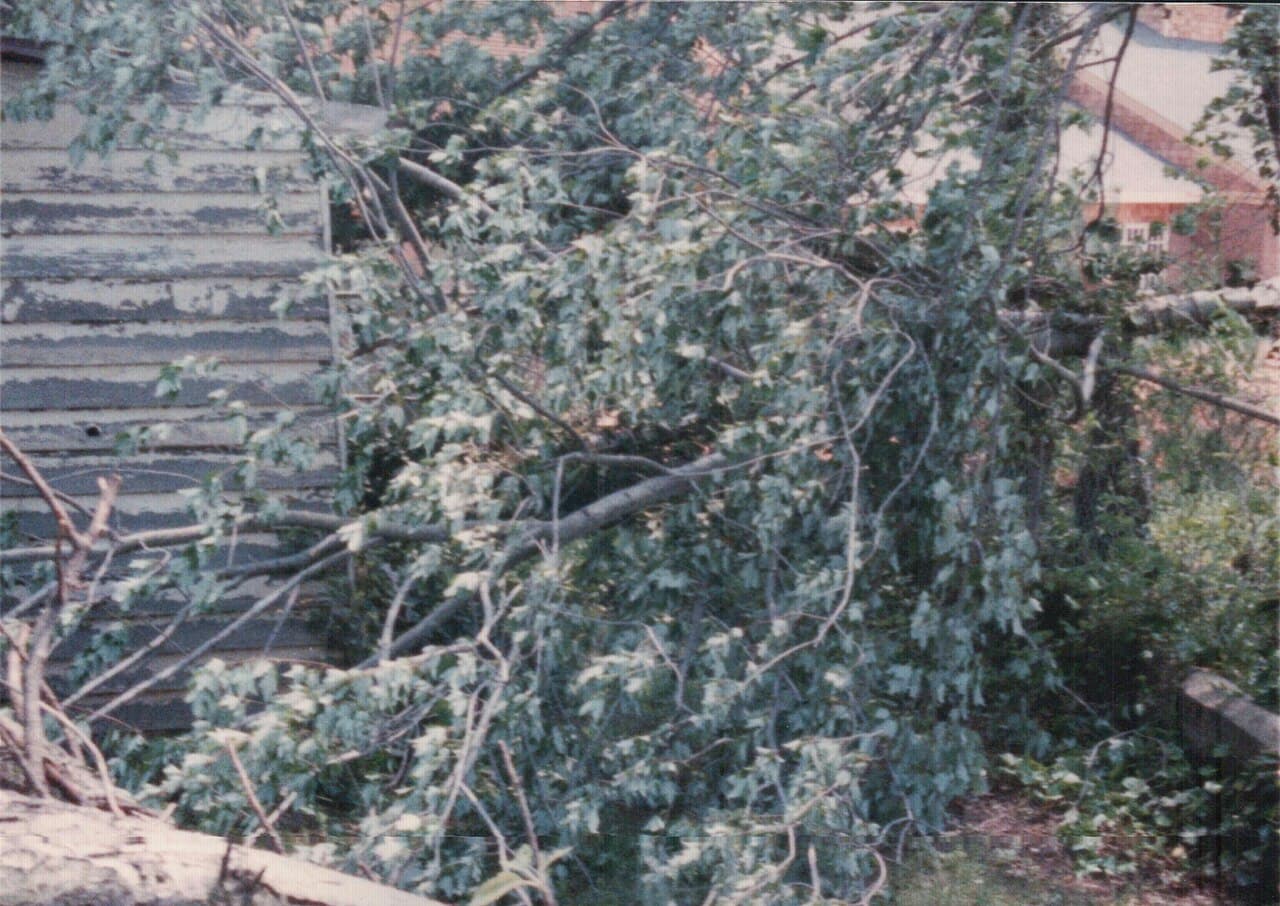
Virginia's Bureau of Insurance advises homeowners to take photographs to show the way things look before you begin cleaning and repairing, and to keep receipts for all of your clean-up expenses.[2] This matters because the fallen tree must generally cause damage to your home or property before the insurance company is obligated to pay for clean up and removal.[2] A photo of a limb on a fence or shed is the evidence.
You do not have to leave the driveway blocked while you wait. It is reasonable to remove debris that prevents access to your driveway or home.[2] Start there, then clear walkways, steps and the path to the trash or recycling area.
Cut it to the size your town will take
Your local rules decide how long a piece can be, so find them before you cut. Two Virginia examples show how much they vary:
- Richmond. Its Bulk and Brush crews do not have chain saws or other cutting equipment, and they pick up storm debris only in pieces no larger than 48 inches (4 feet).[3] City crews do not enter private property, so the property owner has to place the debris at the property line where crews can reach it.[3]
- Fairfax County. Its special pickup takes limbs and branches under 6 inches in diameter and under 6 feet in length.[4] The pile is limited to 2 cubic yards, about 6 feet long by 3 feet wide by 3 feet high.[4]
Gloves, closed shoes and eye protection are the minimum. Loppers handle small limbs and a hand pruning saw takes the rest. Cut so the piece cannot spring back at you: support a bent limb near the cut, and never stand under a branch while you work on it.
Keep brush separate from other debris. Fairfax County asks that piles be separated by type, such as just brush or just metal.[4] Place nothing under utility wires or tree branches: the county requires 20 feet of clearance above and on all sides of special collection materials.[4]
What to do with the wood
Small branches can be bundled for collection or stacked in a brush pile. Thicker, clean pieces make firewood. If you keep it, keep it local: the Tree Owner's Manual says not to transport firewood to another town.[5]
For a limb too heavy to move by hand, leave it where it is. A tree service can cut it and leave the wood in moveable chunks for firewood.[5]
Stop and call a pro if
- A branch is on or near a power line, or a wire is down. Keep away and call the utility, and 911 if anyone is in danger.[1]
- A limb is broken but still hanging in the tree. The Tree Owner's Manual says to call an arborist to remove the "hangers".[5] They can fall without warning.
- You need a chainsaw, a ladder or a climb. Storm-damaged wood is under tension, and the cut can go wrong in ways a straight log does not.
- The tree itself is leaning, split or uprooted. After lightning or storm damage, the Tree Owner's Manual says to call an arborist to assess safety.[5]
- Anything is on the roof, the gutters or the house. Roofs are not a job for a homeowner, and a limb on a roof may be hiding structural damage. See who to call when a tree falls on your house.
- There is more debris than a few trips will clear. See what storm cleanup costs in Virginia.
Getting help in Virginia
For the order of operations after a storm, read the first steps after a storm damages your home, and for the haul-away side, what yard debris removal costs. More guides are on the snow and seasonal answers page, and you can browse snow and seasonal services near you.
When the job is bigger than a weekend, describe the cleanup once and local pros quote it.
Common questions
- Can I cut up fallen branches with a chainsaw?
- Not as part of this job. A chainsaw on storm-damaged wood is where the serious injuries happen, because limbs can be under tension and a trunk can shift as you cut. Hand tools on branches that are already lying flat are fine. For anything heavier, call an arborist.
- What if a branch is touching a power line?
- Stay away and call the utility. Dominion Energy says not to touch anything that is touching the wire, such as a tree limb, because electricity can pass through objects, people and animals to reach the ground. Call 911 if anyone is in immediate danger.
- Does my city pick up storm branches?
- Many do, but the rules differ. Richmond collects storm tree debris in pieces no larger than 4 feet set at the property line, as part of its bi-weekly bulk and brush service. Fairfax County takes limbs under 6 inches across and 6 feet long at the curb by scheduled special pickup. Check your own locality's page.
- Will insurance pay for clearing fallen branches?
- Often only if the tree damaged your home or other covered property. Virginia's Bureau of Insurance says the fallen tree must generally cause damage before the insurer is obligated to pay for clean up and removal, though some policies cover limited removal, such as a tree blocking a driveway. Photograph the debris before you move it and ask your insurer.
- What do I do with the wood?
- Small branches can be set out for collection, and thicker clean pieces kept as firewood. If you keep firewood, use it close to where it came from: the Tree Owner's Manual says not to move firewood to another town.
Sources
- [1] Electric Safety, Dominion Energy. Checked October 27, 2026.
- [2] When Disaster Strikes: Insured Homeowner's Loss, Bureau of Insurance, Virginia State Corporation Commission. Checked October 27, 2026.
- [3] Bulk and Brush, City of Richmond Department of Public Works. Checked October 27, 2026.
- [4] Special Pickup, Fairfax County Department of Public Works and Environmental Services. Checked October 27, 2026.
- [5] Tree Owner's Manual (NA-FR-01-10, revised 2021), USDA Forest Service, distributed by the Virginia Department of Forestry. Checked October 27, 2026.
Want a pro to handle it?
Describe the job once. Licensed local businesses send quotes, and you pay only when you book one.
Get a quote from a local pro