How do I get my yard ready before a big storm?
Bring in or tie down anything the wind can throw, clear drains and gutters, and walk the yard for dead or hanging branches, cracks and leaning trees. Trees that could fall on the house need an arborist before the storm, not during it. Note where overhead lines run, charge your phone and photograph the yard for insurance.
Free to ask. Local shops send quotes, and you pay only when you book one.
By Kasra Taheri, Founder, LoclisPublished
Researched and drafted with AI, then checked claim by claim against the sources listed below before it was published. Prices and rules change; the dates beside each source say when it was last checked.
Step by step
Read when to stop and call a pro, further down this page, before you start.
Step 1: Check the forecast and alerts
Sign up for community alerts and keep several ways to receive warnings, such as the FEMA app.[1]
Step 2: Bring in loose items
Bring in outside furniture,[1] and move grills, planters, toys, bins and tools into the garage or shed. Tie down or lay flat what will not fit.
Step 3: Clear drains and gutters
De-clutter drains and gutters so rain has somewhere to go.[1] Clear the yard drains and the ground at the foot of each downspout from the ground; leave any gutter you can only reach by ladder.
Step 4: Walk the trees from a distance
Look at each tree near the house for cracks in the trunk or major limbs, a one-sided or leaning tree, and branches close to utility lines or structures.[3]
Step 5: Book an arborist for the worry trees
Trees that may be in danger of falling on your home should be cut down or trimmed,[2] by an arborist, ahead of the storm season rather than the night before.
Step 6: Note the overhead lines
Note where wires cross the yard, and plan to stay at least 10 feet from any overhead line.[4]
Step 7: Photograph the yard
Take dated photos of the house, trees, fences and sheds as they stand, so you can show before and after if there is damage.
Step 8: Charge your phone
Keep your cell phone charged when you know a storm is in the forecast and have a backup charger.[1]
The short list
Most of getting a yard ready is moving things, clearing water paths and deciding which trees worry you. Thunderstorms are common and can be dangerous. They can bring intense wind, flash flooding, hail and dangerous lightning.[2] The ready-for-storm jobs that matter fall into three groups: objects, water and trees. Do the first two yourself in the day or two before the storm, and handle the third well ahead, so an arborist has time to fit you in.
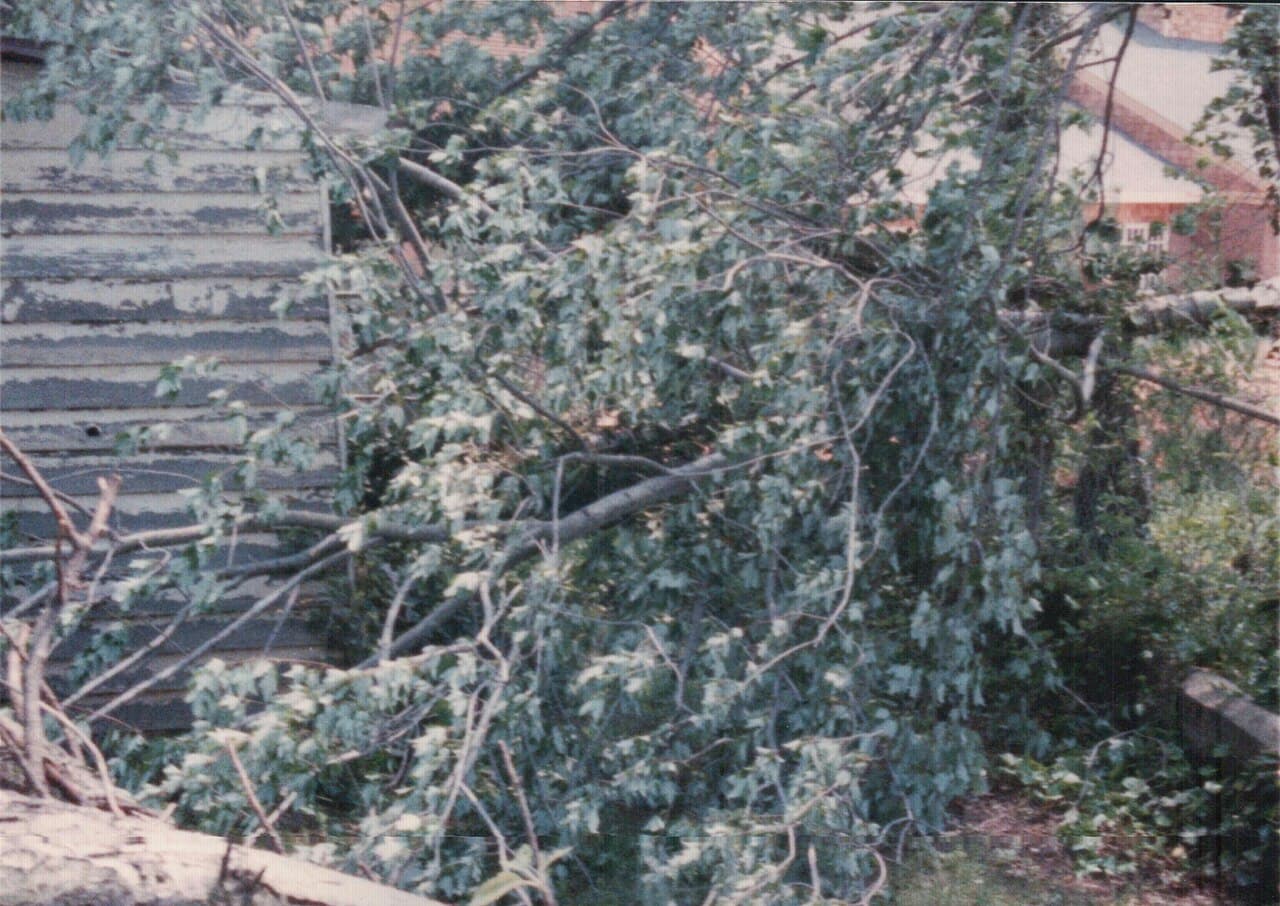
Objects: anything the wind can move
FEMA's hurricane advice is to "de-clutter drains and gutters, bring in outside furniture and consider hurricane shutters."[1] The furniture part applies to any strong wind. Patio chairs, umbrellas, grills, planters, kids' toys, trash and recycling bins and loose tools can all become projectiles.
Put what you can in the garage or shed. Tie down or lay flat what will not fit: trampolines, play sets and large planters. Take down hanging baskets and wind chimes, and close and latch gates and fence doors so they do not slam.
Water: drains and gutters
Keep drains and gutters clear so rain has somewhere to go.[1] From the ground, clear leaves off yard drains, pull debris from the foot of each downspout and make sure water can run away from the house. Gutters you can only reach by ladder are better left than cleaned in wet, windy weather; plan that job for a calm week and see the fall yard checklist.
Trees: the part that cannot wait
Ready.gov's advice is to "cut down or trim trees that may be in danger of falling on your home."[2] That is arborist work. The Virginia Department of Forestry says healthy trees are less likely to succumb to damaging storm winds and floods, and recommends a checkup by an ISA-certified arborist.[3]
Walk around each tree near the house, a driveway or a power line, from a distance. The department lists these symptoms to have checked: cracks in trunk or major limbs, a one-sided or leaning tree, and branches close to utility lines or structures.[3] For the full ground-level check, see how to tell if a storm-damaged tree is safe to leave; the same signs apply before the storm.
Do not do the pruning yourself unless it is small. The Tree Owner's Manual says that if pruning cannot be done with both feet on the ground, hire an arborist, and if power equipment is required, hire an arborist.[5] Call early, ask for a written quote and read what storm cleanup costs in Virginia.
Lines, phone and paperwork
Dominion Energy's advice: "always be aware of overhead lines and stay at least 10 feet away."[4] Know where wires cross your yard now, in daylight, so you do not discover them with a branch in your hand later.
FEMA says to "be sure to have several ways to receive alerts. Download the FEMA app,"[1] and to "keep your cell phone charged when you know a hurricane is in the forecast and purchase backup charging devices to power electronics."[1] It also says to "make sure your insurance policies and personal documents, such as ID, are up to date."[1] Take dated photos of the house, trees, fences and sheds as they stand today. If something is damaged, you will have a before and an after.
Stop and call a pro if
- A tree near the house has a crack, a lean or soil lifted at its base. Have an arborist assess it before the storm, and keep people away from its fall zone.
- Branches are in or touching a power line. Stay at least 10 feet away and call the utility.[4]
- The work needs a ladder, a chainsaw or a climb. Hire an arborist if pruning cannot be done with both feet on the ground or needs power equipment.[5]
- Water already collects at the foundation or runs toward the house. That is a drainage problem for a pro, not something to fix in the hours before rain.
Getting help in Virginia
After the storm, read how to clean up fallen branches and, if a tree lands on the house, who to call. More guides are on the snow and seasonal answers page, and you can browse snow and seasonal services near you.
When trees or debris are beyond a weekend, describe the job once and local tree services quote it.
Common questions
- What should I bring in before a storm?
- Anything the wind can pick up: patio furniture, grills, planters, bins, toys, tools and hanging decorations. FEMA's advice for hurricanes is to bring in outside furniture. What will not fit in a garage or shed should be tied down or laid flat.
- Should I trim my trees right before a storm?
- Not yourself, and not at the last minute. Ready.gov says to cut down or trim trees that may be in danger of falling on your home, which is a job for an arborist booked in advance. The Tree Owner's Manual says that if pruning cannot be done with both feet on the ground, or needs power equipment, you should hire an arborist.
- Do I need to clear my gutters before a storm?
- Ready.gov lists de-cluttering drains and gutters among the ways to strengthen your home for a storm. Clear the yard drains and downspout outlets from the ground. If the gutters can only be reached by ladder, leave them or hire someone rather than climbing in wet or windy weather.
- How do I know which trees are the risk?
- The Virginia Department of Forestry lists the symptoms to have checked by an ISA-certified arborist: over-maturity or dieback, large cavities, decay or a conjoined trunk, cracks in the trunk or major limbs, damaged roots, bark or trunk, a one-sided or leaning tree, and branches close to utility lines or structures.
- Does preparing the yard really help?
- Some. A tidy yard keeps loose objects from becoming projectiles and drains from backing up, and healthy, well-maintained trees are less likely to succumb to damaging storm winds and floods according to the Virginia Department of Forestry. It cannot make a damaged or leaning tree safe, which is why the tree check matters most.
Sources
- [1] Hurricanes, Ready.gov, Federal Emergency Management Agency. Checked October 28, 2026.
- [2] Thunderstorms & Lightning, Ready.gov, Federal Emergency Management Agency. Checked October 28, 2026.
- [3] Trees and Extreme Weather (Forestry Topic 64), Virginia Department of Forestry. Checked October 28, 2026.
- [4] Electric Safety, Dominion Energy. Checked October 28, 2026.
- [5] Tree Owner's Manual (NA-FR-01-10, revised 2021), USDA Forest Service, distributed by the Virginia Department of Forestry. Checked October 28, 2026.
Want a pro to handle it?
Describe the job once. Licensed local businesses send quotes, and you pay only when you book one.
Get a quote from a local pro