How do I fix a drawer that won't slide smoothly?
Empty the drawer, pull it out and look at what it rides on. Clean the runners or metal slides, check for loose screws, and find the shiny rub marks that show where wood is binding. Sand or plane those spots lightly, rub bare wood with paraffin or candle wax, and refit. A drawer that only sticks in humid weather is swelling, not broken.
Free to ask. Local shops send quotes, and you pay only when you book one.
By Kasra Taheri, Founder, LoclisPublished
Researched and drafted with AI, then checked claim by claim against the sources listed below before it was published. Prices and rules change; the dates beside each source say when it was last checked.
Step by step
Read when to stop and call a pro, further down this page, before you start.
Step 1: Empty and remove the drawer
Take everything out, then pull the drawer to its stop. Lift the front slightly to clear a wooden stop block, or on metal slides press the release levers on each side, and slide the drawer free.
Step 2: Look inside the opening
Check the runners, guides and side rails for dust, a chip, a loose screw or a worn spot. Vacuum out debris and wipe the surfaces clean.
Step 3: Tighten or replace loose hardware
Snug up screws holding metal slides or wooden runners. If a screw hole is stripped, fill it with a glued wooden toothpick or dowel and re-drive the screw.
Step 4: Find where it binds
Slide the drawer back in part way and look for shiny, polished or scuffed patches on the sides, bottom edge or top edge of the drawer, and the matching spots in the opening. Those are the tight points.
Step 5: Check that the drawer is square
If the drawer front sits crooked or a corner joint has opened, a racked drawer will bind however much you sand. Note it and fix the joint, as described below, before shaving any wood.
Step 6: Ease the tight spots
Sand or plane the shiny spots a little at a time, with 120 to 150 grit paper on a block, and test the fit after each pass. Remove only what you need.
Step 7: Wax the contact surfaces
Rub a block of paraffin or a plain candle along the bottom edges and sides of the drawer and the runners it rides on. On metal slides, use a dry lubricant instead of wax.
Step 8: Refit and test
Slide the drawer in and out several times, then load it as it will be used and test again. Add a felt or plastic glide or a drawer stop if it rides unevenly.
Find the tight spot first
A drawer that drags is almost always rubbing in one or two places, and the fix is to find them and ease only those. Start by emptying the drawer and pulling it all the way out. Most wooden drawers lift out once you raise the front slightly to clear a stop block. Metal slides usually have a release lever on each side that you press as you pull.
With the drawer out, look at what it rides on. Wooden runners and guides collect dust and old wax. Metal slides get gritty, bend, or loosen at the screws. Vacuum the opening and wipe the surfaces, then tighten any screw that holds a slide or runner. If a screw spins in its hole, glue a toothpick or small dowel into the hole, let it set, and drive the screw again.
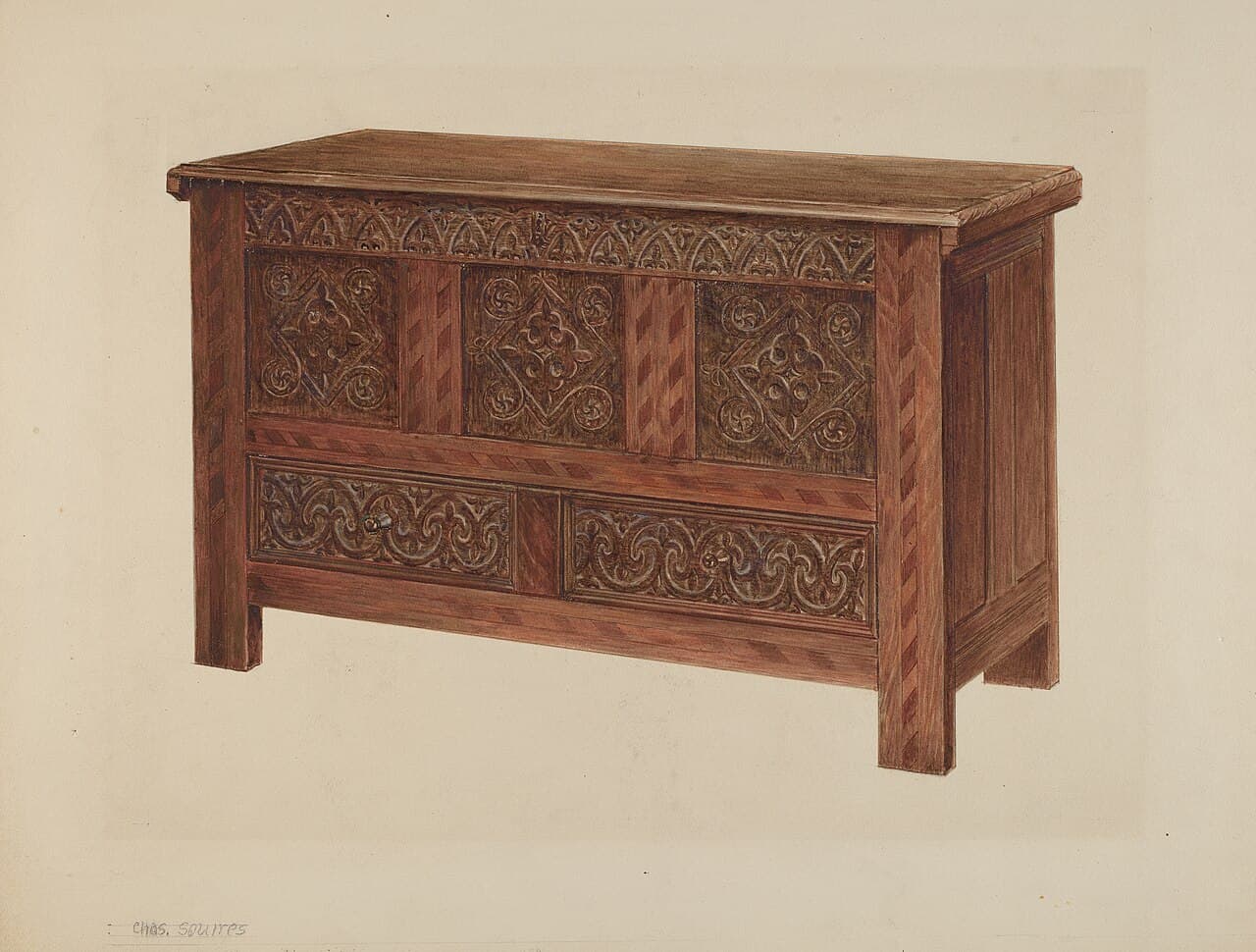
Why wooden drawers stick
Wood swells and shrinks with the air around it. Wood in service is always undergoing slight changes in moisture content.[1] Daily swings are small. Changes that occur because of seasonal variation, although gradual, tend to be of more concern.[1] That is why a drawer that glides in February sticks in July. Protective coatings can retard dimensional changes in wood but do not prevent them.[1]
Swelling is not the only cause. Because this reaction is not uniform across all planes, boards may become distorted or warped.[2] A drawer side or a cabinet panel that has bowed will rub where a flat one would not. Worn runners, a dropped bottom, a loose slide and a drawer that has come out of square will each produce the same sticking.
On older veneered pieces, look at the front edge of the drawer rails as well. The National Park Service notes that the veneer on drawer rails and the bottom rails of case furniture, such as chests and sideboards, is very vulnerable.[2] As the wood underneath shrinks, a lip can form. The drawer, as it moves in and out, can easily snag the protruding veneer and tear it off.[2] If you see lifting veneer on a rail, do not sand there. Stop and have it repaired.
Ease it, then wax it
Slide the drawer back in part way and look for shiny, polished or scuffed patches on its sides, top edges and bottom, and the matching marks in the opening. Those are your contact points. Sand or plane them a little at a time with a sanding block, testing the fit after each pass. Taking off a thin shaving is plenty. If you sand away more than you need, the drawer will rattle and sag.
Once it moves freely, rub plain paraffin or a candle on the bare wood where wood meets wood: the bottom edges and sides of the drawer, and the runners and guides. This is the standard old-shop fix and it leaves no sticky film. Do not use oil sprays on wood. For metal slides, use a dry lubricant made for slides and wipe off the excess so it does not collect dust.
A drawer that is stuck shut
If the drawer will not budge, hold off on prying. If drawers and doors stick because of swelling, do not force them open.[2] Press down on the front, wiggle gently side to side and try again, or let the room dry out for a few days with a fan or dehumidifier running. Forcing a swollen drawer can split a side, tear the bottom or pull a front off.
When the drawer itself is out of square
If the drawer front sits crooked, a corner has opened, or the bottom has dropped, sanding will not help. The box has racked, and it needs to be reglued and clamped square, the same way you would repair a loose table joint. Read how to fix a wobbly table for the cleaning, gluing and clamping steps, which apply to a drawer corner as well.
Stop and call a pro if
- The drawer front or a side is cracked or the bottom has split. The repair takes matching wood and careful joinery.
- The piece is an antique or a family heirloom. Sanding and waxing can reduce its value. A restorer can use methods that can be undone later.
- The veneer on a rail is lifting or missing. It needs to be reglued or patched before the drawer moves over it again.[2]
- You are thinking of stripping or sanding old paint. The EPA lists refinishing old furniture among the jobs that can put you in contact with lead,[3] so ask a pro before sanding or stripping a painted piece.
- The cabinet itself has warped or a guide rail is broken inside the frame. That is a carcase repair, not a drawer fix.
Getting help in Virginia
If the piece is worth more than a weekend of fixing, read how much table repair costs in Virginia for a sense of how furniture repairers price small jobs, browse table and furniture repair requests, or see more furniture repair answers.
When you are ready, describe the repair once and local furniture repairers can quote it.
Common questions
- Why does my drawer stick only in summer?
- Wood takes up moisture from humid air and swells. The Forest Products Laboratory says wood in service is always undergoing slight changes in moisture content, and that seasonal changes, although gradual, tend to be of more concern. A drawer that binds in humid months and frees up in winter is usually swollen, so ease the tight spot lightly and wax it, and do not remove more wood than you must.
- What is the best lubricant for a wooden drawer?
- Plain paraffin or a candle rubbed on the bare wood runners and the drawer's bottom edges. It leaves no sticky film and does not stain. Do not use oil sprays on wood, because they soak in and can mark the piece or the contents. Metal slides take a dry lubricant instead.
- Can I just sand the whole drawer smaller?
- No. Sand only the shiny spots that show where it rubs. Taking wood off everywhere leaves a loose, rattling drawer that sags and still catches, and in humid months the wood swells back toward its old size, so the fix would not have been needed in the first place.
- Should I force a drawer that is stuck shut?
- No. The National Park Service's guidance for water-damaged wooden furniture is that if drawers and doors stick because of swelling, do not force them open. Wiggle gently, press down on the front to free the bottom, or tap lightly from the inside of the cabinet if you can reach. If you must pull hard, the drawer may have jumped its track.
- How do I fix drawer slides that have come loose?
- Pull the drawer, check the screws holding each slide to the cabinet and to the drawer, and tighten them. Both slides should be level and at the same height. If a screw hole has stripped, fill it with a glued toothpick or dowel and re-drive the screw, or move the slide to fresh holes.
- Should I strip and refinish an old dresser to stop the sticking?
- Refinishing is not needed to fix a sticking drawer. On an older painted piece it also has a risk: the EPA lists refinishing old furniture among the jobs that can put you in contact with lead, so ask a pro before sanding or stripping paint.
Sources
- [1] Wood Handbook, Chapter 13: Drying and Control of Moisture Content and Dimensional Changes (FPL-GTR-190), USDA Forest Service, Forest Products Laboratory. Checked October 27, 2026.
- [2] Museum Handbook, Part I, Appendix N: Curatorial Care of Wooden Objects, National Park Service, U.S. Department of the Interior. Checked October 27, 2026.
- [3] Protect Your Family from Sources of Lead, U.S. Environmental Protection Agency. Checked October 27, 2026.
Want a pro to handle it?
Describe the job once. Licensed local businesses send quotes, and you pay only when you book one.
Get a quote for Furniture