How do I condition a leather couch?
Dust and vacuum the couch, wipe it with a lightly dampened soft cloth, then test a leather conditioner on a hidden spot. If it is fine, rub a thin layer into the leather, let it soak in for a few minutes and buff with a clean dry cloth. Klaussner suggests conditioning every few months. Check your maker's care guide first.
Free to ask. Local shops send quotes, and you pay only when you book one.
By Kasra Taheri, Founder, LoclisPublished
Researched and drafted with AI, then checked claim by claim against the sources listed below before it was published. Prices and rules change; the dates beside each source say when it was last checked.
Step by step
Read when to stop and call a pro, further down this page, before you start.
Step 1: Check the care guide
Read the maker's care tag or guide and any warranty terms first. Bassett warns that cleaning agents may void its warranty.[3]
Step 2: Move the couch if it is too close to heat
Keep leather at least 12 inches from radiators and other heat sources.[2]
Step 3: Dust and vacuum
Vacuum with a crevice tool in the seams, then dust with a soft cloth.[2]
Step 4: Wipe it clean
Wipe with a soft white cotton cloth lightly dampened with water, then rub gently with a soft dry cloth to remove soil.[3]
Step 5: Let it dry
Make sure the leather is completely dry before you go on.[1]
Step 6: Test a hidden spot
Dab a little conditioner on a hidden area, such as under a cushion or the back, and check it for darkening or marks.
Step 7: Apply a thin layer
With a clean soft cloth, rub a thin layer into the leather in small circles, section by section.
Step 8: Let it soak in and buff
Let it soak in for a few minutes, then buff with a clean, dry cloth.[1]
Step 9: Repeat only every few months
Condition about every few months, more in dry or heated rooms, and not more often than the leather needs.[1]
Clean it, then condition it lightly
To condition a leather couch, clean and dry it, test a leather conditioner on a hidden spot, rub a thin layer in, let it soak in for a few minutes and buff it off with a clean dry cloth. Klaussner recommends a good leather conditioner every few months to keep leather soft, supple and more scratch-resistant.[1]
The goal is a supple couch, not a shiny or greasy one. Thin and occasional beats thick and often.
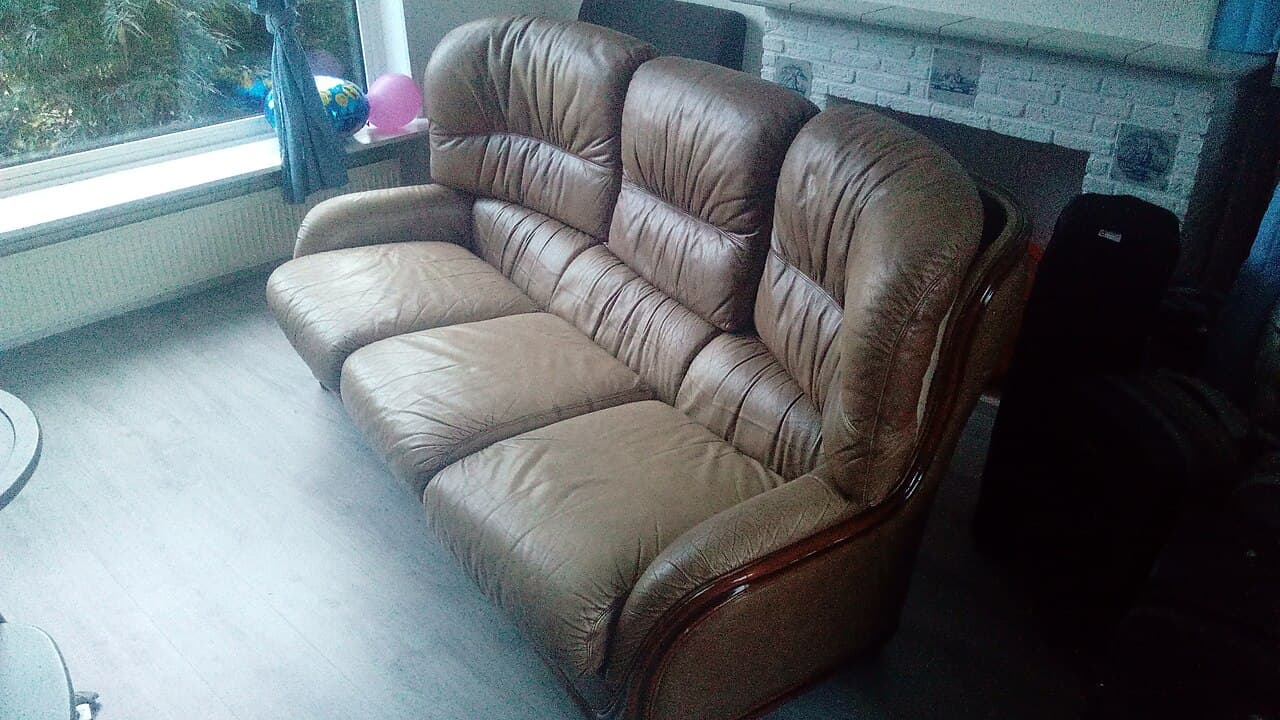
Check the maker first
Leather finishes differ, and a maker's care guide outranks any general advice, including this. Bassett says never to use polishes, oils, ammonia, cleaning fluids, solvents or detergents to clean leather, and that cleaning agents may cause damage and void the warranty.[3] If the couch has a care tag or a protection plan, read it before you open a bottle.
Know, too, that conditioning is debated. The National Park Service says the haphazard use of dressings has caused considerable deterioration within museum collections, and lists darkening of lighter-colored leathers and oxidizing over time and stiffening the material among the drawbacks.[4] That is guidance for museum objects, and a living-room couch is used differently, but it is a good reason to use a conditioner sparingly and test it first.
Clean before you condition
Conditioner over dirt just seals it in. La-Z-Boy recommends dusting and vacuuming often, using a crevice tool in seams.[2] Bassett says to dust frequently with a soft, dry 100% cotton white cloth, and to clean regularly with a soft, 100% cotton white cloth that is lightly dampened with water, then gently rub with a soft dry cloth to remove soil.[3]
For a spill or a mark, La-Z-Boy suggests a solution of half mild soap and half distilled water on a slightly dampened cloth, and says to blot, not rub, and to contact a professional leather cleaning service for more difficult stains.[2]
Klaussner says to clean the leather and make sure it is completely dry before proceeding to treat it.[1] Give it a few hours if you used any moisture.
Apply the conditioner
Choose a conditioner made for leather furniture and read its label. Test a dab on a hidden area, such as under a seat cushion or the back, and give it time to show whether it darkens or marks. Then work in sections, using a clean soft cloth and a thin layer rubbed in small circles. Do not pour product onto the leather.
Let it soak in for a few minutes, then gently buff the area with a clean, dry cloth.[1] Pay extra attention to the places that flex and dry first: seat fronts, arm tops and the folds where the back meets the seat. Stay off stitching and trim, and wipe away any excess so it does not rub off on clothing.
How often
Klaussner says to condition regularly, especially in dry climates or heated homes, where leather gets dry and cracks and scratches more easily.[1] "Every few months" is the rhythm it gives. If the leather still feels soft and the finish looks even, you can skip a round.
Keep it from drying out between treatments
Where the couch sits matters as much as the product. La-Z-Boy advises keeping leather furniture at least 12 inches away from radiators and other heat sources to help prevent the leather from drying and possibly cracking.[2] Bassett says to avoid placing furniture in direct sunlight, which can damage leather, and to keep it away from fireplaces and air vents that can dry out leather.[3]
Stop and call a pro if
- The leather is already cracked open, flaking or peeling. Conditioner will not repair it; see why a leather couch cracks.
- The conditioner darkens, streaks or sticks in your test spot. Stop and ask the maker or a leather repairer.
- The couch is under a warranty or protection plan that sets out its own care steps.
- A stain does not lift with light cleaning. La-Z-Boy advises a professional leather cleaning service for more difficult stains.[2]
- The piece is antique or valuable.
Getting help in Virginia
For marks rather than dryness, read how to fix a scratch on a leather couch. Browse local furniture repair services or more furniture repair answers.
When you are ready, describe the leather repair on Loclis with a photo, and local repairers will quote it.
Common questions
- How often should I condition a leather couch?
- Klaussner suggests a good leather conditioner every few months, especially in dry climates or heated homes, where leather gets dry and cracks and scratches more easily. Your maker's care guide may say something different, and it takes precedence.
- Can I condition a leather couch with olive oil or other household oils?
- It is better not to. Bassett says never to use polishes, oils, ammonia, cleaning fluids, solvents or detergents to clean leather, and that cleaning agents may cause damage and void the warranty. Use a product made for leather furniture instead. The National Park Service lists darkening of lighter-colored leathers among the drawbacks of dressings on museum leather.
- Do I need to condition a new leather couch?
- Not straight away. Start with the care tag or guide from the maker, dust and vacuum regularly, and keep the couch away from heat and sun. Klaussner's every-few-months advice is for keeping leather soft, so begin once the leather starts to feel dry or tight.
- What if my couch is already cracked?
- Conditioning can soften dry, intact leather but cannot close an open split. See why a leather couch cracks and when a repairer is the right call.
- How do I clean a leather couch before conditioning it?
- Bassett says to clean regularly with a soft, 100% cotton white cloth that is lightly dampened with water, and to rub gently with a soft dry cloth afterwards. La-Z-Boy suggests half mild soap and half distilled water on a slightly dampened cloth for spills, and says to blot, not rub.
Sources
- [1] How to Fix Scratches on a Leather Couch (Easy Step-by-Step Guide), Klaussner Home Furnishings. Checked October 28, 2026.
- [2] Fabric and Leather Care, La-Z-Boy. Checked October 28, 2026.
- [3] How to Care for Leather, Bassett Furniture. Checked October 28, 2026.
- [4] Museum Handbook, Part I, Appendix S: Curatorial Care of Objects Made From Leather and Skin Products, National Park Service. Checked October 28, 2026.
Want a pro to handle it?
Describe the job once. Licensed local businesses send quotes, and you pay only when you book one.
Get a quote for Furniture