How do I keep antique furniture from drying out and cracking?
Keep the air steady, not just moist. The National Park Service puts the ideal for wooden objects at 50% relative humidity, plus or minus 5%. Use a hygrometer, a humidifier in winter and air conditioning or a dehumidifier in humid months, and keep pieces away from vents, radiators and direct sun. Skip oils and wipe-on moisturizers.
Free to ask. Local shops send quotes, and you pay only when you book one.
By Kasra Taheri, Founder, LoclisPublished
Researched and drafted with AI, then checked claim by claim against the sources listed below before it was published. Prices and rules change; the dates beside each source say when it was last checked.
Step by step
Read when to stop and call a pro, further down this page, before you start.
Step 1: Measure the room
Put a small hygrometer in the room where the piece stands and read it at different times of day and in different seasons.
Step 2: Aim for 45 to 55 percent
The ideal relative humidity for wooden objects is 50% plus or minus 5%.[1]
Step 3: Add moisture in winter
Run a humidifier in a heated house when the hygrometer reads low, and clean it as the maker directs.
Step 4: Remove moisture in humid months
Use air conditioning or a dehumidifier when the reading climbs, since above 70% mold and insects may become problems.[1]
Step 5: Keep the house temperature steady
Do not turn off heat or air conditioning at night.[1]
Step 6: Move pieces off heat sources
Pull furniture away from radiators, hot-air registers, fireplaces and stoves.
Step 7: Block direct sun
Use blinds, shutters, curtains or roller shades, and UV filters on windows where sun reaches the piece.[1]
Step 8: Leave the finish alone
Dust gently, rewax only if the finish was waxed, and do not apply oil to finished wooden surfaces.[1]
Step 9: Look it over each season
Check joints, veneer edges and the top for new gaps or lifting, and photograph anything you see so changes are easy to compare.
Antique wood cracks when the air around it swings, so the fix is steady humidity more than anything you put on the surface. The ideal relative humidity level in most areas of the country for wooden objects is 50% plus or minus 5%.[1] That is the National Park Service's guidance for museum furniture, and it works at home too.
Why wood cracks
Wood takes up and gives off moisture with the air. The in-service moisture content of interior wood primarily depends on indoor relative humidity,[2] so a heated house in January and a closed-up house in August treat the same table very differently.
The numbers are larger than most people expect. An increase in RH from 30% to 70% can cause wood to expand as much as 2% across the grain.[1] In this case a 2-foot panel could expand almost 1/2 inch causing splitting, veneer loss, and joint failure.[1] Furniture is built from pieces held against that movement by glue, nails and screws, and old animal-hide glue and thin veneer are the first to let go. Fluctuating humidity levels can cause severe damage as the woods expand and contract along different planes,[1] which is why veneered, inlaid and carved pieces suffer first.
What the numbers mean
On the dry side, the moisture content in wood drops rapidly below 35% RH, causing splits.[1] Below 30% the glue may desiccate, joints may loosen, and finishes will become brittle.[1] On the wet side, above 70% mold and insects may become problems.[1] In Virginia that means a dry winter with the furnace running and a damp summer, especially in a basement or a house without air conditioning.
Keep the room steady
Buy a hygrometer, a few dollars at a hardware store, and put it near the piece. Run a humidifier when winter readings sink under 40 percent, and air conditioning or a dehumidifier when summer readings climb past 55. Clean the humidifier as its maker directs, and do not let it spray the furniture.
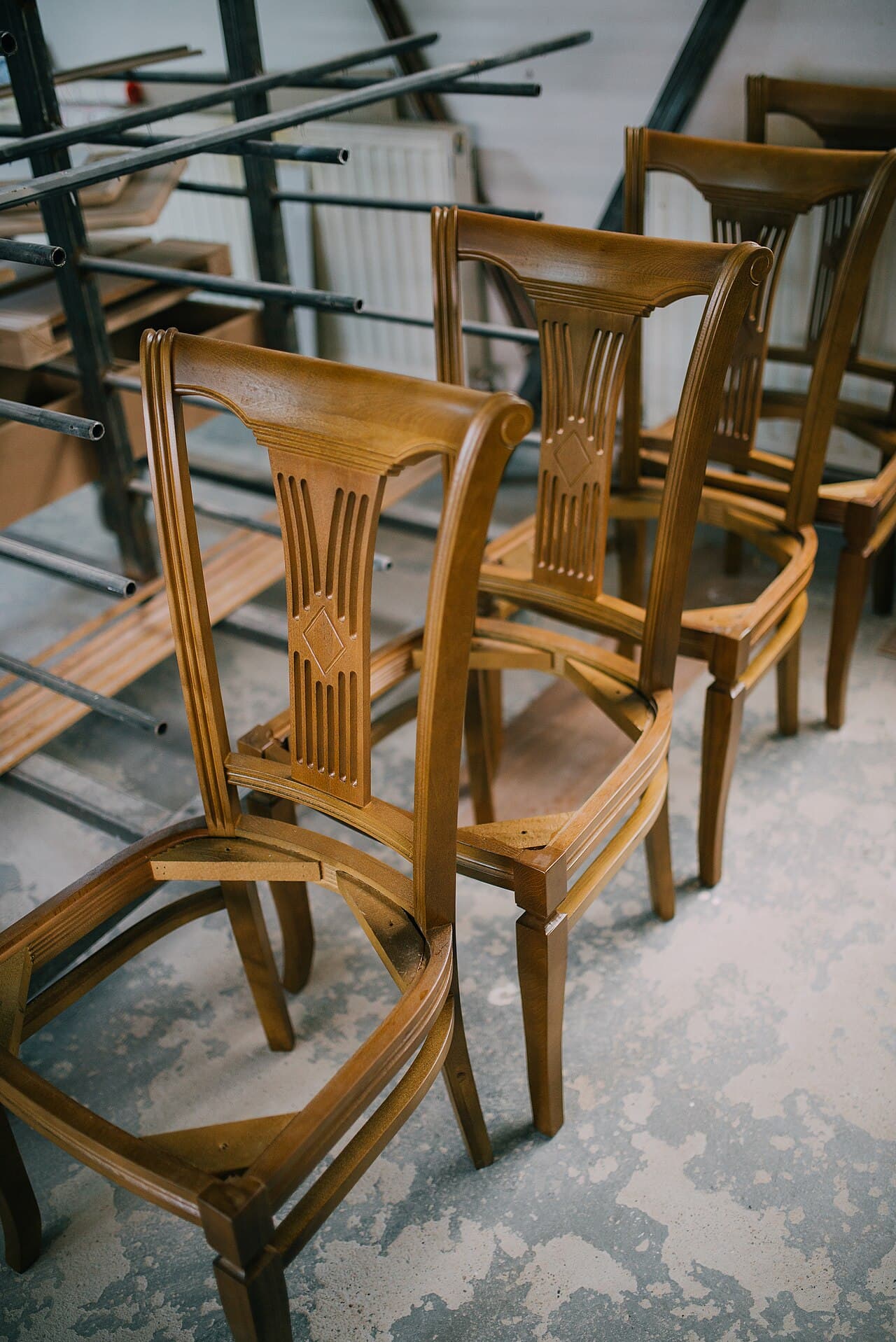
Steadiness matters as much as the number. Avoid temporarily heating, air conditioning, or humidifying spaces that house wooden objects.[1] The handbook is blunt about thermostats too: Do not turn off heat or air conditioning at night.[1] For a whole room or a display cabinet, a humidistat is the museum answer: Consider installing a humidistat to override the thermostat in spaces housing wooden objects.[1]
Move it away from heat and sun
Local microclimates do damage that a good room reading hides. On a wide board, the surface of a table leaf in the sun or near a radiator will become dryer than the surface underneath,[1] and the board can cup or split. Keep furniture off hot-air registers, radiators and fireplace walls, and a few feet back from a sunny window.
Light matters too. Light will change the natural color of heartwood, making light woods darker and dark woods lighter. It will fade stains and embrittle finishes.[1] Use blinds, shutters, curtains, and roller shades in historic structures to reduce visible light,[1] and turn pieces occasionally so one side does not take all the sun.
Skip the oil
Lemon oil and "wood food" feel like the answer to dry wood, but a finish sits between the oil and the wood. Do not apply oil to finished wooden surfaces.[1] The handbook adds that in excess linseed oil remains tacky, gathers dust, and severely darkens the wood.[1] Dust gently and read how to clean antique furniture without ruining its value before you wipe anything.
Stop and call a pro if
- A crack runs through a top, panel or leg, or it keeps growing. Do not clamp or glue it yourself.
- Veneer lifts, bubbles or has fallen off. Save every piece in a labelled bag.
- Joints are loose or the piece wobbles. Racking a loose chair makes it worse.
- You see mold, white bloom or small round holes with fine powder. That is a moisture or insect problem, not dryness.
- The piece is valuable or a family heirloom and you are unsure what to do.
Getting help in Virginia
If a piece has already cracked, read whether to restore an antique or leave it original and what antique furniture restoration costs in Virginia. You can also browse small repairs listings or more furniture repair answers.
When you are ready, describe the piece once and local restorers can quote it.
Common questions
- What humidity is best for antique wood furniture?
- The National Park Service gives 50% relative humidity, plus or minus 5%, as the ideal for wooden objects in most areas of the country. A cheap hygrometer in the room tells you where you actually are.
- Does furniture polish or oil stop wood from drying out?
- No. The museum handbook says not to apply oil to finished wooden surfaces, because in excess linseed oil remains tacky, gathers dust, and severely darkens the wood. The finish protects the wood; the air around it decides whether it dries out.
- Is a humidifier safe to run near antiques?
- Yes, if you keep the room in range. The same handbook warns that above 70% mold and insects may become problems, so a humidifier needs a hygrometer, not guesswork.
- Can a crack that has already opened be closed?
- Often it will narrow when humidity returns to a steady middle range, but do not force it shut with clamps or glue. Have a restorer look at any split in a top, a panel or a joint.
- Why do pieces crack the first winter after a move?
- Usually the air changed. A room with less moisture, or a spot next to a vent or radiator, dries the wood unevenly, and the stress shows up as checks, loose joints or lifting veneer.
Sources
- [1] Museum Handbook, Part I, Appendix N: Curatorial Care of Wooden Objects, National Park Service, U.S. Department of the Interior. Checked October 28, 2026.
- [2] Wood Handbook, Chapter 13: Drying and Control of Moisture Content and Dimensional Changes (FPL-GTR-190), Forest Products Laboratory, USDA Forest Service. Checked October 28, 2026.
Want a pro to handle it?
Describe the job once. Licensed local businesses send quotes, and you pay only when you book one.
Get a quote for Furniture