How do I fix a wobbly chair?
Rock the chair in another spot first to rule out an uneven floor. If the wobble follows the chair, tighten any screws, then find the joint that moves and re-glue it: tap it apart, scrape the old glue to bare wood, dry-fit, spread fresh wood glue, clamp it square and let it cure. Cracked parts or antiques need a repairer.
Free to ask. Local shops send quotes, and you pay only when you book one.
By Kasra Taheri, Founder, LoclisPublished
Researched and drafted with AI, then checked claim by claim against the sources listed below before it was published. Prices and rules change; the dates beside each source say when it was last checked.
Step by step
Read when to stop and call a pro, further down this page, before you start.
Step 1: Rule out the floor
Slide the chair to another spot and rock it again. If it only rocks in one place, the floor is uneven, so use a felt pad or an adjustable glide under the short leg.
Step 2: Check the hardware
Snug up any screws, bolts or corner-block screws under the seat. Firm is enough; overtightening strips the hole and can split the wood.
Step 3: Find the loose joint
Press and twist each leg, rung and back post while watching where it meets the seat frame. A loose joint shows a hairline gap, clicks under load, or has flakes of old glue beside it.
Step 4: Take the loose joint apart
Tap the loose part free with a rubber mallet, striking near the joint rather than the middle of a rung. Leave sound joints alone and mark each part with painter's tape so it goes back where it came from.
Step 5: Clean both faces
Scrape the old glue off both faces down to bare wood. Sand lightly with 60 to 80 grit paper if needed and wipe away all dust.[2]
Step 6: Dry-fit the parts
Push the parts together without glue to check they seat fully and the chair stays square. If the tenon rattles in the hole, see the note on worn joints below.
Step 7: Glue both surfaces
Spread wood glue evenly on both surfaces, using enough to coat the wood but not so much that it floods the joint.[2]
Step 8: Clamp it square
Close the joint with a clamp or strap clamp, check the legs are square to the seat, and wipe off the squeeze-out right away.
Step 9: Let it cure
Leave the clamps on for the time on the glue label and go easy on the chair afterwards, since glue can need hours or weeks to cure fully.[2]
A wobbly chair is usually one loose joint or one loose fastener, and both are fixable at home. Start by finding out whether the chair or the floor is moving, then tighten the hardware, then take apart and re-glue the joint that still shifts.
Is it the chair or the floor?
Slide the chair to another spot or room and rock it again. If the wobble follows the chair, the problem is in the chair. If it only rocks in one place, the floor is uneven and a felt pad or adjustable glide under one leg will settle it.
Why chairs come loose
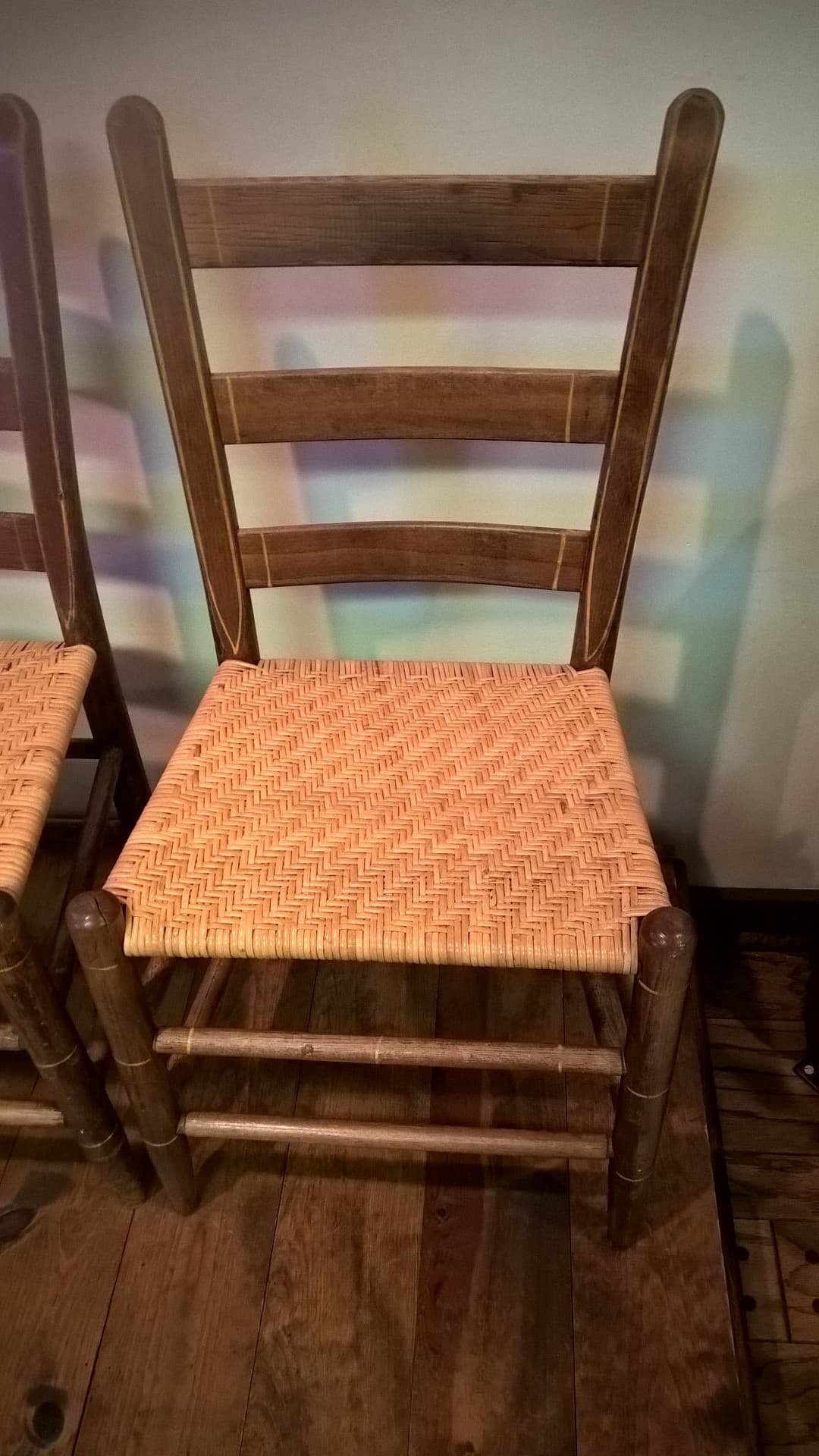
Chairs take more stress than most furniture, because they are pushed, tipped and sat on every day. Rungs and stretchers may become loose in chair legs because of the differential in shrinkage along and across the grain.[1] Add the weight and twisting of daily use and a joint that was tight can slowly open up.
Tighten, then find the joint
Look under the seat for screws, bolts or corner blocks and snug each one. Firm is enough. If the chair still rocks, press and twist each leg, rung and back post while you watch where it meets the seat frame. A loose joint shows a hairline gap, clicks under load, or has fine flakes of old glue beside it.
Take it apart and re-glue
Squirting glue into a joint that is still assembled seldom lasts. Take the loose joint apart instead. Tap it free with a rubber mallet, striking near the joint rather than the middle of a rung, and mark each part with painter's tape so it goes back in the same place. If a neighboring joint is solid, leave it alone, since forcing a sound joint apart can break it.
Scrape the old glue off both faces down to bare wood. The adhesive industry typically recommends 60–80-grit sanding as acceptable for wood bonding, and anything above 200 grit fuzzes the wood surface and is not recommended.[2] Sanding dust must be removed completely from the surface,[2] so wipe the parts clean before you glue.
Dry-fit the parts first. In a mortise-and-tenon joint, the tenon should be slightly smaller than the mortise to prevent the mortise from splitting,[1] so a little play is normal and the glue fills it. Do not sand a tenon down to make it loose, and do not hammer it in tight.
Spread wood glue on both surfaces. The adhesive must be fluid enough to enter the void spaces in the wood but not so fluid that most of the adhesive is squeezed out of the bondline, causing a starved joint.[2] The strongest joints are made with moderately high clamping pressure for the wood density,[2] so use a clamp or strap clamp instead of hand pressure. Check that the chair is square, wipe off the squeeze-out, and leave it clamped for the time on the glue label.
Go easy on the chair afterwards, since adhesives typically need hours or weeks to completely cure.[2]
If the joint is worn
If the tenon spins freely or the hole is chewed out, glue alone will not hold, because there is nothing for it to grip. Fixing that means building up the tenon or reforming the hole with new wood, which is where a furniture repairer earns the fee.
Stop and call a pro if
- A leg, rung, post or seat rail is cracked or snapped. Gluing a split part without repairing the break usually fails again, and the repair takes the right wood and technique.
- The joint is badly worn or oversized. Packing it with glue or filler is a short-term fix at best.
- The chair is an antique or an heirloom. Poorly done repairs are another common cause of damage to wooden objects,[1] and glue may leave misaligned surfaces and residue.[1] A restorer can use repairs that can be undone later.
- You plan to strip an old finish. The EPA lists refinishing old furniture among the jobs that can put you in contact with lead.[3] Ask a pro before you sand or strip a painted chair.
- Several joints are loose at once, or the frame is twisted. That usually means a full re-glue of the whole chair.
Getting help in Virginia
If the repair is beyond a glue joint, read how much it costs to reupholster a chair in Virginia, see the similar fix for a wobbly table, browse chair repair requests, or see more furniture repair answers.
When you are ready, describe the repair once and local furniture repairers can quote it.
Common questions
- Why does my chair keep getting loose?
- Wood changes size with the seasons, and chair joints are loaded every time someone sits. Rungs and stretchers may become loose in chair legs because of the differential in shrinkage along and across the grain. Once a joint has opened a little, daily use works it looser, so it is worth fixing early.
- Can I just squirt glue into a loose joint?
- It rarely lasts. New glue does not bond well to old, dried glue, so the joint holds only until the next hard rock. Taking the joint apart, scraping both faces to bare wood and clamping it fresh is the more durable fix.
- What glue should I use?
- Ordinary wood glue is the usual choice for a joint that still fits snugly. A joint where the wood itself is worn or crushed needs the wood repaired, not just more glue, so that is the point to ask a furniture repairer.
- How long should I leave the clamps on?
- Follow the label on your glue. Clamp time is set by how long the glue takes to set, and adhesives typically need hours or weeks to completely cure, so avoid hard use for a day or more even after the clamps come off.
- Is it worth repairing an inexpensive chair?
- Often yes, because a loose joint is the cheapest kind of chair damage to fix. If the chair is cracked in several places or the parts are loose everywhere, compare the repair quote with the price of a replacement.
Sources
- [1] Museum Handbook, Part I, Appendix N: Curatorial Care of Wooden Objects, National Park Service, U.S. Department of the Interior. Checked October 27, 2026.
- [2] Wood Handbook, Chapter 10: Adhesives with Wood Materials (FPL-GTR-190), USDA Forest Service, Forest Products Laboratory. Checked October 27, 2026.
- [3] Protect Your Family from Sources of Lead, U.S. Environmental Protection Agency. Checked October 27, 2026.
Want a pro to handle it?
Describe the job once. Licensed local businesses send quotes, and you pay only when you book one.
Get a quote for Furniture