How do I get rid of a musty smell in my house?
A musty smell means moisture and usually mold or mildew, so deodorizers only mask it. Find the damp spot, fix the water, dry everything, scrub hard surfaces with detergent and water, and throw out moldy carpet or ceiling tile. Keep humidity below 60 percent. Mold over about 10 square feet, or one you cannot find, is a job for a pro.
Free to ask. Local shops send quotes, and you pay only when you book one.
By Kasra Taheri, Founder, LoclisPublished
Researched and drafted with AI, then checked claim by claim against the sources listed below before it was published. Prices and rules change; the dates beside each source say when it was last checked.
Step by step
Read when to stop and call a pro, further down this page, before you start.
Step 1: Find where it is strongest
Walk the house with your nose first: closets, the basement, under sinks, behind furniture on outside walls, around the water heater and at the air returns. The strongest spot is where to look.
Step 2: Look for water
Check for leaks, stains, damp carpet edges, condensation on windows, walls or pipes, and a clogged air conditioner drip pan or drain line.[1]
Step 3: Measure humidity
Put a humidity meter in the room for a few days; indoor humidity should be kept below 60 percent, ideally between 30 and 50 percent.[1]
Step 4: Fix the water problem first
Repair the leak, redirect the downspout or vent the dryer or fan outdoors; cleaning mold without fixing the water problem means it will most likely come back.[1]
Step 5: Protect yourself
Before disturbing anything that looks moldy, wear an N-95 respirator, long gloves and goggles.[1]
Step 6: Scrub hard surfaces
Scrub mold off hard surfaces with detergent and water, and dry them completely.[2]
Step 7: Throw out what cannot be cleaned
Absorbent or porous materials such as ceiling tiles and carpet may have to be thrown away if they become moldy.[2]
Step 8: Dry and ventilate
Run a dehumidifier or air conditioner, run the bathroom fan or open a window when showering, and use exhaust fans or open windows when cooking.[1]
Step 9: Recheck in a week
Sniff the same spots after a few days of lower humidity. If the smell returns, the moisture source is not fixed or the odor is coming from somewhere hidden.
Find the moisture, not just the smell
A musty smell almost always means something is damp. The key to mold control is moisture control.[1] So the job is in this order: find the damp spot, stop the water, dry the area, then clean what can be cleaned and remove what cannot. A spray or a plug-in air freshener skips all of that and the smell comes back.
Start by walking through the house and noting where the smell is strongest. Basements, closets on outside walls, the space under a sink, a laundry corner and the area around an air return are common. Look for stains, bubbling paint, damp carpet edges and condensation on windows, walls or pipes, which can be a sign of high humidity.[1]
Check humidity and dry it out
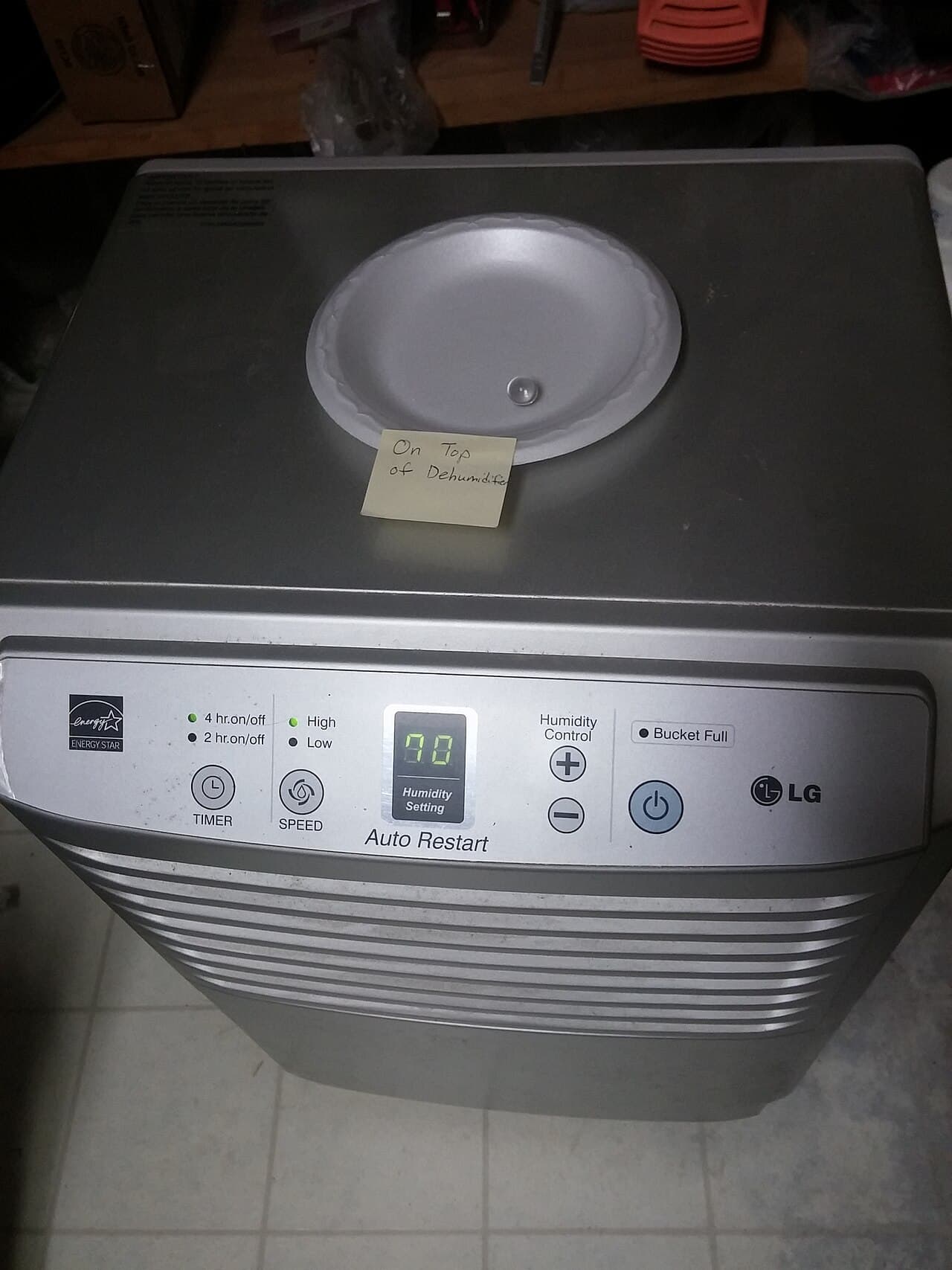
Indoor humidity should be kept below 60 percent, ideally between 30 and 50 percent.[1] A small humidity meter from a hardware store tells you where you stand. If a room reads high, run a dehumidifier or the air conditioner, run the bathroom fan or open a window when showering, and use exhaust fans or open windows when cooking.[1]
After a leak or spill, speed matters. If wet or damp materials or areas are dried 24-48 hours after a leak or spill happens, in most cases mold will not grow.[1] If it has been longer, assume mold is growing and clean accordingly.
Fix the cause as you dry. If there is mold growth in your home, you must clean up the mold and fix the water problem.[1] Skip that and the smell and the mold will most likely come back.
Clean what is cleanable
Before touching anything that looks moldy, wear an N-95 respirator, long gloves and goggles.[1] Then scrub mold off hard surfaces with detergent and water, and dry them completely.[2]
Plain detergent is the standard. The EPA says the use of chlorine bleach is not recommended as a routine practice during mold cleanup, and that dead mold may still cause allergic reactions, so it is not enough to simply kill the mold, it must also be removed.[1] If you do use a disinfectant, ventilate the area, and never mix a bleach solution with a cleaner that contains ammonia because toxic fumes could be produced.[1]
Absorbent or porous materials such as ceiling tiles and carpet may have to be thrown away if they become moldy, because mold can grow into their crevices and be impossible to remove completely.[2] Sealing in an odor with paint is not an option either. Do not paint or caulk moldy surfaces.[2]
Skip the ozone machine
Ozone generators and odor "bombs" are sold as odor cures. The EPA says ozone is a lung irritant, and that although it can reduce odors in unoccupied spaces, the levels needed to do that are above those generally thought to be safe for humans.[3] It does nothing about the damp that caused the smell, and it is not something to run in a home you are living in.
Stop and call a pro if
- The moldy area is larger than about 10 square feet. In most cases you can handle less than that yourself; beyond it, the EPA says to consult its remediation guide, which is focused on schools and commercial buildings but applies to other building types.[2]
- You smell it but cannot find it. Mold may be on the back side of drywall, wallpaper or paneling, the top side of ceiling tiles and the underside of carpets and pads, and the EPA says that if you believe you may have a hidden mold problem, consider hiring an experienced professional.[1]
- The air conditioning or heating system may be involved. Do not run the HVAC system if you know or suspect that it is contaminated with mold, because it could spread mold throughout the building.[2]
- The water was sewage or other contaminated water. Call in a professional who has experience with contaminated water.[2]
- Someone in the home has health concerns. The EPA advises consulting a health professional before starting cleanup if you have health concerns.[2] Allergic reaction is the most commonly reported health effect of mold exposure.[4]
- The smell comes back after you dried and cleaned. The water source is still there, and a pro with moisture meters can find it.
Getting help in Virginia
If the source is crawl space air, read why a house smells musty from the crawl space, and for a wet basement see how to dry out a wet basement after a leak. If you cannot tell whether to hire someone, see what professional mold remediation involves. More is in restoration answers and the restoration directory.
When the smell is beyond a weekend of cleaning, describe the problem once and local pros can quote it.
Common questions
- Why does my house smell musty when I can see no mold?
- A musty smell is usually a sign of mold or mildew growing somewhere out of sight. Mold can be on the back side of drywall, wallpaper or paneling, the top side of ceiling tiles, or the underside of carpets and pads.[^epa-mold] Start with the places that get damp: basements, crawl spaces, under sinks and next to outside walls.
- Will bleach get rid of the smell?
- Usually not the lasting kind. The EPA says chlorine bleach is not recommended as a routine practice during mold cleanup, and that dead mold may still cause allergic reactions, so it has to be removed, not only killed.[^epa-mold] Never mix a bleach solution with a cleaner that contains ammonia, because toxic fumes could be produced.[^epa-mold]
- Do air fresheners, candles or odor bombs work?
- They cover the smell without drying the damp material that is making it, so it returns. The cure is removing the moisture and the mold, then keeping humidity down.
- Is it safe to run an ozone machine in the house?
- The EPA calls ozone a lung irritant and says the levels needed to remove odors are above those generally thought safe for people, which is why it is used only in unoccupied spaces.[^epa-ozone] A rented ozone machine is not a DIY fix for a house you live in.
- How long does it take to get rid of a musty smell?
- If the cause is a damp surface you can dry and clean, the smell usually fades within days of the material being dry. Soaked carpet, drywall or insulation can hold it for as long as it stays in the house, so removal is the quicker route.
- Can a musty smell make me sick?
- Allergic reaction is the most commonly reported health effect of mold exposure, with symptoms such as sneezing, runny nose, red eyes and skin rash.[^vdh-mold] If you cough, wheeze or have trouble breathing around it, see a health professional.
Sources
- [1] A Brief Guide to Mold, Moisture and Your Home, U.S. Environmental Protection Agency. Checked October 27, 2026.
- [2] Mold Cleanup in Your Home, U.S. Environmental Protection Agency. Checked October 27, 2026.
- [3] What are ionizers and other ozone generating air cleaners?, U.S. Environmental Protection Agency. Checked October 27, 2026.
- [4] Mold, Virginia Department of Health. Checked October 27, 2026.
Want a pro to handle it?
Describe the job once. Licensed local businesses send quotes, and you pay only when you book one.
Get a quote from a local pro