How do I keep my house from smelling musty?
Keep moisture out. Hold indoor humidity below 60 percent, ideally 30 to 50 percent, with a meter and a dehumidifier or air conditioner. Run bath and kitchen fans, vent the dryer outdoors, keep gutters clear and the ground sloping away from the house, and dry any leak or spill within 24 to 48 hours. Air fresheners only mask it.
Free to ask. Local shops send quotes, and you pay only when you book one.
By Kasra Taheri, Founder, LoclisPublished
Researched and drafted with AI, then checked claim by claim against the sources listed below before it was published. Prices and rules change; the dates beside each source say when it was last checked.
Step by step
Read when to stop and call a pro, further down this page, before you start.
Step 1: Buy a humidity meter
Put a small humidity meter in the basement, the bathroom and any closet that smells, and read it through the seasons.[1]
Step 2: Keep humidity down
Aim for indoor humidity below 60 percent, ideally between 30 and 50 percent, using an air conditioner or dehumidifier when needed.[1]
Step 3: Run the fans
Run the bathroom fan or open a window when showering, and use exhaust fans or open windows when cooking and running the dishwasher.[1]
Step 4: Vent moisture outdoors
Make sure the dryer and other moisture-producing appliances vent to the outside.[1]
Step 5: Dry spills fast
Dry wet carpet, towels and building materials within 24 to 48 hours of a leak or spill.[1]
Step 6: Clear gutters and downspouts
Clean the gutters regularly and check that downspouts empty away from the foundation.[1]
Step 7: Check the air conditioner drain
Keep the air conditioner drip pan clean and the drain line unobstructed and flowing.[1]
Step 8: Deal with condensation
Wipe moisture from windows, walls and pipes, and cover cold water pipes with insulation.[1]
Step 9: Air out and wash damp items
Open closet doors, leave space between furniture and outside walls, and wash towels and bath mats promptly rather than leaving them damp.
Step 10: Sniff-check monthly
Check the same trouble spots once a month: under sinks, the basement, the laundry corner and closets on outside walls. Fix any stain, drip or smell when it first appears.
Control moisture and the smell stays away
A musty smell is the smell of damp. The key to mold control is moisture control.[1] So keeping a house from smelling musty means keeping water out, and drying quickly what gets in. Air fresheners, candles and baking soda cover the smell without touching the cause.
If the smell is already there, start with how to get rid of a musty smell in your house, then use this page to keep it from returning.
Hold humidity in the right range
The target is simple. If possible, keep indoor humidity below 60 percent (ideally between 30 and 50 percent) relative humidity.[1] A small humidity meter lets you see the number instead of guessing, so put one in the basement, the bathroom and any closet that smells. Basements and rooms with little air movement are where the meter matters most.
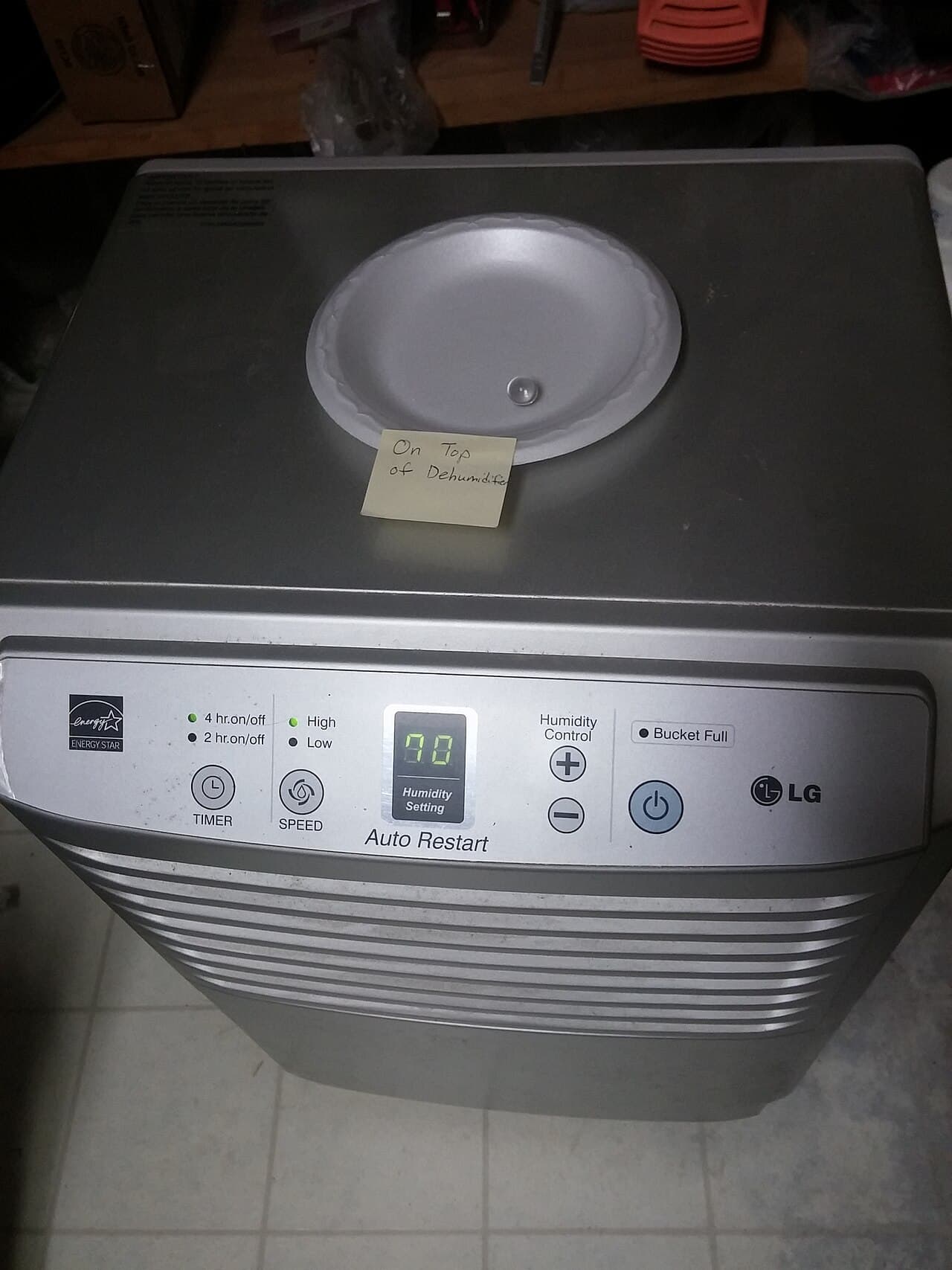
When the number runs high, use an air conditioner or dehumidifier when needed, along with ventilation.[1] Run the bathroom fan or open a window when showering, and use exhaust fans or open windows whenever cooking, running the dishwasher or dishwashing.[1]
Vent and drain water away from the house
Much of the moisture in a house comes from outside or from appliances. The EPA's prevention list covers the main ones:
- Vent appliances that produce moisture, such as clothes dryers, stoves, and kerosene heaters to the outside where possible.[1]
- Clean and repair roof gutters regularly.[1]
- Make sure the ground slopes away from the building foundation, so that water does not enter or collect around the foundation.[1]
- Keep air conditioning drip pans clean and the drain lines unobstructed and flowing properly.[1]
Stop condensation and dry things quickly
If you see condensation or moisture collecting on windows, walls or pipes, act quickly to dry the surface and reduce the moisture source. Condensation can be a sign of high humidity.[1] Cover cold surfaces, such as cold water pipes, with insulation.[1]
Speed matters after a leak, a spill or a wet towel. If wet or damp materials or areas are dried 24-48 hours after a leak or spill happens, in most cases mold will not grow.[1] Wet carpet, a soaked box in the basement and a damp towel on the floor all count. Dry them, move them or throw them out.
Small habits that help
- Leave a gap between furniture and outside walls so air can move.
- Keep closet doors open now and then and do not pack closets tight.
- Wash and fully dry bath mats, towels and shower curtains.
- Replace the furnace and air conditioner filter as the manufacturer directs.
- Do a monthly sniff-check of the trouble spots: under sinks, the basement, the laundry corner and the garage wall.
Stop and call a pro if
- The smell keeps coming back after you dried and cleaned. The water source is still there, probably out of sight in a wall, a floor or a crawl space.
- Humidity stays high even with a dehumidifier running. That points to a leak, groundwater or a ventilation problem. See how to keep a crawl space dry and how to prevent mold in a basement.
- The smell is strongest at the vents. EPA says a suspected mold-contaminated HVAC system calls for caution before you take further action, so have it checked rather than running it to clear the air.[2]
- You find a stain that grows or a patch of mold bigger than about 10 square feet. The EPA says you can usually handle less than that yourself.[2] Beyond it, EPA points to its remediation guide, and a remediation company is the usual route. Read what professional mold remediation involves.
- A leak soaked drywall, carpet or insulation. Materials that stayed wet may need to be removed, and a restoration company can dry and treat them.
Getting help in Virginia
For prices and when it makes sense to hire, see how much odor removal costs in Virginia and when to hire an odor removal company. More guides are in restoration answers and the restoration directory.
If the musty smell is stubborn or you cannot find where it starts, describe the problem once and local pros can quote it.
Common questions
- What humidity level stops a house smelling musty?
- The EPA's advice is to keep indoor humidity below 60 percent, ideally between 30 and 50 percent, and it says a moisture or humidity meter will measure it.[^epa-mold] Check basements and closets separately, since they are often damper than the rest of the house.
- Does a dehumidifier help?
- Yes, in a damp basement or room. The EPA lists air conditioners and dehumidifiers among the ways to cut indoor humidity.[^epa-mold] Empty the bucket or run it to a drain, and keep its filter clean. It cannot fix a leak, so find the water source first.
- Do air fresheners, baking soda or charcoal bags prevent a musty smell?
- They can soften a faint smell, but none of them removes the moisture that causes it. The key to mold control is moisture control.[^epa-mold]
- How quickly must I dry a spill or leak?
- Within a day or two. If wet or damp materials or areas are dried 24-48 hours after a leak or spill happens, in most cases mold will not grow.[^epa-mold]
- Should I run the air conditioner or furnace fan to freshen the air?
- Only if you are sure the system is clean. EPA says that if you suspect the HVAC system may be contaminated with mold, for instance because there is mold near the intake or it is part of an identified moisture problem, you should consult its guide on air duct cleaning before taking further action.[^epa-cleanup] If the smell is strongest at the vents, have the system checked.
- I rent. What can I do?
- Do the daily habits: fans, drying towels, airing closets. For leaks, plumbing problems and moisture that keeps returning, the EPA says renters should report them immediately to the building owner, manager or superintendent, and if persistent water problems are not addressed they can contact local, state or federal health or housing authorities.[^epa-mold]
Sources
- [1] A Brief Guide to Mold, Moisture and Your Home, U.S. Environmental Protection Agency. Checked October 28, 2026.
- [2] Mold Cleanup in Your Home, U.S. Environmental Protection Agency. Checked October 28, 2026.
Want a pro to handle it?
Describe the job once. Licensed local businesses send quotes, and you pay only when you book one.
Get a quote from a local pro