Should I restore an antique or leave it original?
Fix what is structurally broken and leave the rest alone unless it is clearly beyond saving. Museum practice prefers preserving a finish that is original and salvageable, and refinishing only when the finish is inappropriate or almost worn away. Before any stripping or sanding, get a restorer or conservator to look at the piece.
Free to ask. Local shops send quotes, and you pay only when you book one.
By Kasra Taheri, Founder, LoclisPublished
Researched and drafted with AI, then checked claim by claim against the sources listed below before it was published. Prices and rules change; the dates beside each source say when it was last checked.
Step by step
Read when to stop and call a pro, further down this page, before you start.
Step 1: Photograph and record the piece
Take photos of every side, the underside and any labels, and write down where it came from and what you know about its age.
Step 2: Look for what is original
Check the finish, the hardware, the joints and any unfinished surfaces such as the underside of drawers, and note what looks altered or repaired.
Step 3: Separate structure from looks
Decide whether the problem is structural (loose joints, split wood, lifting veneer) or only the appearance of the finish.
Step 4: Get an opinion before any work
Ask a restorer or conservator who works on antiques to assess the piece before anyone strips, sands or glues it.
Step 5: Keep any detached parts
Place small detached parts in a closable bag with a label and keep it with the piece; do not tack a loose part back into place.[1]
Step 6: Choose the least invasive option
Prefer cleaning and a stable repair over a new finish when the existing finish is original and salvageable.[1]
Step 7: Ask to keep evidence of the old finish
If refinishing is chosen, ask the restorer to leave a small area intact to document the finish history.[1]
Step 8: Check for lead before stripping
If the piece is old and painted, ask how dust and stripping will be handled before you agree to the job.[2]
Leave the original finish alone when it is sound, repair what is structurally broken, and restore more only when the finish or the piece is truly beyond saving. Museum practice treats preservation as the starting point: if the existing finish is original, or at least appropriate, and salvageable, preservation is the preferred course.[1] Before you strip, sand or glue anything on a piece that might be valuable, get a restorer or conservator to look at it.
Why original is usually the safer choice
Most of what makes an antique worth owning is what cannot be put back: the surface a maker applied, the wear of generations and the marks of use. The National Park Service's museum handbook describes the conservator's approach as keeping that evidence. The conservator preserves important signs of use.[1]
That includes patina. Patina refers to the distinctive appearance of older finishes.[1] A worn finish with warm tones and a soft shine is not the same as a failed one, though there is a fine line between patina and a damaged finish.[1] A restorer can tell you which you have.
Restoration can also go wrong in ways that are hard to reverse. Poorly done repairs are another common cause of damage to wooden objects,[1] original finishes may be removed mistakenly, and future conservation treatment may be made more difficult by the use of irreversible materials.[1]
What is worth fixing
Not everything should be left. Structural problems get worse if ignored: loose joints, splits and lifting veneer. A conservator's structural repairs aim at restoring structural integrity, but not necessarily appearance,[1] and they are done so that repairs are reversible so that they can be removed if necessary.[1] That is a good standard for any repair on a piece you want to keep.
Cosmetic wear is a different matter. A scratch, a faded top or a dull shine does not threaten the piece. Cleaning and waxing, if the finish is stable,[1] usually improves the look without removing anything. Our guide to cleaning antique furniture without ruining its value covers the safe version.
Hardware is part of the same decision. Polishing brass can damage both the hardware and the surrounding wood,[1] so original pulls are best left with their tarnish unless a restorer advises otherwise.
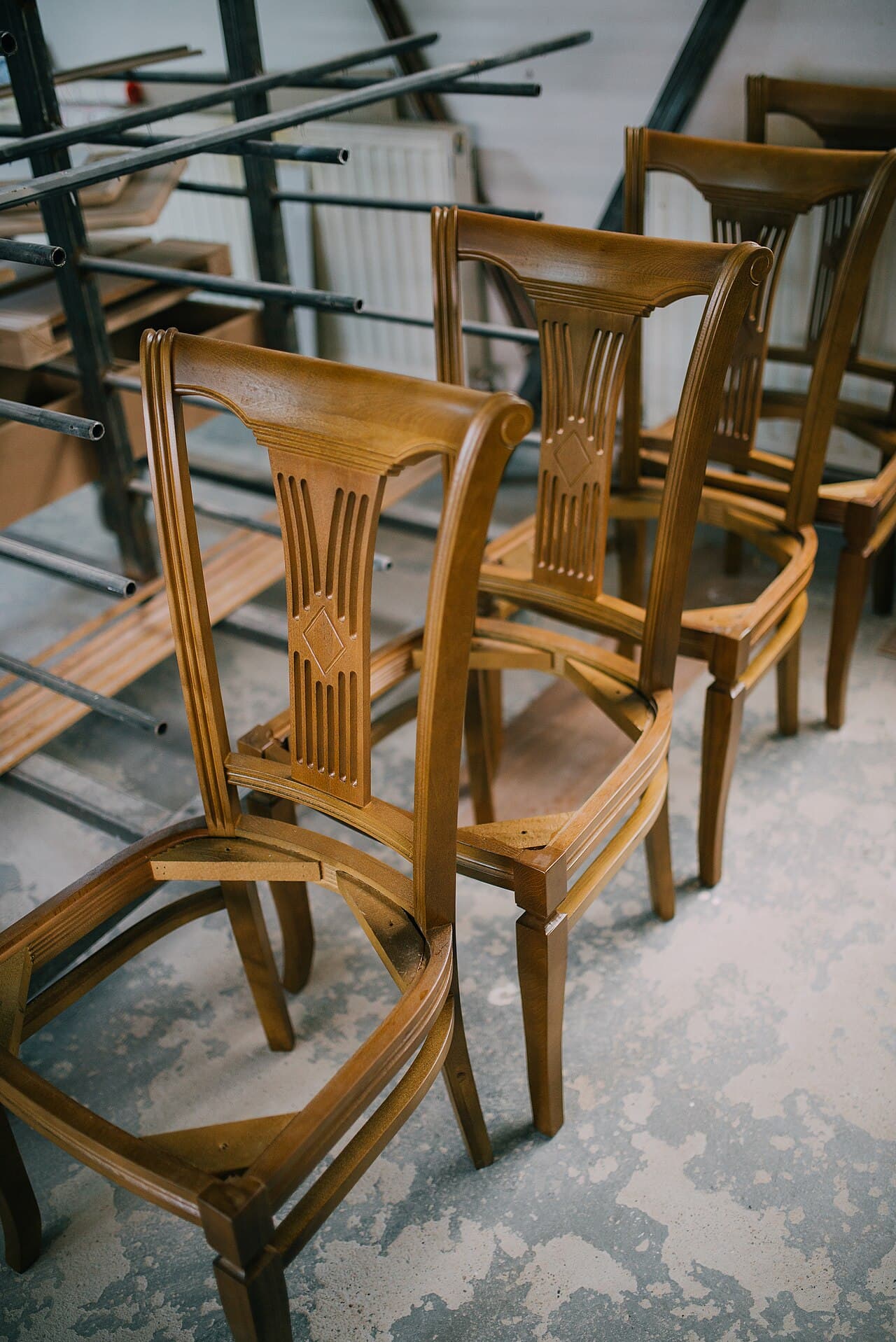
When restoring is the right call
Refinishing is preferred if the existing finish is either inappropriate or almost completely worn away.[1] That is the case for a surface that is mostly bare, badly damaged by water or heat, or covered by a later coat that hides the original. Even then, the handbook says the curator and the conservator should carefully consider the decision to refinish,[1] and a small area is usually left intact to document the finish history of the object.[1] Ask your restorer to do the same.
Pieces that are ordinary, not rare, and that you want to use daily are a different case from a family heirloom or a documented maker's piece. A sturdy farmhouse table you eat at may be worth refinishing; a signed or early piece deserves a specialist's opinion first. If you are unsure which yours is, assume it is the second kind until someone looks.
Safety on old painted pieces
If the piece is painted and old, think about lead before you think about the finish. The EPA lists refinishing old furniture among the jobs that can put you in contact with lead.[2] The federal ban on lead paint covers furniture articles for consumer use that bear lead-containing paint, and applies to products manufactured after February 27, 1978,[3] so an older painted piece may have lead in its paint.
Stripping is a hazard as well. The CPSC advises that if work must be done indoors under low ventilation conditions, consider having the work done professionally instead of attempting it yourself.[4]
If something comes loose
If a part comes off, do not force it back. If small parts become detached, place them in a closable polyethylene bag with a label,[1] and keep the bag with the piece. Do not tack the loose part back into place.[1] When a temporary reattachment is needed, museum guidance names a reversible glue (for example, hide glue),[1] but ask a restorer what they would use.
Stop and call a pro if
- The piece might be valuable, signed, early or an heirloom. Get an assessment before any work.
- You think the finish is original, especially a wax finish. Do not clean or strip it yourself.
- It is old and painted. Lead changes how it must be handled.
- The veneer is lifting, joints are loose or the wood is split. Get a repair quote before a cosmetic one.
- You have nowhere ventilated to strip it. Pay a shop to do it.
Getting help in Virginia
For the money side, read what antique furniture restoration costs in Virginia and whether refinishing old furniture is worth it. Browse more furniture repair answers, antique restoration requests or small repair services.
When you are ready, describe the piece once and local restorers can quote it.
Common questions
- Does refinishing an antique lower its value?
- It can. A finish that is original and salvageable is usually better preserved than replaced, and stripping removes the evidence of the piece's history. Whether it costs you money depends on the piece, so get an opinion from a restorer or appraiser who handles antiques before any stripping.
- What should be fixed even if I want to leave it original?
- Structural problems: loose joints, splits and lifting veneer. Museum practice makes structural repairs to restore structural integrity, and favors repairs that are reversible so they can be removed later. Cosmetic wear is usually the part to leave alone.
- What is patina, and is it damage?
- Patina is the distinctive appearance of older finishes, a worn but warm look with a soft shine. There is a fine line between patina and a damaged finish, which is why a restorer should judge it. Do not remove it just because it looks old.
- A drawer pull came off. What do I do?
- Do not tack it back. Put it in a labelled, closable bag and keep it with the piece. Museum guidance names hide glue as an example of a reversible glue for reattaching a part temporarily, so ask a restorer what they would use.
- Is it safe to strip an old painted piece myself?
- Not without thinking about lead and ventilation. The EPA lists refinishing old furniture among the jobs that can put you in contact with lead, and the CPSC advises that if work must be done indoors under low ventilation conditions, you consider having it done professionally.
Sources
- [1] Museum Handbook, Part I, Appendix N: Curatorial Care of Wooden Objects, National Park Service, U.S. Department of the Interior. Checked October 27, 2026.
- [2] Protect Your Family from Sources of Lead, U.S. Environmental Protection Agency. Checked October 27, 2026.
- [3] 16 CFR Part 1303, Ban of lead-containing paint and certain consumer products bearing lead-containing paint, Consumer Product Safety Commission, Electronic Code of Federal Regulations. Checked October 27, 2026.
- [4] What You Should Know About Using Paint Strippers, U.S. Consumer Product Safety Commission. Checked October 27, 2026.
Want a pro to handle it?
Describe the job once. Licensed local businesses send quotes, and you pay only when you book one.
Get a quote for Furniture