How do I keep outdoor steps from icing over?
Clear the snow off the steps early and often, then treat what is left. Do not put de-icer on top of snow: shovel first, then spread a thin, even layer of de-icer or sand on the bare steps. Sweep up leftover grains, keep salt off new concrete and plants, and recheck the steps at dawn, when melted snow refreezes.
Free to ask. Local shops send quotes, and you pay only when you book one.
By Kasra Taheri, Founder, LoclisPublished
Researched and drafted with AI, then checked claim by claim against the sources listed below before it was published. Prices and rules change; the dates beside each source say when it was last checked.
Step by step
Read when to stop and call a pro, further down this page, before you start.
Step 1: Shovel the snow off early
Shovel, scrape and sweep snow often to remove as much as you can before it packs down and turns to ice.[1]
Step 2: Clear it all the way to the tread
Scrape each step down to the surface so there is no packed layer left to refreeze.
Step 4: Check the temperature
Salt and chemicals can speed up melting when temperatures are above 20 degrees.[3] Below that, lean on sand for grip.
Step 5: Spread it thinly
Apply only to the bare steps, evenly, with about 3 inches between grains and no piles.[1]
Step 6: Keep salty snow off plants
Do not shovel or pile salty snow onto nearby shrubs.[1]
Step 7: Sweep up spilled grains
Sweep up grains you see on dry surfaces so they do not wash or blow into plants and waterways, and save them to reuse.[1]
Step 8: Recheck at dawn
Look at the steps again early in the morning, when black ice is most prevalent, and treat any shiny patches.[4]
The steps stay clear when you take the snow off early and treat only what is left. Ice on steps is usually packed snow or melt that refreezes, so the best defence is removing snow before it is walked flat, then putting down a thin layer of de-icer or sand on the bare surface. The rest of this page covers the order to do it in, which product to pick, and how to keep your steps, concrete and plants from paying for it.
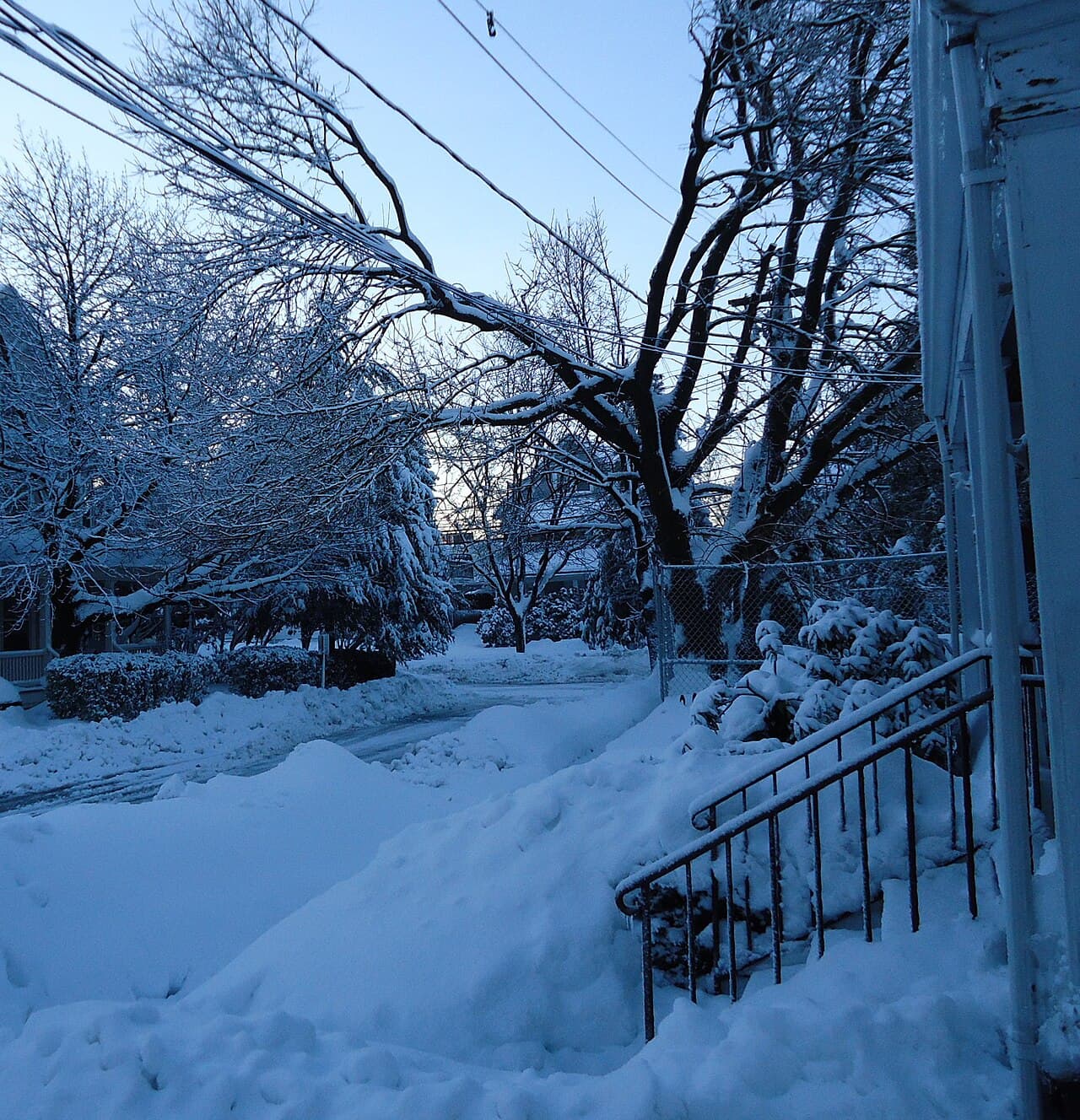
Remove the snow first
Salt melts ice; it is not a substitute for a shovel. University of Minnesota Extension advises that you shovel, scrape and sweep snow often to remove as much snow as possible to prevent ice buildup.[1] It also says: "Do not apply deicers to snow. Remove the snow first."[1] Product poured onto a snow layer gets used up melting snow you could have lifted off in a minute, and what is left refreezes.
On steps, work from the top down so you are not stepping on cleared treads, and scrape each tread and riser edge down to the surface. Begin early, while the snow is light. Orthopaedic surgeons recommend wearing shoes or boots that have slip-resistant soles, and if you have a medical condition or do not exercise regularly, speaking with your doctor before shoveling.[6]
Pick the right treatment
De-icer. Deicing salts are applied onto icy surfaces and reduce the melting point of water from 20°F to -30°F depending on the formulation.[1] The City of Richmond notes that salt and chemicals can speed up the melting process when the temperatures are above 20 degrees.[3] In a deep freeze, a de-icer may sit there doing little.
Sand. Sand can increase traction on icy surfaces, but does not melt or remove ice.[1] That makes it a fair choice on very cold days, when you want grip and not melting. Sweep it up when the ice is gone so it does not wash into drains.
What to avoid on new concrete. The Town of Berryville notes that concrete has a curing period of approximately a year, and that treating with salt and other deicers can lead to chips and cracks, discoloration, and surface weakening.[5] For new steps it suggests alternatives such as sand, sawdust, clean kitty litter, and birdseed, which do not melt the ice but improve traction.[5] Older concrete is not immune either, so keep the dose modest.
Use less than you think
More is not better. University of Minnesota Extension says a coffee mug of salt (about 12 oz.) is all that is needed for about 1,000 sq. ft., and to spread it evenly, leaving about 3 inches between salt grains.[1] A set of steps is a tiny fraction of that area, so a small handful, thrown by hand in a sweeping arc, is plenty. Avoid spilling piles.
Afterwards, sweep up any salt grains you see on dry surfaces to prevent them from washing or blowing into plants and waterways, and save them to reapply later in the season.[1]
Protect the plants and lawn beside the steps
Salt can be absorbed by plant roots, causing dehydration.[1] Do not pile salty shoveled snow where it will melt onto shrubs: the same advice is to avoid depositing snow onto nearby shrubs, as it may contain salts or break branches.[1] To cut the total salt, Virginia Cooperative Extension suggests using a 50/50 mix of sand and granule or pellet de-icing product, and calcium, potassium, or magnesium products instead of sodium-based products.[2]
Watch for refreezing
Even small accumulations of ice can be extremely dangerous to motorists and pedestrians, the National Weather Service warns, and black ice is most prevalent during the early morning hours.[4] A step that was wet at 5 p.m. can be a skating surface at 6 a.m. Sweep meltwater off the treads before dark, and recheck at dawn on any day that started below freezing.
Water that keeps coming back is a hint that something upstream is wrong. A downspout that empties onto the steps or a low spot on a landing can keep re-icing a spot no matter how much you treat it. Redirecting a downspout with a simple extension is a small fix; changing the slope of a concrete step is not.
Stop and call a pro if
- The steps are crumbling, cracked or loose. Salt will not fix them, and a damaged tread is a trip hazard even in summer. A mason or concrete contractor can assess the repair.
- Water seeps from the same spot every day. A leak or poor drainage is feeding the ice and needs diagnosis; see salting and de-icing services.
- You cannot safely do it yourself. If a medical condition makes shoveling a risk, or the steps are steep and unrailed, hire someone to handle them; see what walkway clearing costs.
- There is ice on the roof edge above the steps. That is roof work, not a job for a shovel from a ladder; see roof snow and ice dam services.
Getting help in Virginia
For more on choosing a product, read which ice melt is safe for concrete. To prepare before a storm, see getting your driveway ready before a snowstorm, or browse snow and seasonal answers and walkway clearing services.
When you would rather not do it, describe the job once and local businesses quote it.
Common questions
- Should I put salt down before the storm?
- Treating bare steps just before snow can keep the first layer from bonding, but it is the shoveling that does most of the work. Whatever you put down, clear the snow off first and use a thin layer. A coffee mug of salt, about 12 oz., is enough for roughly 1,000 sq. ft., according to University of Minnesota Extension.
- Why do my steps ice over again overnight?
- Melted snow refreezes when the temperature drops below freezing after dark. The National Weather Service notes that black ice is most prevalent during the early morning hours. Sweep off meltwater and slush in the evening and recheck the steps at dawn.
- Is sand as good as salt?
- They do different jobs. Sand can increase traction on icy surfaces but does not melt or remove ice, so it suits very cold days and new concrete. Salt and chemical de-icers melt ice, but work best above about 20 degrees.
- Will de-icer damage my concrete steps?
- It can, especially on new concrete. Berryville asks residents to avoid salt and other deicers on new concrete for approximately one year, because they can lead to chips, cracks and surface weakening. Sand is a gentler way to get grip.
- Which de-icer is easier on plants beside the steps?
- Virginia Cooperative Extension suggests calcium, potassium or magnesium products instead of sodium-based ones, or a 50/50 mix of sand and granule or pellet de-icer. Sweeping up stray grains and not piling salty snow on shrubs also helps.
Sources
- [1] The effects of deicing salts on landscapes, University of Minnesota Extension. Checked October 27, 2026.
- [2] Trees and Shrubs that Tolerate Saline Soils and Salt Spray Drift (430-031), Virginia Cooperative Extension, Virginia Tech. Checked October 27, 2026.
- [3] Snow Removal, City of Richmond, Department of Public Works. Checked October 27, 2026.
- [4] Ice Storms, Black Ice and Frost, National Weather Service. Checked October 27, 2026.
- [5] Notice Regarding New Concrete, Town of Berryville, Virginia. Checked October 27, 2026.
- [6] Prevent Snow Shoveling and Snowblowing Injuries, American Academy of Orthopaedic Surgeons, OrthoInfo. Checked October 27, 2026.
Want a pro to handle it?
Describe the job once. Licensed local businesses send quotes, and you pay only when you book one.
Get a quote from a local pro