How do I get my driveway ready before a snowstorm?
Stock shovels and salt or sand, mark the driveway edges, clear anything a shovel or plow could catch, and get the snow blower fueled and running. VDOT pre-treats dry roads up to 48 hours before a storm when pavement is above 20 degrees; if conditions allow, treat your driveway the same way. Park in the driveway rather than the street, and check that outdoor vents are clear.
Free to ask. Local shops send quotes, and you pay only when you book one.
By Kasra Taheri, Founder, LoclisPublished
Researched and drafted with AI, then checked claim by claim against the sources listed below before it was published. Prices and rules change; the dates beside each source say when it was last checked.
Step by step
Read when to stop and call a pro, further down this page, before you start.
Step 1: Stock supplies early
Have shovels and salt or sand on hand before the forecast turns, when stores run short.[3]
Step 2: Mark the edges
Set tall stakes or reflective markers along the driveway edges, walks and anything a plow could hit, before the ground freezes.
Step 3: Clear the surface
Put away hoses, toys, doormats, decorations and loose stones that a shovel, snow blower or plow could catch.
Step 4: Test the snow blower
Read the manual, add fuel outdoors before starting it, and run it briefly so you find problems before the storm.[6]
Step 5: Choose where snow will go
Pick pile spots on the low side of the driveway or the lawn, away from shrubs, drains and the hydrant.[7]
Step 6: Point downspouts away
Turn downspout outlets so roof meltwater drains onto the lawn instead of across the driveway.
Step 9: Check outdoor vents
Make sure your carbon monoxide detector works and the outside vent is clear of leaves and debris.[4]
Step 10: Line up help
Book a snow contractor, or arrange for someone to clear the sidewalk if you will be away.[3]
Getting a driveway ready for snow takes an hour or two, and it is easiest a day or two before the storm, while the pavement is dry and the stores still have salt. Stock your tools, mark the edges, clear the surface, make sure the snow blower runs, decide where the snow will go, and pre-treat if the weather allows. Then park the car where the plow will not bury it and check that the house's vents are clear.
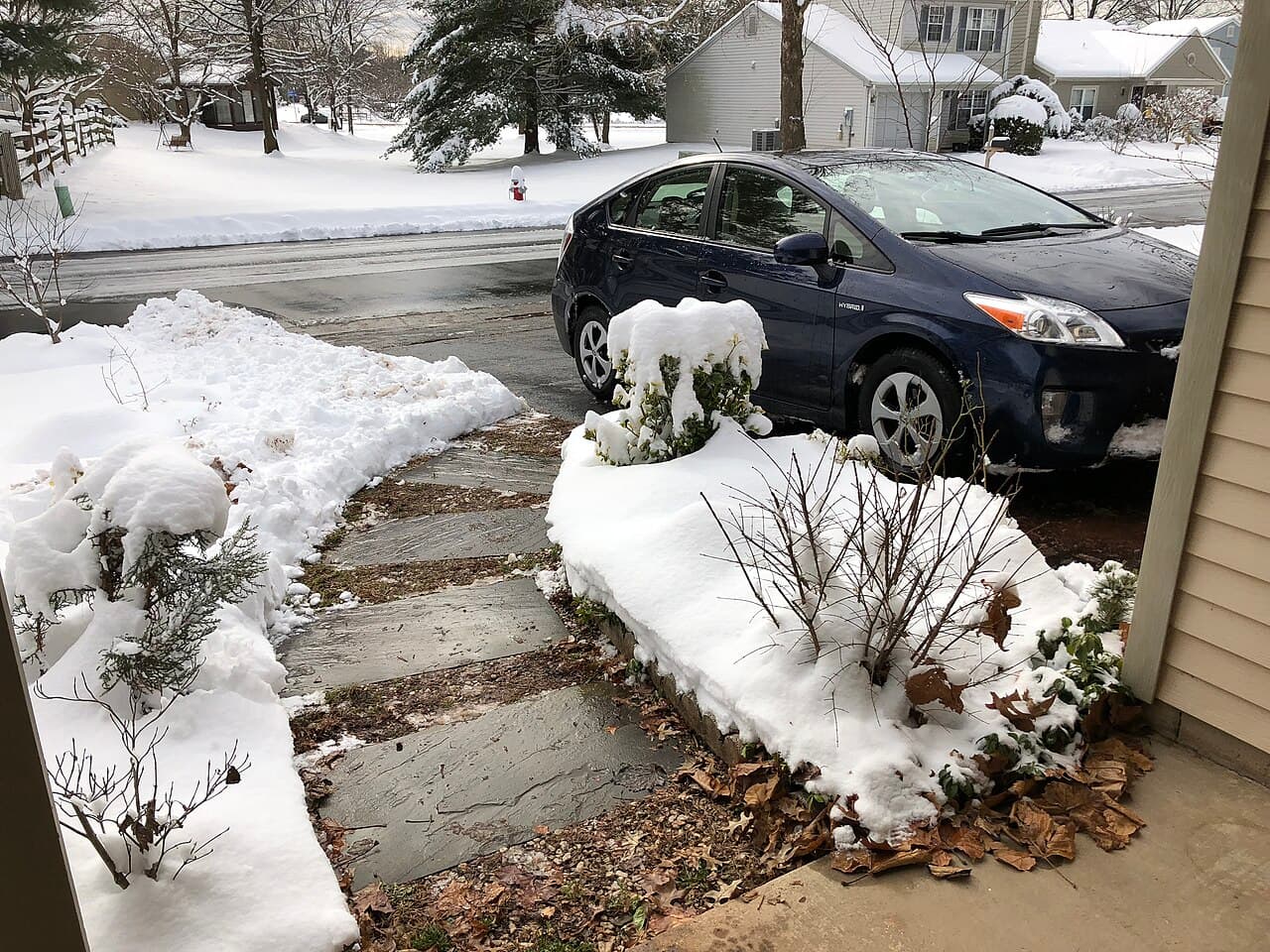
Watch the forecast
You usually get some warning. Winter Storm Watches are usually issued 12 to 48 hours before the beginning of a winter storm,[5] which is enough time for everything on this page. Make the list early in the season, so a watch only means working through it.
Stock tools and supplies
Alexandria asks residents to keep an adequate supply of shovels, salt or sand for sidewalks and driveways.[3] Buy before the first storm, because shelves empty quickly once a big one is forecast. A good set-up is a pusher-style shovel for the driveway, a smaller one for steps, a bag of ice melt, a bag of sand for very cold days, and a scoop or spreader.
When you choose a de-icer, think about the beds beside the driveway. Virginia Cooperative Extension suggests you use a 50/50 mix of sand and granular de-icer, or calcium, potassium or magnesium products instead of sodium-based ones,[7] to limit salt damage to plants.
Mark the edges and clear the surface
Once snow covers everything, it is easy to shovel into the lawn, catch a curb with the snow blower or drop a wheel off the edge. Tall stakes or reflective driveway markers along both sides, at the corners, and beside anything low such as a landscape light or a step, show you or a plow operator where to stop. Put them in before the ground freezes.
Then walk the driveway and walks. Put away hoses, toys, doormats, extension cords and decorations, and rake loose gravel or stones off paved areas. Anything buried in the snow can jam a snow blower or be flung by it.
Get the snow blower ready
Read the instruction manual before using a snowblower,[6] especially if it is new or has sat since last winter. Start it a few days ahead so a dead battery, stale fuel or a broken shear pin turns up while there is still time to fix it. Fueling rules matter: add fuel before starting it, never while the engine is running or hot, and always outdoors rather than in a garage or shed.[6] If it will not start or runs rough, take it in for snow blower repair before the storm rather than during it.
Decide where the snow will go
Pick pile spots before there is a foot of snow on the ground. The low side of the driveway or the open lawn is best, so melt drains away from the pavement instead of across it. Keep piles off shrubs, away from a storm drain or fire hydrant, and out of the corner where you need to see oncoming traffic when backing out. If a downspout empties near the driveway, turn it so roof meltwater drains onto the lawn. Water that crosses the pavement is how a cleared driveway refreezes; see why a plowed driveway refreezes.
Pre-treat, if the weather allows
Road crews treat before storms for a reason: chemicals applied to dry pavement up to 48 hours before a winter storm help prevent a bond from forming between the pavement and the snow and ice, VDOT explains.[1] The conditions matter. VDOT pre-treats in dry conditions when pavement temperatures are above 20 degrees,[1] and Richmond notes that pre-treating works less well when there is rain, which washes the brine away, or when temperatures are below 20 degrees.[2]
Do not count on the road crew to treat your street. VDOT crews pre-treat interstate, primary and high-volume secondary roads, but not neighborhood roads.[1] Richmond's advice to residents is to plan ahead by treating your own walkways and driveways.[2] A thin, even layer on the driveway, walks and steps is enough; more mostly ends up in the soil.
Move the cars
Street plows need room. VDOT recommends parking in your driveway, or if you must park on the road, parking on the odd-numbered side.[1] Alexandria adds that moving cars off the street before the storm helps keep snow from piling up around them.[3] In the driveway, park close to the house or garage. On public streets, crews push snow off the road, to the right, and it can block driveways,[1] so a car parked near the street end will be walled in.
Check the house side
The National Weather Service says to make sure your carbon monoxide detector is working and that the outside vent is clear of leaves and debris, then clear it of snow during or after the storm.[4] If you heat with oil or propane, refuel before you are empty, because fuel carriers may not reach you for days after a winter storm,[4] and a delivery truck needs a cleared driveway to reach you.
If you own a portable generator, set it up with the storm in mind. Generators and fuel should always be used outdoors and at least 20 feet away from windows, doors and attached garages.[5] Ready.gov also says to let the generator cool before refueling and to connect appliances to it with heavy-duty extension cords.[5]
Line up help
If you plan to hire, call before the storm; many companies fill their routes with contract customers first. See whether a seasonal contract is worth it and what snow removal costs. If you will be away, sort out the sidewalk too. In Alexandria, "Owners and tenants who may be unavailable or unable to clear sidewalks themselves are responsible for making arrangements to have the work done for them".[3] Richmond's code requires sidewalks to be cleared within 6 hours of snow stopping or by 11 a.m. the next day if snow falls through the night.[2]
When the snow comes, see the best way to clear a driveway after a big snow.
Stop and call a pro if
- The snow blower will not start, smokes or vibrates. Get it serviced before the storm.
- The driveway has potholes, heaved slabs or crumbling edges that a shovel or plow will catch. Have them repaired before winter; see driveway services.
- Gutters are clogged or icicles formed last winter. That can point to ice dams, which are roof work; see roof snow and ice dam services.
- You want a generator wired into the house. That is electrical work for a licensed electrician, not a pre-storm chore.
- You cannot clear the snow yourself. Book driveway plowing or salting and de-icing before the forecast fills the calendar.
More seasonal help is under snow and seasonal answers and seasonal services around Blacksburg. If the snow blower needs work, describe the job once and local repair shops quote it.
Common questions
- Should I salt my driveway before it snows?
- It helps when conditions are right. VDOT applies chemicals to dry pavement up to 48 hours before a storm to keep snow and ice from bonding to it, and only when pavement is above 20 degrees. Richmond notes that rain washes brine away. If the storm starts as rain or the cold is deep, skip it and treat after clearing instead.
- Why mark the edges of the driveway?
- Once snow covers everything, it is hard to tell pavement from lawn, beds or a drop-off. Tall stakes along the edges show you or a plow operator where to stop, which saves the grass, curbs and the blade. Put them in before the ground freezes.
- Will VDOT pre-treat my neighborhood street?
- Usually not. VDOT says it pre-treats interstate, primary and high-volume secondary roads, but not neighborhood roads, where crews may use sand or other abrasives for traction instead. Cities and counties that maintain their own streets set their own practice.
- Where should I park before a snowstorm?
- VDOT asks residents to park in their driveways, or on the odd-numbered side of the street if they must park on the road, so plows have room to work. Parking close to the house leaves the end of the driveway free to clear after the plow passes.
- What should I do with my snow blower before winter?
- Read the manual, check that it starts, and have fuel ready. Add fuel before starting and only outdoors, never while the engine is running or hot. If it will not start or runs rough, have it serviced before the first storm rather than during one.
Sources
- [1] Winter weather: snow removal and treatment, and frequently asked questions, Virginia Department of Transportation. Checked October 26, 2026.
- [2] Snow Removal, City of Richmond, Department of Public Works. Checked October 26, 2026.
- [3] Snow and Ice Control, City of Alexandria, Virginia. Checked October 26, 2026.
- [4] Prepare: Don't Let a Winter Storm Take You by Surprise, National Weather Service. Checked October 26, 2026.
- [5] Winter Weather, Ready.gov, U.S. Department of Homeland Security. Checked October 26, 2026.
- [6] Prevent Snow Shoveling and Snowblowing Injuries, American Academy of Orthopaedic Surgeons, OrthoInfo. Checked October 26, 2026.
- [7] Trees and Shrubs that Tolerate Saline Soils and Salt Spray Drift (430-031), Virginia Cooperative Extension, Virginia Tech. Checked October 26, 2026.
Want a pro to handle it?
Describe the job once. Licensed local businesses send quotes, and you pay only when you book one.
Get a quote from a local pro