How do I keep a slab from sinking again after it is lifted?
Fix whatever made it sink. Send roof water well away from the slab, make the ground slope away from it, keep joints and cracks sealed so rain cannot reach the soil underneath, and on clay soils keep the moisture under the slab steady. Ask the contractor to confirm every void was filled, and get any warranty in writing.
Free to ask. Local shops send quotes, and you pay only when you book one.
By Kasra Taheri, Founder, LoclisPublished
Researched and drafted with AI, then checked claim by claim against the sources listed below before it was published. Prices and rules change; the dates beside each source say when it was last checked.
This is a job for a licensed pro in Virginia
This page explains what the work involves, the permits, what a licensed pro does and what drives the cost. It does not give step-by-step instructions, because this work needs a licence, a permit or both, and doing it wrong can injure someone. Before you hire, check the licence on Virginia's DPOR record.
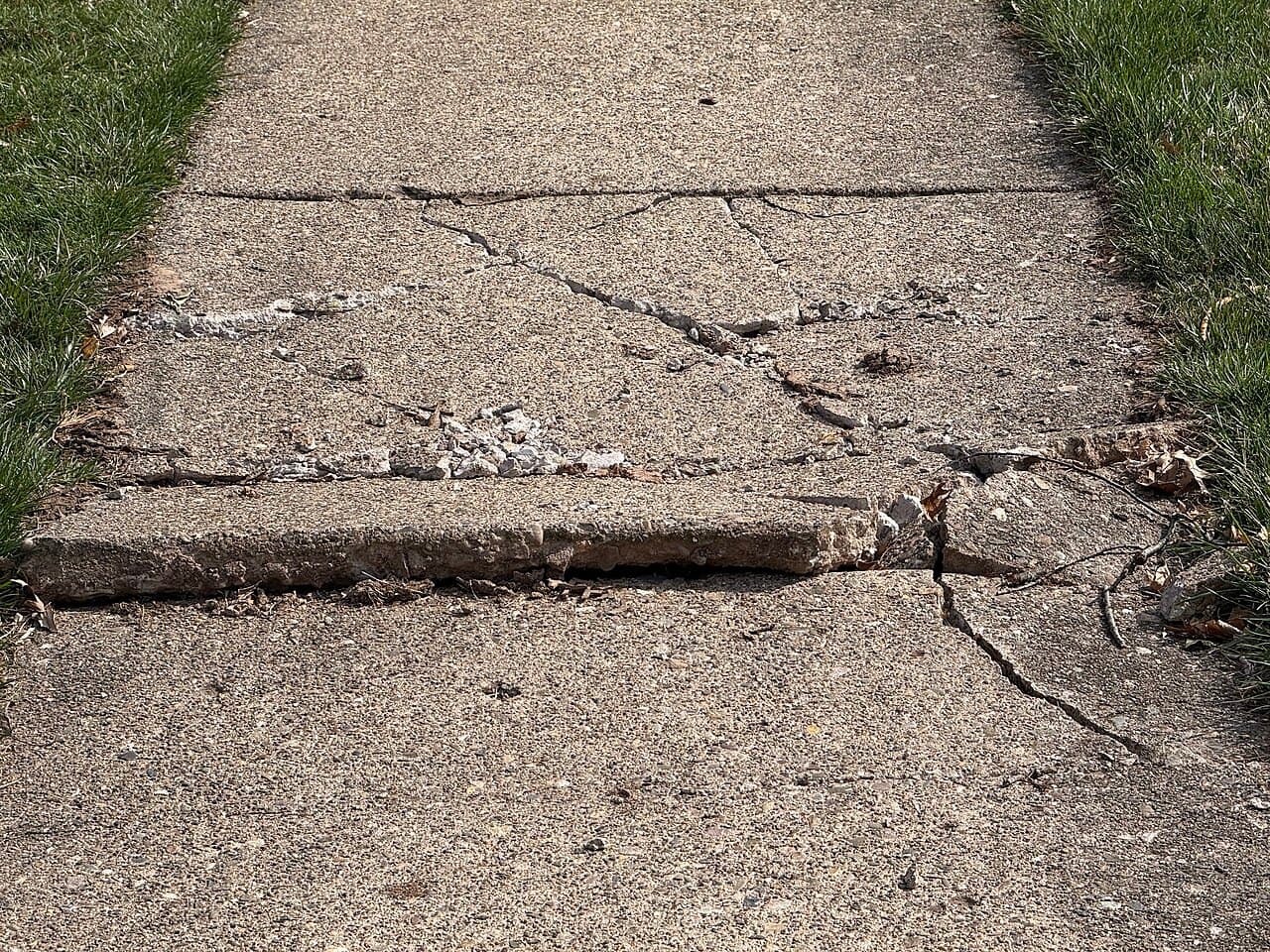
Fix whatever made the slab sink in the first place. A lift puts the slab back where it was, but the Federal Highway Administration (FHWA) warns that if the underlying causes of the settlement are not dealt with, the same problems will come back.[1] That usually means looking at three things: water, the soil under the slab, and the joints that let water in. A good contractor will also have filled every void and put their promises in writing.
If you do not yet know why the slab dropped, start with why concrete slabs sink.
Move roof water away from the slab
Start with water. FHWA lists excessive moisture among the factors that can cause slab settlement.[1] The Northern Virginia Soil and Water Conservation District says an average sized home can shed hundreds of gallons of roof runoff in a hard rain,[2] and all of it has to go somewhere other than under your walk or patio.
Fairfax County says gutters and downspouts should carry all roof water beyond the backfill or at least ten feet away from the house, on splash blocks or through non-perforated pipe.[3] The conservation district adds that downspout extensions, non-perforated corrugated plastic pipes laid on the ground or buried, can carry the water further away, and that it should be discharged to a suitable area.[2] Keep gutters clean so they do not overflow onto the slab, and check after the first big storm that water ends up where you meant it to.
Make the ground slope away
The ground next to the slab matters as much as the downspouts. The Northern Virginia Soil and Water Conservation District recommends: "Ideally, a 5% grade should be maintained for a distance of ten feet around your home."[2] On clay, Fairfax County notes that runoff may stand for long periods where the ground has less than a two percent slope.[3]
Look for low spots along the edges of the slab where water collects after rain, and for soil that has washed away from under an edge. If the lift itself was meant to restore the slab's slope away from the house, check with a level that it did.
Keep joints and cracks sealed
Open joints and cracks let water straight into the soil under the slab. FHWA says joint and crack sealing reduces the moisture that gets into the pavement structure, which in turn reduces pumping and loss of support,[1] and that sealed joints should continue to be resealed regularly over the life of the pavement.[1] The gap where a patio or walk meets the house is the one to watch most closely. Ask your contractor whether sealing joints and repairing cracks is part of the lift, or price it separately.
Keep clay soil evenly moist
On shrink-swell clays, the goal is steady moisture. For its Marine Clay areas, Fairfax County advises:
- Trees and shrubs. Keep deeply rooted trees and shrubs away from the house, and plant trees at least 20 feet away.[3]
- Hoses and faucets. Fairfax County says not to leave outside faucets or hoses running unattended.[3]
- Pools and watering. The county warns that a leaking swimming pool or excessive watering of plants next to the house can weaken foundation soils.[3]
Make sure the lift itself was done fully
A lift should leave no empty pockets under the slab. One manufacturer's specification requires that all voids beneath the slab are filled, with additional holes drilled as necessary,[4] and calls for inspecting drain pipes before and after the job[4] and repairing cracks with cementitious grout or epoxy before or after the lift.[4] Ask your contractor how they confirmed each of those on your job.
If a slab settles again, find out why before paying for another round of injection. On road pavement, FHWA says that if follow-up deflection testing after void filling still shows a loss of support, the slabs should be regrouted using new drilled holes, and it cites guidance that if voids are still present after three attempts to stabilize the slab, other methods of repair should be considered.[1] If a slab keeps moving, it is worth pricing a replacement too; whether to lift or replace covers the choice.
Put the follow-up in writing
Virginia's Board for Contractors tells homeowners to get all oral promises in writing and spell out exactly what the contractor will and will not do.[5] For a lift, that means the warranty period, what counts as settling again, and whether a return visit is free. The Board's rules require residential contracts to include a listing of specified materials and work to be performed,[6] and say any modification to the contract that changes the cost, materials, work to be performed, or estimated completion date must be in writing and signed by all parties.[6]
When to call a licensed pro
Lifting and re-lifting are jobs for a licensed contractor with injection equipment, never a homeowner. Virginia's Board for Contractors says that if the work is valued at $1,000 or more, a valid Virginia contractor's license is required for the license category the contractor works in,[5] and how to check a contractor's licence shows the DPOR lookup.
Call your contractor, or a new one, if:
- The slab drops again, or a step reappears at a joint.
- A gap opens under an edge or keeps growing after rain.
- New cracks appear across the lifted slab.
- Water is reaching the house from the slab, or the house shows new wall cracks or sticking doors.
How mudjacking and foam lifting work explains the methods, what concrete leveling costs covers prices, and whether to lift or replace helps if lifting has stopped working.
Loclis lists DPOR-licensed concrete businesses with their licence number and class. Browse slab lifting and leveling, look up concrete contractors in Blacksburg, or see all concrete and hardscaping answers.
Describe the slab once and licensed local businesses quote the work.
Common questions
- How long should a lifted slab stay level?
- There is no set figure. It depends on what caused the sinking and whether that has been fixed. A slab whose downspout now drains well away and whose soil stays evenly moist has a much better chance than one left with the same water problem. Ask the contractor what their warranty covers and for how long, in writing.
- What should I do first after a lift?
- Start with water. Roof runoff from a hard rain can be hundreds of gallons, and if it empties beside the slab it can soften or wash out the soil again. Extending downspouts and making the ground slope away from the slab are usually the first fixes.
- Should the joints be sealed after lifting?
- Usually, yes. The Federal Highway Administration says joint and crack sealing reduces the moisture that gets under concrete and so reduces loss of support, and that sealed joints should be resealed regularly. Ask your contractor whether sealing the joints and the gap at the house is part of the job.
- What if the slab sinks again?
- Call the contractor who lifted it and ask what the warranty covers. Ask them to find out why it moved before they treat it again, because if the cause is still at work, the slab can sink again. If the slab keeps moving, ask for a replacement price as well.
- Does the type of material matter for keeping a slab up?
- It can. Polyurethane foam is light and adds little load to soft soil, while cement grout is heavier. What matters most is that every void is filled and the cause is fixed, so ask each contractor how they confirm both.
Sources
- [1] Concrete Pavement Preservation Guide, Second Edition (FHWA-HIF-14-004), Chapters 4 and 10, Federal Highway Administration. Checked October 26, 2026.
- [2] Gutters and Downspouts: Wetness or Erosion Problems, Northern Virginia Soil and Water Conservation District (Fairfax County). Checked October 26, 2026.
- [3] Homeowner's Guide to Overcoming Problems with Marine Clay-Marumsco Soils in Fairfax County, Fairfax County and the Northern Virginia Soil and Water Conservation District. Checked October 26, 2026.
- [4] Section 31 43 00: Concrete Raising (AP Lift 430 guide specification), Alchatek. Checked October 26, 2026.
- [5] What You Should Know Before You Hire a Contractor, Virginia Board for Contractors, DPOR. Checked October 26, 2026.
- [6] 18VAC50-22-260. Filing of charges; prohibited acts, Virginia Administrative Code (Board for Contractors). Checked October 26, 2026.
Want a pro to handle it?
Describe the job once. Licensed local businesses send quotes, and you pay only when you book one.
Get a quote from a local pro