Why is my concrete slab sinking?
A slab sinks when the soil under it stops holding it up. Common causes are fill that was not compacted well before the pour, water from downspouts or poor drainage softening or washing out the base, and clay soils that shrink in dry weather. Find and fix the cause before lifting or replacing the slab, or it will sink again.
Free to ask. Local shops send quotes, and you pay only when you book one.
By Kasra Taheri, Founder, LoclisUpdated
Researched and drafted with AI, then checked claim by claim against the sources listed below before it was published. Prices and rules change; the dates beside each source say when it was last checked.
This is a job for a licensed pro in Virginia
This page explains what the work involves, the permits, what a licensed pro does and what drives the cost. It does not give step-by-step instructions, because this work needs a licence, a permit or both, and doing it wrong can injure someone. Before you hire, check the licence on Virginia's DPOR record.
A concrete slab sinks when the soil under it stops holding it up. Concrete is strong, but a driveway, walk or patio is only as steady as the ground it sits on. The cause is often one of three things, sometimes more than one at once: fill that was never compacted properly, water that softens or washes away the base, or clay soil that shrinks as it dries.
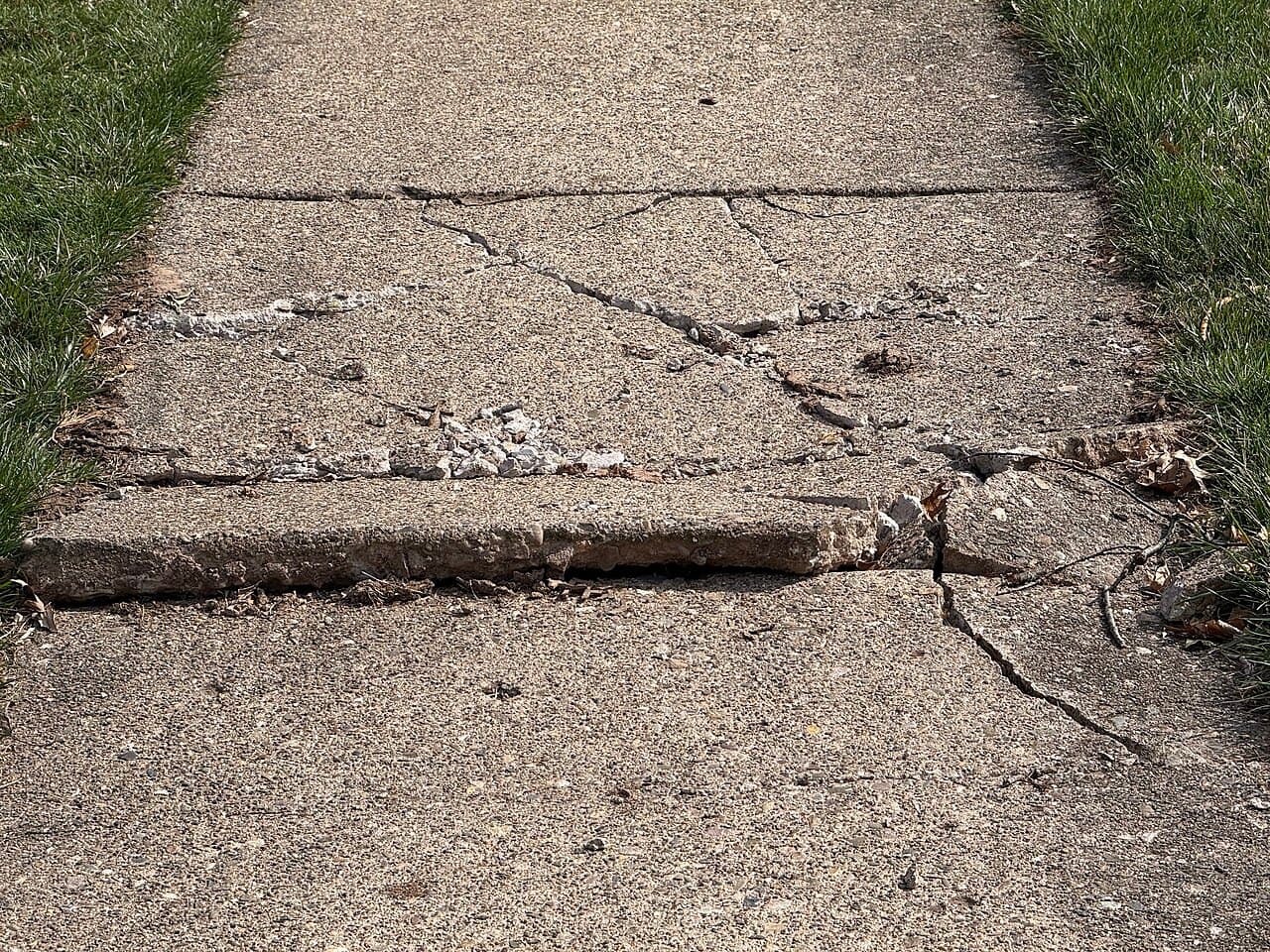
Fill that was not compacted
New houses sit on soil that has been dug, moved and backfilled, and slabs are often poured on that loose ground. The Federal Highway Administration (FHWA) notes that on pavements, settlements are most often found over fill areas, and that dips over culverts and at bridge approaches typically come from poor or inadequate compaction of the underlying fill.[1] Backfill against a house foundation can keep settling too: Fairfax County notes that clay backfill gradually settles under its own weight as years pass.[4]
A well-built slab starts with a compacted base. For the sidewalks it builds, the Virginia Department of Transportation requires the earthen foundation to be excavated, shaped and compacted to a firm, even surface, with unsuitable material removed and replaced.[2] FHWA lists poor consolidation among the factors that can cause slab settlement, along with excessive moisture.[1] When the base under a home slab is not compacted, the slab can sink slowly as the soil under it settles.
Water under the slab
Water often plays a part. FHWA explains that loss of support under concrete slabs comes from three things together: an erodible base, excessive moisture, and significant slab deflections.[1] Water softens the soil, the slab flexes under weight, and over time fine soil is carried away, leaving a gap.
Roof runoff is one source to look at first. The Northern Virginia Soil and Water Conservation District says an average sized home can shed hundreds of gallons of roof runoff in a hard rain, and that downspouts and sump pump pipes that are not set up correctly can cause foundation problems, erosion or wet spots in the yard.[3] It adds that poor grading around the foundation can make these problems worse.[3]
A downspout that empties beside a walk, a gutter that overflows onto a patio, or a lawn that drains toward the driveway can all wash out the base under a slab. A broken drain pipe or a leaking water line under a slab can do the same.
Clay soils that shrink and swell
Some Virginia soils move with the weather. Fairfax County says its Marine Clays contain montmorillonite, a clay that shrinks during dry periods and swells during wet ones, and that slight changes in moisture are enough to cause damaging movement.[4] In Fairfax County they occur mainly in the southeast of the county, east of Interstates 95 and 395.[4] Ask your county or soil and water conservation district whether your area has problem soils.
The county says damage to floor slabs happens when the underlying clays shrink and swell.[4] Trees make it worse: tree roots draw water from the soil well beyond the farthest-reaching branches, drying it out and causing shrinkage, and roots have been seen as deep as 15 feet in the Marine Clays.[4]
Clay also drains poorly. Fairfax County notes that water percolates very slowly through the clays, and runoff may stand for long periods where the ground has less than a two percent slope.[4] It also warns that a leaking swimming pool or heavy watering next to the house can weaken foundation soils.[4]
Reading the signs
On roads, FHWA lists faulting of joints and cracks, pumping, corner breaks and shoulder dropoff as signs that support under the pavement has been lost.[1] Two of those are easy to spot on a driveway, walk or patio:
- A step at a joint or crack, where one section now sits lower than the next.
- Broken corners, where a corner of the slab has cracked off.
A slab that has started to tilt toward the house is worth noting too, because it sends rain toward the foundation instead of away from it.
Not every uneven slab has sunk. Fairfax County notes that swelling pressures under floor slabs can cause a damaging uplift,[4] and a slab broken by a heavy load can look much the same, which is one more reason to have the cause checked before a lift.
Look at the house too. Fairfax County warns that uneven settling can cause broken footings, cracked masonry walls, cracks in interior plaster, and warped door and window frames.[4] If you see those alongside a sinking slab, the problem may be bigger than the slab.
When to call a licensed pro
Finding the cause is part of the repair, and it is worth paying for. Fairfax County says correctly identifying the problems usually requires a thorough investigation of the soil and structural conditions by a qualified professional,[4] and FHWA warns that if the underlying causes of the settlement are not dealt with, the same problems will come back.[1]
Call sooner rather than later if:
- The slab touches the house and is tilting toward it, or water is getting into the basement or garage.
- The house shows signs of movement: new wall cracks, sticking doors or windows, cracked plaster.
- A gap keeps growing after each heavy rain, which points to soil being washed out.
- You suspect a leaking pipe under the slab.
For a single sunken walk, patio or driveway slab, a licensed concrete contractor who does lifting is the place to start. Virginia's concrete contracting specialty (CEM) covers repairing and grouting concrete,[5] and the Board for Contractors says that if the work is valued at $1,000 or more, a valid Virginia contractor's license is required for the license category the contractor works in.[6] When the house itself is moving, start with an engineer: Fairfax County says only licensed professional engineers may perform engineering work in Fairfax County, and suggests checking the licence on DPOR's website.[4] How to check a contractor's licence shows how the DPOR lookup works.
Once you know the cause, how mudjacking and foam lifting work, whether to lift or replace the slab and how to keep it from sinking again cover what comes next.
Loclis lists DPOR-licensed concrete businesses with their licence number and class. Browse slab lifting and leveling, look up concrete contractors in Blacksburg, or see all concrete and hardscaping answers.
Describe the sinking slab once and licensed local businesses quote the repair.
Common questions
- Is a sinking patio or sidewalk a foundation problem?
- Not usually on its own. A walk or patio is a thin slab on the surface, and it often sinks because of the fill or drainage right under it. If the house also shows cracked walls, sticking doors or cracks in interior plaster, have the house looked at by a qualified professional before fixing the slab.
- Why did my slab sink years after it was poured?
- Fill that was loosely placed can keep settling for years, and water from a downspout or a low spot can soften or carry away the base a little at a time. Shrink-swell clays shrink in dry periods and swell in wet ones, so a slab on them that was steady for years can start to move.
- Does a sinking slab next to the house let water in?
- It can. A slab that tilts toward the house sends rain toward the foundation instead of away from it, and that water can add to the problem under the slab. Fixing the slope, by lifting or replacing, and fixing the downspouts usually go together.
- Who should I call first, a concrete contractor or an engineer?
- For a single sunken walk, patio or driveway slab, a licensed concrete contractor who does lifting can usually tell you the cause. If the house itself shows signs of movement, or you are in an area with problem clay soils, a licensed geotechnical or structural engineer can investigate first.
Sources
- [1] Concrete Pavement Preservation Guide, Second Edition (FHWA-HIF-14-004), Chapter 4: Slab Stabilization and Slab Jacking, Federal Highway Administration. Checked October 26, 2026.
- [2] 2020 Road and Bridge Specifications, Section 504: Sidewalks, Steps, and Handrails, Virginia Department of Transportation. Checked October 27, 2026.
- [3] Gutters and Downspouts: Wetness or Erosion Problems, Northern Virginia Soil and Water Conservation District (Fairfax County). Checked October 26, 2026.
- [4] Homeowner's Guide to Overcoming Problems with Marine Clay-Marumsco Soils in Fairfax County, Fairfax County and the Northern Virginia Soil and Water Conservation District. Checked October 26, 2026.
- [5] 18VAC50-22-30. Definitions, Virginia Administrative Code (Board for Contractors). Checked October 26, 2026.
- [6] What You Should Know Before You Hire a Contractor, Virginia Board for Contractors, DPOR. Checked October 26, 2026.
Want a pro to handle it?
Describe the job once. Licensed local businesses send quotes, and you pay only when you book one.
Get a quote from a local pro