How do I keep a sunroom comfortable year-round?
Treat the sunroom like part of the house: glass with a coating suited to both seasons, shades and fans used with the weather, and its own sized heating and cooling, such as a ductless heat pump. Seasonal habits cost little. Glazing, wiring and mechanical changes need a permit and a licensed contractor in Virginia.
Free to ask. Local shops send quotes, and you pay only when you book one.
By Kasra Taheri, Founder, LoclisPublished
Researched and drafted with AI, then checked claim by claim against the sources listed below before it was published. Prices and rules change; the dates beside each source say when it was last checked.
This is a job for a licensed pro in Virginia
This page explains what the work involves, the permits, what a licensed pro does and what drives the cost. It does not give step-by-step instructions, because this work needs a licence, a permit or both, and doing it wrong can injure someone. Before you hire, check the licence on Virginia's DPOR record.
A sunroom stays comfortable all year when the room is treated like part of the house: glazing that suits both seasons, shade and insulating coverings you use with the weather, a way to move air, and its own sized heating and cooling. Most of the upkeep is seasonal habits. The upgrades are licensed work.
Start with the glass
Glass is where a sunroom gains and loses most of its heat. ENERGY STAR says single-pane windows are poor performers at insulating against cold weather and typically do not have coatings to block solar heat in the summer, increasing air conditioning costs.[1] If the room still has single panes, better glazing does the most for comfort in both seasons.
Climate matters when you choose. A low U-factor insulates better and keeps heat in during winter, and a low SHGC blocks more solar heat in summer.[1] ENERGY STAR recommends lower U-factor windows, 0.22 and less, in the northern part of the country and lower SHGC levels, 0.23 and less, in the South.[1] Virginia sits between the two, so ask a window installer which combination suits a room that faces your way, and get both numbers in writing.
If replacing the glass is out of reach, ENERGY STAR describes certified storm windows with low-e glass as an affordable option, designed to allow the right amount of solar heat through your windows to keep your home cool in the summer and warm in the winter.[1]
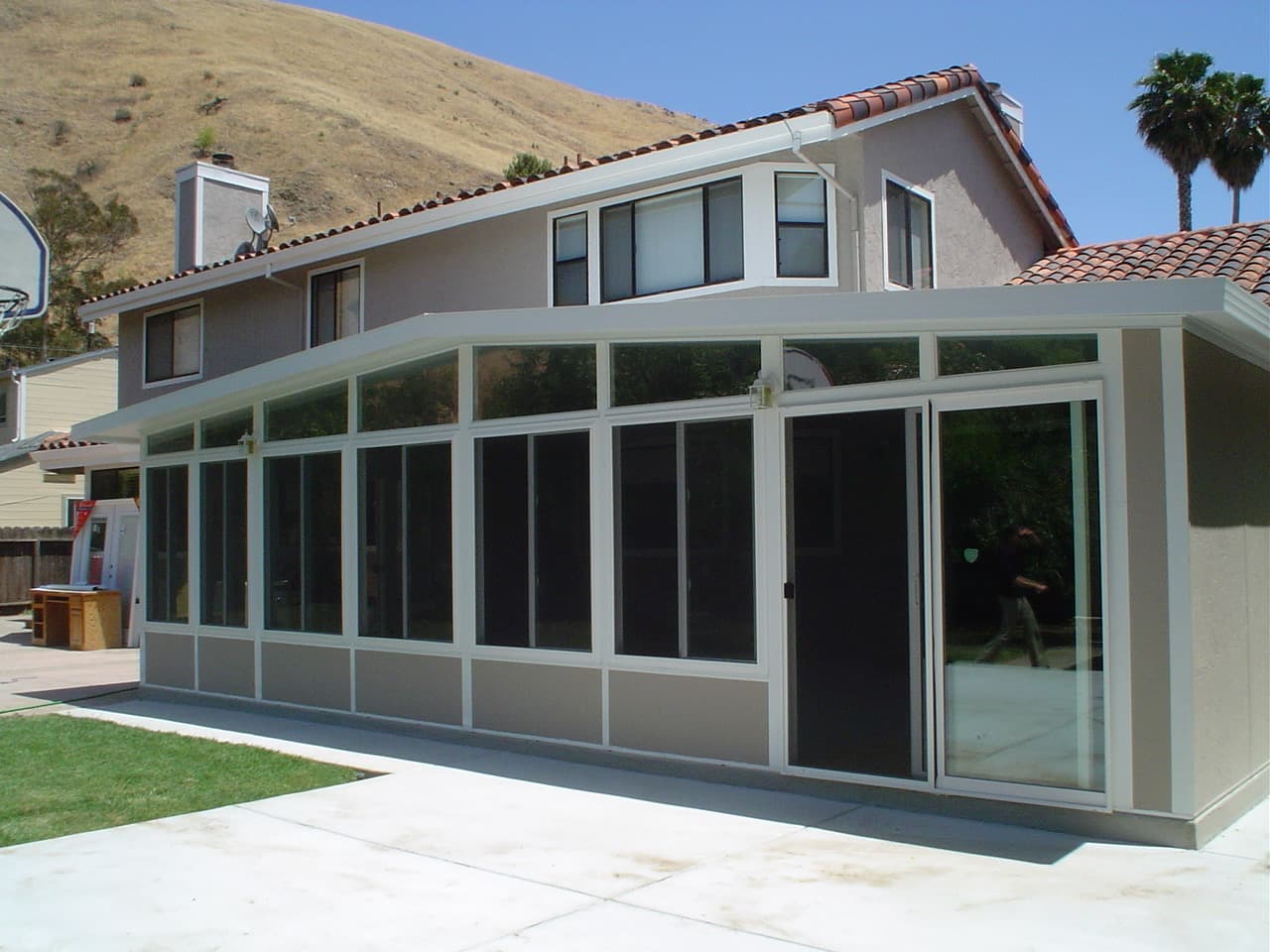
Use coverings with the seasons
The Department of Energy says cellular shades reduce nighttime heat loss through windows, minimize cold drafts near windows, and reduce unwanted solar heat gain.[2] In its tests, cellular shades saved up to 20% on heating energy and up to 15% on total energy from heating and cooling compared with having no shades.[2] That was in a modeled house, not a sunroom, and the fact sheet says research is still needed on cooling-season benefits.[2] In practice that means closing shades on sunny summer afternoons and on winter nights, and opening them in the winter sun.
Shade outside the glass, such as an awning or a deciduous tree, stops heat before it enters the room, which interior coverings cannot do as well.
Keep the air moving
ENERGY STAR says ceiling fans cool people, not rooms, so turn them off when no one is in the room.[3] It also says that in winter you should reverse the motor and operate the ceiling fan at low speed in the clockwise direction, which produces a gentle updraft that forces warm air near the ceiling down into the occupied space.[3] A new fan or fan box means electrical work, which a licensed electrician should do.
Give the room its own heating and cooling
A sunroom that depends on whatever reaches it from the house will be too hot in July and too cold in January. The common fix is a ductless heat pump, or mini split, with a head unit in the room. ENERGY STAR lists additions and outbuildings where extending ductwork or heating and cooling capacity is difficult among the places they are used.[4] It adds that many new certified models excel at providing space heating even in the coldest of climates, and that if winter temperatures regularly dip below freezing you should talk to your contractor to choose a unit suited to your particular home.[4]
Sizing is the part that gets skipped. A system that is either too large or too small for its intended space will struggle to meet your home comfort needs, and ENERGY STAR says the contractor should verify the proper size using a calculation called Manual J.[4] A room with a lot of glass has an unusual load, so ask for the calculation for the sunroom itself.
Permits and who does the work
Virginia's building code requires a permit before any construction of a building or structure, and before alterations that add or remove a wall, touch a structural component, or involve electric wiring or mechanical systems.[5] A mini split, a new circuit or new glazing set in altered framing can all be covered, so ask your building department first.
If you are still planning the room, what enclosing a porch involves and how much a sunroom costs in Virginia explain the scope, and why a sunroom runs too hot in summer goes deeper on the heat side. Do I need a permit to enclose a porch in Virginia covers the permit question.
When to call a licensed pro
Call one for new glazing, any change to the roof or walls, a heat pump, or new wiring. Virginia licenses contractors by contract size: a Class C contractor handles a single contract or project over $1,000 but less than $30,000, and Class B handles $30,000 or more but less than $150,000 (the code also counts the total value of work over a 12-month period).[6] The Board for Contractors requires a master tradesmen license as a condition of licensure for electrical, plumbing, and heating, ventilation, and air conditioning contractors.[6] Check the licence before you sign.
Browse remodeling services or read more remodeling answers. To get quotes for your sunroom, describe the job once and licensed local businesses reply.
Common questions
- Can a sunroom really be used in winter?
- Often yes, if it has decent glazing and its own heating. A room of mostly single-pane glass with no heat source will stay cold on winter nights, so ask a contractor what the room needs to hold a comfortable temperature.
- Should I close the shades in winter?
- Close them at night to cut heat loss and open them on sunny days to let the sun in. The Department of Energy's research on cellular shades points to the nighttime benefit.
- Which way should my ceiling fan turn?
- ENERGY STAR says counterclockwise in summer and, in winter, clockwise at low speed. Check the manufacturer's instructions for your fan.
- Is a mini split better than extending my ducts?
- It depends on the house. ENERGY STAR lists additions where extending ductwork is difficult as a common use for them. An HVAC contractor can compare both for your room.
- Who should size a heating and cooling unit for a sunroom?
- The licensed HVAC contractor, using a Manual J calculation for the sunroom itself, not a rule of thumb or the size of the room alone.
Sources
- [1] High Performing Windows or Storm Windows, ENERGY STAR, U.S. Environmental Protection Agency. Checked October 28, 2026.
- [2] Interior Cellular Shades Boost Home Energy Performance, U.S. Department of Energy, Building Technologies Office. Checked October 28, 2026.
- [3] Ceiling Fan Installation and Usage Tips, ENERGY STAR, U.S. Environmental Protection Agency. Checked October 28, 2026.
- [4] Ductless Heating & Cooling, ENERGY STAR, U.S. Environmental Protection Agency. Checked October 28, 2026.
- [5] 13VAC5-63-80. Section 108 Application for permit (Virginia Uniform Statewide Building Code), Virginia Administrative Code, Virginia General Assembly. Checked October 28, 2026.
- [6] Va. Code § 54.1-1100, Definitions, Code of Virginia, Virginia General Assembly. Checked October 28, 2026.
Want a pro to handle it?
Describe the job once. Licensed local businesses send quotes, and you pay only when you book one.
Get a quote from a local pro