Why is my sunroom too hot in summer?
A sunroom gets hot because it is mostly glass facing the sun, often with a high solar heat gain rating, little insulation and no cooling of its own. Shade for the glass, low-SHGC glazing, air movement and a separately sized cooling unit are the usual fixes. Glazing, roof and electrical changes need a permit and a licensed contractor.
Free to ask. Local shops send quotes, and you pay only when you book one.
By Kasra Taheri, Founder, LoclisPublished
Researched and drafted with AI, then checked claim by claim against the sources listed below before it was published. Prices and rules change; the dates beside each source say when it was last checked.
This is a job for a licensed pro in Virginia
This page explains what the work involves, the permits, what a licensed pro does and what drives the cost. It does not give step-by-step instructions, because this work needs a licence, a permit or both, and doing it wrong can injure someone. Before you hire, check the licence on Virginia's DPOR record.
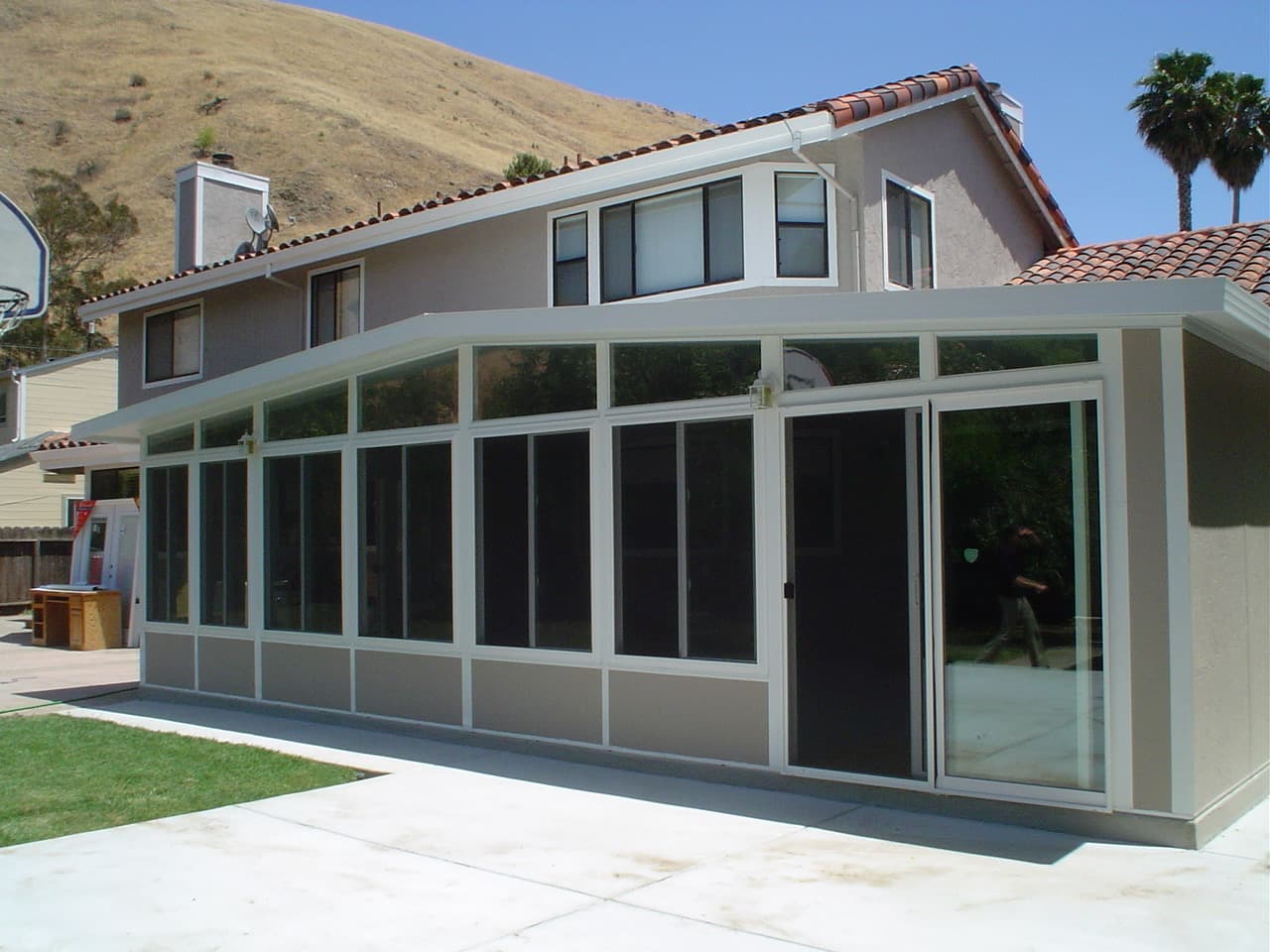
A sunroom runs hot because it is mostly glass facing the sun, with little insulation and no cooling of its own. Sunlight comes through the glazing and turns into heat that has nowhere to go. The fixes are better glazing, shade for the glass, air movement and a way to cool the room, and several of them involve licensed work.
Why the room overheats
The glass lets in solar heat. ENERGY STAR rates windows with a number called SHGC, the solar heat gain coefficient, which measures how much solar heat from sunlight is blocked by the window.[1] It explains that "a window with a low SHGC is better for hot, sunny climates."[1] A sunroom built with older or budget glass can have a much higher number than the windows in the rest of the house.
Old glass has no coating. ENERGY STAR notes that single-pane windows typically do not have coatings to block solar heat in the summer.[1] If your sunroom started life as a screened porch with windows added later, or uses single-pane panels, that is a likely cause.
The room is not on your cooling system. Most sunrooms are not connected to the house's ducts, so the air conditioner in the main house does little for them. A room that gets sun from several sides and has no cooling of its own has nothing to hold its temperature down.
Roof and walls matter too. Many sunrooms have glass or thin panels overhead, and a sun-facing roof can matter more than the side windows. Poor air sealing and thin insulation let the heat of the day soak through the walls and ceiling.
What helps, in rough order
Shade the glass from outside the room if you can. Stopping the sun before it reaches the glass works better than blocking it afterwards. Awnings, exterior solar screens and shade trees are the usual options, and an installer can tell you what suits your roofline.
Add interior shades. The Department of Energy says cellular shades "reduce unwanted solar heat gain" as well as nighttime heat loss.[2] In its tests in a modeled house with 2,380 square feet of conditioned floor space, cellular shades saved up to 20% on heating energy and up to 15% on total energy from heating and cooling compared with having no shades.[2] The fact sheet adds that research is needed to fully explore control strategies and benefits in the cooling season, so treat the savings as a guide rather than a promise.[2]
Move the air. ENERGY STAR says ceiling fans cool people, not rooms, so turn them off when no one is in the room.[3] In the summer it says to use the ceiling fan in the counterclockwise direction, so you feel a cool breeze from directly underneath.[3] A fan helps you feel better in a warm room, but it does not lower the room's temperature.
Replace or upgrade the glass. If the glazing is the problem, new windows with a low SHGC are the lasting fix. For homes in the South, ENERGY STAR suggests looking for lower SHGC levels, 0.23 and less.[1] Ask the installer for the SHGC and U-factor in writing, and ask whether the frames are meant to carry the new glass.
Give the room its own cooling. A ductless mini split is a common answer. ENERGY STAR lists additions and outbuildings where extending ductwork or heating and cooling capacity is difficult among the places they are used.[4] Sizing matters: a system that is either too large or too small for its intended space will struggle to meet your home comfort needs, and ENERGY STAR says the contractor should verify the proper size using a calculation called Manual J.[4] A sunroom full of glass often needs more cooling per square foot than an ordinary room, which is one reason to have it measured instead of guessed.
Permits and who can do the work
Virginia's building code requires a permit before any construction of a building or structure, and before alterations that add or remove a wall, touch a structural component, or involve electric wiring or mechanical systems.[5] Changing a roof, swapping framed glazing or adding an air handler and electrical circuit can all fall under that, so ask your building department before work starts.
For what a full enclosure involves, read what enclosing a porch involves, and for budgeting see how much a sunroom costs in Virginia. Do I need a permit to enclose a porch in Virginia covers the paperwork in more detail.
When to call a licensed pro
Call one for anything past shades and a fan: new glazing, roof or wall changes, a new mini split or any new circuit. Virginia licenses contractors by contract size: a Class C contractor handles a single contract or project over $1,000 but less than $30,000, and Class B handles $30,000 or more but less than $150,000 (the code also counts the total value of work over a 12-month period).[6] The Board for Contractors requires a master tradesmen license as a condition of licensure for electrical, plumbing, and heating, ventilation, and air conditioning contractors.[6] Check the licence before you sign.
Ask for a written scope that lists glass type with its SHGC, the cooling system and its sizing calculation, and who pulls the permit. Browse remodeling services or read more remodeling answers.
To get quotes for your own sunroom, describe the job once and licensed local businesses reply.
Common questions
- Is it normal for a sunroom to be much hotter than the rest of the house?
- Yes. A room that is mostly glass, with little insulation and no cooling of its own, will usually run hotter than the rooms around it on a sunny day. How much hotter depends on the glass, which way the room faces and whether anything shades it.
- Will a ceiling fan fix a hot sunroom?
- It helps people feel cooler but not the room itself. ENERGY STAR says ceiling fans cool people, not rooms, so use one as part of a plan with shade and cooling rather than instead of it.
- Do window shades really help in a sunroom?
- Interior shades reduce solar heat gain, and the Department of Energy reports savings from cellular shades. Shade on the outside of the glass generally works better than anything inside it.
- Can my central air conditioner cool the sunroom?
- Only if the room was designed for it. Ask an HVAC contractor to run a sizing calculation before anyone connects the room to the house system.
- What should I ask a contractor about the glass?
- The SHGC and U-factor of the glass, in writing, along with whether the existing frame and roof can carry it and who pulls the permit.
Sources
- [1] High Performing Windows or Storm Windows, ENERGY STAR, U.S. Environmental Protection Agency. Checked October 28, 2026.
- [2] Interior Cellular Shades Boost Home Energy Performance, U.S. Department of Energy, Building Technologies Office. Checked October 28, 2026.
- [3] Ceiling Fan Installation and Usage Tips, ENERGY STAR, U.S. Environmental Protection Agency. Checked October 28, 2026.
- [4] Ductless Heating & Cooling, ENERGY STAR, U.S. Environmental Protection Agency. Checked October 28, 2026.
- [5] 13VAC5-63-80. Section 108 Application for permit (Virginia Uniform Statewide Building Code), Virginia Administrative Code, Virginia General Assembly. Checked October 28, 2026.
- [6] Va. Code § 54.1-1100, Definitions, Code of Virginia, Virginia General Assembly. Checked October 28, 2026.
Want a pro to handle it?
Describe the job once. Licensed local businesses send quotes, and you pay only when you book one.
Get a quote from a local pro