How do I keep tile from coming loose?
Keep the flexible joints flexible: recaulk the corners and the line along the tub or counter instead of filling them with grout. Reseal grout when water soaks in, fix leaks and dry wet areas within 24 to 48 hours, tap-test the tile once a year, and reset any single loose tile before its neighbours go.
Free to ask. Local shops send quotes, and you pay only when you book one.
By Kasra Taheri, Founder, LoclisPublished
Researched and drafted with AI, then checked claim by claim against the sources listed below before it was published. Prices and rules change; the dates beside each source say when it was last checked.
Step by step
Read when to stop and call a pro, further down this page, before you start.
Step 1: Check the caulk
Look at the caulk where tile meets the tub, shower base, countertop and inside corners, and note any that is cracked, shrunk or pulled away.
Step 2: Replace failed caulk
Scrape out failed caulk and re-seal those joints with a flexible sealant, not grout.[2]
Step 3: Leave movement joints open
Do not push grout into corner or perimeter joints that were left soft.[1]
Step 4: Test the grout seal
Drop a little water on the grout; if it soaks in rather than beading, it is time to reseal.[4]
Step 5: Fix leaks and dry wet areas
Repair drips and leaks as soon as you find them and dry water-damaged areas within 24-48 hours.[3]
Step 6: Tap-test once a year
Tap along tile edges and in high-traffic areas, and mark any tile that starts to sound hollow or clicks underfoot.[5]
Step 7: Reset a loose tile early
Reset any single loose tile before its neighbours work loose, and keep traffic off it until the adhesive has cured.[6]
Step 8: Keep spare tile
Store about 10% extra tile from the job in case a later repair needs a match.[4]
Most tile that comes loose does so at the edges and corners, where the building moves, or where water gets in behind it. So the way to keep tile on is to keep the flexible joints intact, keep the grout sealed, fix leaks fast and catch a loose tile while it is still one tile. None of that takes more than an afternoon or two a year.
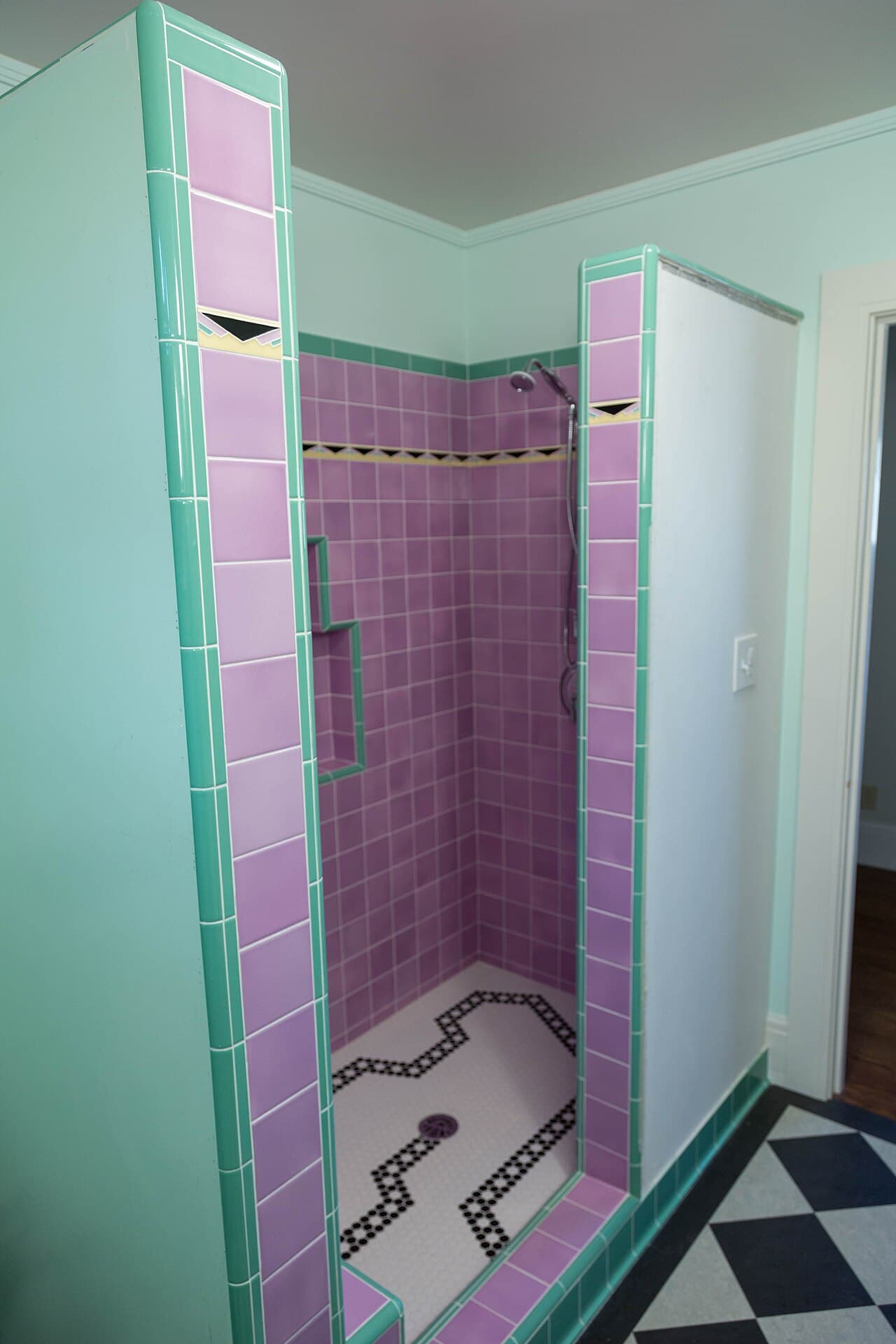
Keep the movement joints soft
LATICRETE says that "ALL buildings move", and that the grout in a backsplash that keeps cracking, or the inside corners of a shower that keep cracking and leaking, are in most cases down to a lack of properly installed allowance for movement.[1] Walls and floors, and different wall planes, move independently of each other, which is why those joints are soft rather than grouted.[1]
LATICRETE lists the spots that need a flexible joint: changes in plane, floor and wall intersections, wall and wall intersections, places where different surfaces meet, and where tile meets cabinets or countertops.[1] In a bathroom that means the line where tile meets the tub and the inside corners. The maintenance job is simple: if that caulk has cracked, shrunk or pulled away, replace it. How to recaulk a bathtub walks through it.
Do not fill those joints with grout. Custom Building Products says its repair adhesive and grout is "Not for use in movement joints or changes of plane in the tile installation", and names a caulk or sealant for those places.[2]
Keep water out from behind the tile
Tile is only as good as the wall or floor behind it. EPA says to dry water-damaged areas and items within 24-48 hours to prevent mold growth, and to fix plumbing leaks and other water problems as soon as possible.[3] A drip from a faucet base, a cracked caulk line at the tub, or a missing grout joint near the shower valve can send water behind tile for months before anything shows.
Test the grout once a year. Daltile suggests dropping a small amount of water on the grout: if the droplets bead up, the sealant is fine, and if the water is absorbed into the grout, it is time to reseal.[4]
Catch it early
A tile that is starting to let go gives warnings first: a hairline crack in the grout, a tile that clicks under your foot, a gap at the edge. Tap around the tiles once a year, and after any plumbing leak. Areas that previously were without hollow sounds but now have some resonance when tapped may very well be an indication of concrete slab movement or adhesive failure.[5] Why that happens is covered in why tile sounds hollow when you tap it.
When one tile has come loose, reset it before its neighbours go. How to fix loose wall tiles has the method. After you reset a tile or a patch of floor, keep traffic off it until the adhesive has cured; LATICRETE's guidance is to allow the installation to cure properly before opening to use or traffic.[6] The data sheet for the adhesive you used gives the times.
Keep spare tile
Daltile recommends buying approximately 10 percent more tile than you expect to need and keeping it as "attic stock", so that a broken tile can be replaced with tile from the same dye lot and printing process as the original.[4] If you have none left, take a loose tile with you when you shop for a match.
Stop and call a pro if
- Loose tiles keep coming back in the same place. Something is moving or leaking behind them. LATICRETE lists substrate deflection, and movement or settlement of the substrate, among the causes of loose tile.[6]
- A floor flexes or bounces underfoot, or tiles are cracking in a line. That is a framing question, not a tile one.
- The wall behind a loose shower tile is soft, dark or damp. The leak has to be found first. EPA notes that mold may be hidden in places such as the back side of dry wall.[3]
- Many tiles are hollow or lifting at once. That is a bond failure across an area; see when it is worth hiring a pro to repair tile and how much tile repair costs in Virginia.
Getting help in Virginia
See more handyman answers or browse handyman services. When you are ready, describe the tile job once and local pros can quote it.
Common questions
- Why does my tile keep coming loose?
- The usual reasons are not enough adhesive on the back of the tile, a surface that moved or settled, no allowance for movement at corners and edges, and water getting behind the tile. LATICRETE lists all of these among the causes of loose tile.
- Should I grout the corners where tile meets the tub or wall?
- No. Those joints should stay flexible so the tile and the building can move. Use a flexible sealant or caulk there and keep grout for the joints between tiles.
- How often should I reseal grout?
- When it stops repelling water. Drop a little water on the grout; if the droplets bead up the sealer is fine, and if the grout absorbs the water it is time to reseal.
- Can I walk on a repaired tile right away?
- Not until the adhesive has cured. Read the cure and traffic times on the product you used, and keep the area clear until then.
- Is one loose tile a sign of a bigger problem?
- Often it is a one-off. If it is in a corner or along a tub it points to movement or water, and if loose tiles keep appearing in the same area, treat it as a larger fault and get it looked at.
Sources
- [1] Movement Joints in Residential and Light Commercial Applications (TDS 256), LATICRETE. Checked October 27, 2026.
- [2] SimpleFix Pre-Mixed Adhesive & Grout, Technical Data Sheet TDS-180 (published 10/30/2023), Custom Building Products. Checked October 27, 2026.
- [3] A Brief Guide to Mold, Moisture and Your Home, U.S. Environmental Protection Agency. Checked October 27, 2026.
- [4] Frequently Asked Questions, Daltile. Checked October 27, 2026.
- [5] Assessing Tile Assemblies for Damage in Flood Conditions (TB101), Custom Building Products. Checked October 27, 2026.
- [6] Tile installation complaints: causes and prevention (TDS 208), LATICRETE. Checked October 27, 2026.
Want a pro to handle it?
Describe the job once. Licensed local businesses send quotes, and you pay only when you book one.
Get a quote from a local pro