How do I maintain a garage door opener?
Once a month, run the door by hand to check balance and test the safety reversal with a 2x4 on the floor. Once a year, oil the door's rollers, bearings and hinges and test any battery backup. Every two to three years, regrease the rail. The opener motor itself needs no extra lubrication.
Free to ask. Local shops send quotes, and you pay only when you book one.
By Kasra Taheri, Founder, LoclisPublished
Researched and drafted with AI, then checked claim by claim against the sources listed below before it was published. Prices and rules change; the dates beside each source say when it was last checked.
Step by step
Read when to stop and call a pro, further down this page, before you start.
Step 1: Run the door by hand
Pull the release cord with the door closed and lift it by hand; if it is unbalanced or binding, call a trained door systems technician.[1]
Step 2: Check full travel
Make sure the door opens and closes fully with the opener.[1]
Step 3: Do the 2x4 test
Place a 2x4 on the floor in the door's path and close the door; it should reverse when it touches the board.[2]
Step 4: Check the sensors
Wipe the lenses and confirm each sensor faces the other, 4 to 6 inches above the floor.[2]
Step 5: Oil the door's moving parts
Once a year, oil the door rollers, bearings and hinges, not the tracks.[1]
Step 6: Test the battery backup
If the opener has a battery backup, test it once a year and consider replacing the battery.[1]
Step 7: Regrease the rail
Every two to three years, wipe the old grease off the rail and apply a small layer of white lithium grease where the trolley slides.[1]
Step 8: Change the remote batteries
Replace the batteries in the remotes with the type printed on them.
Maintaining an opener takes about ten minutes a month and very little else. Test the safety reversal, watch and listen to the door, and once a year oil the door's moving parts, because the opener itself needs less than you would expect. LiftMaster's own maintenance sheet says the garage door opener does not require additional lubrification, and says not to grease the door tracks.[1]
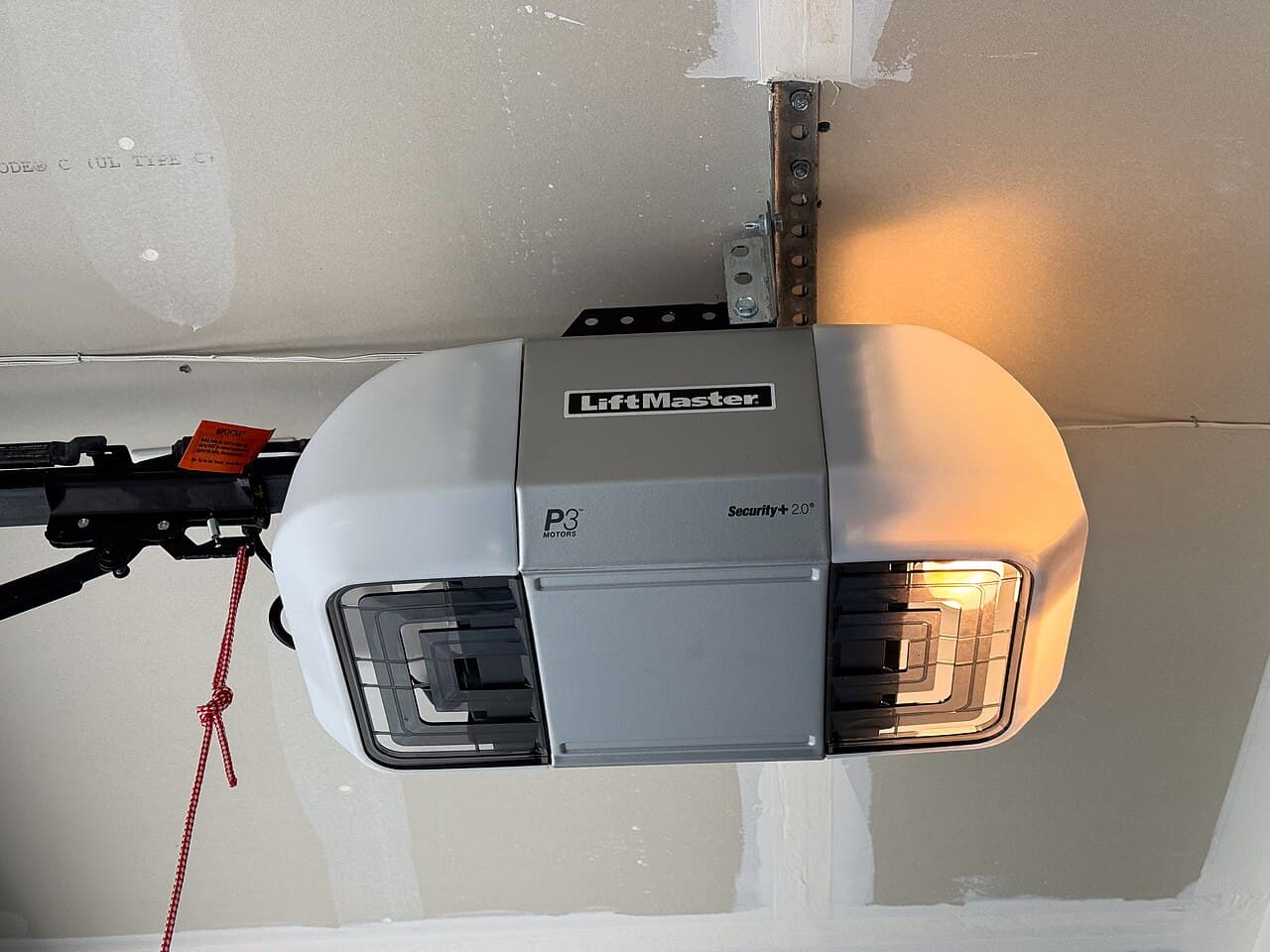
Every month
LiftMaster's list has three monthly jobs. Manually operate the door; if it is unbalanced or binding, call a trained door systems technician. Check that the door opens and closes fully. Test the safety reversal system.[1] CPSC's advice matches: inspect the garage door and the garage door opener every 30 days to make sure they are working properly.[2]
To test reversal, place a 2x4 on the floor of the garage in the door's path.[2] Close the door with the wall button. If it does not properly reverse when striking the 2x4, the opener should be disengaged until the unit is adjusted according to the owner's manual, repaired or replaced.[2] Sensors work separately: wave a broom past the eyes while the door closes and it should reverse.
Also look at the sensors themselves. CPSC says an electric eye should be installed at a height of 4 to 6 inches above the floor,[2] and a misaligned sensor is a common reason a door will not close, as covered in why an opener only works sometimes.
Every year
Oil the door's rollers, bearings and hinges.[1] A little lubricant on the moving parts of the door lowers the strain on the opener. See how to lubricate a garage door for what goes where.
If your opener has a battery backup, test it and consider replacing the battery so the opener will operate during an electrical power outage.[1] LiftMaster's test: unplug the opener from AC power, then open and close the door with the remote or door control, and plug it back in afterward.[1] Replace the battery with the type the opener's maker specifies.
Also replace the remote batteries every year or so, so a weak one does not look like an opener fault. Chamberlain's 3-button visor remote uses a 3V coin-cell lithium CR2032 battery; check the label on yours.[3]
Every two to three years
LiftMaster says to use a rag to wipe away the existing grease from the garage door opener rail and reapply a small layer of white lithium grease to the top and underside of the rail surface where the trolley slides.[1] Keep the opener unplugged and keep your hands off the door while you do it.
Small habits that help
- Keep the wall button high. CPSC says to install the push button wall control as high as practical on the garage door's wall to restrict children's access to it.[2]
- Keep remotes away from children. CPSC says to keep the remote control door opener device away from children.[2]
- Dust the opener and the sensor lenses with a dry cloth, and keep stored boxes clear of the sensors and the door's path.
- Listen for change. New grinding, jerking or a door that slows partway usually means the door's hardware or springs need attention.
Stop and call a pro if
- The door is unbalanced, binds or sticks. CPSC says it should be serviced by a professional.[2] Do not try to adjust springs or cables yourself.
- The door does not reverse on the 2x4 and adjusting per the manual does not fix it. Disengage the opener and have it repaired or replaced.[2]
- The opener runs but the door does not move, or you see a frayed cable or cracked bracket.
- The opener is old. If it predates the external entrapment protection requirement CPSC says was added in 1993, read should I replace my opener or repair it and what a new opener costs installed in Virginia.
Getting help in Virginia
Browse more garage door answers or find garage door services in your area. For a yearly tune-up or a repair, describe the job once and local garage door businesses quote it.
Common questions
- How often should I test the safety reversal?
- Monthly. LiftMaster lists it as a monthly job, and CPSC says to inspect the door and opener every 30 days.
- Should I lubricate the opener?
- Only the rail, every two to three years, with white lithium grease. LiftMaster says the opener needs no other lubrication and not to grease the door tracks.
- What should I oil on the door?
- The rollers, bearings and hinges, once a year. Wipe off drips so dust does not cake on.
- Does the battery backup need maintenance?
- Yes. LiftMaster says to test it yearly and consider replacing the battery so the opener works during a power outage.
- When is maintenance not enough?
- When the door is unbalanced, binds, or the opener fails the reversing test. Call a professional.
Sources
- [1] LiftMaster Residential Maintenance, LiftMaster (Chamberlain Group), maintenance sheet. Checked October 27, 2026.
- [2] Non-Reversing Automatic Garage Door Openers Are a Hazard (Pub. 523), U.S. Consumer Product Safety Commission. Checked October 27, 2026.
- [3] 3-Button Visor Garage Door Remote (G953EV-P2), product page, The Chamberlain Group. Checked October 27, 2026.
Want a pro to handle it?
Describe the job once. Licensed local businesses send quotes, and you pay only when you book one.
Get a quote from a local pro