How do I plan a long-distance move?
Start eight to twelve weeks out. Cut down what you own, get written estimates from movers registered with FMCSA after each one sees your things, choose your liability coverage, and pin down firm pickup and delivery dates. Pack and label by room, keep documents and batteries with you, forward your mail, and sort out your driver's licence in the new state.
Free to ask. Local shops send quotes, and you pay only when you book one.
By Kasra Taheri, Founder, LoclisPublished
Researched and drafted with AI, then checked claim by claim against the sources listed below before it was published. Prices and rules change; the dates beside each source say when it was last checked.
Step by step
Read when to stop and call a pro, further down this page, before you start.
Step 1: Set dates and a budget
Pick a target loading date with a backup, and note when you lose the old home and get the keys to the new one.
Step 2: Cut down first
Sell, donate or haul away what you will not take before anyone surveys your home, since long-distance charges usually rise with weight.
Step 3: Shortlist registered movers
Look up each company's USDOT number in FMCSA's mover search and drop any that are not registered or are brokers you did not mean to hire.
Step 4: Get surveyed estimates
Have two or three movers survey your belongings in person or by video and give you a written, signed estimate that says binding or non-binding.
Step 5: Choose your coverage
Decide between Full Value Protection and the 60 cents per pound released value, and list any item worth more than $100 per pound in writing.[1]
Step 6: Fix the dates in writing
Agree on a pickup date and a delivery window, and make sure both appear on the bill of lading rather than as soon as possible.
Step 7: Read the paperwork early
Review the bill of lading you should receive at least 3 days before loading, and never sign a blank document.[2]
Step 8: Pack room by room
Start with rooms you use least, keep each box to one room, and label two sides with the room and a short contents list.
Step 9: Keep hazards off the truck
Tell the mover about anything flammable or pressurised, bag or tape loose lithium-ion batteries, and carry them with you.[4]
Step 10: Pack a first-week kit
Carry documents, medicines, chargers, valuables, bedding, basic tools and a few days of clothes in your own vehicle.
Step 11: Forward mail and services
File a USPS change of address about two weeks ahead and schedule utilities and internet at both addresses.
Step 12: Check the inventory at loading
Walk through with the driver, check the condition notes on the inventory, and keep your copies of every page.
Step 13: Check everything at delivery
Tick off inventory numbers as items come in and write any damage or missing items on the paperwork before you sign.
A long-distance move works best planned backwards from the day the truck leaves. Give yourself eight to twelve weeks if you can. Most of the risk sits in the choice of mover and the paperwork, so put your effort there first. If you are moving within Virginia, most of this still applies; see how to plan a local move for the in-state rules.
Eight to twelve weeks out: cut down and shortlist
Walk every room, the attic, the basement and the shed, and decide what is not worth moving. Long-distance moves are usually priced by weight and distance, so everything you clear now comes straight off the bill. Book a haul-away or your locality's bulk pickup for the big pieces.
Then build a shortlist. A mover that crosses state lines must be registered with the federal government, and only interstate movers are included in FMCSA's mover search.[3] Check each company's USDOT number before you invite it in; how to check if an interstate mover is registered walks through it.
Six to eight weeks out: get surveyed estimates
Federal rules require the mover to base its estimate on a physical survey of your belongings, done on site or virtually, unless you waive that in writing.[1] Turn down a price quoted over the phone from a room count. Show the surveyor everything, including the attic, the garage and anything you might add later.
Each written estimate should say whether it is binding or non-binding. A binding estimate fixes what you can be required to pay at delivery for the items and services listed.[1] With a non-binding one, under a non-binding estimate the mover cannot require more than 110 percent of the estimate at delivery, and bills any remainder after 30 days.[1] Compare estimates line by line; what a long-distance move from Virginia costs explains the charges.
Decide on liability coverage
Interstate movers offer two levels. Full Value Protection is the level you get unless you waive it in writing,[1] and it costs more. If you sign the waiver, the waiver option, released value, limits the mover's liability to 60 cents per pound per article.[1] Movers may limit liability for items worth more than $100 per pound unless you list them on the shipping documents,[1] so declare jewellery, art and antiques.
Four to six weeks out: lock the dates and read the contract
Agree on a pickup date and a delivery window, sometimes called a delivery spread. FMCSA's booklet tells you not to agree to pickup or delivery "as soon as possible",[1] and the mover is required to give you 24 hours' notice before it arrives.[1] Be reachable for the whole window.
Federal rules also set the timing of the contract: the bill of lading must be provided to you, signed and dated at least 3 days before loading, and you may cancel it without penalty within 3 days of signing.[2] Check that the dates, the estimate, the coverage you chose and the most you will owe at delivery are all on it.
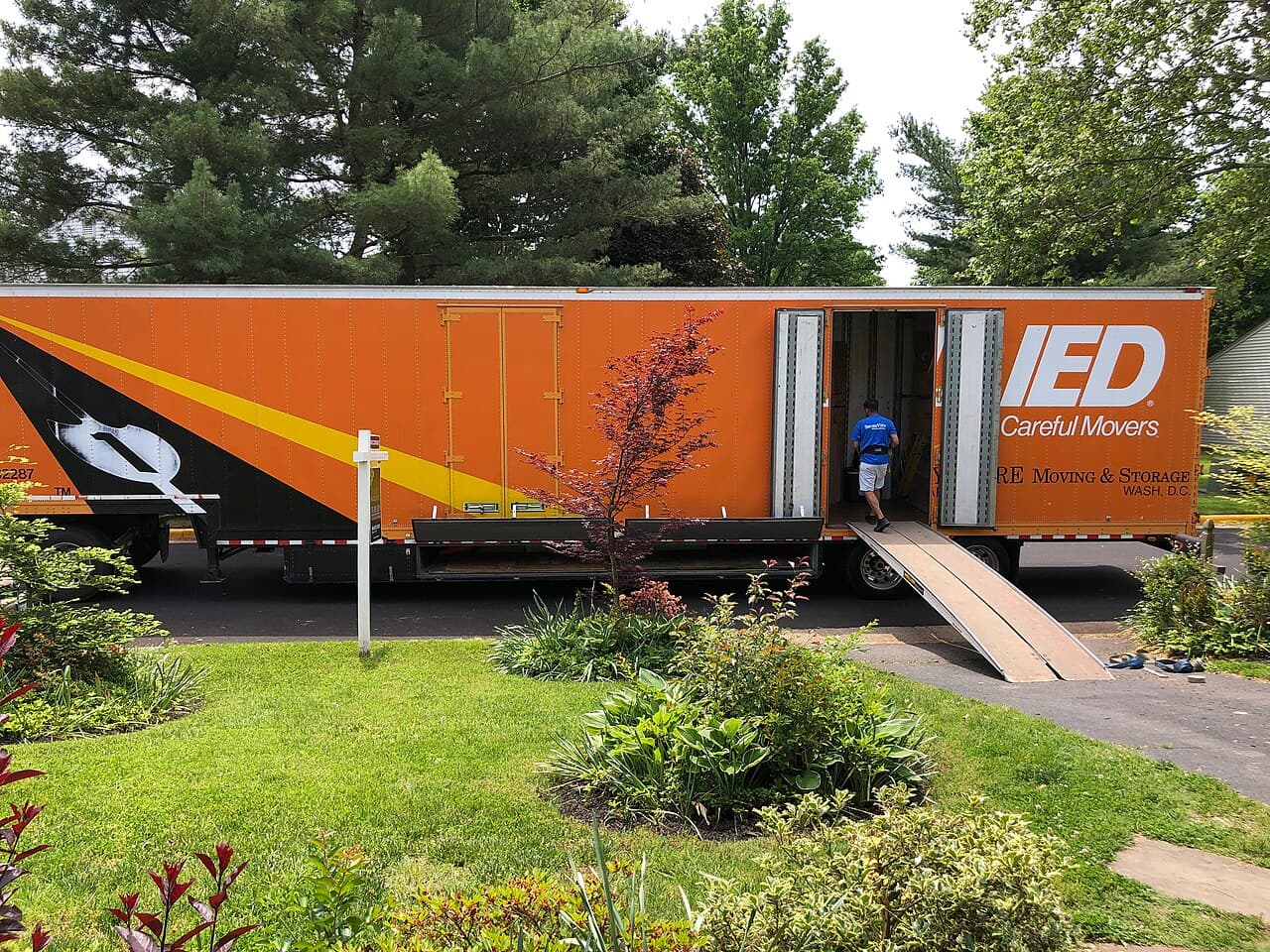
Two to four weeks out: pack
Start with books, off-season clothes and guest rooms. Use small boxes for heavy things and large ones for light things, fill gaps so boxes do not crush, and label two sides with the room and contents. Number the boxes and keep a list. For sofas, tables and dressers, see how to protect furniture in a long-distance move.
Some things should not go in boxes at all. Federal law forbids you to ship hazardous materials in your household goods boxes or luggage without informing your mover.[1] Ask for the mover's list. For batteries, tape the terminals of loose lithium-ion batteries or put each in its own plastic bag,[4] and keep them with you.
Check outdoor items too. Spotted lanternfly spreads mainly by hitchhiking, laying egg masses on vehicles and outdoor materials.[8] Virginia repealed its quarantine on March 27, 2025, but some other states still keep one,[8] so look over patio furniture, grills and planters before they leave.
One to two weeks out: mail and addresses
File a USPS change of address and allow at least 7 to 10 business days after USPS approves it.[5] When we checked on October 27, 2026, USPS charged a $1.25 identity verification fee to file online.[5] Tell your bank, insurer and employer directly.
Plan the licence change. If you report a non-Virginia address, Virginia DMV cancels your licence or ID 30 days after it mails you a notice, with exceptions such as active-duty military.[6] Coming the other way, a driver licensed in another state may drive in Virginia on that licence for the first 60 days of residency.[7]
Loading day and delivery day
Be there when the crew arrives. The driver lists every item on an inventory with its condition. Read the condition notes before you sign each page, because your ability to recover for loss or damage may depend on those notes.[1] Keep your copy of the inventory with the bill of lading.
At delivery, check items off by number, look at furniture as it comes in, and write damage or missing items on the paperwork before you sign. If something arrives broken, see what to do if movers damage your furniture.
Stop and call a pro if
- A piano, safe, pool table or hot tub is moving. Hire a crew with the right equipment.
- A washer, dryer, range or refrigerator needs a gas, water or electrical disconnection or hookup. Leave gas and wiring to a licensed tradesperson.
- The mover will not survey your home, will not put the estimate in writing, or asks you to sign blank forms. Walk away and find another mover.
- The mover will not deliver unless you pay more than the estimate allows. See what to do if a mover holds your belongings hostage.
Get help on Loclis
Browse more junk removal and moving answers, see long-distance movers, or describe your move and get quotes.
Common questions
- How far ahead should I book a long-distance mover?
- Eight to twelve weeks gives you time to get surveys from two or three movers and compare written estimates, and more for a summer or end-of-month move. Book once you have the estimate and the dates in writing.
- Is a binding or non-binding estimate better?
- A binding estimate fixes the price for the items and services listed, though a mover may charge to prepare one. A non-binding estimate is free, and the mover cannot demand more than 110 percent of it at delivery, but the final bill follows the actual weight and can be higher.
- What does the bill of lading do?
- It is your contract with the mover and your receipt. Federal rules require it to reach you at least 3 days before loading, list the pickup and delivery dates and the most you must pay at delivery, and be signed at both ends of the move.
- Do I have to update my Virginia driver's licence if I move out of state?
- You get a licence in your new state under its rules. If you report a non-Virginia address, Virginia DMV cancels the Virginia licence 30 days after mailing you a notice, with some exceptions such as active-duty military.
- I am moving to Virginia. How long can I drive on my old licence?
- Va. Code § 46.2-308 lets a driver licensed in another state drive in Virginia for the first 60 days of residency. Virginia DMV's moving page has the steps for getting a Virginia licence.
- What should I carry myself instead of putting on the truck?
- Documents, medicines, valuables, chargers, loose lithium-ion batteries and anything flammable or pressurised the mover will not carry, plus a kit for the first days, since the truck may arrive days after you do.
Sources
- [1] Appendix A to Part 375, Your Rights and Responsibilities When You Move, Federal Motor Carrier Safety Administration, via the Electronic Code of Federal Regulations. Checked October 27, 2026.
- [2] 49 CFR Part 375, Transportation of Household Goods in Interstate Commerce; Consumer Protection Regulations, Electronic Code of Federal Regulations. Checked October 27, 2026.
- [3] Search Movers and Complaint History: Search by Company, Federal Motor Carrier Safety Administration. Checked October 27, 2026.
- [4] Used Lithium-Ion Batteries, U.S. Environmental Protection Agency. Checked October 27, 2026.
- [5] Change of Address - The Basics, United States Postal Service. Checked October 27, 2026.
- [6] Va. Code § 46.2-324, Applicants and license holders to notify Department of change of address; fee, Code of Virginia, Virginia General Assembly. Checked October 27, 2026.
- [7] Va. Code § 46.2-308, Temporary exemption for new resident licensed under laws of another state, Code of Virginia, Virginia General Assembly. Checked October 27, 2026.
- [8] Spotted Lanternfly, Virginia Department of Agriculture and Consumer Services. Checked October 27, 2026.
Want a pro to handle it?
Describe the job once. Licensed local businesses send quotes, and you pay only when you book one.
Get a quote from a local pro