What can I do if a moving company holds my belongings hostage?
On an interstate move, federal rules say the mover must deliver once you pay 100 percent of a binding estimate or 110 percent of a non-binding one, plus any extra services you asked for and capped charges for difficult access. Offer that amount in the agreed form of payment, in writing, then call FMCSA at (888) 368-7238 and file a complaint with Virginia's Attorney General.
Free to ask. Local shops send quotes, and you pay only when you book one.
By Kasra Taheri, Founder, LoclisPublished
Researched and drafted with AI, then checked claim by claim against the sources listed below before it was published. Prices and rules change; the dates beside each source say when it was last checked.
Step by step
Read when to stop and call a pro, further down this page, before you start.
Step 1: Find your paperwork
Pull out the signed estimate, the bill of lading, the inventory and any signed changes, and photograph each page.
Step 2: Work out what is due
Start from 100 percent of a binding estimate or 110 percent of a non-binding one, then add only extra services you asked for after signing.[1]
Step 3: Check the access charge
If the mover adds charges for impracticable operations, limit what you pay at delivery to 15 percent of all other charges due.[2]
Step 4: Offer payment in writing
Send the mover a text or email offering that amount, in the form of payment named on the estimate, and keep a copy.
Step 5: Sign nothing new
Do not sign a new estimate, a blank form or a release of liability as a condition of getting your goods.
Step 6: Keep a record
Write down every call, name, time and demand, and save texts, emails, photos of the truck and any receipts.
Step 7: Call FMCSA
Call FMCSA at (888) 368-7238 and give the mover's USDOT number, the amount demanded and the amount your paperwork allows.[1]
Step 8: File with Virginia
File a complaint with the Virginia Attorney General's Consumer Protection Section online or on its hotline, with copies of your documents.
Step 9: Settle the rest later
After delivery, check the final invoice against the paperwork, pay legitimate charges, and dispute the rest in writing or through arbitration.
A mover that loads your belongings, quotes one price and then demands far more before it will unload is holding your goods hostage. On an interstate move, federal rules set the most it can demand at delivery, and refusing to deliver once you offer that amount is a federal violation. What follows explains how to work out that amount, what to do while the truck is waiting, and who to call. If your move stayed inside Virginia, read the in-state section near the end, because different rules apply.
What the mover is allowed to demand at delivery
FMCSA's consumer booklet puts it plainly: Your mover must give you possession of your shipment if you pay 110 percent of a non-binding estimate or 100 percent of a binding estimate, plus 15 percent of the impracticable operations charges (if applicable).[1] It adds: If your mover does not relinquish possession, the mover is holding your shipment hostage in violation of Federal law.[1]
The mover may also collect the full cost of any additional services you asked for after the contract was signed.[1] Charges for impracticable operations, when the mover needs special equipment or extra labour to reach your home, are capped at delivery at 15 percent of all other charges due.[1] Anything beyond that comes later, by invoice.
Your paperwork usually tells you the number. The bill of lading must state the most the mover will demand at delivery on a collect-on-delivery move.[2] A few more federal rules help you push back:
- A mover may not change an estimate after your goods are loaded.[1] A "new estimate" offered at the destination does not count.
- On payment, the mover must accept the form of payment agreed at the time of the estimate unless you agree in writing to change it.[2]
- If the mover delivers only part of the shipment, it may demand only a prorated share of the estimate, based on the weight delivered.[2]
- If you request additional services after the bill of lading is issued, the mover must tell you the added charges, and you must agree to them.[2]
The rule cuts both ways. If you cannot pay 110 percent of a non-binding estimate or 100 percent of a binding one at delivery, the mover may put your shipment in storage at your expense.[1] Have the allowed amount ready in the agreed form before the truck arrives.
What to do while the truck is waiting
Stay calm and keep it in writing. Send the driver and the company's office a text or email that states the estimate type, the amount your paperwork allows, and that you are ready to pay it now in the agreed form. That written offer matters: Failing to deliver after you offer the allowed amount also counts as failing to transport with reasonable dispatch, which opens the mover to a cargo delay claim.[2]
Do not sign anything new to get your goods back. Movers are prohibited from having you sign documents that release the mover from all liability for loss or damage in exchange for delivery.[1]
Then call. FMCSA's booklet says: If your mover refuses to deliver your shipment unless you pay an amount the mover is not entitled to charge, contact FMCSA immediately at (888) 368-7238.[1] Have the mover's USDOT number ready; how to check an interstate mover shows where to find it.
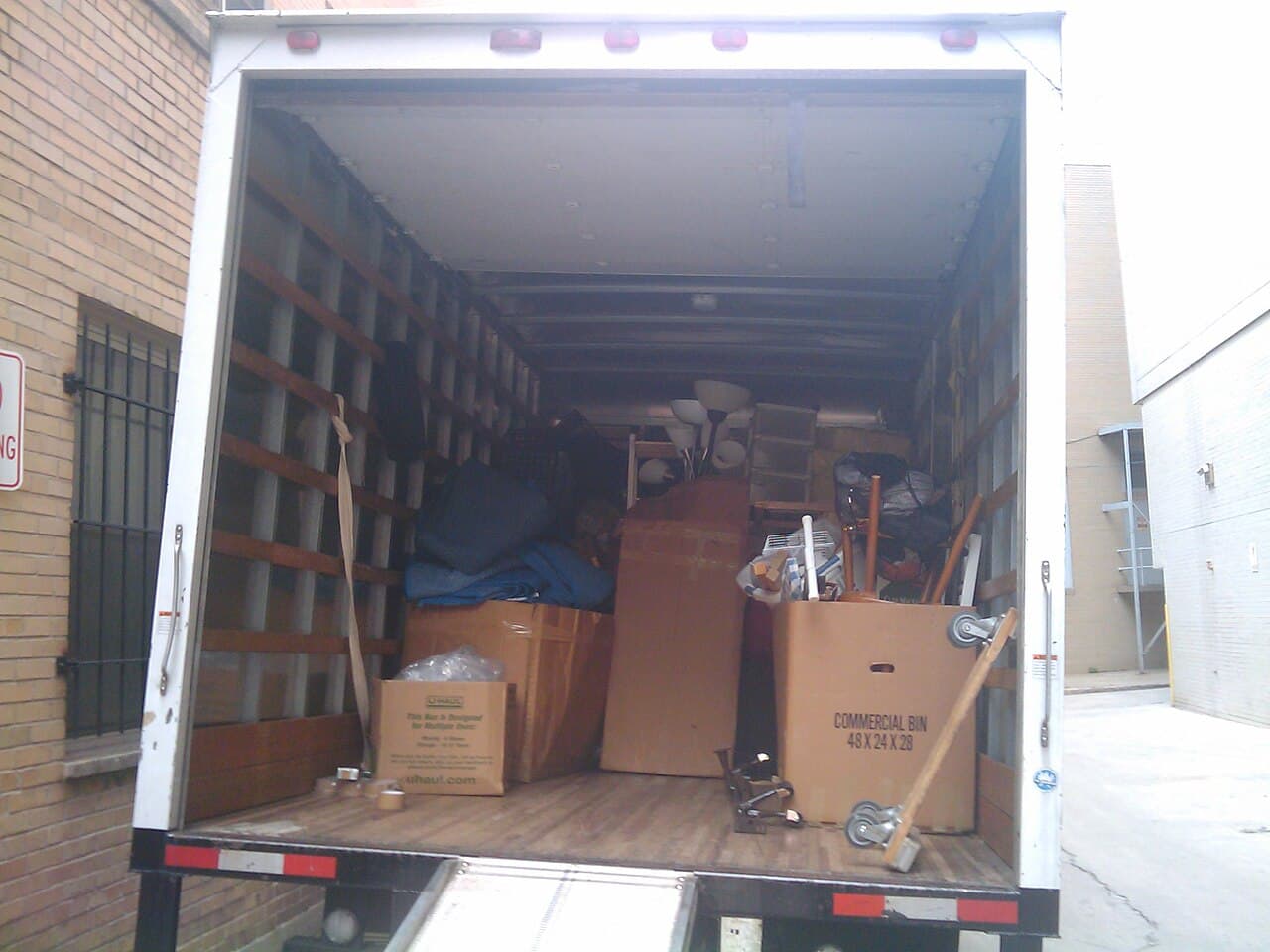
Why the mover has reason to back down
The federal penalties are steep. Under federal law, a mover found holding a household goods shipment hostage is liable for a civil penalty of not less than $10,000 for each violation,[3] and each day it fails to give up the goods may count as a separate violation.[3] The Secretary of Transportation may order the goods returned[3] and may suspend a carrier's or broker's registration for 12 to 36 months.[3] Separately, a person convicted of knowingly and willfully failing to give up household goods can be fined or imprisoned for up to 2 years.[3]
Bring in Virginia
Federal law lets a state bring a civil action on behalf of its residents to enforce the federal household goods consumer protection rules.[4] The Virginia Attorney General's Consumer Protection Section takes complaints online or by mail, and runs a hotline at 1-800-552-9963 for calls from Virginia.[5] If a complaint is outside its jurisdiction, the office says it will tell you and forward it to the right agency.[5] Send copies of the estimate, the bill of lading, the inventory and your written payment offer, never originals.
After you get your belongings
Check every item against the inventory and note damage before signing; what to do if movers damage your furniture covers claims. The mover will bill any remaining charges after 30 days from delivery.[1] Compare that invoice with the estimate and weight tickets, pay what is legitimately owed, and dispute the rest in writing.
FMCSA says it cannot resolve loss and damage claims on your behalf,[1] but every interstate mover must offer arbitration. If you request arbitration for a claim of $10,000 or less, the mover must agree and the decision is binding.[1] For larger amounts or other options, a Virginia consumer lawyer can tell you where you stand.
If the move stayed inside Virginia
The 110 percent rule is federal and covers interstate moves. For an in-state move, Virginia law says a carrier will not deliver or give up possession until all tariff rates and charges are paid, unless other satisfactory arrangements have been made.[6] The same section says estimated charges may be bound or fixed so the price may not be exceeded, apart from destination accessorial charges found only at delivery.[6] Get any fixed price in writing before the move, and file a complaint with the Attorney General if a mover goes beyond it.
Stop and call a pro if
- The mover has driven off with your goods and will not say where they are. Call FMCSA and the Attorney General's hotline the same day.
- The crew threatens you or will not leave your property. Call the police.
- The amount in dispute is large, or the mover sues or refuses arbitration. Talk to a Virginia attorney who handles consumer cases.
Avoid it next time
Most hostage cases start with a low price given without a survey. See how to plan a long-distance move, browse more junk removal and moving answers, or describe your move and get quotes.
Common questions
- How much do I have to pay before an interstate mover must unload?
- 100 percent of a binding estimate or 110 percent of a non-binding one, plus the full cost of extra services you asked for after the contract was signed, and charges for impracticable operations up to 15 percent of all other charges due. The rest is billed after delivery.
- The mover says my things weighed more than estimated. Do I have to pay the difference now?
- Not at delivery, on a non-binding estimate. The mover cannot require more than 110 percent of the estimate at delivery; any remaining charges are billed after 30 days, and you can ask for weight tickets and a reweigh before unloading if the shipment was weighed at origin.
- Can the mover demand cash when we agreed on a card?
- On an interstate move, the mover must accept the form of payment agreed at the time of the estimate unless you agree in writing to change it. Check what the estimate and bill of lading say.
- Who do I call first?
- FMCSA's booklet says to contact FMCSA immediately at (888) 368-7238 if a mover refuses to deliver unless you pay an amount it is not entitled to charge. Then file a complaint with the Virginia Attorney General's Consumer Protection Section.
- Does the 110 percent rule apply to a move within Virginia?
- No. It is a federal rule for interstate moves. Virginia law says an in-state carrier will not deliver until all tariff charges are paid unless other arrangements were made, but lets estimated charges be fixed. Read your estimate closely before the move.
- Should I sign whatever they ask so I can get my things back?
- Do not sign a release of liability. Federal rules prohibit movers from making you sign away their liability in exchange for delivery, and the delivery receipt may only say the goods arrived in apparent good condition except as noted.
Sources
- [1] Appendix A to Part 375, Your Rights and Responsibilities When You Move, Federal Motor Carrier Safety Administration, via the Electronic Code of Federal Regulations. Checked October 27, 2026.
- [2] 49 CFR Part 375, Transportation of Household Goods in Interstate Commerce; Consumer Protection Regulations, Electronic Code of Federal Regulations. Checked October 27, 2026.
- [3] 49 U.S.C. § 14915, Penalties for failure to give up possession of household goods, U.S. Government Publishing Office, United States Code. Checked October 27, 2026.
- [4] 49 U.S.C. § 14711, Enforcement by State attorneys general, U.S. Government Publishing Office, United States Code. Checked October 27, 2026.
- [5] File a Complaint, Office of the Attorney General of Virginia, Consumer Protection Section. Checked October 27, 2026.
- [6] Va. Code § 46.2-2161, Payment of tariff charges; payment of specific charges, Code of Virginia, Virginia General Assembly. Checked October 27, 2026.
Want a pro to handle it?
Describe the job once. Licensed local businesses send quotes, and you pay only when you book one.
Get a quote from a local pro