How do I protect floors and walls on moving day?
Clean the floors first so grit is not ground in, lay runners or hardboard along the main path, and pad door frames, banisters and corners with blankets or guards. Put felt pads on furniture feet, carry or dolly heavy pieces instead of dragging them, and keep the path clear. In a pre-1978 home, take extra care with painted trim.
Free to ask. Local shops send quotes, and you pay only when you book one.
By Kasra Taheri, Founder, LoclisPublished
Researched and drafted with AI, then checked claim by claim against the sources listed below before it was published. Prices and rules change; the dates beside each source say when it was last checked.
Step by step
Read when to stop and call a pro, further down this page, before you start.
Step 1: Clean the path
Sweep or vacuum the route from each room to the door the day before, since grit under furniture and boots is what scratches finishes.
Step 2: Map one route
Pick a single path from the rooms to the truck so you protect one route well instead of the whole house loosely.
Step 3: Cover the floors
Lay non-slip runners, taped-down floor protection film on carpet, or hardboard sheets on wood and tile along that route.
Step 4: Tape only to the covering
Tape coverings to each other rather than to finished floors or painted walls, and use low-tack painter's tape where you must touch a surface.
Step 5: Pad the pinch points
Wrap door frames, banister posts, newel caps and outside corners with moving blankets or foam guards held by bands or tape on the blanket.
Step 6: Take doors off if needed
Lift interior doors off their hinge pins where a large piece must pass, and set them flat in a room out of the way.
Step 7: Pad furniture feet
Put felt pads on furniture legs, and wrap tables and dressers in blankets so corners do not catch walls.
Step 8: Carry, do not drag
Lift pieces or move them on a dolly or furniture sliders, and never drag a dresser or appliance across a bare floor.
Step 9: Keep the route clear
Stage boxes in one room or the garage, not along the hall, so nobody squeezes past and scrapes a wall.
Step 10: Walk through afterwards
Lift the coverings, look for scratches, dents and scuffs in good light, and photograph anything new before the crew leaves.
Protect one clear route through the house and the spots where furniture is most likely to hit. Clean the floors first, cover the main path, pad door frames, banisters and corners, and make sure nothing heavy is dragged. An hour of preparation saves floor refinishing and wall repairs, and the same steps work whether you hire movers or move with friends.
Start with clean floors
Most moving-day scratches come from grit, not from the furniture itself. Grit under furniture legs, dolly wheels and boots grinds into a floor's finish, and pads do not protect a dirty floor. Sweep or vacuum the route the day before, and again in the morning if it has been raining. Put a coarse mat outside each door the crew will use, so they wipe their feet before stepping onto anything finished.
Cover the route
Choose one path from the rooms to the door and protect it well. Covering the whole house loosely tends to leave gaps where people actually walk.
- Wood, tile and vinyl. Non-slip runners or heavy paper protect against grit and scuffs. For dollies and heavy pieces, sheets of hardboard spread the weight and stop wheels from denting the floor. Tape sheets to each other, not to the floor.
- Carpet. Self-adhesive film made for carpet keeps mud off and lets dollies roll. Peel it up the same day.
- Stairs. Covering stairs can make them slippery. Use runners that grip, or leave the treads bare and keep them clean.
Be careful with feet as well as furniture: hard heels and pointed shoes concentrate weight and can dent wood floors, so ask helpers to wear flat, clean soles or go in socks.
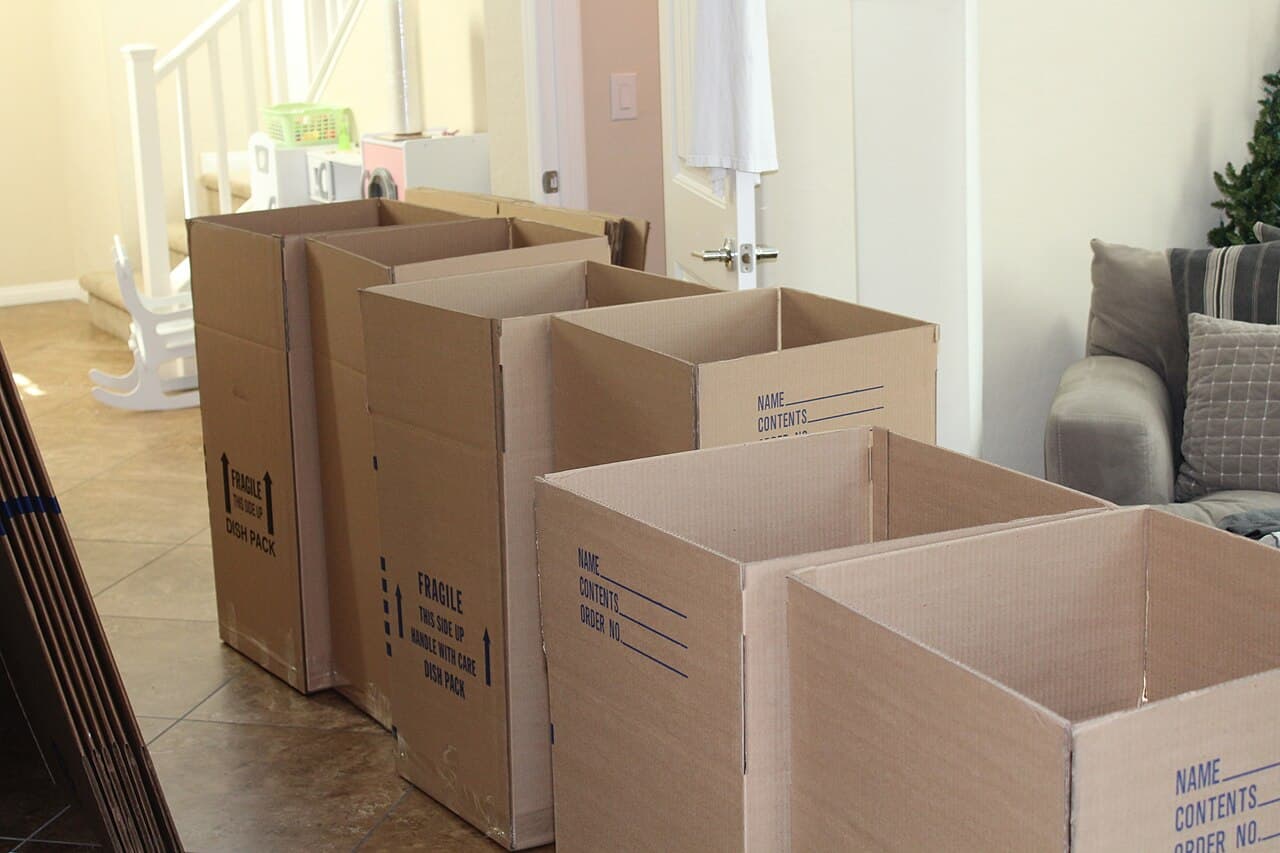
Protect walls, door frames and banisters
Walls get damaged at the same few places: door frames, outside corners in hallways, the bottom turn of a staircase, and banister posts. Wrap those with moving blankets or foam corner guards. Hold padding with bands, or tape it to itself, rather than taping to painted surfaces; where you must tape to a wall, use low-tack painter's tape and pull it off slowly.
Take down pictures, mirrors and hooks along the route, so nothing gets knocked off a wall. Where a large piece must pass through a tight doorway, lifting the door off its hinge pins buys an inch or two and protects the door itself.
Older homes need extra care. EPA says a home built before 1978 is more likely to have lead-based paint,[1] and that old or worn lead-based paint on surfaces subject to constant friction, like doors or window sills, can produce chips and dust that become a hazard.[1] Padding door frames and trim in an older house protects your family as well as the paint.
Protect the furniture so it protects the floor
Heavy pieces cause the deepest damage. Carry them, or use a dolly or furniture sliders. Never drag a dresser, piano or appliance across a bare floor.
Before furniture goes down in the new house, put felt pads on the feet, thick enough for heavy pieces, and check that each piece sits level, since a rocking leg digs into the finish. Keep hard plastic-wheeled chairs on a mat rather than rolling them over bare floors, and use a rug pad made for your floor type when the rugs go back down.
Keep the route clear
Stage packed boxes in one room or the garage, not along the hall. A crowded hallway is where people squeeze past and scrape walls. Keep pets and children out of the route, and prop doors open with a soft stop, not a box.
If something gets damaged
Lift the coverings and walk the route in good light before the crew leaves. Photograph any new scratch, dent or scuff and tell the company that day, in writing. Ask which of the company's insurance policies covers damage to your home, and get the insurer's details. For the claims process, see what to do if movers damage your furniture.
Small scuffs often come off with a damp cloth. For chipped paint in a pre-1978 home, EPA advises fixing small areas of damaged paint, under 6 square feet, as soon as possible without sanding.[1] Larger repairs are a different matter: anyone paid to do work that disturbs paint in housing built before 1978 must be certified and trained in lead-safe work practices,[1] and EPA's Renovation, Repair and Painting rule requires firms doing that work in pre-1978 homes to be EPA- or state-certified.[2] For a small dent in drywall, see how to patch a small hole in drywall.
Stop and call a pro if
- A hardwood floor is gouged through the finish or a board is cracked. A flooring contractor can tell you whether it needs a spot repair or refinishing.
- A banister, railing or stair tread has come loose. Keep people off it and have a carpenter fix it before the stairs are used.
- Paint is chipped or gouged in a home built before 1978 and the damage is more than a small spot. Hire a lead-safe certified contractor.
- A drywall hole is larger than a patch kit covers, or a door frame is split.
Plan the rest of the move
For the full timeline, see how to plan a local move. Browse more junk removal and moving answers, see local moving companies, or describe your move and get quotes.
Common questions
- What is the best floor protection for moving day?
- It depends on the floor. Non-slip runners or rosin paper work for light traffic on wood and tile, hardboard sheets spread the load of dollies and heavy pieces, and self-adhesive film made for carpet keeps it clean. Clean the floor before covering it either way.
- Can I use painter's tape on walls to hold padding?
- Low-tack painter's tape is gentler than packing or duct tape, but any tape can lift fresh or weak paint. Where you can, hold blankets with bands or tape them to themselves instead of to the wall.
- Do professional movers protect floors and walls?
- Many bring floor runners, door-jamb pads and banister covers. Ask what they use when you get the quote, and ask what happens if they damage the house.
- Who pays if movers damage my walls or floors?
- Report it to the company in writing with photos the same day. Before the move, ask which of the company's insurance policies covers damage to your home, and get the insurer's name in writing.
- Should I put rugs down right after the move?
- Rugs and mats help at entrances. Wait until the heavy carrying is done, and use a rug pad that is made for your floor type; check the pad maker's guidance before putting any rubber-backed mat on a wood floor.
Sources
- [1] Reduce the Risk of Lead Exposure at Home, U.S. Environmental Protection Agency. Checked October 27, 2026.
- [2] Lead Renovation, Repair and Painting Program Rules, U.S. Environmental Protection Agency. Checked October 27, 2026.
Want a pro to handle it?
Describe the job once. Licensed local businesses send quotes, and you pay only when you book one.
Get a quote from a local pro