How do I store Christmas lights so they don't tangle or break?
Test each strand as you take it down, throw out any with frayed or pinched wires, then wind the good ones loosely around a flat piece of cardboard, a spool or a hanger and keep the plug end free. Label each strand and store it in a rigid, lidded bin kept dry, so bulbs are never crushed and cords never packed under weight.
Free to ask. Local shops send quotes, and you pay only when you book one.
By Kasra Taheri, Founder, LoclisPublished
Researched and drafted with AI, then checked claim by claim against the sources listed below before it was published. Prices and rules change; the dates beside each source say when it was last checked.
Step by step
Read when to stop and call a pro, further down this page, before you start.
Step 1: Unplug and take the lights down gently
Unplug every strand and the extension cord before you touch it. Work from the plug end back toward the far end, and unclip rather than yank so sockets and wires are not pulled loose.
Step 3: Wipe off dirt and let them dry
Wipe strands with a dry or barely damp cloth and let them air dry completely before packing, so moisture is not sealed into the box.
Step 4: Choose a winding form
Use a flat piece of cardboard with a notch cut in each end, a cord reel, an empty wrapping-paper tube or a hanger. A form keeps strands from knotting around each other.
Step 5: Wind loosely, bulb side first
Tuck the plug end into the notch, then wind the bulbs and wire around the form in even turns. Keep the wire loose, not stretched, and do not bend it sharply at any socket.
Step 6: Secure and label
Tuck the last end into a notch or fasten it with a twist tie or tape, and write the length, colour and where it hangs on a label, such as roofline or front shrubs.
Step 7: Pack in a rigid bin
Lay the wound strands flat in a lidded plastic bin and leave space around them, or use compartments or cups for bulbs. Put heavier items elsewhere so nothing presses on the wire.
Step 8: Store the bin dry and indoors
Keep the bin in a closet or on a shelf in a conditioned or dry space, off a bare floor, with the replacement bulbs and fuses in a labelled bag on top.
Check first, then wind
The best way to store Christmas lights is to test and inspect each strand as you take it down, wind it loosely around a flat form and put it in a rigid, lidded bin kept dry. Tangles and broken bulbs both come from the same mistake: a strand balled up and packed loose in a bag or a box where it gets crushed.
Start before you pack. The U.S. Fire Administration says to inspect holiday lights each year before you put them up.[1] The easier time to do that is now, with the strand in your hand. Throw away light strands with frayed or pinched wires.[1] A strand that has lost a section of insulation will not improve in a bin.
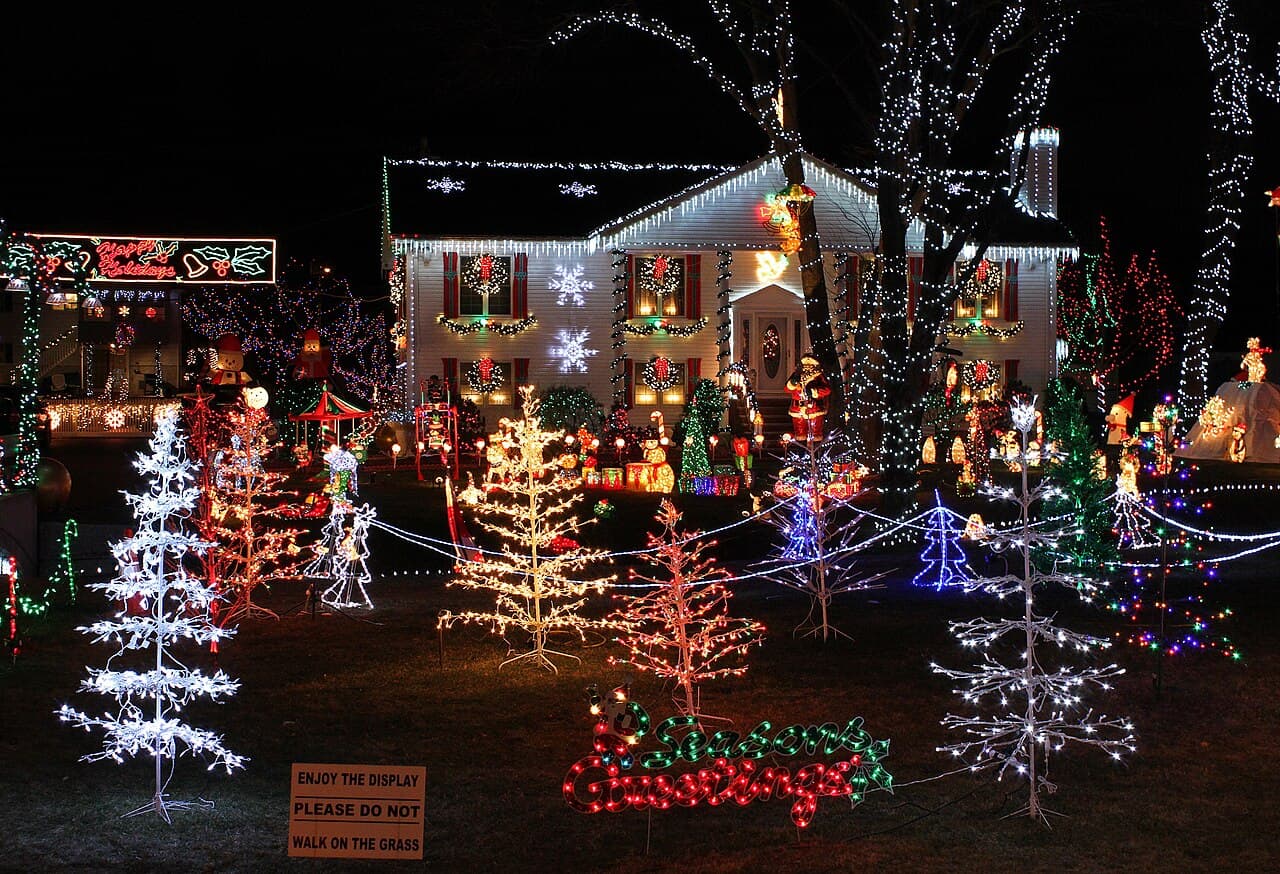
Unplug, then take down
Unplug each strand and its extension cord first. Then work from the plug end toward the far end, unclipping each clip by hand. Pulling a strand by the wire strains the sockets and is how most bulbs end up loose or cracked.
If you hung the lights from a ladder, keep the strand moving into a bucket or over your shoulder instead of dropping it, so it does not stretch or snag. For roofline lights, how to hang Christmas lights along gutters covers the clips that make takedown fast the next time.
Which damage to look for
Run the wire between your fingers. Look for cracked or missing insulation, bare copper, a bent or loose plug prong and sockets that are cracked or corroded. Replace any cord that is frayed, cracked or otherwise damaged.[2] The reason is concrete: damaged cords may have exposed live wires that can be shock and fire hazards.[2] Stepping on cords does the same thing slowly, since cords can be damaged when stepped on, creating a fire or shock hazard.[2]
Extension cords come down and go through the same check. Nails and staples can tear or crush the insulation or cut the wires inside,[2] so if you fastened anything that way, look closely at those spots.
A winding method that works
Cardboard is the cheapest form: cut a piece about the size of a paperback book or larger, notch both ends and tuck the plug in one notch. Wind the bulbs and wire around it in even turns, side by side instead of crossing, and finish by tucking the last end into the other notch. A cord reel, a wrapping-paper tube or a plastic hanger works the same way for long strands.
Keep the wire loose. A wound strand should hold its shape without any tension, and no bend should be sharper than a gentle curve at a socket. Wind icicle and net lights flat on a larger board, folding the net or draping the drops over the form.
Label each strand with its length and where it goes, such as "front porch rail" or "left side shrubs". Next year you will match strands to places in minutes, and you will not plug in more strands than the packaging allows. The U.S. Fire Administration also says to read the manufacturer's instructions for the number of light strands to connect,[1] so keep the paper tag with the strand where you can.
The right bin
Use a rigid plastic bin with a lid, not a cardboard box or a bag. Lay wound strands flat in layers with something soft between them, and keep heavy items such as ornaments or tools elsewhere. Large bulbs fit well in the cups of a spare egg carton or a bulb organiser, and the replacement bulbs and fuses can go in a labelled bag on top.
Store the bin indoors, in a dry place, away from a furnace or a water heater. A garage or attic that gets very hot or very damp is the worst case for cords and sockets, and a bin sitting on a bare concrete floor can take on moisture. A closet shelf is better.
Ten minutes of inspection at takedown is far easier than finding a bad strand on a ladder next December.
Stop and call a pro if
- A strand is hard-wired to your house or to a timer circuit. Disconnect nothing at the panel or at a junction box yourself. That is electrician work.
- You find scorched, melted or discoloured plugs, sockets or outlets where lights were plugged in. Stop using that circuit and have it checked.
- A ladder job is beyond you. If the lights are on a steep or high roof, hire a company to take them down: see how much it costs to take down Christmas lights in Virginia, and whether to hire the same company that put them up.
- Strings of lights are caught on or near overhead service wires. Do not touch them. Call the utility.
Getting help in Virginia
If takedown and storage is more work than you want, many seasonal-lighting companies offer a takedown that includes boxing and labelling, and some store the lights until next season. Ask for the service, the date and the price in writing. Read more in snow and seasonal answers, or browse snow and seasonal services near you.
When you want a quote, post a lighting job once and local companies bid on it.
Common questions
- What is the best way to wind Christmas lights so they do not tangle?
- Wind each strand around a form, such as a flat piece of cardboard with notches cut in the ends, a cord reel or a hanger. Start at the plug, wind in even turns, keep the wire loose and secure the last end. A strand wound on a form comes out in one piece, where a loose coil in a bin knots itself.
- Should I test lights before I put them away or before I hang them?
- Both, if you can. Testing at takedown means a dead strand is thrown out and replaced in the sales, not discovered on a ladder next December. The U.S. Fire Administration says to inspect holiday lights each year before you put them up and to throw away light strands with frayed or pinched wires.
- Is it safe to keep damaged strands that still light up?
- No. A strand can work and still have bare wire. The Consumer Product Safety Commission notes that damaged cords may have exposed live wires that can be shock and fire hazards, and says to replace any cord that is frayed, cracked or otherwise damaged.
- Where should I keep stored lights?
- Indoors, in a closet or on a shelf in a dry space, in a lidded bin that keeps out dust and damp. Avoid a spot where the bin gets crushed, stacked under heavy boxes or exposed to heat or moisture.
- Can I leave lights up all year instead of storing them?
- Plugged-in or not, outdoor strands left up through summer take sun, heat and storms, and cords left in the path of foot traffic or clipped with nails or staples get damaged. Take them down at the end of the season, check them, and rehang them next year.
Sources
- [1] Holiday Fire Safety, U.S. Fire Administration, FEMA. Checked October 27, 2026.
- [2] Home Electrical Safety Checklist (Publication 513), U.S. Consumer Product Safety Commission. Checked October 27, 2026.
Want a pro to handle it?
Describe the job once. Licensed local businesses send quotes, and you pay only when you book one.
Get a quote from a local pro