How much does it cost to take down Christmas lights in Virginia?
There is no single Virginia price for takedown. It is priced by how much is hung, how high it is, and whether storage and haul-away are included. Ask for a written quote for the same job from at least three companies, or do the low, ground-reachable parts yourself and hire out only the high ones.
Free to ask. Local shops send quotes, and you pay only when you book one.
By Kasra Taheri, Founder, LoclisPublished
Researched and drafted with AI, then checked claim by claim against the sources listed below before it was published. Prices and rules change; the dates beside each source say when it was last checked.
Step by step
Read when to stop and call a pro, further down this page, before you start.
Step 1: Unplug the display
Unplug every string and extension cord at the outlet or timer before you touch a single bulb or clip. Do not take lights down while the power is on.
Step 2: Decide what you can reach safely
Limit yourself to shrubs, railings, fences and eaves you can reach from the ground or from a stepladder on firm, level ground. Anything higher is a job to price out.
Step 3: Check the weather and the ground
Wait for a dry, calm day. Ladders must not be used on slippery surfaces such as snow, ice or oily deposits.[3]
Step 4: Stay clear of overhead lines
Look up before you set a ladder down. Virginia law bars work that puts a ladder within 10 feet of an overhead high voltage line unless the danger has been guarded against.[2]
Step 5: Start low and work toward the high points
Take down shrubs, railings and low trim first, then work along the eave in short sections, moving the ladder rather than leaning out sideways.
Step 6: Unclip, do not yank
Release each clip or hook by hand and lift the wire free. Pulling on a string can crack sockets and tear gutter clips.
Step 7: Coil and set aside bad strings
Wrap each string loosely around a spool or piece of cardboard, and set aside any with cracked sockets, bare wire or damaged plugs to throw out rather than store.
There is no single Virginia price for taking down Christmas lights. What you pay depends on a handful of things you can see from the driveway, and the only figure that counts is a written quote for your own house.
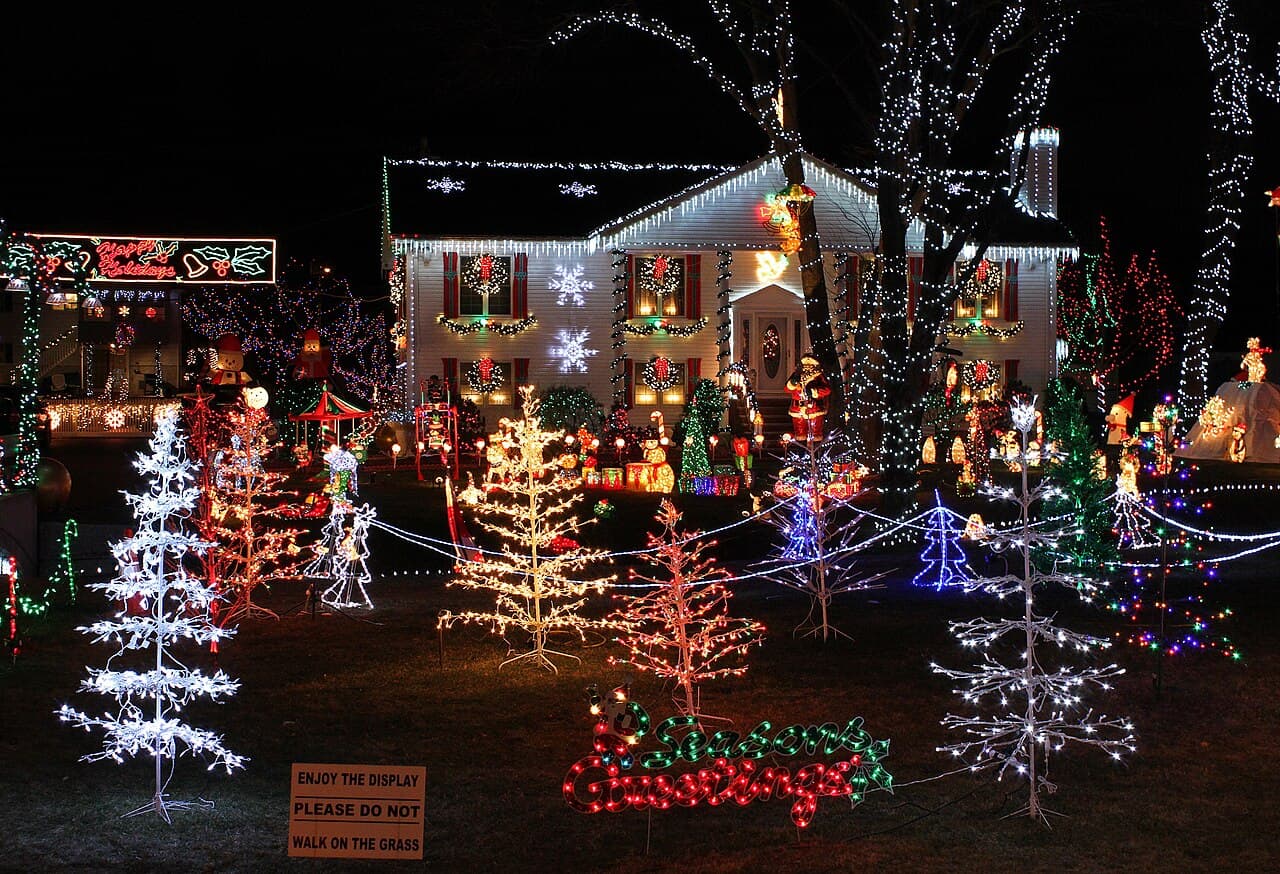
What drives the price
How much is hung. Takedown is mostly time. A single strand on a porch rail is a few minutes; a roofline with dormers, gables, trees and shrubs is an afternoon for a crew.
Height. A first-floor eave can be reached from a ladder. A second storey or a steep roof needs more equipment and more risk, and companies charge for both.
Who hung them. A company that installed the display knows how every clip and cord is fixed, so removal is quicker. Lights that went up years ago, or were put up by someone else, can take longer to free.
Storage and haul-away. Some quotes cover only taking the lights down and leaving them in a pile. Others include coiling, labeling and boxing, storing the lights until next season, or hauling away strings that are no longer worth keeping. Each is a separate line.
How to get a quote you can trust
The Virginia Board for Contractors advises getting "at least three written bids or estimates using identical plans and specifications".[1] For takedown, that means telling each company the same thing: which parts of the house, roughly how many strings, whether storage is wanted, and the date range.
The same guide warns: "Beware of any bid substantially lower than the others."[1] A very low quote often leaves out disposal or the high work.
On payment, the board says "a good rule of thumb is an initial deposit of no more than 10% of the total price or $1,000, whichever is less" for home improvement work.[1] For a small takedown job you should rarely need a large deposit at all. The board also says "The contract should include the total price, when payments will be made, and whether there is a cancellation penalty."[1] Ask for the same in writing, even for a short job.
Cut the cost by doing the low parts yourself
You can lower a quote by taking down the easy parts and hiring out only the hard ones. Shrubs, railings, fences, porch columns and the lowest stretch of trim are within reach from the ground.
If you do the work, unplug everything first and use these steps. Take the lights down on a dry day: ladders are not to be set up or used on "slippery surfaces such as snow, ice, or oily deposits".[3] Never stand on the top of a ladder. A university safety program says "The top two steps of a stepladder and the top two rungs of a straight or extension ladder shall not be used for standing."[3] And never shuffle it while you are on it: "Do not move, shift, or extend ladders while in use."[3]
Then price out only what is left. A company can quote the high section on its own, and you keep the cost of the rest.
Stop and call a pro if
- The lights are on a second storey or a roof. Falls are the main danger of ladder work. Leave them to a company with the equipment and insurance, and see whether hiring is worth it.
- Overhead lines are near the work. Virginia law bars work that puts a ladder or equipment "within 10 feet (3.1 meters) of any overhead high voltage line" unless the danger has been guarded against.[2] Do not work near a service drop or a line from the pole.
- A cord, plug or outlet looks scorched, cracked or wet. Leave it unplugged and have an electrician look at the outlet.
- A string is fixed in a way you cannot undo from the ground, such as screwed or stapled into trim at height.
Getting started
Before you call anyone, read whether to hire the same company that hung the lights, and the cost side of putting them up in professional Christmas light installation. Browse holiday lighting services or more snow and seasonal answers.
When you know what is left to take down, describe the job and local businesses quote it.
Common questions
- Why is there no price per foot here?
- Because takedown is priced by the job, not by the foot: height, access, and what is included change the total more than length does. A written quote for your own house is the only number worth acting on.
- Is takedown usually included in the installation price?
- Often, when the company installed the display, but not always. Ask for takedown, a date for it, and storage to be written into the quote, so you are not left with a second job.
- Is it cheaper if the company did not install the lights?
- Not necessarily. A company that did not hang the lights has to work out how they were fixed, and some will not touch a display they did not install. Ask when you request the quote.
- How much deposit is reasonable?
- The Board for Contractors suggests an initial deposit of no more than 10% of the total price or $1,000, whichever is less, as a good rule of thumb. For a small takedown, many companies take payment when the work is done.
- Can I take down only the low parts myself?
- Yes, and it can lower a quote. Shrubs, railings and low trim are within reach from the ground. Leave the second storey and anything near overhead lines to a company with the equipment.
Sources
- [1] What You Should Know Before You Hire a Contractor, Virginia Board for Contractors, DPOR. Checked October 27, 2026.
- [2] Va. Code § 59.1-408, Prohibited activities (Overhead High Voltage Line Safety Act), Code of Virginia, Virginia General Assembly. Checked October 27, 2026.
- [3] Portable Ladder Safety Program, Virginia Commonwealth University, Safety and Risk Management. Checked October 27, 2026.
Want a pro to handle it?
Describe the job once. Licensed local businesses send quotes, and you pay only when you book one.
Get a quote from a local pro