How do I test a sump pump?
Pour a bucket of water slowly into the pit. The pump should start on its own as the water reaches its switch, empty the pit quickly and shut off, with water coming out of the discharge pipe outdoors. Check that it is plugged into a working GFCI outlet, standing upright, with a free float and clear inlet screen.
Free to ask. Local shops send quotes, and you pay only when you book one.
By Kasra Taheri, Founder, LoclisPublished
Researched and drafted with AI, then checked claim by claim against the sources listed below before it was published. Prices and rules change; the dates beside each source say when it was last checked.
Step by step
Read when to stop and call a pro, further down this page, before you start.
Step 1: Check the outlet and cord
Make sure the pump is plugged into a working GFCI outlet and the cord is in good shape, and reset the GFCI if it has tripped.[1]
Step 2: Look into the pit
Lift the lid and check that the pump is standing upright and the float can move freely.[1]
Step 3: Unplug and clear debris
Unplug the pump, then clear small stones and debris from the inlet screen and away from the switch.[1]
Step 4: Plug it back in
Plug the pump straight into the GFCI outlet and keep your hands out of the water from here on.[1]
Step 5: Pour in a bucket of water
Pour water slowly into the pit until the pump starts on its own.[1]
Step 6: Watch it empty and stop
The pump should empty the pit quickly and shut off by itself; if it does not start, have it serviced or replaced.[1]
Step 7: Listen as it stops
A rush of water back down the pipe right after the pump stops points to a check valve that is leaking or not working.[1]
Step 8: Check the outlet outside
While it runs, make sure water comes out of the discharge pipe and lands at least 3 feet from the foundation.[1]
Step 9: Unplug the backup's charger
If you have a battery backup, check it once a month, starting by unplugging the charger's transformer.[2]
Step 10: Look at the battery
With eye protection on, inspect the battery's terminals and clamps for corrosion and tightness, and clean and tighten them as needed.[2]
Step 11: Run the backup twice
Unplug the main pump and fill the pit until the backup pump turns on, then repeat it to make sure the backup runs normally.[2]
Step 12: Plug everything back in
If the backup ran normally, plug the transformer into the GFCI outlet and turn the main pump back on; if not, see the backup's troubleshooting guide.[2]
Step 13: Close up and note the date
Refit the lid, write down the test date, and note when a tether switch is due for replacement every two years.[1]
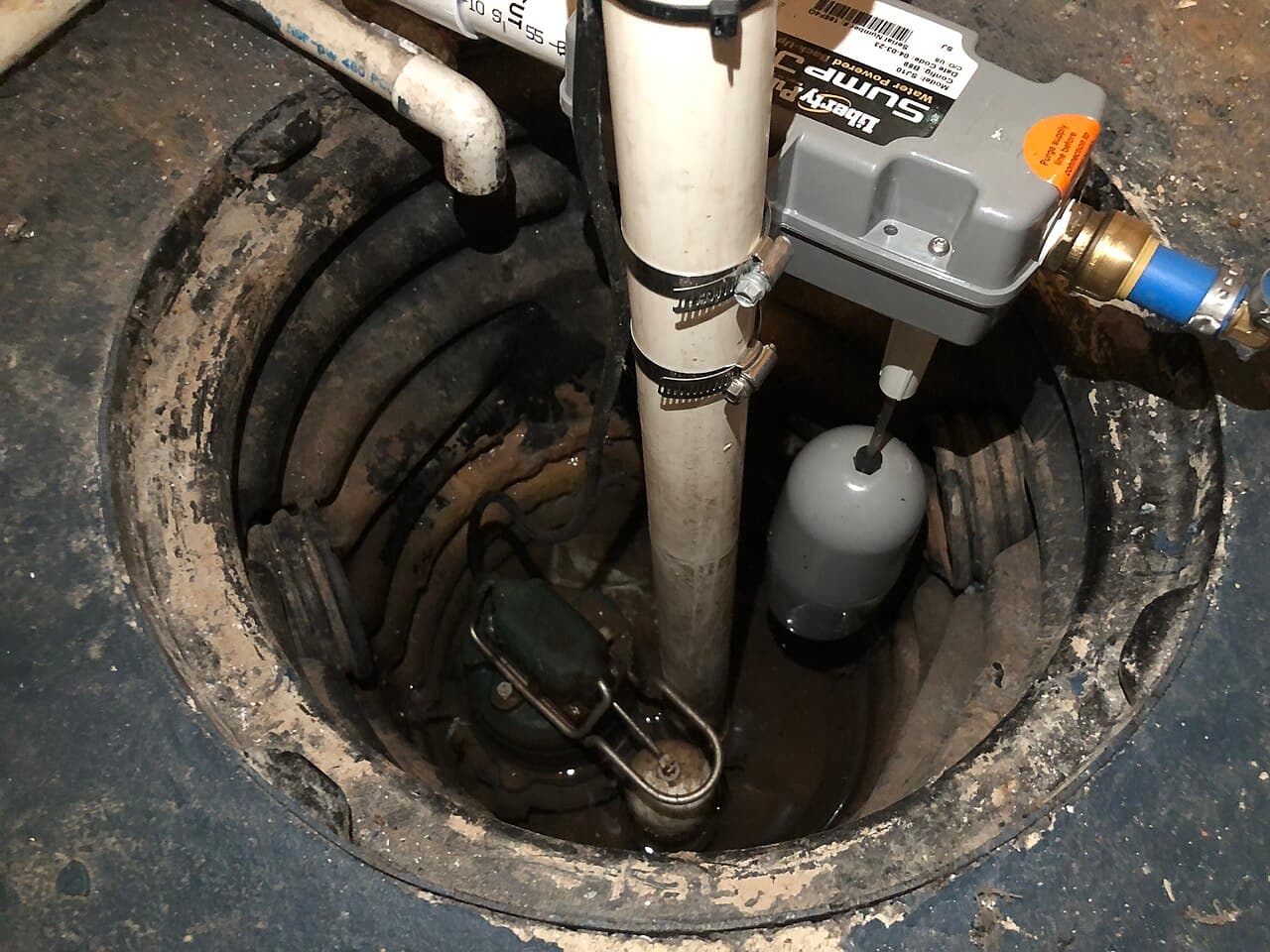
To test a sump pump, pour a bucket of water slowly into the pit. The pump should start on its own as the water reaches its switch, empty the pit quickly and shut off, with water coming out of the discharge pipe outdoors. While you are there, check that it is plugged into a working GFCI outlet, standing upright, and that the float moves freely and the inlet screen is clear. The whole check takes only a few minutes.
How often to test
Wayne's manual for its submersible sump pumps says to inspect the pump 3 to 4 times a year for movement or debris on the switch or float.[1] A test at the start of each season, and again when a big storm or a long wet spell is forecast, covers it. A battery backup gets a check every month.
The pump only matters when it is needed, and that is often during the storms that also knock out power. Ready.gov's flood advice includes: "Consider a sump pump with a battery."[5] The Northern Virginia Soil and Water Conservation District's first step for a wet basement is to make sure your sump pump is turned on and working.[3]
The bucket test
Wayne's routine maintenance is a bucket test: pour a bucket of water into the pit to make sure the pump starts automatically and the water drains quickly once it is on, and if the pump does not start, have it serviced or replaced.[1] The steps on this page walk through it in order, with the checks that go with it.
Check the power first. In damp areas a GFCI can trip and effectively shut off the sump pump, so check it and reset it if necessary.[1]
Check the pump is standing up. Vibration during operation can make a pump fall or tilt onto one side, which can jam the float so it cannot start the pump.[1] Wayne also says to clear small stones and debris from the inlet screen, and to replace a tether switch every two years.[1]
Keep it safe. Never handle a pump with wet hands, or while standing on a wet or damp floor, while it is plugged in.[1] Always disconnect the pump from power before servicing it or making adjustments.[1] Pour the water in with the pump plugged in, but keep your hands out of the pit while you do.
What a good test looks like
- The pump starts on its own before the water gets near the top of the pit.
- It empties the pit in a steady run and shuts off by itself.
- No water rushes back down the pipe after it stops.
- Water comes out of the pipe outside, away from the house.
- It runs smoothly, without loud grinding or rattling.
Go outside while someone runs the test, or run it twice. Wayne's manual says the discharge pipe should carry water to a point at least 3 feet from the foundation.[1] If the end of the pipe is buried in leaves or soil, clear it. Pumped water that pools against the wall can find its way back to the pit.
What a failed test tells you
It does not start. Check the GFCI, the plug and the float. If the outlet has power and the float is free, the switch or motor has likely failed; see how to replace a sump pump.
It starts again within minutes. For a pump that starts and stops too often, its troubleshooting chart points to water flowing back from the discharge pipe or a check valve that leaks or does not work properly.[1] Why a sump pump runs constantly covers this in detail.
It is loud or shakes. For a pump that is noisy or vibrates too much, it lists worn bearings, a broken impeller, or piping attached to the house too rigidly or too loosely; for that last one, a rubber coupling isolates the vibration.[1]
Testing a battery backup
A backup has its own float, set higher than the main pump's, so it only runs when the water gets past the main pump. Wayne's ESP25n backup manual says to check the battery once a month: unplug the charger's transformer, inspect the terminals and clamps for corrosion and tightness, then unplug the main pump and fill the sump until the backup pump turns on, twice, before plugging everything back in.[2]
Many backups also have a self-test. On the ESP25n, with the main pump and transformer unplugged, the self-test button runs the backup pump, and the charge lights then show the battery's state: green for fully charged, yellow for partly charged but still working, red for discharged or defective.[2] Other brands have their own versions, so keep your backup's manual by the pit.
Treat the battery with care. Batteries can release hydrogen gas while charging, which a spark can ignite in an enclosed space, and battery acid is corrosive, so Wayne says to wear eye protection when handling the battery and keep the area well ventilated.[2]
Outside, while you are at it
The less water reaches the pit, the less the pump has to do. The district says gutters should be cleaned at least once a year, more often with trees close to the house.[4] Make sure downspouts empty away from the foundation; see how to adjust gutters so they drain properly.
Stop and call a pro if
- There is water on the basement floor. Wayne says not to walk on a wet basement floor until all power is off, and to call an electrician if the electrical panel is in the basement.[1]
- The power cord is cut, cracked or frayed, or the pump itself is damaged. Wayne's manuals say not to use a pump with a damaged cord, or to install or operate a pump that has been damaged in any way.[1][2] Do not use it; have it replaced.
- The backup battery is cracked, swollen or leaking, or acid gets on your skin or in your eyes. Battery acid is corrosive: if it gets in your eyes, Wayne says to flush them with cold running water for 10 minutes and seek immediate medical attention, and to wash acid off skin or clothing immediately with soap and water.[2]
- The GFCI trips again as soon as you reset it, or the pump has no GFCI outlet within reach of its cord.
- The pump hums but does not move water, or will not start with power and a free float.
- The pit fills faster than the pump can empty it.
Getting help
Browse sump pump repair, find plumbers in Blacksburg, check whether your basement needs a sump pump, or read more plumbing answers.
If the test fails, describe your sump pump problem once on Loclis and licensed local plumbers can quote the repair.
Common questions
- How often should I test my sump pump?
- Wayne's manual calls for inspecting the pump 3 to 4 times a year, and a bucket test takes only a few minutes. A good rhythm is once a season, plus before a big storm is forecast. Test a battery backup once a month.
- Can I test it by lifting the float?
- Many people do, but a bucket of water is a better test: it checks that the switch, pump, check valve and discharge line all work together, the way they will in a storm. Lifting the float means reaching into the pit while the pump is plugged in, which the manual warns against.
- My pump started but the water drained slowly. What does that mean?
- Something is restricting the flow: a clogged inlet screen, a check valve stuck partly closed, a blocked discharge line or a worn impeller. Clear the screen and the outside end of the pipe first; if it is still slow, see why a sump pump runs constantly or have a plumber look at it.
- How do I know if the backup battery is still good?
- Use the backup's own test. On Wayne's ESP25n, with the main pump and charger unplugged, the self-test button runs the pump and the lights then show green for fully charged, yellow for partly charged and red for discharged or defective. Other brands have similar tests in their manuals.
- The GFCI outlet keeps tripping when I test it. Is that the pump?
- It could be the pump or the outlet. Wayne's troubleshooting chart lists a bad GFCI or a bad pump, and says to have an electrician replace the GFCI. Do not plug the pump into a regular outlet or an extension cord to get around it.
Sources
- [1] Submersible Sump Pumps: Operating Instructions and Parts Manual (600002W-001 J, 06/25), Wayne Water Systems. Checked October 26, 2026.
- [2] ESP25n 12 Volt Backup Sump Pump: Operating Instructions and Parts Manual (600005W-001 J, 08/26), Wayne Water Systems. Checked October 26, 2026.
- [3] Solving Drainage and Erosion Problems, Northern Virginia Soil and Water Conservation District, Fairfax County. Checked October 26, 2026.
- [4] Gutters and Downspouts: Wetness or Erosion Problems, Northern Virginia Soil and Water Conservation District, Fairfax County. Checked October 26, 2026.
- [5] Floods, Ready.gov, Federal Emergency Management Agency. Checked October 26, 2026.
Want a pro to handle it?
Describe the job once. Licensed local businesses send quotes, and you pay only when you book one.
Get a quote for Plumbing Repair