How do I treat a sick tree?
Find the cause before treating anything. Check the species, photograph the symptoms, then look at water, soil and mulch, the most common culprits. Skip fertilizer, wound paint and sprays until a forester, arborist or the Virginia Tech plant clinic confirms the problem. Leave ladder work, chainsaws and anything near power lines to an arborist.
Free to ask. Local shops send quotes, and you pay only when you book one.
By Kasra Taheri, Founder, LoclisPublished
Researched and drafted with AI, then checked claim by claim against the sources listed below before it was published. Prices and rules change; the dates beside each source say when it was last checked.
Step by step
Read when to stop and call a pro, further down this page, before you start.
Step 1: Identify the tree
Find out the species, since many problems affect only certain species. The Virginia Department of Forestry points to Virginia Tech's identification keys and its own tree guides.[2]
Step 2: Describe and photograph the symptoms
Note mushrooms at the base, insect exit holes or leaf spots, and photograph the whole tree plus close-ups of the injury, with the date and location.[2]
Step 3: Look for the pattern
Check whether the top is dying, whether the problem is spreading slowly or appeared suddenly, and whether other kinds of plants nearby are affected.[1]
Step 4: Check soil moisture
Check the soil about 6 inches below the surface and water when it is dry; do not water soil that is already saturated.[3]
Step 5: Fix the mulch
Pull mulch back from the trunk, keep it 2 to 3 inches deep over the roots, and remove any fabric or plastic under it.[4]
Step 7: Get the cause confirmed
Send your photos or a sample to your local DOF forester or the Virginia Tech Plant Disease Clinic and Insect ID Lab.[2]
Step 8: Treat only a confirmed cause
If an insect or disease is confirmed, identify it exactly and choose the control for that pest before buying anything.[1]
Work out what is wrong before you treat anything. A tree that looks sick may be short of water, sitting in soggy ground, buried in mulch or recovering from root damage rather than infected, and treating the wrong problem wastes money. Virginia Cooperative Extension puts it this way: the health of a plant may be affected by soil nutrition and texture, weather conditions, quantity of light, other environmental and cultural conditions, and animals, including humans.[1]
Start with the tree's story
Identify the species first, because many problems affect only certain species. Then describe the symptoms and where you see them. The Virginia Department of Forestry suggests noting whether there are mushrooms at the base of the tree, exit holes from insects, or spots on the leaves, and taking photos that show the whole plant plus close-ups of the injury.[2] Write down the date, the location and how many plants are affected.
Where the damage shows up matters. When the tops of plants wilt or die, one can generally infer that there is a problem with the root system.[1] A problem that spreads gradually can point to a living cause such as an insect or a disease, while one that appears suddenly and stays in one spot points toward a nonliving cause.[1] Damage across several different kinds of plants in one spot also suggests nonliving factors.[1]
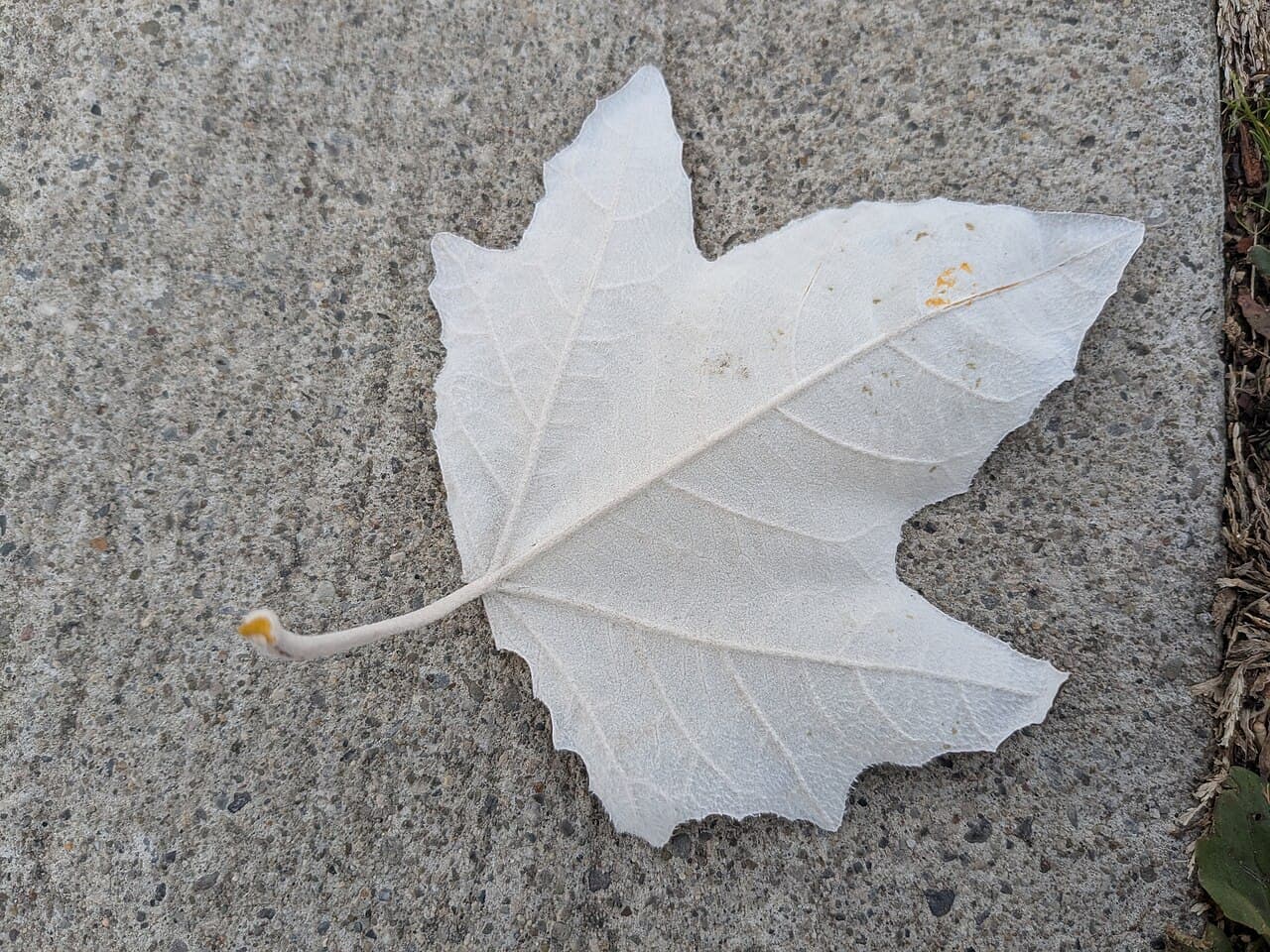
Check water, soil and mulch
These are the usual culprits, and you can fix them yourself. Drought and waterlogging produce many of the same symptoms on the aboveground parts of the plant, mainly chlorosis (yellowing leaves), abscission (shedding older leaves), and wilt.[1] So do not guess. The USDA Forest Service's Tree Owner's Manual says the best way to know how often and how much to water is to check the soil moisture at 6 inches below the surface, and to water when dry.[3] It also warns that watering too much is as dangerous as watering too little, because soil saturated with water for more than 24 hours can prevent roots from getting oxygen.[3]
Mulch is the other common cause. Do not put mulch in contact with the trunk, and then pile mulch only 2 to 3 inches over the roots.[4] Pull away any mound against the trunk, and do not put any type of fabric or plastic material under your mulch.[4] Also look for stacked items, parked equipment or recent digging near the roots, since stacking items atop the roots causes soil compaction.[4]
What not to do
- Do not fertilize on a hunch. The Tree Owner's Manual says to apply nitrogen fertilizer ONLY if diagnosis by an arborist indicates that it is necessary, and other fertilizers ONLY if a soil test shows that nutrients are lacking.[3]
- Do not paint or seal wounds. Virginia Cooperative Extension's advice is to not use anything to cover pruning cuts or wounds, because trees seal their own wounds.[4]
- Do not top the tree or cut flush to the trunk. The same publication says to cut on the outside of the branch bark collar.[4]
- Do not spray before you know the pest. If it appears insects or pathogens are causing the problem, be sure to positively identify the pest so you can choose the most effective control measure.[1]
Get a real diagnosis
If watering and mulch do not explain it, get the cause confirmed. The Virginia Department of Forestry lists three routes: consult its Tree and Forest Health Guide, contact your local DOF forester, or submit a sample to the Virginia Tech Plant Disease Clinic and Insect ID Lab.[2] The Tree Owner's Manual adds that for yellow or brown leaves, sparse leaves, leaf spots, small leaves or wilted leaves, the answer is to call for advice from an arborist or a university plant diagnostic service.[3] For a boxwood or other shrub, the same approach applies. See why boxwoods turn brown for one common case.
Pruning and pesticides have limits
Removing a dead branch you can reach from the ground is ordinary care. Anything more is not. The manual's rule is blunt: if you cannot prune your tree with both feet on the ground, hire an arborist, and if power equipment is required, hire an arborist.[3]
Pesticides carry legal limits as well. Virginia says no person may apply or recommend for use any pesticide commercially without a pesticide business license and the employment of a certified commercial applicator.[5] A homeowner cannot buy their way around a restricted-use product either: no one may use a pesticide classified for restricted use unless they have complied with the Board's certification requirements or are under the direct supervision of a certified applicator on-site.[6] Read and follow the label on any consumer product you do use.
Stop and call a pro if
- The work is above your head. Anything that needs a ladder, climbing or a chainsaw is arborist work.[3]
- A power line is near the branches. Never prune trees or branches that are within 10 feet of utility lines; contact your local utility company.[3] Virginia law separately bars anyone working in a trade or business from placing a person, tool or ladder within 10 feet of an overhead high voltage line.[7]
- An elm has bright yellow leaves on one or two branches. The manual lists this as Dutch elm disease and says to immediately call the university or an arborist.[3]
- The trunk is cracked, has cavities or fungi, or the tree has started to lean. The manual lists cracks, fungi and cavities, a flat-sided trunk at the ground level and a recent lean among the dangers to check, and says that if anything is found, or if in doubt, contact an arborist.[3]
- The treatment you are considering is a spray of a restricted-use product. That is licensed work.[6]
Getting help in Virginia
If you suspect the tree is past saving, read how to tell if a tree is dead or dangerous. To decide whether to hire someone, see when to call a certified arborist and what an arborist costs in Virginia. Browse lawn and landscaping answers or tree and shrub health services.
When you want a professional look, describe the problem once and local businesses quote it.
Common questions
- Can I save a tree with leaf spots or powdery mildew?
- Usually yes, and often it needs no treatment at all. Many leaf spots and mildews are cosmetic on an otherwise healthy tree. Confirm the cause first, then fix the conditions behind it, such as water, mulch and airflow. Send photos to your local Virginia Department of Forestry forester or a sample to the Virginia Tech Plant Disease Clinic if the tree is declining.
- Should I fertilize a sick tree?
- Not unless a test says so. The Tree Owner's Manual says to apply nitrogen only if an arborist's diagnosis indicates it is necessary, and other fertilizers only if a soil test shows that nutrients are lacking. Extra fertilizer on a stressed tree can add to the problem.
- Is drought or too much water killing my tree?
- Often you cannot tell from the leaves, because drought and waterlogging produce many of the same symptoms: yellowing, shedding older leaves and wilting. Check the soil about 6 inches down. If it is dry, water; if it has stayed saturated for more than a day, the problem is drainage, not thirst.
- Is it safe to spray the tree myself?
- Consumer products on a small shrub are one thing. For a large tree you generally cannot spray the crown safely from the ground, and restricted-use products are off limits to anyone not certified. In Virginia, applying pesticides on someone else's property for pay requires a certified commercial applicator at a licensed company.
- Who can tell me what is wrong with my tree for free?
- Start with your local Virginia Department of Forestry forester, who can look at photos and point you to the right resource. The Virginia Tech Plant Disease Clinic and Insect ID Lab accepts samples, and your Virginia Cooperative Extension office can help with plant problems.
Sources
- [1] Diagnosing Plant Problems (426-714), Virginia Cooperative Extension, Virginia Tech. Checked October 27, 2026.
- [2] Help with Sick Trees, Virginia Department of Forestry. Checked October 27, 2026.
- [3] Tree Owner's Manual (NA-FR-01-10, revised 2021), USDA Forest Service, distributed by the Virginia Department of Forestry. Checked October 27, 2026.
- [4] How NOT to Kill a Tree: 24 Common Tree Care Mistakes That Damage Landscape Trees (430-210), Virginia Cooperative Extension, Virginia Tech. Checked October 27, 2026.
- [5] Va. Code § 3.2-3924. Annual business license required, Code of Virginia, Virginia General Assembly. Checked October 27, 2026.
- [6] Va. Code § 3.2-3929. Restricted use pesticides prohibited; exceptions; training required, Code of Virginia, Virginia General Assembly. Checked October 27, 2026.
- [7] Va. Code § 59.1-408. Prohibited activities (Overhead High Voltage Line Safety Act), Code of Virginia, Virginia General Assembly. Checked October 27, 2026.
Want a pro to handle it?
Describe the job once. Licensed local businesses send quotes, and you pay only when you book one.
Get a quote from a local pro