Why are my boxwoods turning brown?
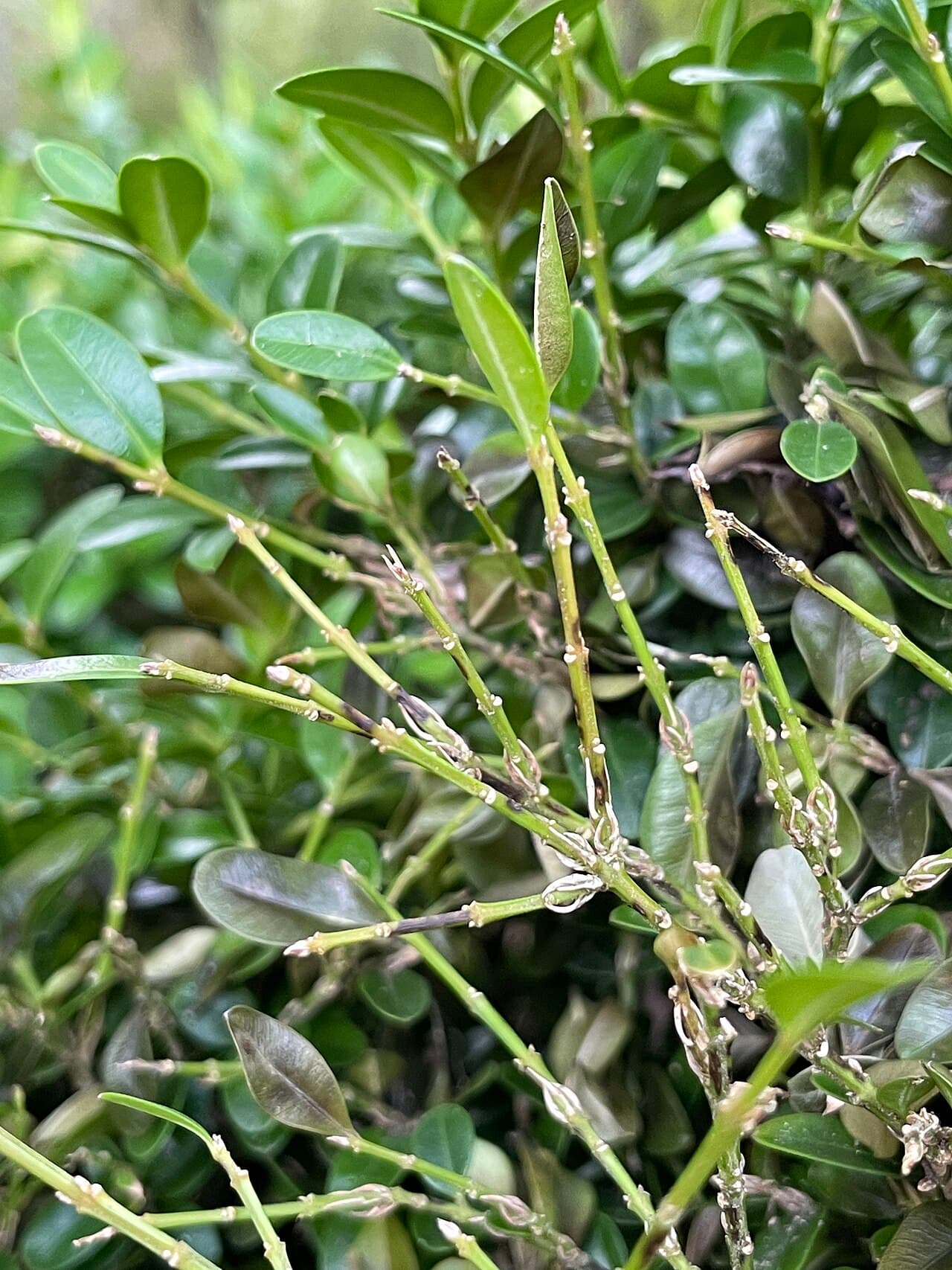
Boxwoods usually brown from one of four things: winter drying when the ground is frozen, roots that stay too wet or too dry, boxwood leafminer, or boxwood blight. Blight shows as brown leaf spots with dark borders, fast leaf drop and black streaks on stems. If you see those, double-bag a sample for your local Extension office before pruning or composting anything.
Free to ask. Local shops send quotes, and you pay only when you book one.
By Kasra Taheri, Founder, LoclisPublished
Researched and drafted with AI, then checked claim by claim against the sources listed below before it was published. Prices and rules change; the dates beside each source say when it was last checked.
Step by step
Read when to stop and call a pro, further down this page, before you start.
Step 1: Note where the brown is
Write down whether browning is on the sunny or windy side, the whole plant, the inside, or scattered patches, and when it started.
Step 2: Look at single leaves
Circular brown spots with a darker border point to blight; blistered, discolored leaves point to leafminer.[1]
Step 3: Look at the stems
Part the foliage and check the green stems for dark or black streaks, a classic blight sign.[1]
Step 4: Think back over the weather
Browning after a hard winter on an exposed plant suggests leaves dried out while the ground was frozen.[2]
Step 5: Check the soil
Dig a little at the edge of the mulch: soggy soil or bone-dry soil both stress boxwood and invite disease.[2]
Step 6: Bag a sample if blight is possible
Double-bag stems with spots, streaks or leaf drop in sealed plastic bags and take them to your Extension office.[1]
Step 7: Hold off on pruning and composting
Do not compost or put out suspect boxwood debris for curbside brush pickup until you have a diagnosis.[1]
Step 8: Clean your tools
Clean off soil, then soak pruners in a sanitizer such as 1 part bleach to 9 parts water for at least 5 minutes, and oil them after.[1]
Step 9: Fix the growing conditions
Water during drought, keep a mulched ring around the plant, and get a soil test so pH sits near 6.5 to 7.2.[2]
Step 10: Thin dense plants once healthy
Remove 3- to 6-inch pieces of branch tips through the canopy to let in light and air, but not in late summer or early fall.[2]
Boxwoods usually turn brown for one of four reasons: winter drying, roots that are too wet or too dry, boxwood leafminer, or boxwood blight. The first three are about the plant's conditions and can often be fixed. Blight is a contagious fungal disease, so it is the one to rule out first, before anyone prunes, rakes or composts anything.
Read the pattern first
Where and when the browning shows tells you a lot:
- One side, after winter. Usually winter drying on the sunny or windy face.
- Whole plant, slowly. Often a root problem from wet soil, drought or a poor site.
- Blistered, discolored leaves in spring. Often leafminer.
- Spotted leaves, sudden leaf drop and black streaks on stems, late summer or fall. Possibly blight.
Winter drying and too much sun
Virginia Tech notes that boxwoods look and perform best with some shade, especially in the afternoon, and leaves may dry out in winter when the ground is frozen and roots cannot take up water.[2] The result is bronzed or straw-colored leaves on the exposed side, usually noticed in late winter or early spring. Many cultivars tolerate full sun, but some cultivars must have afternoon shade to stay healthy.[2] If a plant browns every winter in the same spot, it may simply be in the wrong place.
Wait for spring growth before cutting anything off. New shoots often fill in, and you can then remove twigs that stay dead.
Too much water, or too little
Boxwood roots are fussy. Virginia Tech's summary is that poor plant health and disease problems are often the result of too much water, drought stress, or too much sun for certain cultivars,[2] and that low areas of the landscape that tend to stay moist or wet do not support boxwood growth.[2] Heavy clay, a downspout emptying into the bed, or irrigation that runs too often can all keep roots wet.
Drought does its damage on a delay: drought-stressed plants often succumb to disease or decline in the months and years after the stress.[2] Water deeply during dry spells, and keep a mulched ring at least 3 feet out from the plants[2] so grass roots do not compete for water. A soil test is cheap insurance too. Soil pH should be in the range of 6.5 to 7.2.[2]
Boxwood leafminer
Boxwood leafminer is one of the two most common insect pests of boxwood. Its larvae that feed between the upper and lower leaf surfaces, which discolors and blisters the leaves.[2] Hold a leaf up to the light or peel it open and you may see small larvae inside. In midspring, usually April when weigela begins to bloom, the larvae pupate and adults that look like small orange mosquitoes emerge to lay eggs.[2] Medium to large populations greatly reduce the plant's vigor, and treatment is recommended,[2] timed to the insect's life cycle. If you hire someone to spray, Virginia requires that anyone who uses any pesticide on someone else's property for pay must be a certified commercial applicator.[3]
Boxwood blight
Blight causes brown leaf spots that lead to defoliation and black streaking on the stems.[1] The spots are typically circular and brown with a dark brown border.[1] In Virginia, blight symptoms typically appear in late summer and fall, but prolonged rain can bring them on at other times.[1] In Virginia, boxwood blight was first identified at a nursery in Carroll County in 2011,[1] and it is now spreading in many communities in Virginia.[1]
The spores are sticky and travel on pruning tools, clothing, equipment, wildlife and anything that has touched infected plants.[1] Pachysandra and sweetbox, in the same plant family, can also carry it.[1]
Get it confirmed. Other problems on boxwood can be mistaken for blight,[1] so a lab diagnosis matters. Collect stems with spots, streaks or leaf drop, double-bagged in sealed plastic bags,[1] and your local Extension office can help send it to the Virginia Tech Plant Disease Clinic.[1]
If it is blight. Virginia Tech recommends prompt removal of susceptible boxwood, such as English boxwood, along with the fallen leaves.[1] The debris should be double-bagged and taken to the landfill, buried 2 feet deep, or burned where your locality allows it, and never composted or put out for curbside brush pickup.[1] Because the fungus leaves long-lived survival structures in the soil for 5 to 6 years,[1] replanting susceptible boxwood in the same spot is not advisable;[1] a blight-resistant cultivar or a different shrub is the safer replacement. Fungicides cannot eradicate the disease from infected plants;[1] they only protect healthy ones when applied ahead of infection.
Dense, sheared plants brown inside
A tightly sheared boxwood traps humid, shaded air in its center, which favors disease. Dense cultivars such as English boxwood need thinning every one to two years,[2] by removing 3- to 6-inch pieces of branch tips throughout the canopy.[2] Avoid thinning in late summer or early fall, when it can push new shoots that may be damaged by cold.[2] Our guides to trimming overgrown hedges and shrubs and when to prune shrubs in Virginia cover the timing for the rest of the yard.
Stop and call a pro if
- You see circular brown leaf spots, black stem streaks or fast leaf drop. Get a diagnosis before anything is pruned or removed.
- Blight is confirmed and large or numerous plants have to come out and be bagged.
- Leafminer or blight needs a spray program; a for-hire applicator must be VDACS certified.
- The plants are browning in a wet, low spot that needs drainage work, not just new shrubs.
When hiring, see whether it is worth hiring someone to trim your shrubs for questions to ask about tool sanitation. Browse more lawn and landscaping answers, see tree and shrub health services, or look up lawn and landscaping businesses around Blacksburg. To get help, describe the problem once and local businesses quote it.
Common questions
- Will brown boxwood leaves turn green again?
- Usually not. Leaves that are fully brown are dead, but the plant can push new growth if the stems and roots are healthy. Scratch a twig with a fingernail; green underneath means it is alive. Fix the cause first, and expect recovery to take a season or more.
- How can I tell boxwood blight from winter damage?
- Winter damage tends to show on the exposed, sunny or windy side after a hard winter, with no distinct spots. Blight shows as circular brown spots with darker borders, rapid leaf drop and black streaks on the stems, typically in late summer and fall. A lab diagnosis settles it, because other problems can look like blight.
- Can I just cut out the brown parts?
- Not until you know the cause. If it is blight, pruning can spread spores on your tools and clothes, and the debris must be bagged for the landfill rather than composted. For winter damage, wait until new growth starts in spring and then remove what stays dead.
- Can I replant boxwood where a blighted one died?
- Virginia Tech advises against replanting susceptible boxwood there, because the fungus can survive in the soil for 5 to 6 years. A blight-resistant boxwood cultivar or a shrub outside the boxwood family is the safer choice for that spot.
- Is browning inside the plant normal?
- Some inner leaf drop is normal on dense boxwood that gets little light inside. Heavy browning inside a tightly sheared plant can mean poor air flow and disease, which is why Virginia Tech recommends thinning dense boxwood every one to two years.
Sources
- [1] Best Management Practices for Boxwood Blight in the Virginia Home Landscape (PPWS-29NP), Virginia Cooperative Extension, Virginia Tech. Checked October 27, 2026.
- [2] Selecting Landscape Plants: Boxwoods (426-603), Virginia Cooperative Extension, Virginia Tech. Checked October 27, 2026.
- [3] Pesticide Applicator Certification, Virginia Department of Agriculture and Consumer Services. Checked October 27, 2026.
Want a pro to handle it?
Describe the job once. Licensed local businesses send quotes, and you pay only when you book one.
Get a quote from a local pro